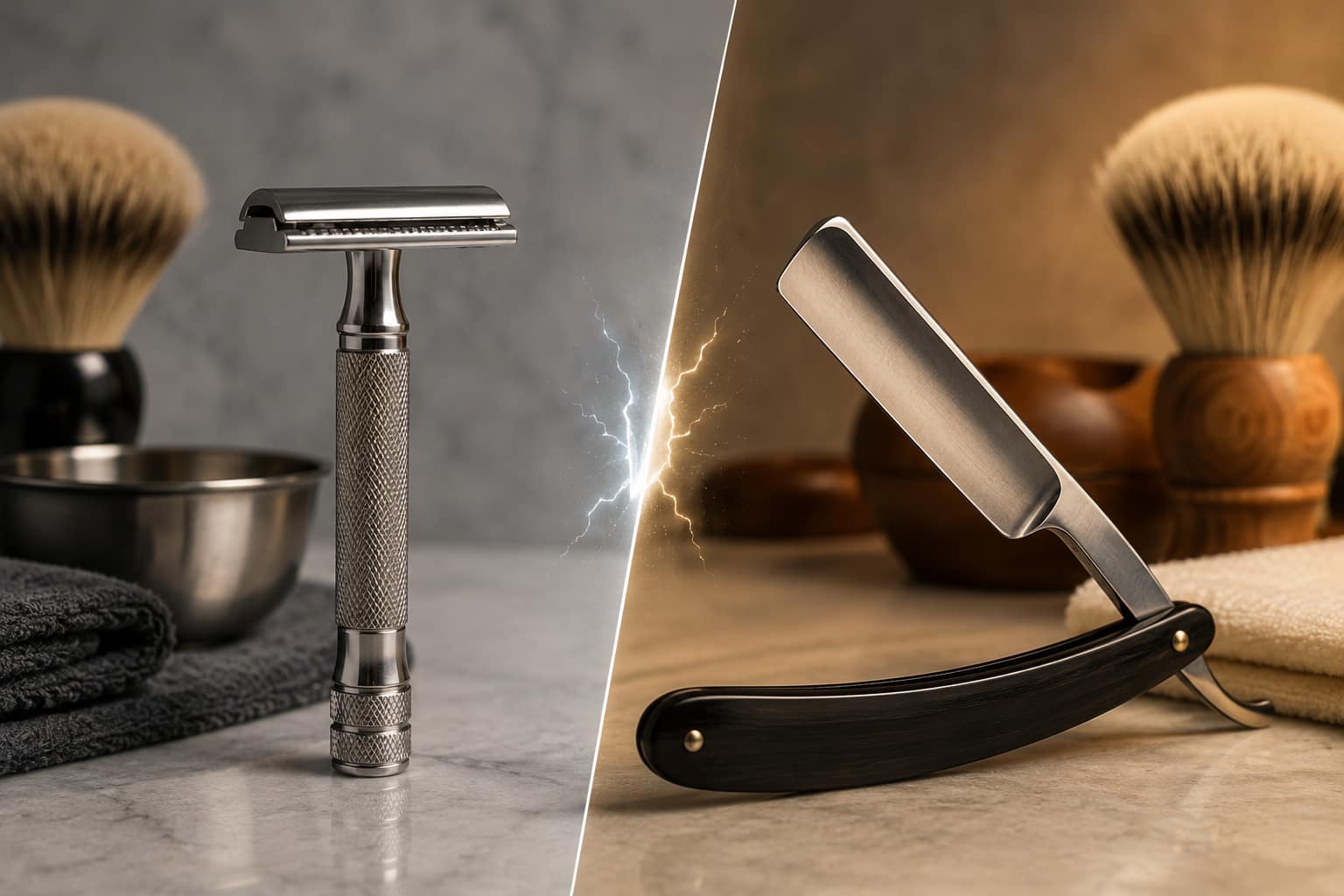
Two blades, two completely different philosophies and two shaving experiences that are far further apart than most people who have only used one of them realize.
The safety razor vs straight razor debate is one of the oldest running conversations in wet shaving. Both tools have devoted fans, both deliver results a cartridge razor cannot match and both need technique that takes time to build but the similarities end there, because the two differ in almost every meaningful way: the learning curve, the cost, the maintenance, the feel of the shave itself and who each one actually suits. This guide will not crown one winner and tell you it is objectively better, because there is no objective answer. What it does is give you the full, honest picture of both so you can decide which belongs in your bathroom.
The Key Difference in One Line
Before the detail, here is the difference between a straight razor and a safety razor in a sentence. A safety razor holds a single replaceable double edge (DE) blade inside a metal head with a safety bar that limits how much blade touches your skin, while a straight razor is one fixed piece of sharpened steel with no guard at all, where nothing sits between the edge and your skin except your technique. That single distinction, guarded blade versus bare blade, drives every other difference below.
Quick Comparison: Safety Razor vs Straight Razor
| Factor | Safety Razor | Straight Razor |
| Initial Cost | $20 to $200+ | $60 to $500+ |
| Ongoing Cost | $15 to $30 per year (blades) | Minimal (strop, occasional honing) |
| Learning Curve | Moderate (1 to 2 weeks) | Steep (several months) |
| Shave Closeness | Very close | Extremely close |
| Risk of Cuts | Low with technique | Moderate even with technique |
| Maintenance | Simple (rinse, dry, occasional clean) | Significant (stropping, honing) |
| Convenience | Moderate | Low |
| Environmental Impact | Very low | Extremely low |
| Travel Suitability | Good (blades in checked luggage) | Poor (airline restrictions) |
| Skill Ceiling | Moderate | Very high |
| Best For | Most men wanting a great daily shave | Dedicated enthusiasts and craft lovers |
What Is a Safety Razor?
A safety razor uses a single replaceable double edge blade held in a metal head with a safety bar that shields the skin from the blade. The bar limits how much blade meets the skin per stroke and guides the skin into the cutting angle, so the razor gives a great shave with technique most people pick up in one to two weeks.
For most men who want a much better shave than a cartridge razor without a long learning commitment, a safety razor is the rational choice and it is the most widely recommended entry point in wet shaving precisely because the barrier is low enough for almost anyone to clear. Our guide to the best safety razors of 2026 covers the full range from mild beginner models to aggressive premium razors.
What Is a Straight Razor?
A straight razor is a single piece of steel ground to a sharp edge on one side and folded into a handle for storage. It has no guard, no safety bar, and nothing between the edge and the skin except the shaver’s technique. The edge is kept sharp by the user through stropping before every shave and periodic honing on a whetstone, usually every few months. In Britain a straight razor is often called a cut throat razor, which tells you plainly how much respect the tool demands.
Straight razors come in two main forms. Traditional straight razors need ongoing stropping and honing and represent the full wet shaving craft. Shavettes are straight razor style handles that take disposable blades, like a barber’s razor and they remove the stropping and honing requirement while feeling different to shave with and generally running a little more aggressive than a well maintained traditional straight razor.
Are Straight Razors Safe? Is a Straight Razor Dangerous?
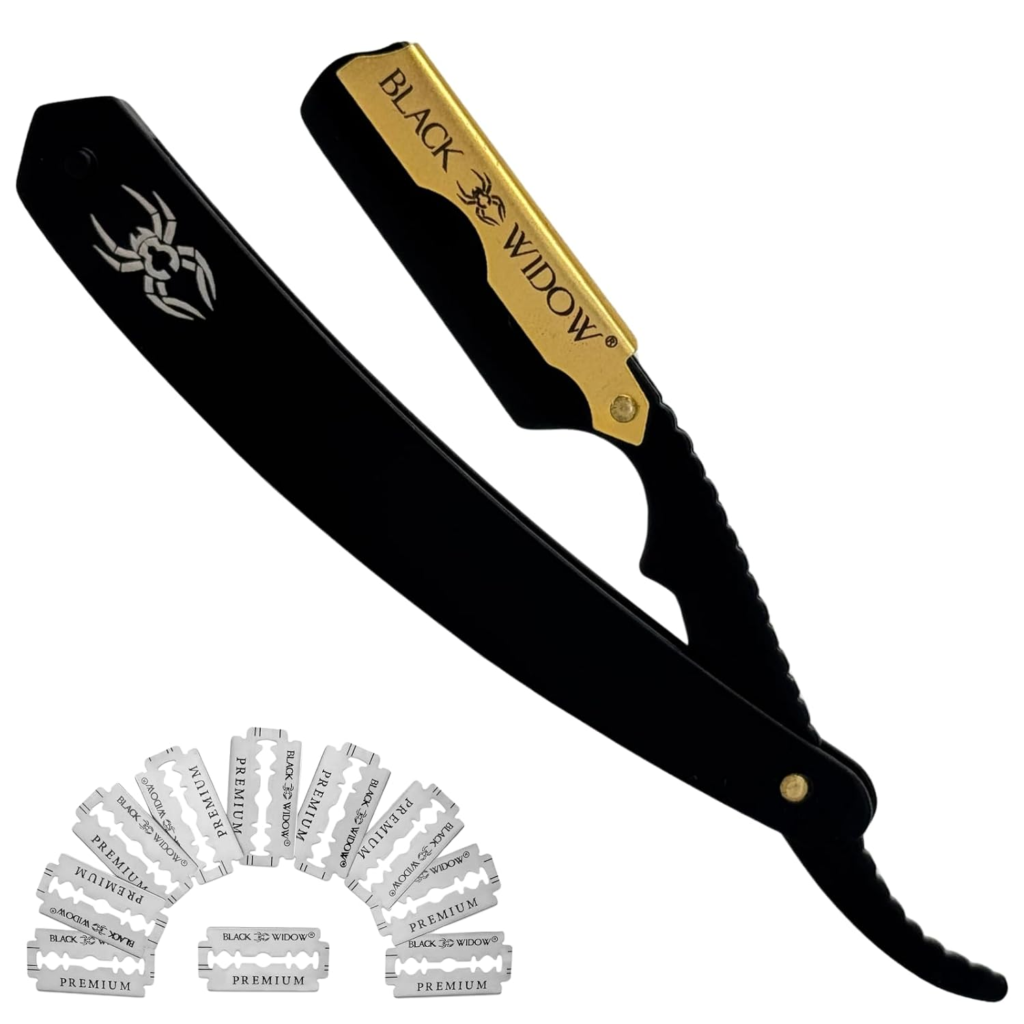
This is one of the most searched questions about straight razors, so here is a straight answer. A straight razor is not inherently dangerous but it demands far more respect than a safety razor because there is no guard between the full edge and your skin. Cuts happen more often during the learning phase than with a safety razor, though they are almost always shallow nicks rather than anything serious, and genuine injuries are rare among people who learn carefully and do not rush. The risk is highest when someone skips proper technique development or shaves while distracted.
If safety is your main concern but you still want the straight razor experience, there are two ways to lower the risk. Start with a safety razor to build the underlying skills of angle, pressure and grain first, then move to a straight razor later. Or begin with a shavette, which gives you the straight razor form and much of the technique without the maintained bare edge and which many barbers prefer specifically because disposable blades remove hygiene concerns. In short, a straight razor is as safe as the care and patience you bring to learning it.
The Learning Curve: An Honest Assessment
The gap in learning curve is one of the biggest practical factors in choosing between the two.
Safety Razor Learning Curve
Most men build reliable, comfortable safety razor technique within one to two weeks of daily shaving. The core skills are holding the razor at roughly 30 degrees from the face, using zero pressure, and reading grain direction, all learnable quickly and the mild razors recommended for beginners give a forgiving place to develop them. By the end of the first month most users are shaving far better than they ever did with a cartridge and by three months it is largely automatic. Our guide on how to shave with a safety razor walks through the whole process step by step.
Straight Razor Learning Curve
The straight razor curve is in a different league, taking most shavers three to six months of consistent practice to reach reliable, comfortable technique and sometimes longer. Finding the angle involves no guiding geometry from a safety bar, so you locate and hold it entirely by feel and sight, adjusting continuously across every curve of the face and angle errors carry bigger consequences because nothing protects the skin. Pressure control is more demanding for the same reason, multi pass shaving takes longer since each stroke covers less area, and on top of the shave itself you must learn to strop before every shave and hone periodically, with honing in particular being genuinely difficult to master.
The Verdict on Learning
If you are committed to wet shaving long term and the depth of the craft is part of the appeal, the straight razor journey is worth undertaking. If you want a much better shave than a cartridge without a multi month commitment to a new craft, the safety razor is the rational choice.
Shave Quality: Which Gives the Closer Shave?
This is the question most people care about and the answer is nuanced.
A safety razor used with good technique gives a shave substantially closer and smoother than any cartridge, and a two or three pass shave leaves skin genuinely smooth in a way most cartridge users have never felt. The closeness ceiling is high: an experienced shaver with a premium or aggressive razor, the right blade, and refined multi pass technique reaches what wet shavers call baby smooth, which is within reach after a few months of practice.
A well maintained straight razor with a keen edge in experienced hands delivers what many enthusiasts call the closest shave possible, since the full single edge meets the skin with no guard, creating a more direct cutting action but the margin between a great safety razor shave and a great straight razor shave is real yet not dramatic, since both sit in a completely different category from cartridge shaving. The straight razor has a slight edge in maximum theoretical closeness, though realizing it takes significant skill and a properly maintained blade. For most people who try both, the practical difference in closeness is not large enough to justify the far greater investment the straight razor demands and the ceiling of a great safety razor shave satisfies virtually everyone who is not specifically drawn to the straight razor craft.
Cost: The Full Picture
Both tools beat cartridge razors over a lifetime but their cost profiles differ.
For a safety razor, a quality beginner model is $20 to $50 and a premium one is $100 to $300, with ongoing cost being DE blades at $10 to $20 per 100, which lasts a daily shaver a year or more, so annual running cost is roughly $15 to $30. Our guide to the best budget safety razors under $30 covers the cheapest starting points.
For a straight razor, a quality entry level blade is $60 to $150 and a premium German or Japanese one is $200 to $500 or more and it never needs replacing if cared for. The ongoing costs are different: a leather strop at $30 to $100, honing stones at $30 to $150 and optional professional honing at $20 to $40 a session. Over five years, a straight razor setup often costs about the same as or slightly more than a premium safety razor setup once you include the strop and honing gear, since the saving on blades is partly offset by honing consumables.
A shavette, which uses disposable blades, costs $15 to $60 and is often recommended as a low cost way into straight razor technique before investing in a traditional blade, though its per blade cost tends to run higher than full DE blades.
Maintenance: What Each Tool Requires
Maintenance is one of the clearest practical differences.
Safety razor maintenance is simple and quick: rinse thoroughly after every shave, shake off the water, air dry, do a weekly toothbrush clean, change the blade every three to seven shaves and inspect monthly. Daily maintenance is under a minute and weekly is under five and our safety razor maintenance guide covers the full routine.
Straight razor maintenance is a craft skill in itself. Stropping before every shave realigns the microscopic edge and takes two to five minutes with technique that must be learned, since doing it wrong damages the edge. Honing on a whetstone is needed every one to three months to restore sharpness when stropping no longer holds it and it is genuinely difficult to learn, so many users have their razors professionally honed until they are confident on the stone. On top of that, the bare steel must be dried completely and lightly oiled after every shave because a damp straight razor rusts and rust damages the edge in ways that need significant re-honing to fix.
The Experience: Ritual vs Refinement
Both offer a more engaging shave than a cartridge but the nature of the experience differs.
Safety razor shaving is a refined morning ritual, with the lather, the weight of the razor, the clean sound of a sharp blade and a result that feels genuinely different combining into a routine many men look forward to. The technique demands enough attention to keep you present but is learnable enough to become smooth and reliable quickly, rewarding consistency with the same excellent result each day.
Straight razor shaving is a craft practice that demands full attention for the entire shave, since the lack of a guard raises the consequence of any lapse, and many enthusiasts value exactly that demanded presence. Once technique is established, the shave is often described as meditative in a way safety razor shaving does not quite replicate, with the direct connection between a skilled hand and a bare edge creating something dedicated practitioners find unique. Whether that justifies the greater demands is entirely a matter of what you want from your routine.
Who Should Choose a Safety Razor
A safety razor suits men who want a much better shave than a cartridge with a realistic one to two week learning investment, who want to cut grooming costs without a big upfront spend, who have sensitive skin or razor bumps and want the benefits of single blade shaving quickly, who travel regularly and need a practical daily tool, who want an enjoyable routine without turning shaving into a demanding craft and anyone unsure whether wet shaving is for them who wants to invest minimally first.
Who Should Choose a Straight Razor
A straight razor suits men drawn to the craft tradition for its own sake rather than just a closer shave, men who already shave well with a safety razor and want to explore the skill ceiling further, men who value the meditative quality of demanding technique, men committed to the absolute minimum long term waste and cost, barbers or those with a professional interest in traditional technique and men who enjoy tool maintenance and find stropping and honing satisfying rather than a chore.
The Shavette: A Middle Path
For men curious about straight razor technique but not ready for a traditional blade and its upkeep, a shavette offers a middle path, using the form of a straight razor with disposable blades instead of a maintained steel edge. The feel is closer to a straight razor than a safety razor in technique demand, with no safety bar and a fully user controlled angle but it removes the stropping and honing. Shave quality is comparable to a safety razor while the technique demand is higher, so most people who try a shavette either graduate to a traditional straight razor because they enjoyed it or return to their safety razor because the extra demand was not worth the difference. At $15 to $60 and using half DE or proprietary blades, it is the most affordable way to experience straight razor style shaving without a real commitment.
Making the Choice: A Simple Framework
Start with a safety razor if you have never used a wet shaving tool, you mainly want a better daily shave with manageable effort or you are unsure you will stick with traditional shaving. Add a straight razor later if you have used a safety razor for at least six months, you are getting consistently excellent shaves and you are drawn to the craft and skill depth.
Try a shavette first if you are curious about straight razor technique but want to experience it before investing in a traditional blade. Do not start with a straight razor if you have no wet shaving experience and your goal is simply a better daily shave rather than the craft itself.
👉Check Straight Razors Price on Amazon
AMAZON AFFILIATE DISCLAIMER
This post contains affiliate links. If you purchase through our links, we may earn a small commission at no extra cost to you.
Frequently Asked Questions
Is a straight razor better than a safety razor?
Neither is objectively better. A straight razor offers a slightly closer theoretical ceiling and a deeper craft experience, while a safety razor offers a dramatically shorter learning curve, simpler maintenance and a shave quality that satisfies almost everyone. The better tool depends entirely on what you value.
Is a straight razor safe, or is it dangerous?
It is not inherently dangerous but it demands more respect than a safety razor since nothing guards the edge. Cuts are more common while learning, though usually shallow and serious injuries are rare among careful learners. Starting with a safety razor or a shavette first lowers the risk considerably.
What is the difference between a straight razor and a safety razor?
A safety razor uses a replaceable double edge blade in a guarded head that limits skin contact, while a straight razor is a single fixed steel edge with no guard, maintained by stropping and honing. The safety razor is easier and safer to learn, the straight razor offers a deeper craft and a marginally closer ceiling.
How long does it take to learn to shave with a straight razor?
Most shavers reach reliable, comfortable technique over three to six months of consistent practice and some take longer, compared with the one to two weeks a safety razor usually needs.
Can a straight razor shave every day?
Yes. Many enthusiasts shave daily and find it sustainable once technique is set, though daily use needs daily stropping and disciplined post shave blade care to hold the edge between honings.
What is the difference between a straight razor and a shavette?
A traditional straight razor uses a maintained steel edge that you strop and hone, while a shavette uses the straight razor form with disposable blades, removing stropping and honing but feeling slightly different. Many barbers use shavettes because disposable blades remove cross contamination concerns.
Can I use a safety razor blade in a straight razor?
Not in a traditional straight razor, which uses its own maintained edge. Some shavettes are made to take half DE blades, which are standard DE blades snapped in half.
Which is more eco-friendly, a safety razor or a straight razor?
Both are dramatically greener than cartridge razors. A traditional straight razor produces essentially zero ongoing waste since the blade is maintained rather than replaced, while a safety razor produces a small amount of metal blade waste. Both are excellent environmental choices.
Should I try a safety razor before a straight razor?
For most people, yes. A safety razor teaches the core wet shaving skills of lather, grain direction and zero pressure that also underpin straight razor shaving, so starting there and graduating later is the sequence most experienced wet shavers recommend.