Ingrown hairs and razor bumps are not a skin condition. They are a mechanical problem with a mechanical solution. The vast majority of people who deal with chronic post-shave bumps, embedded hairs, and inflamed follicles are experiencing the direct consequence of how their razor interacts with their hair at the moment of cutting. Change the razor. Change the interaction. Change the outcome.
This is the most important thing to understand before reading the rest of this guide. Ingrown hairs and razor bumps are not something your skin is doing wrong. They are something your razor is doing to your skin. And once you understand the mechanism precisely, the solution becomes clear.
This guide covers everything you need to know about safety razor ingrown hairs and razor bumps. The precise mechanical cause of each condition, why single blade safety razors eliminate or dramatically reduce the problem for most sufferers, who is most affected, and what complete prevention looks like as a daily practice.
Quick Reference: Ingrown Hairs vs Razor Bumps
| Feature | Ingrown Hair | Razor Bump |
| Medical Name | Pili Incarnati | Pseudofolliculitis Barbae (PFB) |
| Cause | Hair curls back under skin | Hair regrows into follicle wall |
| Who Gets Them | Anyone, more common with curly hair | Very common in Black men, curly hair types |
| Appearance | Single embedded hair, redness, swelling | Multiple small bumps, widespread irritation |
| Pain Level | Localized, can be significant | Diffuse, chronic discomfort |
| Best Prevention | Single blade razor, with-grain shaving | Single blade razor, with-grain shaving |
| Treatment | Gentle exfoliation, time, topical treatment | Consistent prevention, break from shaving |
| Razor Type Impact | Very High | Very High |
The Mechanism: Why Multi-Blade Razors Cause the Problem
To understand the solution, you need to understand the problem at the mechanical level. This is not complicated but it is specific.
The Hysteresis Cutting Mechanism
Multi-blade cartridge razors use a principle called hysteresis to achieve their close shave. When the leading blade of a cartridge contacts a hair during a stroke, it does not immediately cut the hair. Instead it drags the hair slightly forward, stretching it taut before the blade severs it. The subsequent blades in the cartridge continue this process, with each blade cutting progressively shorter and the final blade cutting the hair below the level of the skin surface.
This below-surface cutting is how cartridge razors achieve the closeness that their marketing emphasizes. The hair is cut shorter than the skin surface level, which means the hair tip is now underground at the moment the stroke ends.
What Happens After the Stroke
Once the stroke ends and the tension that stretched the hair is released, the shortened hair retracts further below the skin surface. Now the hair tip is sitting beneath the surface with nothing to anchor its growth direction.
As this hair begins to grow back, it needs to find its way through the skin. If the hair is naturally straight, it usually grows back through the follicle opening without incident. If the hair has any natural curl or wave, the tip may curve before it reaches the surface opening. Instead of emerging from the follicle, it curves back into the follicle wall or directly into the surrounding skin. This is an ingrown hair.
Why Curly Hair Is More Affected
The tighter the natural curl of the hair, the more likely it is to curve back into the skin during regrowth rather than growing straight out. This is why men with naturally curly or tightly coiled hair suffer disproportionately from ingrown hairs and razor bumps when using multi-blade cartridge razors.
Black men, in particular, experience pseudofolliculitis barbae at significantly higher rates than men with straighter hair because of the naturally tight curl pattern of the hair shaft. The combination of below-surface cutting from multi-blade cartridges and tightly curled regrowth creates a condition that is both chronic and genuinely painful for many sufferers. A dedicated guide to this specific concern is available in the safety razor for Black men section of this site.
The Single Blade Solution
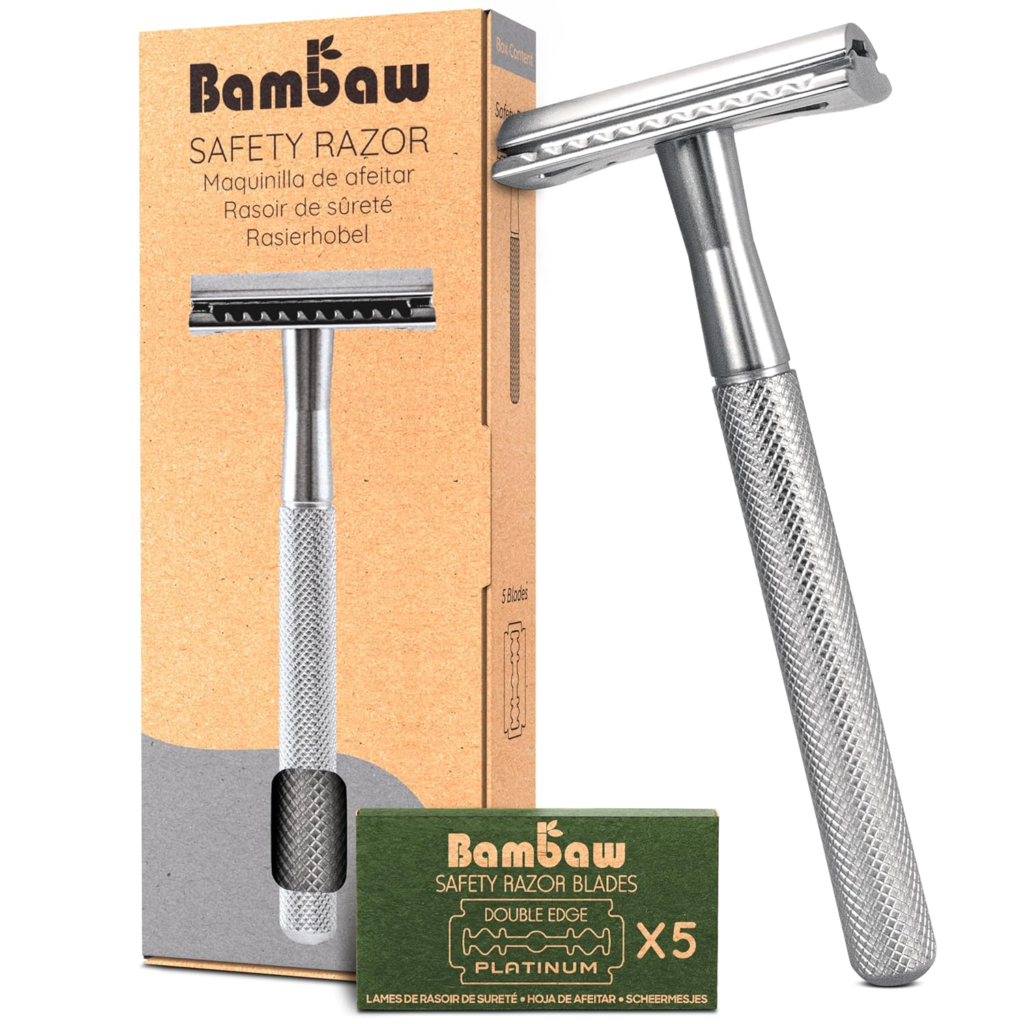
A single blade safety razor does not use hysteresis. There is only one blade, and it cuts the hair at approximately the level of the skin surface rather than below it. The hair is not stretched before cutting. It is not cut below the surface. When the stroke ends, the hair tip sits at or just above skin level.
As the hair grows back, it starts from a position at the surface rather than below it. The likelihood of it curling back into the skin before reaching the opening is dramatically lower. For most ingrown hair sufferers, switching to a single blade safety razor reduces the frequency of new ingrown hairs substantially. For many, it eliminates the problem almost entirely.
👉 Shop Single Blade Safety Razors on Amazon
Understanding Razor Bumps: Pseudofolliculitis Barbae
Pseudofolliculitis barbae is the medical term for the condition most commonly called razor bumps. It is a specific form of follicular inflammation that occurs when shaved hairs regrow into the surrounding skin tissue rather than emerging cleanly through the follicle opening.
Two Types of PFB
There are two mechanisms through which razor bumps form. The first is extrafollicular penetration, where a curled hair exits the follicle normally but then curves back and penetrates the adjacent skin surface. The second is transfollicular penetration, where a hair that was cut below the surface grows outward through the follicle wall before reaching the opening.
Both types result in a foreign body reaction in the skin. The immune system responds to the embedded hair as it would to any foreign object, producing the inflammation, redness, and bumps that characterize the condition.
Who Is Most Affected
Pseudofolliculitis barbae affects approximately 45 to 85 percent of Black men who shave regularly with multi-blade razors. It also affects people of other ethnicities and women who shave areas with naturally curly or coarse hair, including the bikini area and lower leg.
The correlation between multi-blade razor use and PFB severity is well-established in dermatological research. Single blade razors, which cut at the skin surface rather than below it, are consistently recommended by dermatologists as the first-line preventive intervention.
The Bikini Area and PFB
Women who shave the bikini area with multi-blade cartridge razors experience PFB at high rates because the hair in this region tends to be coarser and curlier than leg hair. The same mechanism applies: below-surface cutting leads to subsurface regrowth that curls back into the skin. Switching to a single blade safety razor for bikini area shaving is one of the most consistently effective interventions for women dealing with chronic bikini area ingrown hairs.
The best safety razors for women’s legs and bikini area guide on this site covers this in detail with specific razor recommendations.
👉 Shop Safety Razors for PFB Prevention on Amazon
The Complete Prevention Strategy

Switching to a single blade safety razor is the most important single change a chronic ingrown hair sufferer can make. But the complete prevention strategy involves several additional elements that work together to maintain clear, smooth skin.
Prevention Pillar 1: The Right Razor
A mild single blade safety razor used with proper technique is the foundation of ingrown hair prevention. Any razor from the mild closed comb category covered in the best safety razors for sensitive skin guide on this site is appropriate. The Merkur 34C, Edwin Jagger DE89, and Parker 99R are consistently recommended starting points.
The razor aggressiveness should be mild to medium. Aggressive razors with large blade gaps cut more efficiently but also risk cutting closer to or below the skin surface, which reintroduces the subsurface cutting mechanism that causes ingrown hairs. For ingrown hair prevention specifically, staying at mild to medium aggressiveness is more important than maximizing closeness.
Prevention Pillar 2: Shaving With the Grain
Shaving with the grain means shaving in the direction that hair grows rather than against it. This is the single most important technique element for ingrown hair prevention after switching to a single blade razor.
Against-the-grain shaving stretches the hair before cutting, similar to the hysteresis mechanism of multi-blade cartridges. Even a single blade razor shaving against the grain can cut the hair below the surface level, reintroducing the ingrown hair risk. With-the-grain shaving cuts the hair at the natural surface level without stretching.
For shavers dealing with active ingrown hairs and PFB, with-the-grain only shaving is non-negotiable until the skin has cleared and a sustained ingrown-free period has been established. Adding across-the-grain or against-the-grain passes should wait until the skin is clear and should be reintroduced gradually.
Prevention Pillar 3: Consistent Exfoliation
Regular, gentle exfoliation between shaving sessions is the second most important ongoing prevention habit. Exfoliation removes the dead skin cells that can trap growing hair tips before they reach the surface opening. A growing hair that encounters a thick layer of dead surface cells is more likely to deflect and grow sideways rather than emerging cleanly.
Twice-weekly gentle exfoliation in shaved areas maintains clear follicle openings and allows new growth to emerge without obstruction. Physical exfoliation using a soft facial scrub or a clean washcloth with circular motions is the most accessible approach. Chemical exfoliation using salicylic acid (BHA) is more effective for many people, particularly in areas with dense or coarse hair, because it penetrates the follicle and clears debris from inside as well as the surface.
For the bikini area specifically, a gentle salicylic acid product applied two to three times per week between shaves produces better results than physical exfoliation alone for most women.
Prevention Pillar 4: Pre-Shave Preparation
Proper pre-shave preparation softens the beard hair and reduces the mechanical demand on the blade per stroke. Softer, more hydrated hair is cut more cleanly at the surface level than dry, brittle hair that resists the blade. A warm shower or warm wet towel applied for three to five minutes before shaving is the most effective preparation.
Pre-shave oil adds additional lubrication that helps the blade glide across the skin surface without dragging. For ingrown hair sufferers specifically, the lubricating layer of pre-shave oil reduces the friction that can cause the blade to catch and stretch hair before cutting.
Prevention Pillar 5: Quality Lather
The quality of shaving lather directly affects how cleanly the blade cuts. Thick, rich lather from a quality shaving soap or cream creates a cushioning layer that allows the blade to slide smoothly across the skin without the friction that leads to hair being pulled rather than cut. As covered in the safety razor starter kit guide on this site, canned shaving foam provides insufficient lubrication for ingrown hair prevention purposes. A quality cream or soap applied with a brush is the correct choice.
Prevention Pillar 6: Sharp Blades Changed Frequently
A dull blade is one of the most reliable causes of ingrown hairs even with a single blade razor. A dull blade cannot cut cleanly at the skin surface. Instead it drags and pulls the hair before eventually severing it, creating the same pre-cut stretching mechanism that causes subsurface cutting. For ingrown hair prevention, changing blades frequently is non-negotiable.
For men shaving faces, change blades every three to five shaves rather than the standard five to seven. For women shaving large body areas, change every two to three shaves. For bikini area shaving, always use a fresh blade or one that has done at most one to two prior shaves. The cost of more frequent blade changes is minimal compared to the ongoing cost and discomfort of managing chronic ingrown hairs.
Full guidance on recognizing blade degradation is in the how often you should change your safety razor blade guide on this site.
Prevention Pillar 7: Post-Shave Care
Post-shave care for ingrown hair prevention focuses on soothing the skin, reducing inflammation, and creating the surface conditions that minimize obstruction to new hair growth.
Cold water rinsing after shaving closes pores and reduces the immediate inflammatory response that the shaving process creates. An alcohol-free aftershave balm or gel keeps the skin moisturized and supple, which reduces the surface tightness that can trap growing hairs.
For areas with active or historical ingrown hair problems, applying a product containing salicylic acid or glycolic acid after shaving helps maintain clear follicle openings. These chemical exfoliants work between shaves to keep the follicle paths clear. Products containing benzoyl peroxide are effective for managing the bacterial component of PFB inflammation.
Avoiding tight clothing immediately after shaving the bikini area or inner thigh reduces friction against freshly shaved skin that can trigger inflammation and ingrown hair formation.
👉 Shop Anti-Ingrown Hair Products on Amazon
Treating Existing Ingrown Hairs
The prevention strategy above addresses new ingrown hairs. Existing ingrown hairs from prior shaving require a treatment approach alongside the prevention work.
Do Not Squeeze or Pick
The most common mistake people make with ingrown hairs is squeezing or picking at them. This spreads bacteria, deepens the inflammation, and often causes scarring that makes future ingrown hairs in the same area more likely. An ingrown hair that was manageable without intervention can become an infected cyst that requires medical attention through aggressive squeezing.
Warm Compress Approach
Apply a warm, wet cloth to the area for five to ten minutes twice daily. The warmth softens the skin surface and encourages the hair to work its way toward the opening naturally. This approach requires patience but is the safest intervention for most ingrown hairs.
Chemical Exfoliation
Salicylic acid or glycolic acid products applied to the affected area two to three times daily help clear the dead skin cells that are trapping the ingrown hair and encourage it to surface naturally. This is more effective than physical scrubbing for most people and has the additional benefit of reducing the follicular inflammation that makes ingrown hairs painful.
Gentle Release for Visible Hairs
If the tip of an ingrown hair is visible just beneath the skin surface and the surrounding skin is not actively inflamed or infected, a sterile needle or comedone extractor can be used to gently release the hair tip without breaking the skin. Sterilize the needle with isopropyl alcohol, use a magnifying mirror for visibility, and work the needle under the hair loop to release it. Do not dig into the skin. If the hair is not close to the surface, leave it and continue with the compress and exfoliation approach.
When to See a Doctor
Some ingrown hairs become infected and develop into pustules or deeper cysts that require medical treatment. Signs that warrant a dermatologist visit include: significant spreading redness around the ingrown hair, increasing pain rather than gradual resolution, a bump that is growing rather than resolving over two to three weeks, or multiple simultaneously infected ingrown hairs in the same area.
A dermatologist can prescribe topical antibiotics for infected PFB, retinoids for stubborn cases, or in severe cases, a short course of oral antibiotics. For men with severe PFB who cannot manage the condition through shaving technique changes alone, laser hair removal is increasingly recommended as a definitive solution.
Specific Area Guidance
Face
For men dealing with facial ingrown hairs and PFB, the complete prevention strategy above should be implemented together rather than one element at a time. Switch the razor first, then address technique, then add the exfoliation and post-shave care elements.
The most important technique adjustment for facial ingrown hair prevention is learning and respecting grain direction. Most men have variable grain direction across their face and neck, with some areas growing in significantly different directions from adjacent areas. Shaving against even part of this variable grain without prior experience is a reliable ingrown hair trigger.
Map grain direction on every area of the face and neck before beginning the single-blade protocol. Use the grain direction map to ensure every first pass stroke is strictly with the grain. Add second passes across the grain only after the skin has been ingrown-free for at least two to three weeks.
Neck
The neck is the most problematic area for PFB for most men. The combination of coarse hair, variable grain direction, and close proximity to the collar line creates conditions where ingrown hairs are particularly common and visible. Many men find that the neck requires the most conservative shaving approach of any facial area.
For severe neck PFB, a two-to-four week break from shaving entirely allows the existing ingrown hairs to resolve. Resuming with a mild single blade safety razor and strictly with-the-grain passes on a fresh skin canvas is more effective than trying to manage active PFB while continuing to shave.
Bikini Area
The bikini area is where ingrown hair prevention has the highest quality of life impact for women. The combination of coarse, curly hair, frequent friction from clothing, and the visual conspicuousness of bumps in this area makes effective prevention genuinely important.
Use a fresh blade for every bikini area shave. Use a mild razor only. Shave strictly with the grain on the first pass. Apply a salicylic acid product after shaving and between sessions. Wear loose cotton clothing for several hours after shaving. Exfoliate gently twice weekly between shaves.
The best safety razors for women’s legs and bikini area guide on this site covers the specific razor recommendations for bikini shaving in detail.
Legs
Leg ingrown hairs are less common than bikini area ingrown hairs but they do occur, particularly on the inner thigh where hair can be coarser and the skin is more sensitive. The same prevention principles apply. Single blade razor, with-the-grain first pass, regular gentle exfoliation, fresh blades, quality lather.
Ingrown Hairs and Race: Addressing PFB in Black Men
Pseudofolliculitis barbae is a condition that disproportionately affects Black men due to the naturally tighter curl pattern of the hair shaft. For many Black men who shave regularly, PFB is not an occasional inconvenience. It is a chronic, painful skin condition that significantly affects quality of life.
The standard dermatological recommendation for Black men with severe PFB has shifted progressively toward single blade shaving. Multiple clinical studies have demonstrated that switching from multi-blade cartridge razors to single blade safety razors reduces the frequency and severity of PFB significantly for this population.
The safety razor for Black men guide on this site covers this topic comprehensively with specific razor recommendations, technique guidance tailored to tightly coiled hair patterns, and the full range of prevention and treatment options for severe PFB cases.
For Black men who have tried the switch to a single blade safety razor and still experience significant PFB, additional interventions worth discussing with a dermatologist include:
Topical retinoids, which reduce follicular keratinization and keep follicle openings clear. Regular low-concentration glycolic acid or salicylic acid treatments. Eflornithine cream, which slows hair regrowth and reduces ingrown hair frequency. Laser hair removal as a definitive solution for severe cases.
👉 Shop Safety Razors for PFB Prevention on Amazon
Building a Sustainable Anti-Ingrown Routine
The complete prevention routine, implemented consistently, produces results that improve progressively over weeks and months.
The First Two Weeks
In the first two weeks after switching to a single blade safety razor, continue treating any existing ingrown hairs with warm compresses and gentle exfoliation. Shave with the grain only. Use quality lather and fresh blades. Do not try to achieve maximum closeness. The goal in this phase is allowing existing ingrown hairs to resolve while preventing new ones from forming.
Expect existing bumps to take one to three weeks to fully resolve. Ingrown hairs do not disappear overnight when the underlying cause is removed. They resolve gradually as the skin surface clears and existing trapped hairs work their way out.
Weeks Three Through Six
Once existing ingrown hairs have largely resolved, begin establishing the full prevention routine as a consistent daily habit. Exfoliate twice weekly. Apply salicylic acid or aftershave balm with chemical exfoliant after every shave. Continue with-the-grain only shaving. Assess the skin condition at the end of six weeks.
Most ingrown hair sufferers who implement this protocol consistently report a significant reduction in new ingrown hairs by the end of six weeks. Many report near-complete resolution.
Long-Term Maintenance
Once the ingrown hair problem is managed, the maintenance routine is simpler than the initial intervention. The single blade razor becomes the permanent tool. The grain-direction habit becomes automatic. The twice-weekly exfoliation and regular post-shave care continue as standard practice.
Some shavers who have fully resolved their PFB through this protocol cautiously reintroduce a cross-the-grain second pass after three to four months of ingrown-free shaving. Many find this is well-tolerated with the maintained prevention routine. Against-the-grain passes should be approached very cautiously and only if the skin is consistently clear.
AMAZON AFFILIATE DISCLAIMER
This post contains affiliate links. If you purchase through our links, we may earn a small commission at no extra cost to you.
Frequently Asked Questions
Why do safety razors cause fewer ingrown hairs than cartridge razors?
Safety razors use a single blade that cuts hair at approximately the skin surface level without the hysteresis stretching mechanism of multi-blade cartridges. Without below-surface cutting, the hair tip starts its regrowth from at or above the skin surface rather than below it. This dramatically reduces the likelihood of the hair tip curling back into the skin before emerging from the follicle.
Will switching to a safety razor completely eliminate my ingrown hairs?
For most people, yes. The reduction in ingrown hairs after switching to a single blade safety razor is significant, and for many it is complete elimination of new ingrown hairs when combined with proper technique and regular exfoliation. A small number of people with severely tight hair curl patterns may still experience occasional ingrown hairs even with a single blade, though at much lower frequency and severity than with multi-blade razors.
How long does it take to see improvement after switching razors?
Existing ingrown hairs typically take one to three weeks to resolve after the underlying cause is removed. New ingrown hair formation typically stops or dramatically reduces from the very first shave with a single blade razor and proper technique. Most people see clear skin improvement within two to four weeks of switching.
Should I stop shaving entirely if I have severe razor bumps?
A two-to-four week complete break from shaving allows severe active PFB to resolve before restarting with a single blade safety razor and correct technique. This clean-slate approach is more effective than trying to manage severe active PFB while continuing to shave. During the break, continue the exfoliation and warm compress treatment for existing bumps.
What is the best razor for preventing ingrown hairs?
Any mild single blade safety razor is superior to a multi-blade cartridge for ingrown hair prevention. The Merkur 34C and Edwin Jagger DE89 are the most widely recommended starting points. For Black men with severe PFB, the same mild DE razors are recommended alongside the additional prevention techniques covered in the dedicated guide on this site.
Can women prevent bikini area ingrown hairs with a safety razor?
Yes. Switching to a single blade safety razor for bikini area shaving is one of the most consistently effective interventions for women dealing with chronic bikini area ingrown hairs. The same mechanism applies as for facial shaving. Single blade cutting at the surface level rather than below it dramatically reduces the subsurface regrowth that causes ingrown hairs in this area.
Is chemical exfoliation or physical exfoliation better for ingrown hair prevention?
For most people dealing with ingrown hairs, chemical exfoliation with salicylic acid or glycolic acid is more effective than physical scrubbing because it penetrates the follicle and clears debris from inside the pore rather than only the surface. Physical exfoliation with a soft cloth or gentle scrub is beneficial as a complement but should not replace chemical exfoliation for ingrown hair prevention.
Does hair type affect ingrown hair risk with a safety razor?
Yes, but to a much lesser degree than with multi-blade cartridges. People with tightly coiled or very curly hair have a higher baseline risk of ingrown hairs than people with straight hair regardless of razor type. However, the risk reduction from switching to a single blade razor is larger for people with curly hair than for those with straight hair, making the switch particularly impactful for those most affected.