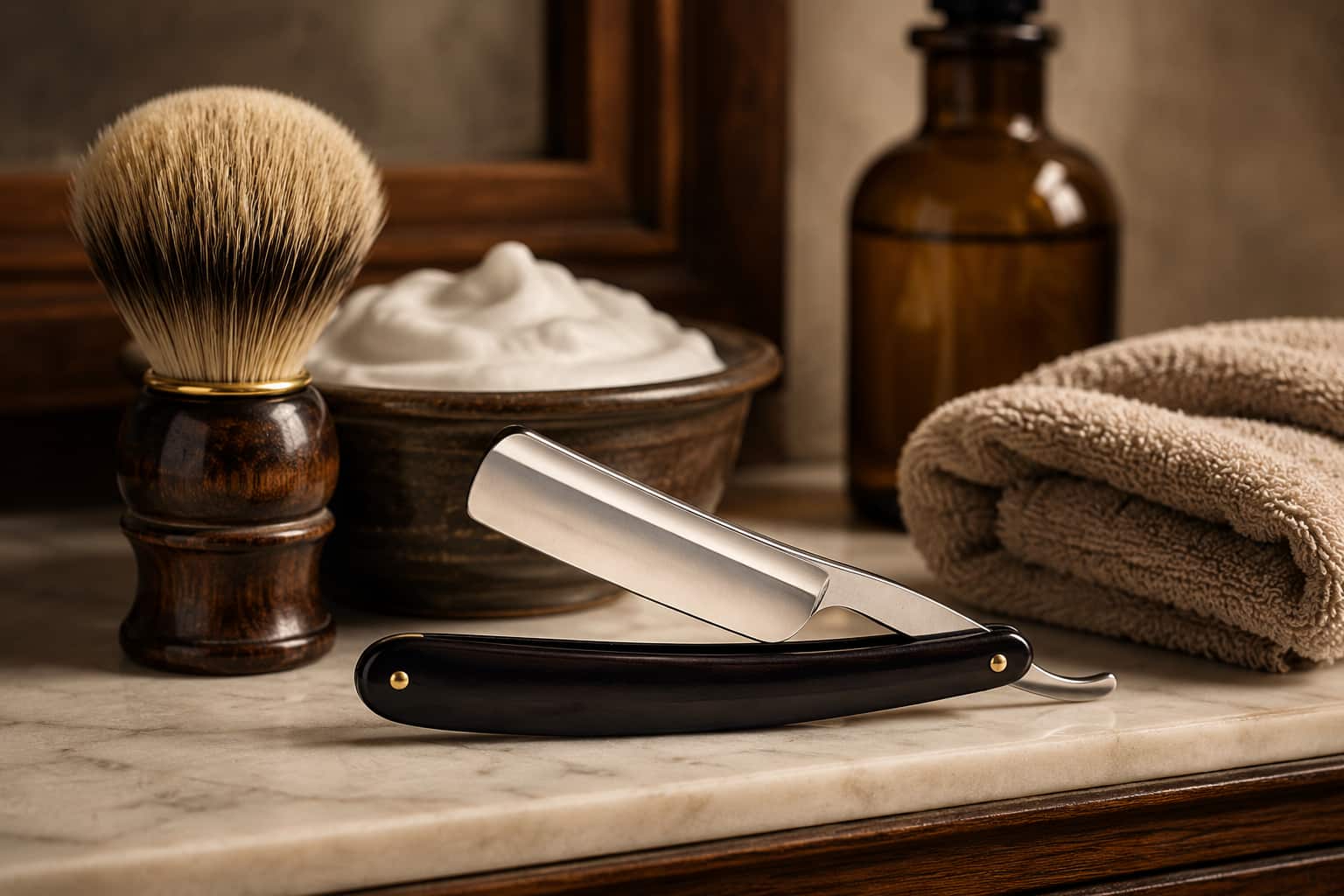
Learning how to shave with a straight razor can feel intimidating at first. The blade is open, the technique is nothing like a cartridge razor and there is no safety guard between the edge and your skin. Once you understand the right angle, pressure, prep and shaving direction, a straight razor gives one of the cleanest shaves you can get at home.
A straight razor shave is not about speed, it is about control. You prepare the beard, build a slick lather, stretch the skin, hold the razor correctly and use slow short strokes. Your first few shaves will not be perfect but technique improves quickly when you follow the right process. This beginner guide covers everything about using a straight razor step by step: the tools you need, how to prepare your skin, how to hold the razor, what angle and pressure to use, how to shave each part of the face and how to care for your skin afterward.
If you are new to straight razor shaving, it is worth checking beginner straight razors, strops, shaving creams, and aftershave balms before you start and you can see beginner straight razor gear on Amazon to build your setup.
Quick Beginner Summary
| Step | What to Do | Why It Matters |
| 1 | Wash your face with warm water | Softens beard hair |
| 2 | Apply pre shave oil or cream | Adds glide and protection |
| 3 | Build a slick shaving lather | Reduces razor drag |
| 4 | Hold the razor at a shallow angle | Helps prevent scraping |
| 5 | Use short light strokes | Improves control |
| 6 | Shave with the grain first | Reduces irritation |
| 7 | Rinse with cool water | Calms the skin |
| 8 | Apply aftershave balm | Helps soothe dryness |
Best Straight Razor for Beginners
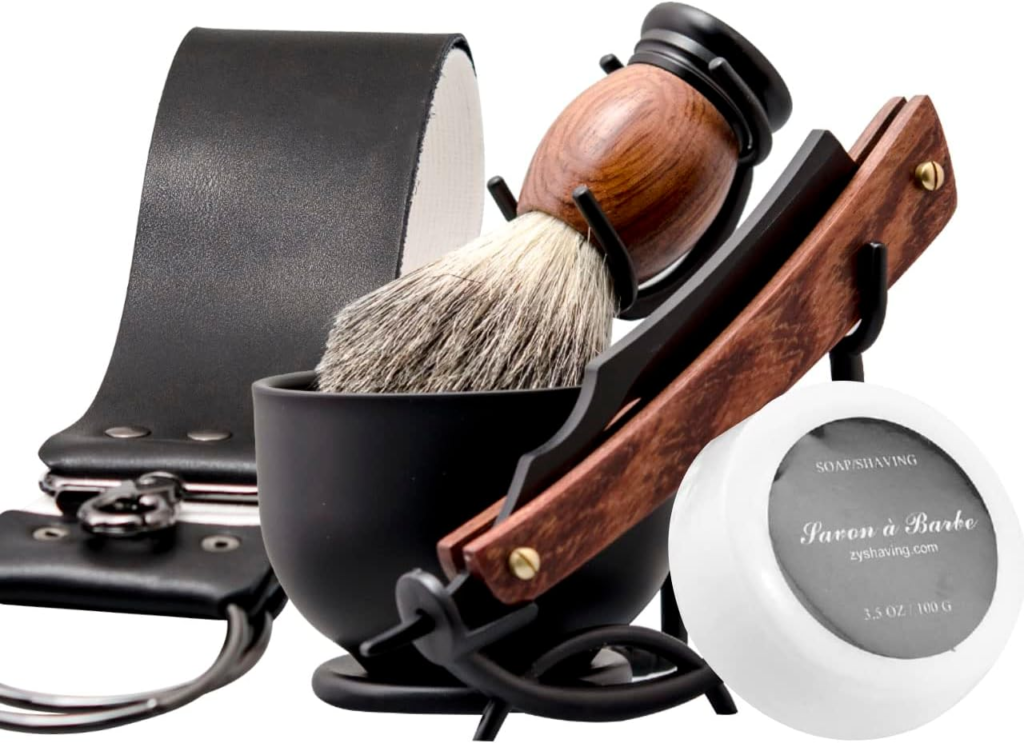
Before technique, you need the right tool and this is also the most common question new shavers ask. For a traditional straight razor, the most recommended beginner choice is a 5/8 inch blade with a round point, since the 5/8 width is easy to handle and the round point is far more forgiving than a square point that can nick the skin. For those who want less maintenance, a beginner friendly shavette is the easiest entry because it uses replaceable blades and needs no stropping or honing while still teaching you the same angle, pressure and stroke skills.
As a rule, choose a shavette if you want to learn straight razor technique with minimal upkeep and low upfront cost. Choose a 5/8 traditional straight razor if you want the classic experience and are willing to learn stropping. Our full guide to the best straight razors of 2026 compares specific models across both types.
Tools You Need Before Shaving
You should not start with just a razor and water, since the blade sits directly against your skin and proper tools make it safe and comfortable.
Straight Razor
You can use a traditional straight razor, which has a fixed blade that needs stropping and occasional honing, or a shavette, which uses replaceable blades and needs no sharpening. Beginners usually do best with a 5/8 traditional razor or a beginner friendly shavette.
Leather Strop
A strop is needed for a traditional straight razor. It does not sharpen the blade like a stone, it realigns the edge before shaving so the razor feels smoother and you strop before each shave. Do not skip it with a fixed blade razor.
Shaving Brush
A brush builds rich lather and lifts the beard hair so the razor cuts more cleanly. A synthetic brush is easy to maintain, while a badger brush feels more traditional.
Shaving Cream or Soap
Use a slick shaving cream or soap. Canned foam is usually not ideal for straight razor shaving because it lacks glide and you want a lather that stays wet and slippery.
Pre Shave Product
Pre shave oil, cream, or lotion adds a protective layer, which is especially useful if your beard is coarse or your skin irritates easily.
Aftershave Balm
A balm calms the skin after shaving, and a gentle balm is a better choice than a harsh alcohol splash if your skin feels dry or sensitive.
If you want everything in one box, you can check straight razor shaving kits on Amazon that include a razor, strop, brush and cream.
Traditional Straight Razor or Shavette for Beginners?
Many beginners get confused between the two, since they look similar but work differently. A traditional straight razor has one fixed blade that you maintain with stropping and honing, and it feels more classic and lasts years with proper care. A shavette uses replaceable blades that you swap when dull, so there is no stropping or honing, which makes it easier for beginners who want less maintenance.
If you are weighing this against a safety razor, remember the key difference: a safety razor has a guard and is easier to control, while a straight razor gives more freedom but needs more skill. For most beginners a shavette is easier to start with and for men who want the real traditional experience a fixed blade straight razor is more satisfying.
How to Prepare Your Face Before a Straight Razor Shave
Good prep is the difference between a smooth shave and an uncomfortable one, so never rush it.
Wash Your Face
Start by washing with warm water to remove oil, sweat, and dirt, since warm water also softens the hair and makes cutting easier. Shaving after a warm shower is one of the easiest ways to prepare the beard and if you do not shower first, hold a warm wet towel on your face for two to three minutes.
Apply Pre Shave Oil or Cream
Apply a small amount of pre shave oil or cream to create a thin protective layer between the blade and skin. Do not overapply, since too much product makes the razor slip in a way that feels less controlled and a small amount is enough.
Build a Proper Lather
Use a brush and cream or soap to build a lather that looks creamy, shiny and hydrated, adding a few drops of water if it looks dry or bubbly. Apply it in circular motions first to lift the hair, then paint it evenly over the shaving area.
How to Hold a Straight Razor
Holding the razor correctly gives you control, and while the grip feels strange at first, it becomes natural after a few shaves.
Basic Grip
Open the razor fully, place your index, middle, and ring fingers on the shank, put your thumb under the shank for support and rest your pinky on the tang if your razor has one. The grip should feel stable but not tense, so do not squeeze hard, since a relaxed hand gives better control.
Use Your Dominant Hand First
Start with your dominant hand for both sides of the face if switching hands feels difficult. Some experienced users switch hands for each side but beginners do not need to do that right away.
Keep the Wrist Steady
Your wrist should not twist too much. Move the razor with controlled hand motion and keep the blade angle consistent through each stroke.
Best Straight Razor Angle for Beginners
Angle is one of the most important parts of straight razor shaving. Too steep and the blade scrapes the skin, too flat and it will not cut the hair well. A good starting angle is around 20 to 30 degrees from the skin, and you do not need to measure it exactly, just keep the spine of the razor slightly lifted from the face. For beginners it is safer to start shallower, adjusting slowly if the razor is not cutting and never making sudden angle changes while the blade is moving.
How Much Pressure Should You Use?
Use almost no pressure, and this is critical. A straight razor is sharp enough to cut hair without force, so your hand should guide the blade rather than push it into the skin, since pressing harder causes nicks, razor burn and irritation. If the razor is pulling hair, the problem is usually poor prep, dry lather, a dull blade or the wrong angle, so never solve pulling by adding pressure.
How to Shave with a Straight Razor Step by Step
Step 1: Start With the Cheeks
The cheeks are the easiest area because the skin is flatter, so start here before the chin, neck, or mustache. Stretch the cheek skin gently with your free hand, place the razor at a shallow angle and use short downward strokes with the grain. Do not try to clear the whole cheek in one long pass, use strokes of one to two inches and rinse the blade often.
Step 2: Shave the Sideburn Area
Move carefully around the sideburns with small strokes that follow your natural growth direction. If you are shaping the sideburns, take your time, since a straight razor gives clean lines but mistakes are easy if you rush.
Step 3: Shave the Jawline
The jawline is harder because the surface curves, so stretch the skin upward or sideways to flatten it, use short strokes, and keep pressure light. If the blade feels awkward, adjust your head position rather than forcing the razor.
Step 4: Shave the Neck
The neck is where many beginners get irritation, since neck hair often changes direction, so feel it with your fingers first to map the grain. Shave with the grain first, do not go against the grain on your first few shaves and use very light pressure and short strokes. If your neck is sensitive, one pass may be enough at the start.
Step 5: Shave the Chin
The chin has curves and thicker hair, so stretch the lower lip upward to flatten the skin and use small controlled strokes. Do not attack the chin from many directions, keep it simple, shave with the grain first and clean small areas slowly.
Step 6: Shave the Mustache Area
The mustache area is tricky because the skin is tight and the area is small, so stretch your upper lip down over your teeth and use tiny strokes. Keep the angle shallow and use no pressure and if this area feels too risky on your first shave, leave it for a safety razor and practice later.
Step 7: Rinse and Check
After the first pass, rinse with warm water and feel for missed areas, and do not chase perfect smoothness at first. If you want a second pass, reapply lather, since you should never shave dry skin with a straight razor.
Step 8: Do a Second Pass Only If Needed
A second pass improves closeness but raises irritation risk, so beginners should do it across the grain, not against it. If your skin feels hot, tight or irritated, stop after one pass.
Prices and availability change often, so it is worth checking the latest price on Amazon before buying any gear.
Should Beginners Shave Against the Grain?
Not at first. Shaving against the grain with a straight razor gives a closer result but raises the chance of irritation, cuts, and ingrown hairs. Start with one pass with the grain, then try across the grain once your technique improves and only try against the grain when your skin can handle it and your hand feels steady. For many men, one with the grain pass plus one across the grain pass is plenty.
After Shave Care
After shaving, rinse with cool water to calm the skin and remove leftover lather, then pat dry with a clean towel rather than rubbing hard. Apply an aftershave balm to soothe the skin, choosing a gentle balm without heavy alcohol if your skin is sensitive. Aftercare matters here because straight razor shaving exposes the skin to more direct blade contact, so a proper balm reduces dryness and tightness. You can check soothing aftershave and pre shave products on Amazon if your skin feels dry afterward.
How to Clean the Straight Razor After Shaving
Rinse the blade carefully to remove lather and hair and do not let water sit inside the pivot area. Dry the blade fully with a soft towel, being careful around the edge, since drying matters most for carbon steel razors where moisture leads to rust. Leave the razor open in a dry place for a short while before storing, and never store it wet inside a case. If you use a shavette, remove and discard the blade safely when needed, then wipe and dry the holder.
When Does a Straight Razor Need Honing?
A traditional straight razor does not need honing after every shave. It needs regular stropping and honing only when the edge goes dull. Signs it may need honing include pulling, tugging, a rough shaving feel, or needing too many passes to cut hair, so if stropping no longer improves the edge, honing is likely needed. You can learn to hone at home but beginners should be careful since it takes skill and a professional honing service is often the better choice until you understand edge maintenance.
Common Straight Razor Mistakes Beginners Make
Using too much pressure is the biggest mistake, so let the blade cut and do not press. Starting with the neck causes irritation, so start with the easier cheeks. Shaving with dry lather causes drag, so keep it slick and hydrated. Moving too fast reduces control, so slow down. Using a dull razor is more dangerous because it pulls hair and tempts you to press harder. Skipping skin stretching makes the surface harder to shave, so stretch gently with your free hand and chasing perfect smoothness on your first shaves leads to over shaving, when your first goal should be a safe shave, not the closest one of your life.
Beginner Safety Tips
- Do not shave when you are tired or distracted
- Keep the blade moving in straight controlled strokes
- Never move the blade sideways across the skin
- Keep your fingers away from the edge
- Use short strokes
- Stop if your skin feels irritated
- Do not shave over bumps, cuts or active acne
- Keep the razor dry after shaving
- Replace shavette blades before they tug
- Practice patience
Best Routine for Your First Week
| Day | What to Do | Goal |
| Day 1 | Shave the cheeks only with the straight razor | Learn grip and angle |
| Day 2 | Use your normal razor | Let skin recover |
| Day 3 | Shave cheeks and sideburns | Build control |
| Day 4 | Use your normal razor | Avoid irritation |
| Day 5 | Try cheeks, jawline, and easy neck areas | Practice skin stretching |
| Day 6 | Rest or use your normal razor | Check skin comfort |
| Day 7 | Try a full with the grain shave | Build confidence |
This slow approach lets you learn without irritating your skin and you do not need to master everything in one shave.
Straight Razor Shaving Tips for Sensitive Skin
If you have sensitive skin, keep the routine simple: warm water, slick shaving cream, light pressure and one pass with the grain. Avoid alcohol heavy aftershaves at first and use a gentle balm instead and do not shave against the grain until your skin is comfortable with straight razor shaving. Check your blade sharpness too, since a dull blade irritates sensitive skin by pulling hair instead of cutting cleanly.
Final Verdict
Learning how to shave with a straight razor takes patience but it is far from impossible. Start with good prep, a slick lather, a shallow blade angle and very light pressure, use short strokes, stretch the skin gently, shave with the grain first and do not chase a perfect result on your first attempts. If you want low maintenance, start with a shavette and if you want the traditional experience, choose a 5/8 straight razor and learn stropping. Once your technique improves, straight razor shaving becomes one of the most satisfying parts of a grooming routine. You can check beginner straight razors, creams, strops, and balms on Amazon to build a complete setup.
Amazon Affiliate Disclosure
As an Amazon Associate we earn from qualifying purchases, which means we may earn a small commission when you buy through links on this page at no extra cost to you.
FAQs
Is shaving with a straight razor hard?
It feels hard at first but gets easier with practice. The main skills are angle control, light pressure, skin stretching and slow strokes and most beginners feel noticeably more comfortable within a couple of weeks.
What is the best straight razor for a beginner?
A 5/8 inch round point traditional razor is the most recommended beginner choice for the classic experience, while a beginner friendly shavette is easier if you want replaceable blades and no stropping or honing.
What angle should I use with a straight razor?
A good beginner angle is around 20 to 30 degrees from the skin. Keep it shallow and adjust slowly if the razor is not cutting well.
Should I use pressure with a straight razor?
No. Use very light pressure and let the blade cut the hair by itself, since pressing harder increases the risk of cuts and irritation.
Can beginners shave their neck with a straight razor?
Yes, but carefully. Start with the grain, use short strokes and if your neck is sensitive, do only one pass while you learn.
Do I need shaving cream for a straight razor?
Yes. You need a slick shaving cream or soap and a straight razor should never be used on dry skin.
Should I start with a shavette or a traditional straight razor?
A shavette is easier if you want less maintenance, while a traditional straight razor is better if you want the classic experience and are willing to learn stropping.
How often should I shave with a straight razor as a beginner?
Start slowly, every few days while learning, which gives your skin time to recover and lets you improve technique without irritation.
Can a straight razor give a closer shave than a cartridge razor?
Yes, it can be very close when used correctly, though closeness depends on blade sharpness, prep, angle and technique.
What should I do if I cut myself?
Rinse the area with cool water and use an alum block or styptic pencil to stop the bleeding and do not keep shaving over the cut.
Is straight razor shaving good for sensitive skin?
It can be, with a sharp blade, slick lather, light pressure and good aftercare. Avoid shaving against the grain in the beginning while your skin adjusts.