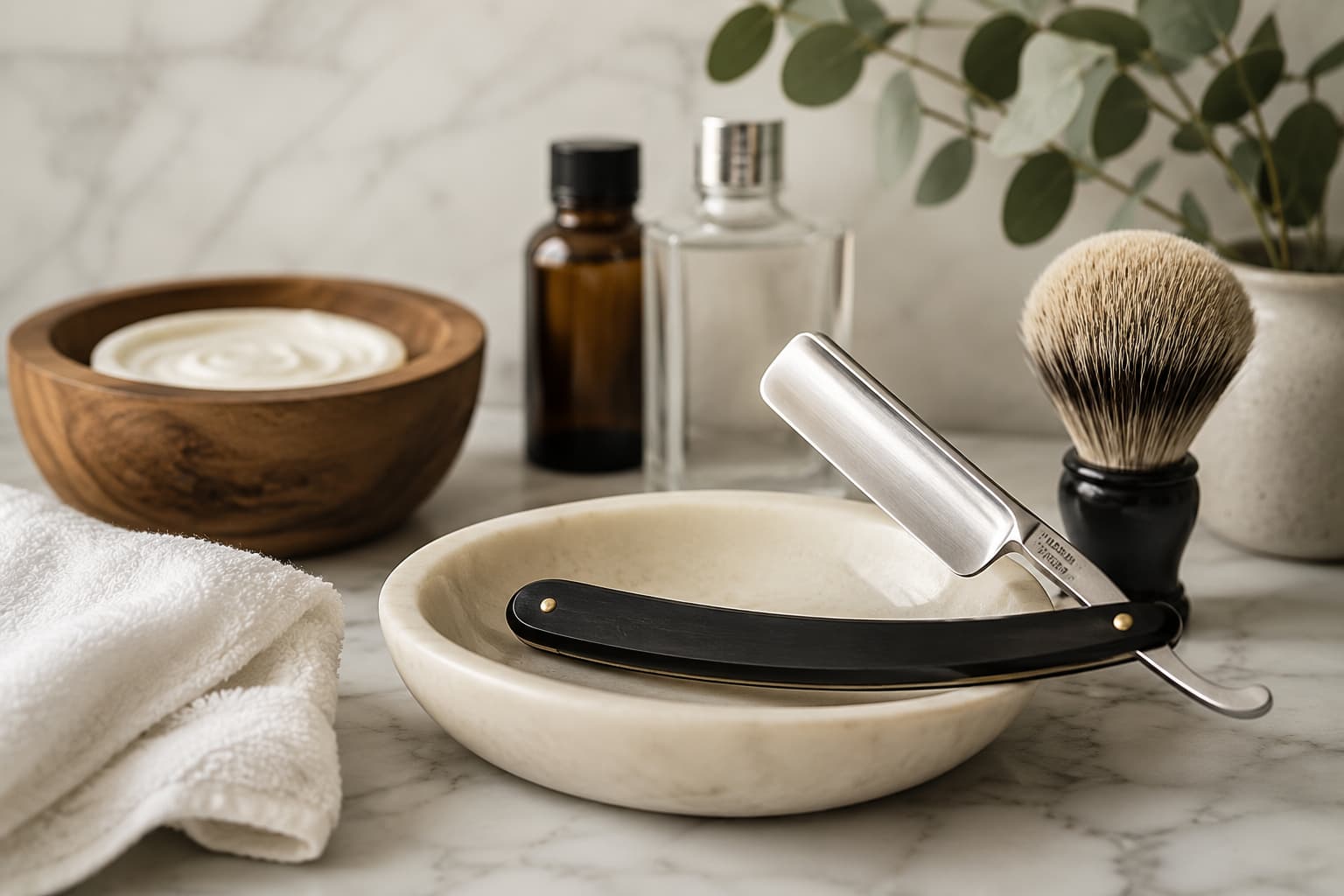
Straight razor shaving for sensitive skin can feel risky at first. A straight razor has an open blade, so many men worry about razor burn, redness, cuts or irritation but with the right technique, proper prep, slick lather plus gentle aftercare, a straight razor can work well for sensitive skin. The key is not to chase the closest shave on day one. Sensitive skin needs patience. You should focus on comfort first. That means softening the beard properly, using light pressure, shaving with the grain, avoiding too many passes plus using calming aftershave products.
A straight razor is not automatically bad for sensitive skin. In fact, some men prefer it because it can remove hair cleanly with fewer passes when the blade is sharp and the technique is correct. The problem starts when the blade is dull, the lather is dry or the user presses too hard. This guide explains how to use a straight razor with sensitive skin. You will learn how to prepare your face, what products to use, which shaving mistakes to avoid, how to reduce razor burn plus how to build a safer shaving routine.
Quick Sensitive Skin Shaving Tips
| Tip | What to Do | Why It Helps |
| Use warm water prep | Soften beard before shaving | Reduces tugging |
| Use slick lather | Choose cream or soap with glide | Helps blade move smoothly |
| Use light pressure | Let the blade cut naturally | Reduces scraping |
| Shave with the grain | Follow hair growth direction | Lowers irritation risk |
| Avoid too many passes | Stop before skin gets hot | Protects sensitive areas |
| Use a sharp edge | Do not shave with a dull blade | Prevents pulling |
| Apply aftershave balm | Calm skin after shaving | Reduces dryness |
| Rest irritated skin | Do not shave over redness | Helps skin recover |
Is Straight Razor Shaving Good for Sensitive Skin?
Straight razor shaving can be good for sensitive skin if your technique is gentle. It can also be irritating if you use the wrong approach. A straight razor gives you full control over the blade angle and pressure. This is helpful because you can adjust the shave to your skin but that control also means mistakes are easier. If you press too hard or use a steep angle, the blade can scrape the skin. Sensitive skin usually reacts badly to three things:
- Too much pressure.
- Too many passes.
- Poor blade glide.
A straight razor shave should be slow, light and controlled. If you do that, you can reduce irritation and make shaving more comfortable. If you are still learning how to shave with a straight razor, start with cheeks only. Do not try a full close shave immediately.
Why Sensitive Skin Gets Irritated During Shaving
Sensitive skin reacts quickly when the skin barrier is disturbed. Shaving removes hair, but it can also remove some surface skin cells. If you shave too aggressively, the skin becomes red, dry or sore. Common causes of irritation include:
- Shaving without enough warm water prep.
- Using dry or airy lather.
- Using a dull blade.
- Shaving against the grain too early.
- Pressing the razor into the skin.
- Shaving the same area again and again.
- Using harsh alcohol based aftershave.
- Shaving over bumps, acne or existing redness.
- Skipping moisturizer or balm.
- Poor razor cleaning.
Sensitive skin needs a softer approach. The goal is to reduce friction before, during and after the shave.
Choose the Right Straight Razor for Sensitive Skin
The razor does not solve everything but it matters.
Traditional Straight Razor
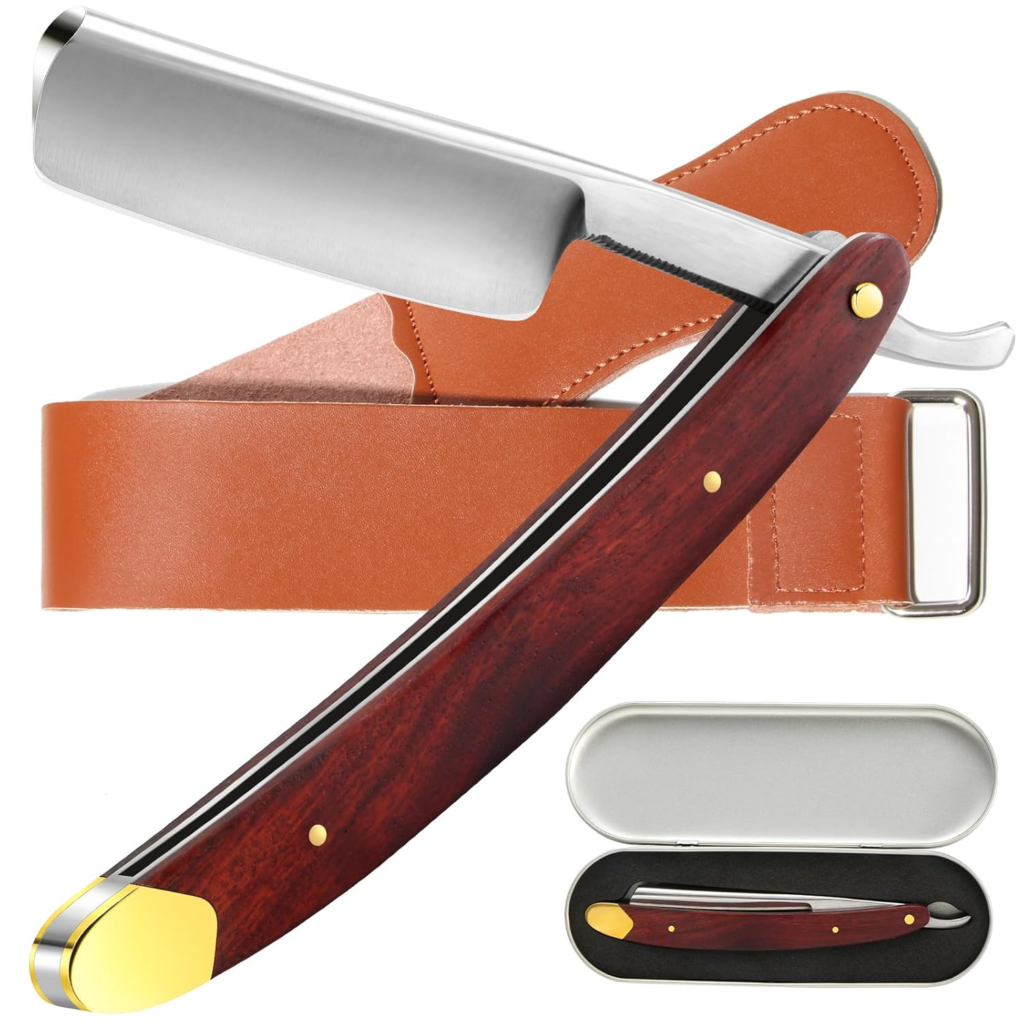
A traditional straight razor has a fixed blade. When properly honed and stropped, it can feel smooth on the skin. This can be helpful for sensitive skin users who want a refined edge. The downside is maintenance. If the blade is not sharp or smooth, it may tug and irritate the skin. You need proper stropping plus careful storage.
Shavette
A shavette uses replaceable blades. This is convenient because you can use a fresh blade without honing. But some disposable blades can feel aggressive on sensitive skin. If you use a shavette, choose smoother blades first. Avoid jumping straight to the sharpest blade if your skin reacts easily.
Best Beginner Choice
For sensitive skin beginners, a mild shavette blade or a well prepared 5/8 round point straight razor can work well. The key is to avoid aggressive pressure and harsh blade feel.
Best Blade Features for Sensitive Skin
| Feature | Better Choice for Sensitive Skin | Why |
| Point style | Round point | Less tip risk |
| Blade size | 5/8 | Easier control |
| Grind | Half hollow or full hollow | Balanced feel |
| Edge feel | Smooth and sharp | Reduces tugging |
| Maintenance | Well stropped or fresh blade | Better glide |
| Weight | Comfortable in hand | Better pressure control |
A sharp blade is important, but sharpness should feel smooth, not harsh. A blade that pulls hair is usually worse for sensitive skin than a properly sharp edge.
Pre Shave Care for Sensitive Skin
Good prep is the most important part of straight razor shaving for sensitive skin. Do not skip it.
Wash Your Face First
Wash your face with warm water and a gentle cleanser. This removes oil, dirt and sweat. It also softens the beard. Avoid harsh scrubs right before shaving. Scrubbing can make sensitive skin more reactive before the blade touches it.
Use a Warm Towel
Place a warm wet towel on your face for two to three minutes. This helps soften coarse hair and relax the skin. If you shower before shaving, that can work even better. Shaving after a warm shower is often easier for sensitive skin.
Apply Pre Shave Oil or Cream
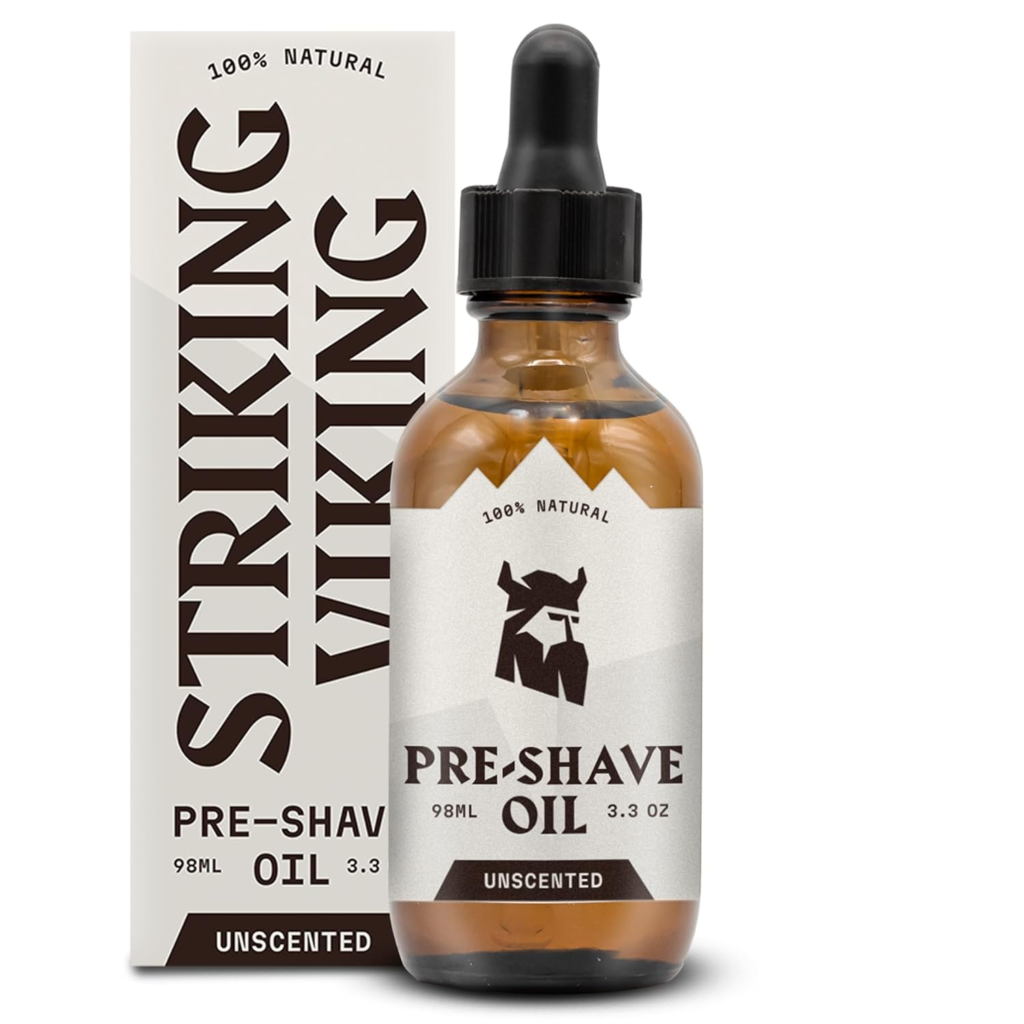
A thin layer of pre shave oil or cream can help reduce drag. This is useful if your razor often feels rough during the first pass. Do not use too much oil. A small amount is enough. Too much product can make the blade feel slippery and less controlled.
For a deeper routine, pre shave care for sensitive skin can help you choose the right products before the blade touches your face.
Build Slick Lather
Sensitive skin needs glide more than thick foam. A big layer of dry foam does not protect well if the blade cannot slide smoothly. Use a quality shaving cream or soap. Build lather with a shaving brush if possible. A brush helps lift hair and spread lather evenly. Good lather should be:
- Creamy.
- Wet.
- Slick.
- Stable.
- Easy to spread.
- Comfortable on the skin.
If the lather looks bubbly or dry, add small amounts of water and keep working it. If it runs down your face, add more cream or soap. Avoid heavily fragranced products if your skin reacts easily. Fragrance can bother some sensitive skin users.
Use the Right Shaving Angle
Angle is one of the biggest reasons sensitive skin gets irritated. If the angle is too steep, the blade scrapes the skin. If it is too flat, it may not cut well. A beginner friendly angle is around 20 to 30 degrees from the skin.
You do not need to measure it exactly. Keep the spine of the razor close to your face and lift it only slightly. The blade should glide, not scrape. Use short strokes. Do not use long sweeping strokes until your technique improves.
Use Almost No Pressure
Pressure is the enemy of sensitive skin. A straight razor is sharp enough to cut hair without force. Your hand should guide the blade. It should not push the blade into the skin. If the razor is not cutting, do not press harder. Instead, check these things:
- Is the lather slick enough?
- Is the blade sharp?
- Is the angle too flat or too steep?
- Is the beard properly softened?
- Are you shaving against the grain too early?
Most irritation happens because users try to fix poor cutting with pressure. That usually makes the shave worse.
Shave With the Grain First
Sensitive skin users should always start with the grain. That means shaving in the direction your hair grows. For many men, cheek hair grows downward. Neck hair may grow in different directions. Before shaving, feel your beard with your fingers. The smooth direction is usually with the grain. The rough direction is against the grain. Your first pass should be gentle and simple. Do not chase baby smooth skin in one shave.
Should You Shave Against the Grain?
If you have sensitive skin, avoid against the grain shaving at first. It can give a closer shave, but it increases the risk of razor burn and ingrown hairs. Once your skin handles straight razor shaving well, you can try across the grain. For many sensitive skin users, with the grain plus across the grain is enough.
Best Shaving Routine for Sensitive Skin
A good straight razor shaving routine keeps every step gentle.
| Step | Action | Sensitive Skin Tip |
| 1 | Wash face with warm water | Avoid harsh scrubs |
| 2 | Warm towel or shower | Soften beard fully |
| 3 | Apply pre shave product | Use a thin layer |
| 4 | Build slick lather | Keep it hydrated |
| 5 | Strop or load fresh blade | Avoid dull edges |
| 6 | Shave with the grain | Use short strokes |
| 7 | Skip extra passes if needed | Stop before irritation |
| 8 | Rinse with cool water | Calm the skin |
| 9 | Apply aftershave balm | Avoid harsh alcohol |
| 10 | Clean and dry razor | Protect the blade |
This routine is not about speed. It is about reducing friction and protecting the skin.
Straight Razor Tips for Sensitive Neck
The neck is often the most sensitive area. Hair direction changes here, and the skin can be softer or looser. Use these tips:
- Map the hair growth before shaving.
- Use extra warm water prep.
- Apply fresh lather before touching the neck.
- Stretch the skin gently.
- Use very short strokes.
- Shave with the grain only at first.
- Avoid repeated passes.
- Stop if the skin feels hot.
- Use balm after shaving.
- Let the skin rest between shaves.
If your neck reacts badly, shave the cheeks with a straight razor and finish the neck with a milder tool until your technique improves.
Straight Razor Tips for Sensitive Chin and Mustache Area
The chin and upper lip are tricky because the areas are curved and the hair can be dense. For the chin, stretch the skin by moving your lower lip or pulling gently from the side. Use tiny strokes. Reapply lather if the area dries.
For the mustache area, stretch your upper lip downward over your teeth. Keep the angle shallow. Use small controlled strokes. Do not press. If the upper lip feels too risky, skip it during early practice. There is nothing wrong with learning slowly.
How Many Passes Should Sensitive Skin Users Do?
Start with one pass only. This is the safest option. If your skin feels calm after several shaves, try a second pass across the grain. Do not add against the grain shaving until you are sure your skin can handle it.
| Experience Level | Recommended Passes |
| First few shaves | One pass with the grain |
| Beginner with calm skin | One pass plus light touch ups |
| Intermediate user | With the grain plus across the grain |
| Sensitive neck user | One pass only on neck |
| Irritated skin day | Skip shaving or use safest tool |
More passes do not always mean a better shave. For sensitive skin, comfort matters more than closeness.
After Shave Care for Sensitive Skin
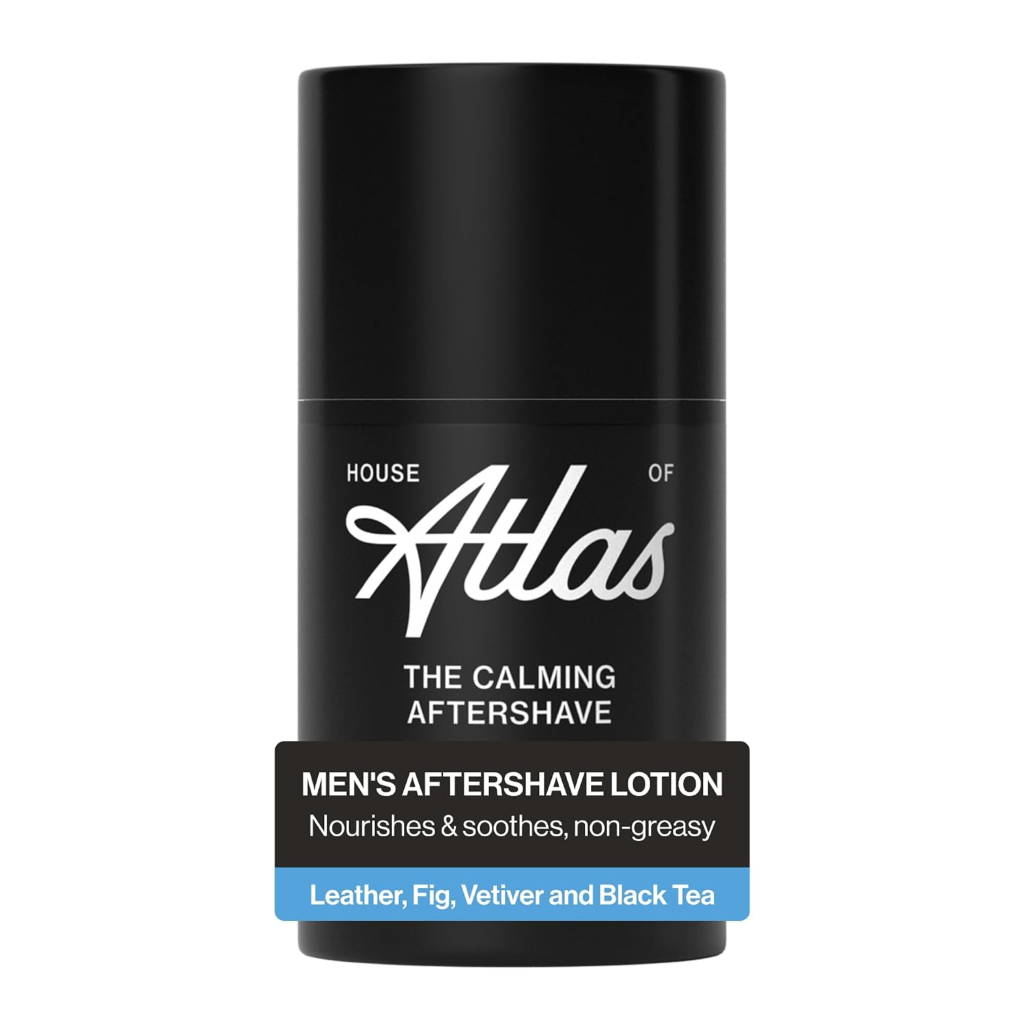
Aftercare helps calm the skin after blade contact.
Rinse With Cool Water
Cool water helps remove leftover lather and calm the skin. Do not use very hot water after shaving.
Pat Dry
Pat your face dry with a clean towel. Do not rub hard. Rubbing can make redness worse.
Use an Alcohol Free Balm
Choose a gentle aftershave balm. Alcohol heavy splashes can sting and dry out sensitive skin. Look for balm that feels soothing, light and moisturizing. Avoid strong fragrance if your skin reacts easily.
Use Alum Carefully
An alum block can help with small nicks and give feedback on your shave. But it can feel drying for some sensitive skin users. If alum makes your skin tight, use it only when needed.
How Often Should You Shave With Sensitive Skin?
This depends on your skin and beard growth. Some men can shave daily. Others need a day of rest between shaves. If your skin is red, sore or bumpy, do not shave over it. Let it recover.
A good beginner schedule is:
| Skin Response | Suggested Frequency |
| No irritation | Every other day or as needed |
| Mild redness | Rest one day between shaves |
| Razor burn | Wait until skin calms |
| Ingrown hairs | Reduce passes and avoid against the grain |
| Dryness | Improve aftercare and shave less often |
Straight razor shaving should not feel like punishment. Adjust frequency based on your skin.
Common Mistakes Sensitive Skin Users Make
Chasing a Perfectly Smooth Shave
Sensitive skin often reacts when you keep shaving the same area. Stop when the shave is clean enough.
Using a Dull Blade
A dull blade pulls hair. Pulling creates irritation. Use a properly stropped razor or fresh shavette blade.
Applying Too Much Pressure
Pressure causes scraping. Use the lightest touch possible.
Shaving Against the Grain Too Soon
This is a common cause of razor burn and bumps. Start with the grain.
Using Dry Lather
Dry lather does not protect well. Keep it slick and hydrated.
Skipping Aftercare
Sensitive skin needs calming after shaving. Use balm.
Shaving Over Irritated Skin
Do not shave over active redness, bumps or cuts. Give the skin time to recover.
What Products Help Sensitive Skin?
You do not need a huge product collection, but a few gentle products help.
| Product | Why It Helps |
| Gentle cleanser | Removes dirt without harsh scrubbing |
| Pre shave oil or cream | Adds glide |
| Sensitive skin shaving cream | Reduces drag |
| Soft shaving brush | Builds better lather |
| Alcohol free balm | Calms skin |
| Light moisturizer | Helps dryness |
| Alum block | Helps small nicks when needed |
| Blade disposal bank | Useful for shavette blades |
Avoid products that burn, sting or leave your skin tight for a long time.
Should Sensitive Skin Users Use a Shavette?
A shavette can work, but choose blades carefully. Some blades feel very sharp and direct. That can irritate sensitive skin if your technique is not ready. A traditional straight razor with a smooth edge may feel better for some sensitive skin users but it requires stropping and maintenance. If you use a shavette:
- Start with smoother blades.
- Replace blades before they tug.
- Use short strokes.
- Avoid pressure.
- Do one pass only at first.
- Use good aftercare.
If a shavette feels harsh no matter what you do, try a milder shaving tool for the most sensitive areas.
When to Stop Shaving
Stop shaving if your skin starts burning, bleeding more than a small nick or feeling raw. Do not keep going just to finish the routine. You should also stop if the lather dries out. Reapply fresh lather before shaving any missed areas.
If irritation happens often, review your blade, lather, pressure, angle and aftercare. One of those areas usually needs adjustment.
Final Verdict
Straight razor shaving for sensitive skin is possible, but your routine must be gentle. Start with warm water prep, use slick lather, choose a smooth sharp blade and shave with the grain. Keep pressure extremely light and avoid extra passes until your skin can handle them. Do not rush. Sensitive skin needs time. Your first goal should be a comfortable shave, not the closest shave possible.
After shaving, rinse with cool water and apply a gentle balm. Clean and dry your razor properly so the blade stays smooth for the next shave. If you treat the routine carefully, a straight razor can become a comfortable grooming tool even for sensitive skin.
FAQs
Can I use a straight razor if I have sensitive skin?
Yes, but you need gentle technique. Use warm prep, slick lather, a sharp blade, light pressure and soothing aftercare.
Is a straight razor better than a cartridge razor for sensitive skin?
It can be better for some men because it uses one blade edge and allows more control. But poor technique can still cause irritation.
Should I shave against the grain with sensitive skin?
Avoid it at first. Shave with the grain until your skin becomes comfortable with the straight razor.
What is the best shaving cream for sensitive skin?
Choose a slick, gentle shaving cream with low fragrance. The lather should stay hydrated and help the blade glide.
How do I prevent razor burn with a straight razor?
Use light pressure, shave with the grain, avoid repeated passes and apply a gentle aftershave balm.
Is a shavette good for sensitive skin?
It can work, but some disposable blades feel harsh. Start with smoother blades and use careful technique.
How many passes should I do?
Start with one pass. Add a second pass only if your skin feels calm after several shaves.
Why does my neck get irritated after shaving?
Neck hair often grows in different directions. Map the grain, use short strokes and avoid shaving against the grain.
Should I use aftershave balm?
Yes. A gentle balm helps calm sensitive skin after shaving and can reduce dryness.
How often should I shave if my skin is sensitive?
Shave based on your skin response. If your skin feels sore or red, rest for a day or longer before shaving again.