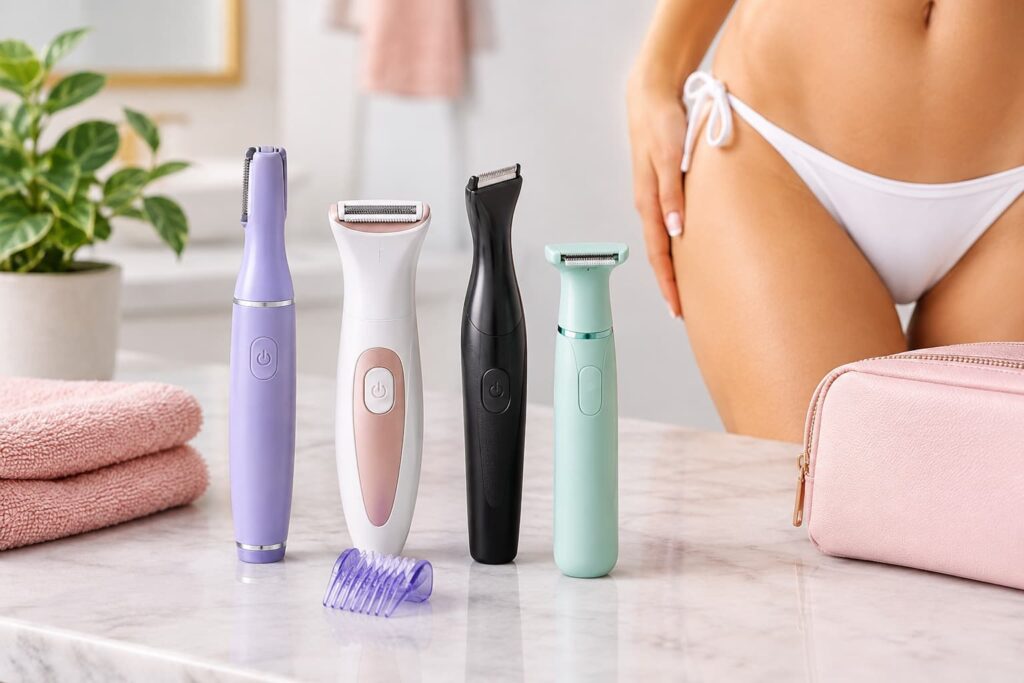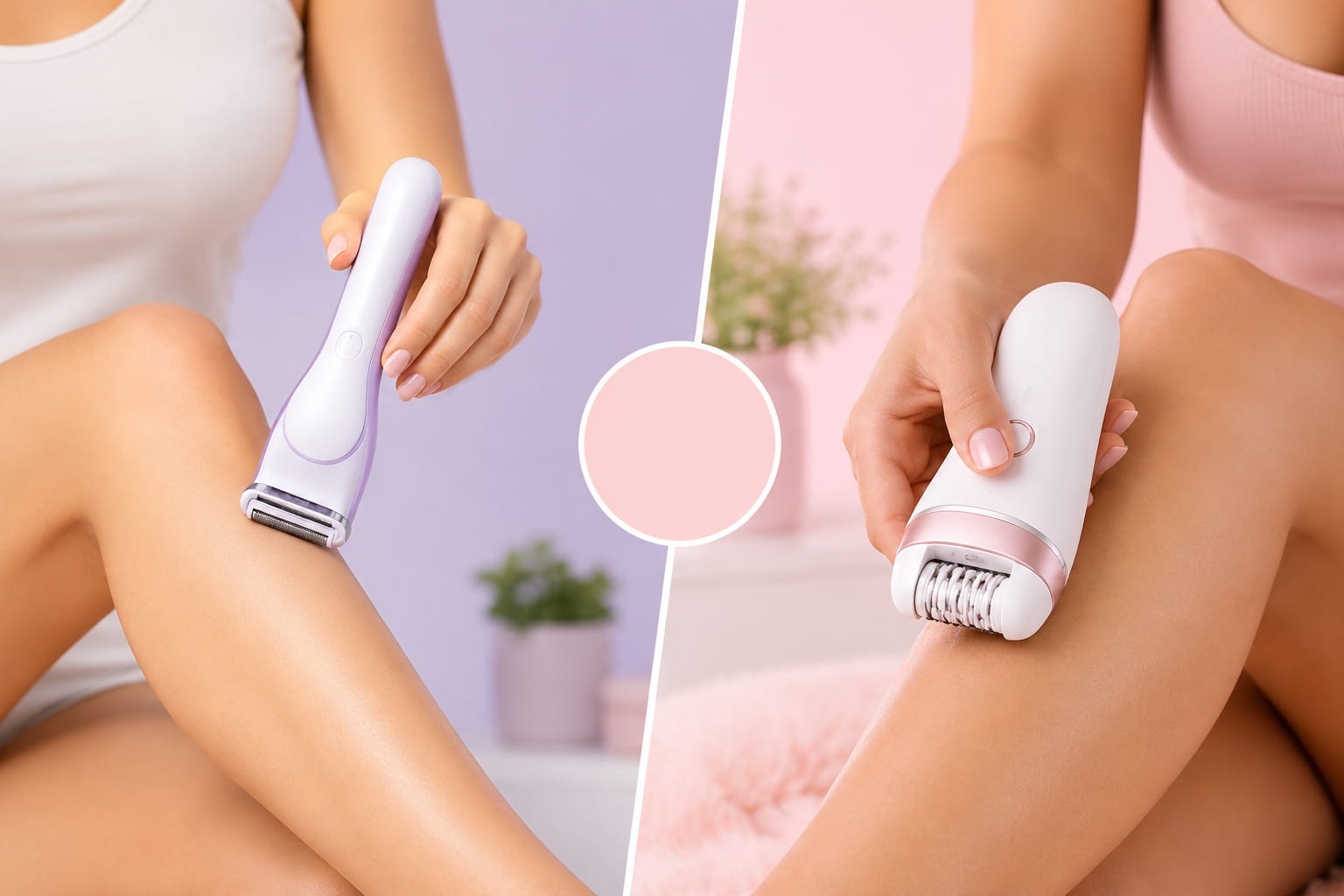
Electric shavers and epilators both remove body hair but the similarities end there. One is fast, painless, and gives you smooth skin for a day or two. The other takes longer, involves genuine discomfort during use, and leaves you smooth for up to four weeks. Both are excellent tools. Neither is universally better. The right choice depends entirely on your pain tolerance, your schedule, your skin type, and how long you want your results to last.
This guide gives you the complete, honest comparison between electric shavers and epilators for women covering how each works, where each one wins, which skin and hair types benefit most from each, and what the real long-term cost looks like. By the end you will know clearly which one belongs in your routine.
Electric Shaver vs Epilator: Head-to-Head Comparison
| Factor | Electric Shaver | Epilator |
|---|---|---|
| How It Removes Hair | Cuts at skin surface | Pulls from the root |
| Results Duration | 1 to 3 days | Up to 4 weeks |
| Pain Level | Painless | Moderate to significant |
| Speed | Fast 5 to 10 minutes | Slower 15 to 30 minutes |
| Skin Smoothness | Very good | Excellent, longer lasting |
| Ingrown Hair Risk | Low | Moderate |
| Suitable for Sensitive Skin | Yes | With caution |
| Usable on Face | Yes (with right device) | Not recommended |
| Upfront Cost | $25 to $200 | $30 to $200 |
| Ongoing Cost | Blade replacement every 12 to 18 months | Minimal, no consumables |
| Learning Curve | Minimal | Moderate, technique matters |
| Best For | Daily or frequent users, sensitive skin | Infrequent users wanting long-lasting results |
What Is an Electric Shaver?
An electric shaver for women uses motorized foil or rotary blades to cut hair at the skin surface. The blade never directly contacts the skin, a protective foil or guard sits between the cutting element and skin, making it completely painless. The result lasts one to three days depending on individual hair growth rate before stubble becomes visible again.
Modern women’s electric shavers are waterproof, cordless, and designed specifically for the larger surface areas and contoured zones of leg and body shaving. They range from compact travel models under $30 to premium ceramic-plate shavers over $100.
For a full review of the top women’s electric shavers across every use case, our complete guide on the best electric shavers for women covers every major model with honest rankings.
What Is an Epilator?
An epilator is an electric device that removes hair by pulling it out from the root using a series of rotating or oscillating tweezers built into the device head. Because the hair is removed from the root rather than cut at the surface, the follicle takes significantly longer to produce a visible new hair typically three to four weeks for most women.
The trade-off is discomfort. Pulling hair from the root creates a sensation ranging from mild to moderately painful depending on skin sensitivity, hair coarseness, and the body area being treated. Most women find the discomfort decreases significantly after the first few sessions as skin adapts and hair regrows finer and softer.
Epilators are available in wet and dry models, wet epilators used in a warm bath or shower are generally more comfortable than dry use because warm water softens both hair and skin.
Results: Which Lasts Longer?
Epilators win on results duration by a significant margin.
Electric shavers cut hair at the skin surface. The hair follicle is untouched and resumes producing visible hair within one to three days for most women. Daily or every-other-day shaving is required to maintain smooth skin continuously.
Epilators remove hair from the root. The follicle must regenerate the entire hair shaft from scratch, a process that takes three to four weeks for most women. A single epilating session delivers up to four weeks of smooth skin with no maintenance required between sessions.
For women who want to shave their legs once and forget about it for a month, epilators are the only electric option that delivers this. For women who prefer a quick daily or weekly routine without the discomfort of root removal, electric shavers fit the lifestyle better.
Pain: Which Is More Comfortable?
Electric shavers win on comfort, they are completely painless.
The foil or guard on an electric shaver prevents any direct blade contact with skin. There is zero pain during use — it is the same sensation as running a non-cutting surface across your skin. Women with the most sensitive skin can use electric shavers daily without discomfort.
Epilators involve genuine discomfort. The sensation is similar to multiple simultaneous tweezing, the rotating tweezers grip and pull individual hairs rapidly across the treatment area. On a scale of discomfort, most women rate dry epilating as a four to six out of ten on first use, decreasing to a two to three out of ten after several sessions as hair regrows finer and the skin adapts.
Factors that reduce epilator discomfort:
Using a wet epilator in a warm bath reduces discomfort noticeably, warm water relaxes the skin and softens hairs, making root removal less sharp. Most women who switch from dry to wet epilating report a significant comfort improvement.
Epilating after a shower rather than on cold, unprepared skin similarly reduces the sensation. Exfoliating two days before epilating lifts hairs away from the skin surface for cleaner root removal with less pulling.
Frequency matters too, as hair regrows finer after repeated epilating sessions, the discomfort decreases progressively with each treatment. Women who epilate consistently for three to four sessions typically find the process becomes manageable even on sensitive areas.
Skin Comfort: Which Causes Less Irritation?
Electric shavers cause less post-treatment skin irritation for most women.
The cutting-at-surface method of electric shaving leaves the hair follicle and surrounding skin undisturbed. Post-shave redness, when it occurs, resolves within minutes. Electric shaving does not disturb the follicle channel that epilating opens up during hair removal.
Epilating temporarily opens the hair follicle during removal, which creates a brief window of increased skin sensitivity. Redness and mild irritation after epilating is normal and typically resolves within 30 to 60 minutes on less sensitive areas. On very sensitive skin or after epilating a new area for the first time, mild redness can persist for a few hours.
Ingrown hair risk is another consideration. Electric shaving leaves a clean-cut hair end at the surface less likely to curl back into the follicle than a pulled-root hair. Epilating can cause ingrown hairs in some women, particularly on the bikini line and underarms where hair growth is more curved. Regular exfoliation between epilating sessions significantly reduces this risk.
For women with sensitive skin specifically, electric shavers are the safer daily option. Our guide on the best electric shavers for sensitive skin women covers the models with the most skin-protective features.
Speed: Which Is Faster?
Electric shavers win on speed significantly.
A full double-leg shave with an electric shaver takes five to ten minutes. The process requires no preparation pick up the shaver and start. For shower shaving, even the setup is minimal.
Epilating both legs takes fifteen to thirty minutes depending on hair density, device model, and the care taken to cover each area thoroughly. Add preparation time ideally a warm shower before use and the total session is thirty to forty-five minutes for a full leg treatment.
However, frequency changes the calculation meaningfully. An electric shaver requires five to ten minutes every one to three days approximately thirty to sixty minutes per week of total shaving time. An epilator requires thirty to forty-five minutes once every three to four weeks approximately eight to fifteen minutes per week of total treatment time when averaged out.
For women who factor in total time investment rather than per-session time, epilating is actually more time-efficient over a full month.
Cost: Which Is Cheaper Long-Term?
Both methods have similar upfront costs, quality devices start at $30 to $50 in both categories and premium models reach $150 to $200. The long-term cost difference comes from consumables.
Electric Shaver Long-Term Cost
- Initial device: $30 to $200
- Blade/foil replacement: $15 to $50 every 12 to 18 months
- Shaving gel (optional): $5 to $15 per month for wet shavers
Over five years, total electric shaving cost ranges from approximately $120 (budget, dry) to $500 (premium, wet with gel).
Epilator Long-Term Cost
- Initial device: $30 to $200
- Replacement tweezers or head: $10 to $30 every two to three years (some models)
- No consumables required for most sessions
Over five years, total epilating cost ranges from approximately $40 (budget device, no consumables) to $230 (premium device with occasional head replacement).
Epilators are cheaper long-term. The absence of regular blade or foil replacement, the primary ongoing cost of electric shaving makes epilators significantly less expensive over a multi-year horizon. For women who epilate consistently and avoid frequent device replacement, the five-year cost is a fraction of equivalent electric shaving.
Which Is Better for Different Body Areas?
Legs
Both methods work well on legs. Electric shavers are faster and painless, ideal for daily or frequent maintenance. Epilators deliver longer-lasting smoothness, ideal for women who want to treat their legs once and forget about it for a month. For dedicated leg shaving options, our guide on the best electric shavers for women’s legs and body hair covers the top leg-specific models.
Underarms
Electric shavers are recommended for underarms. Underarm skin is thin and highly sensitive, epilating this area is significantly more uncomfortable than legs for most women. Electric shavers handle underarm hair quickly and comfortably. Epilating underarms is possible but requires more sessions to reduce discomfort to a manageable level.
Bikini Line
Proceed with caution for both methods on the bikini line. Electric shavers with a dedicated bikini attachment handle this area safely and comfortably. Epilating the bikini line is more uncomfortable than legs and has a higher ingrown hair risk due to the curved growth pattern of bikini area hair. Regular exfoliation is essential if epilating this zone.
Face
Electric shavers win for facial hair. Epilating is not recommended for facial use, the skin is too thin and sensitive for the pulling action of epilator tweezers, and the risk of irritation, broken capillaries, and skin damage is significant. Dedicated women’s facial electric shavers handle upper lip, chin, and cheek peach fuzz safely and painlessly. Our guide on the best electric shavers for women’s face and upper lip covers dedicated facial hair tools in full detail.
Body Hair (Arms, Stomach)
Epilators work well on arms and stomach. These areas have relatively fine hair and less sensitive skin than legs or bikini zones. The discomfort is generally lower than leg epilating. Electric shavers also work well here, the choice comes down to whether long-lasting results (epilator) or quick painless maintenance (shaver) is the priority.
Which Is Better for Your Hair Type?
Fine Hair
Either method works well. Fine hair offers minimal resistance during epilating, making the process less uncomfortable. Electric shavers cut fine hair cleanly and efficiently. The choice comes down to lifestyle preference rather than performance.
Medium Hair
Either method works. Medium hair is within the effective range of both tools. Epilating medium hair delivers the full benefit of root removal without the intensity of coarser hair. Electric shavers handle medium hair at any tier.
Coarse Hair
Electric shavers are easier on coarse hair. Epilating coarse hair requires more tweezer passes and creates more discomfort than fine or medium hair. The pulling force required for coarse root removal is noticeably higher. Electric shavers cut coarse hair at the surface without the resistance issue that epilating creates. For women with very coarse leg or body hair, premium electric shavers with stronger motors are the more comfortable long-term solution.
Very Fine or Sparse Hair
Epilators may struggle with very fine or sparse hairs. Hair that is very fine or grows sparsely may not be gripped effectively by epilator tweezers particularly older or lower-quality models. Electric shavers handle very fine hair effectively regardless of density.
Which Is Better for Your Skin Type?
Sensitive Skin
Electric shavers are the safer choice for sensitive skin. The no-direct-blade-contact design of foil and ceramic plate shavers minimizes post-treatment irritation. Epilating sensitive skin causes more redness and longer recovery than on normal skin particularly on the first few treatments before the skin adapts.
Normal Skin
Either method works well. Normal skin tolerates both methods without significant issues. The choice is based on lifestyle preference, frequency versus lasting results.
Dry Skin
Electric shavers with moisturizing features are best for dry skin. Models like the Remington WDF4840 with built-in aloe vera moisturizing strips actively hydrate during shaving. Epilating dry skin can cause more irritation and slower recovery, always moisturize immediately after epilating on dry skin.
Reactive or Allergy-Prone Skin
Electric shavers are strongly preferred. Epilating reactive skin carries a higher risk of prolonged redness, folliculitis, and contact irritation. Hypoallergenic foil shavers are the safest option for women with reactive or allergy-prone skin.
Top Electric Shaver Picks for Women
Braun Silk-epil 9 Flex
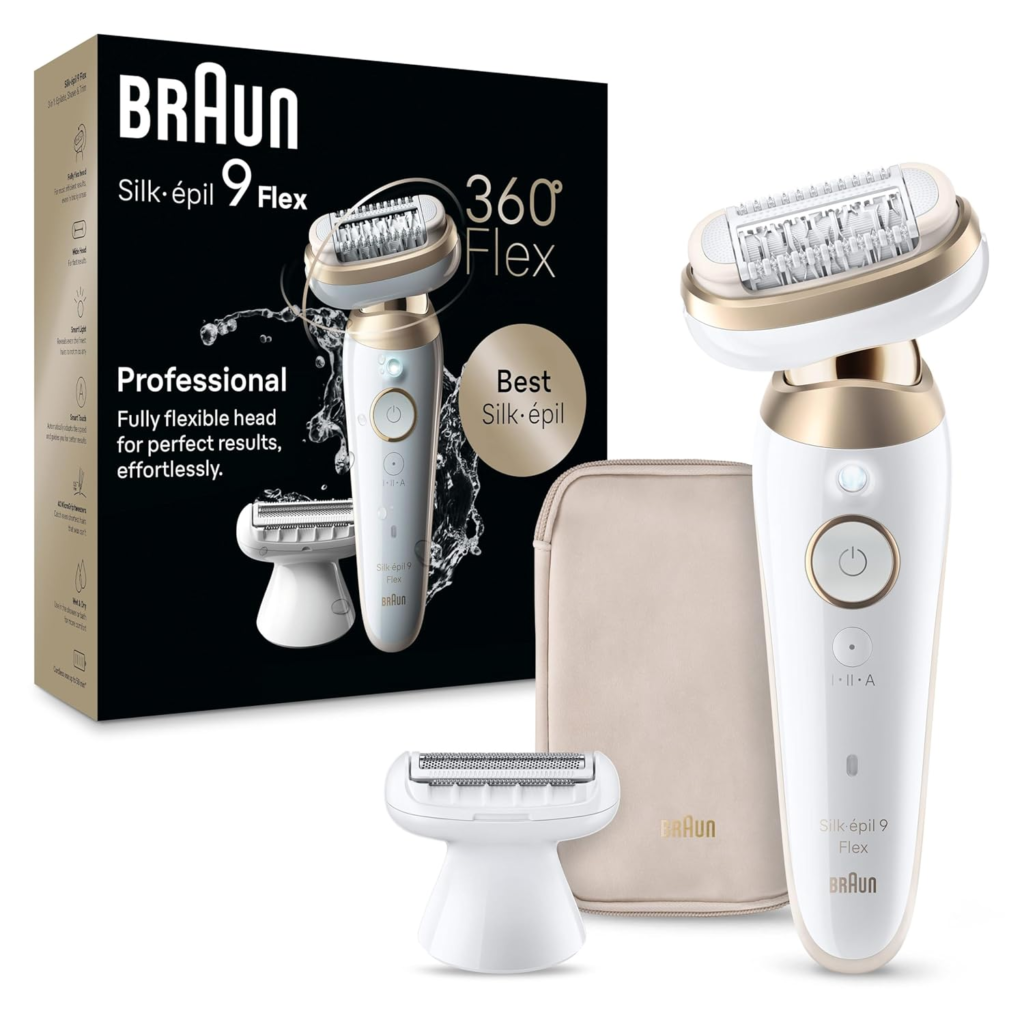
Key Specs:
- 40 micro-grip tweezers for epilating
- SoftLift tips capture flat-lying hairs
- 100% waterproof use in bath or shower
- 40-minute battery
Pros:
- Best-in-class leg epilating with outstanding flex head for knees and ankles
- Wet use in warm bath dramatically reduces epilating discomfort
- SoftLift tips minimize missed hairs on first pass
Cons:
- 40-minute battery requires planning for full sessions
- Heavier than average
Best For: Women who want the best epilator performance on legs with maximum comfort through wet use.
👉 Check Latest Price on Amazon
Philips BRL136 Satinshave Prestige
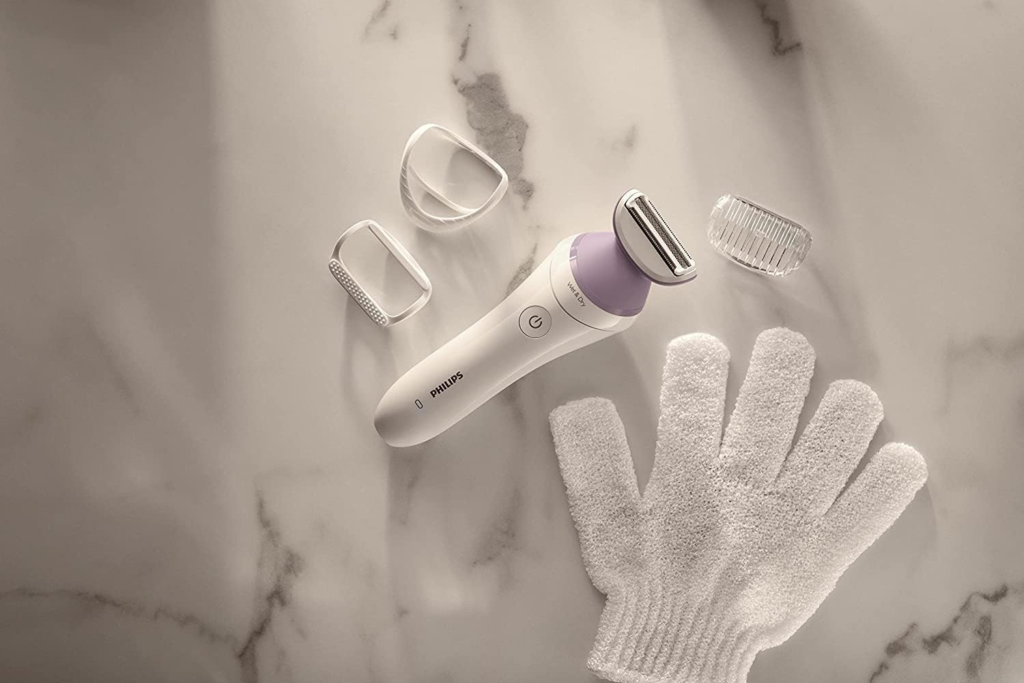
Key Specs:
- Ceramic HyperGlide plates for smooth skin contact
- 60-minute battery via USB-C
- 100% waterproof IPX7
- Skin-friendly ceramic coating
Pros:
- Ceramic plates deliver the most skin-friendly electric shaving experience for women
- USB-C charging eliminates proprietary cable issues
- Outstanding battery life for full body sessions
Cons:
- Ceramic plates more fragile than standard foil
- Less effective on very coarse leg hair
Best For: Women who want the most skin-friendly electric shaving experience for legs and body.
👉 Check Latest Price on Amazon
Top Epilator Picks for Women
Braun Silk-epil 9 Flex (Epilator Mode)
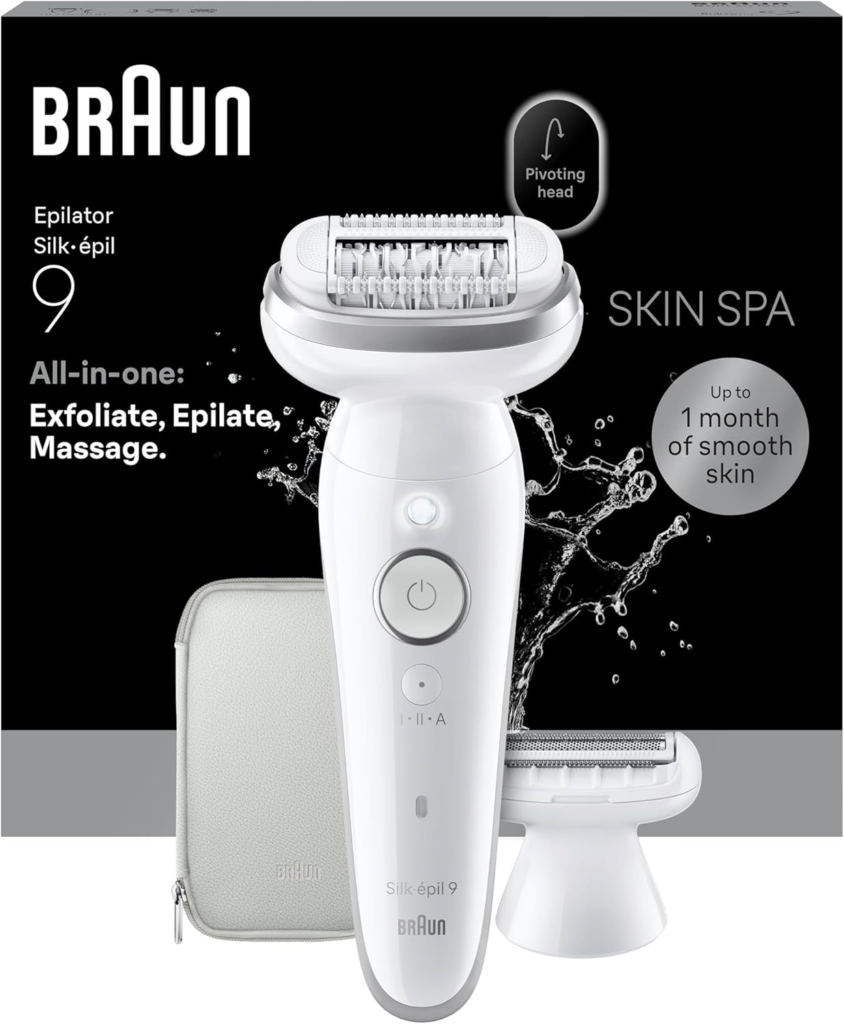
The same device listed above functions as both an epilator and electric shaver depending on the attachment used. As an epilator, the 40 micro-grip tweezer system delivers the most thorough root removal available in a consumer epilator, particularly in wet bath use where discomfort is significantly reduced.
👉 Check Latest Price on Amazon
Philips Satinelle Advanced
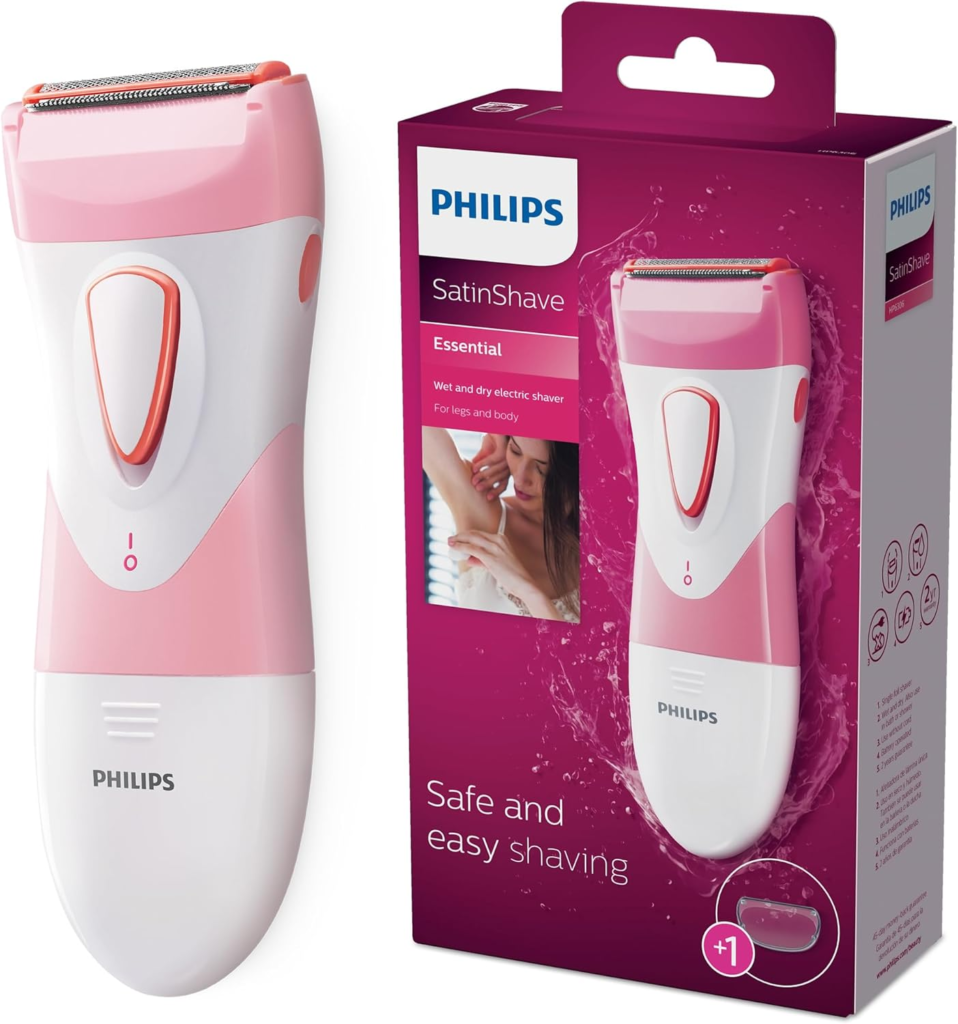
Key Specs:
- 32 tweezer discs for efficient root removal
- Ceramic plates reduce skin friction during epilating
- Wet and dry compatible
- 30-minute cordless runtime
- Compact ergonomic design
Pros:
- Ceramic plate technology reduces the friction and heat generated during epilating — directly reducing post-treatment skin redness
- Wet use compatibility delivers a noticeably more comfortable epilating experience than dry use alone
- 32 tweezer discs provide efficient coverage per pass on legs and body
Cons:
- 30-minute battery limits full session coverage on longer hair areas
- Less effective on very fine or sparse hairs
Best For: Women new to epilating who want a comfortable, wet-compatible entry-level epilator with ceramic friction reduction at an accessible price.
👉 Check Latest Price on Amazon
Who Should Choose Which Method
Choose an electric shaver if:
- You have sensitive, reactive, or easily irritated skin
- You want a completely painless daily or frequent routine
- You need quick five to ten minute sessions without preparation
- You want to remove facial hair alongside body hair
- You are new to electric hair removal and want zero learning curve
- You have very coarse leg or body hair
Choose an epilator if:
- You want results that last three to four weeks between sessions
- You can tolerate moderate discomfort that decreases over time
- You want to minimize the total time spent on hair removal per month
- You prefer to epilate in a warm bath for maximum comfort
- You want the lowest possible long-term cost
- Your skin and hair type handles root removal well
Use both if:
- You epilate legs monthly for long-lasting smoothness
- You use an electric shaver for quick touch-ups between epilating sessions
- You use an electric shaver for sensitive or facial areas while epilating legs and arms
👉 Whether you choose an electric shaver, an epilator, or both the best models for each method are available on Amazon. Check current prices and deals before deciding.
Conclusion
The electric shaver vs epilator debate for women does not have a universal winner — it has a winner for each lifestyle and priority. Electric shavers win on comfort, speed, skin safety, and suitability for sensitive skin and facial areas. Epilators win on results duration, long-term cost, and total monthly time efficiency.
Most women who try both methods eventually settle into using one primarily and the other situationally. If you are new to electric hair removal, starting with an electric shaver is the lower-risk, zero-discomfort introduction. Once you are comfortable with the process and want longer-lasting results, an epilator becomes a natural next step particularly for legs where the discomfort is most manageable.
For the best women’s electric shavers across every use case and budget, our complete guide on the best electric shavers for women covers every top-rated option with full honest reviews.
👉 Browse our top picks for both electric shavers and epilators on Amazon and check current prices before making your decision.
AMAZON AFFILIATE DISCLAIMER
This post contains affiliate links. If you purchase through our links, we may earn a small commission at no extra cost to you.
FAQs
Q1: Is an epilator better than an electric shaver for women?
It depends on your priorities. Epilators deliver longer-lasting results up to four weeks of smooth skin from a single session. Electric shavers are painless, faster, and better for sensitive skin. Epilators win on results duration and long-term cost. Electric shavers win on comfort, speed, and skin safety. Most women who try both use electric shavers for frequent maintenance and epilators for longer-lasting leg and body results.
Q2: Does epilating hurt more than using an electric shaver?
Yes significantly. Electric shavers are completely painless with no direct blade contact. Epilators pull hair from the root, creating a sensation most women describe as moderate discomfort on first use, decreasing to mild after several sessions. Using a wet epilator in a warm bath substantially reduces discomfort. Pain tolerance varies widely between individuals and body areas.
Q3: How long do epilator results last compared to shaving?
Electric shaving results last one to three days before regrowth becomes visible. Epilating results last up to four weeks because the hair is removed from the root rather than cut at the surface. The follicle must regenerate the full hair shaft before growth is visible again.
Q4: Can I use an epilator on sensitive skin?
With caution. Sensitive skin tolerates epilating less well than normal skin, post-treatment redness lasts longer and discomfort during treatment is more pronounced. Wet epilating in a warm bath reduces the impact on sensitive skin significantly. For highly reactive skin, electric shavers with hypoallergenic foils are the safer long-term choice. Always patch test on a small area before epilating a full sensitive skin zone for the first time.
Q5: Which is cheaper, an electric shaver or an epilator?
Epilators are cheaper long-term. The upfront cost is similar for both ($30 to $200), but epilators have minimal ongoing costs, no blade or foil replacements required. Electric shavers need foil and blade cassette replacement every 12 to 18 months at $15 to $50. Over five years, epilating typically costs significantly less than electric shaving.
Q6: Can I use an epilator on my face?
No epilating is not recommended for facial use. Facial skin is too thin and sensitive for the pulling action of epilator tweezers. The risk of irritation, broken capillaries, and skin damage is too high for facial areas. Use a dedicated women’s facial electric shaver for upper lip, chin, and cheek hair removal instead.
Q7: Should I shave before epilating?
No epilators require a minimum hair length to grip effectively, typically two to five millimeters. Shaving before epilating removes the hair below the length the epilator needs to grasp. If hair is too long (over five millimeters), trim it to the optimal length before epilating rather than shaving it off completely.
Q8: Can I use an epilator in the shower?
Only if the epilator is rated IPX7 waterproof or higher. Wet-compatible epilators like the Braun Silk-epil 9 Flex and Philips Satinelle Advanced are specifically designed for bath or shower use. Warm water significantly reduces epilating discomfort, wet epilating in a warm bath is the most comfortable epilating experience available. Never use a non-waterproof epilator with water.