Most men who are disappointed with their electric razor are not using the wrong shaver, they are using the right one incorrectly. Electric razors are precision instruments that reward specific techniques, preparation habits, and maintenance practices. Used carelessly, even a $250 premium shaver delivers a mediocre result. Used correctly, a mid-range model can approach the closeness of a safety razor on most beard types.
This guide covers every factor that contributes to electric shave closeness from pre-shave preparation and shaving technique to blade maintenance and product choices. Work through each section and you will notice an improvement in your next shave
Why Electric Shavers Sometimes Underperform
Before improving your shave, it helps to understand why electric razors fall short of their potential in the first place. The causes fall into four categories.
Wrong Technique
Electric razors require a fundamentally different technique than manual razors. Men who switch from cartridge or safety razors often apply the same long, sweeping strokes and heavy pressure they used with a blade. This approach works against the electric shaver foil shavers need short, methodical strokes while rotary shavers need circular motions. Using the wrong technique on the right shaver produces mediocre results consistently.
Inadequate Skin and Beard Preparation
Dry, unprepared skin and stiff, unlubricated hair create maximum cutting resistance for the shaver. A shaver that could cut cleanly through pre-softened hair in one pass may require three passes on stiff, dry hair each additional pass adding friction, heat, and irritation without proportionally improving closeness.
Worn or Dirty Blades
A clean, sharp blade cuts hair at skin level cleanly. A worn blade bends hair before severing it, the bending lifts the hair tip above skin level before cutting, leaving a slightly longer stubble end than a sharp blade that cuts flush to the skin. Dirty blades are similarly compromised, packed debris prevents the foil from making full contact with the skin surface.
Wrong Shaver for the Beard Type
No technique improvement compensates for a fundamental mismatch between shaver capability and beard type. A budget motor that cannot cut coarse hair cleanly will underperform regardless of technique. If all technique and maintenance improvements have been made and closeness is still unsatisfactory, the shaver itself may be the limiting factor.
Step 1: Prepare Your Skin and Beard Correctly
Preparation is the highest-return step for improving electric shave closeness — and the most commonly skipped.
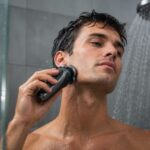
Shave After a Warm Shower
The single most effective preparation habit for a closer electric shave is shaving immediately after a warm shower. Two to three minutes of warm water and steam exposure:
- Softens the hair shaft, reducing cutting resistance significantly
- Opens pores slightly, allowing hairs to stand more upright from the skin surface
- Warms and relaxes the skin, making it more pliable under the shaver head
- Removes surface oils and dead skin cells that trap hairs flat against the skin
For men with coarse beards specifically, post-shower shaving can reduce the number of passes needed by one to two a meaningful improvement in both closeness and skin comfort. Our full guide on wet vs dry electric shaving covers exactly how shower preparation changes shave results across different beard types.
Wait 20 Minutes After Waking
Facial skin retains mild puffiness from fluid accumulation during sleep for approximately 20 minutes after waking. This puffiness slightly submerges hair follicles below the skin surface, making hairs marginally shorter and harder for the shaver to capture cleanly. Waiting 20 minutes allows the skin to normalize and hairs to stand at their full natural height above the surface.
Wash Your Face First
Clean skin free of overnight oils, dead skin cells, and product residue allows the shaver head to glide cleanly without obstruction. A quick face wash with warm water before shaving, even without a full shower, removes the surface debris that reduces shave efficiency.
Step 2: Master the Right Shaving Technique
Technique is where most men leave the most improvement on the table. Electric shavers reward a very specific approach.
For Foil Shavers: Short, Overlapping Linear Strokes
Foil shavers work best with short, methodical strokes rather than long sweeping passes. Move the shaver in short up-and-down or side-to-side strokes approximately two to three centimeters per stroke, working systematically across each facial zone with overlapping coverage. Each short stroke positions the foil flat against the skin for maximum hair capture before moving on.
Long sweeping strokes with a foil shaver sacrifice contact time, the foil head lifts away from the skin surface during the transition between stroke zones, missing hairs along the gaps.
Technique for specific zones:
- Cheeks and jawline: Short vertical strokes moving upward against the grain after an initial with-the-grain pass
- Upper lip: Short horizontal strokes from center outward, pulling the lip down slightly to flatten the surface
- Chin: Short horizontal strokes across the chin, stretching the skin taut with the free hand
- Neck: Short upward strokes against the grain, the neck is where most closeness is lost with poor technique
For Rotary Shavers: Slow Circular Motions
Rotary shavers perform best with slow, overlapping circular motions approximately coin-sized circles covering each facial zone methodically. The circular motion aligns with the spinning direction of the rotary heads and maintains maximum blade contact time per area.
Moving a rotary shaver in linear strokes as many new users do by instinct, works against the head design and produces noticeably less close results than the proper circular technique.
Shave with the Grain First, Then Against
The highest-closeness approach for electric shavers uses two passes:
First pass with the grain in the direction of hair growth. This removes the bulk of the hair and reduces overall stubble length without the skin irritation risk of immediately going against the grain.
Second pass against the grain against the direction of hair growth. This captures the hairs that lay flat with the grain direction and were not fully captured in the first pass, delivering the closest possible result.
Not all skin types tolerate a two-pass approach comfortably. Men with sensitive skin should evaluate their skin response after the first pass before attempting an against-the-grain second pass.
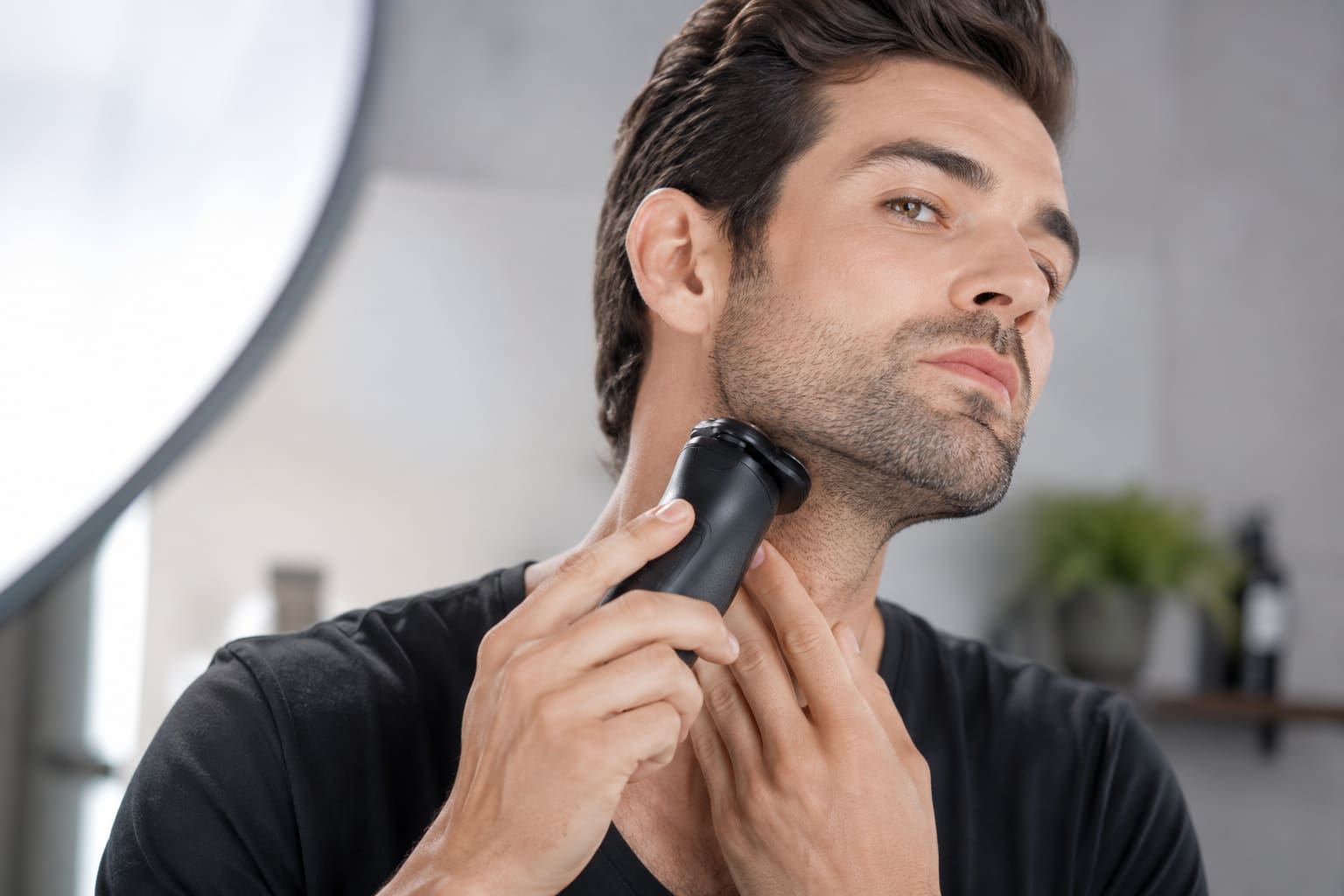
Stretch the Skin Taut
Using the free hand to gently stretch the skin flat in the area being shaved provides a firmer, more even surface for the shaver head to work against. Loose skin on the jaw and neck creates folds that the foil skips over, stretched skin eliminates these folds and allows consistent blade contact across the full zone. This technique is particularly effective along the jawline and neck where loose skin is most common.
Use Light, Consistent Pressure
Pressing the shaver hard against the face does not improve closeness, it actually reduces it. Excessive pressure compresses the skin surface against the foil, preventing hairs from standing upright through the foil perforations for cutting. Use just enough pressure to keep the foil in continuous contact with the skin and no more.
Step 3: Use Wet Shaving for Maximum Closeness
If you currently shave dry, switching to wet shaving with a waterproof electric razor is the single technique change most likely to deliver an immediately noticeable improvement in shave closeness and skin comfort.
Shaving gel applied before a wet shave softens the hair shaft at the surface, lubricated the shaver’s path across the skin, and reduces the mechanical friction that prevents the foil from cutting flush to skin level. Pre-softened, lubricated hair requires less cutting force, the blades can make cleaner cuts at a lower point on the hair shaft, delivering a visibly closer result.
Verify your shaver is rated IPX7 waterproof before attempting wet shaving. Our guide on wet vs dry electric shaving covers which beard and skin types benefit most from the switch.
Step 4: Use a Pre-Shave Product
Pre-shave products available as powders, sprays, or gels, prepare the skin and hair for electric shaving in ways that plain water cannot.
Pre-Shave Powder
Pre-shave powder (such as Lectric Shave or equivalent) absorbs surface oils and moisture from the skin and hair surface, causing hairs to stand more upright from the skin. More upright hairs are captured more efficiently by the foil, the result is a noticeably closer dry shave on skin that was previously too oily for optimal foil contact.
Pre-shave powder is the most effective dry-shave enhancement available and is particularly useful for men with oily skin where foil performance is compromised by surface oil.
Pre-Shave Lotion or Spray
Pre-shave lotions soften hair slightly similar to the effect of warm water while adding a thin lubrication layer that reduces friction during dry shaving. They bridge the gap between fully dry shaving and full wet shaving for men who prefer not to use shaving gel.
Shaving Gel (for Wet Shaving)
For waterproof shavers, a quality shaving gel is the most effective pre-shave product available. It simultaneously softens hair, lubricates the shaver path, and protects the skin surface. Use a transparent gel rather than a thick foam, foam clogs foil perforations and reduces cutting efficiency.
Step 5: Maintain Your Shaver Properly
A poorly maintained shaver cannot deliver a close shave regardless of technique. These maintenance habits directly impact shave closeness.
Clean After Every Use
Packed hair debris in the foil or rotary head prevents the cutting element from making full contact with the skin surface. A clogged foil physically lifts away from the skin as it pushes through the debris rather than cutting flush to skin level. A 30-second rinse or brush clean after every shave maintains full foil contact on the next use.
Lubricate Weekly
A dry, unlubricated foil generates more friction per stroke — the blades move less freely, cut less cleanly, and generate more heat. One drop of shaver oil on the foil or rotary heads once per week reduces this friction and restores the cutting efficiency that lubrication provides. Our complete guide on how to clean and maintain your electric shaver covers the full weekly maintenance routine.
Use an Auto-Cleaning Station
For Braun and Panasonic users, auto-cleaning stations clean and lubricate simultaneously in every cycle, ensuring the shaver is always performing at maximum blade efficiency before every use. Men who use auto-cleaning stations consistently report more stable shave quality over time than those who clean manually and less regularly.
Step 6: Replace Blades on Schedule
This is the most underrated improvement available to most men with declining electric shave quality. Worn blades are the single most common cause of reduced shave closeness in shavers that are otherwise functioning correctly.
A sharp blade severs hair at skin level cleanly. A worn blade bends the hair before it cuts, the bending momentarily lifts the hair tip above skin level before the blade severs it, leaving a hair end that is fractionally longer than a clean flush cut. This accumulated fractional difference across a full face of hairs is the difference between a close result and a result that still feels rough an hour after shaving.
Replace foil and blade cassettes at 12 to 18 months regardless of whether performance has noticeably declined. Proactive replacement maintains the sharpness that delivers maximum closeness rather than waiting for the shave to feel noticeably worse before acting.
Step 7: Allow Your Skin to Adapt
Men switching from manual razors to electric shavers often experience a three to four week adaptation period during which the electric shave feels less close than the manual result they are used to. This is normal and temporary, it is not a reflection of the electric shaver’s capability.
During this adaptation period, skin adjusts to the different mechanical action of electric cutting, the pores open differently in response to the foil contact, and shaving habits gradually calibrate to the new technique requirements. Most men who persist through the adaptation period find their electric shave closeness matches or approaches their previous manual results within three to four weeks.
If you are in the first month of electric shaving and disappointed with closeness, commit to the technique improvements in this guide and reassess at the four-week mark before concluding that electric shaving does not work for you.
Step 8: Upgrade Your Shaver If Needed
If all technique improvements, preparation habits, maintenance practices, and blade replacements have been implemented and closeness is still unsatisfactory, the shaver itself may be the limiting factor.
The most common shaver limitations that no technique improvement can overcome:
Insufficient motor speed for coarse beards. Budget motors below 8,000 CPM cannot cut through dense, wiry stubble cleanly at any technique level. For thick or coarse beards, a minimum of 10,000 CPM is required for genuine single-pass closeness 13,000 to 14,000 CPM (Panasonic Arc4/Arc5) is the gold standard. Our guide on the best electric shavers for thick and coarse beards covers the models that handle heavy beard types at every budget.
Insufficient cutting elements. A single-element or two-element foil shaver requires more passes to achieve the same coverage as a four or five-element model. More passes mean more friction and heat without proportional closeness improvement particularly on multi-directional beard growth.
Low-quality foil. Budget foils have less precise perforations and rougher surface geometry than premium foils reducing how close the blade can cut to skin level regardless of motor speed or technique.
Best Electric Shavers for the Closest Shave
These shavers deliver the closest electric shave available at each price tier. For full reviews, see our complete guide on the best electric shavers for men.
Braun Series 9 Pro+
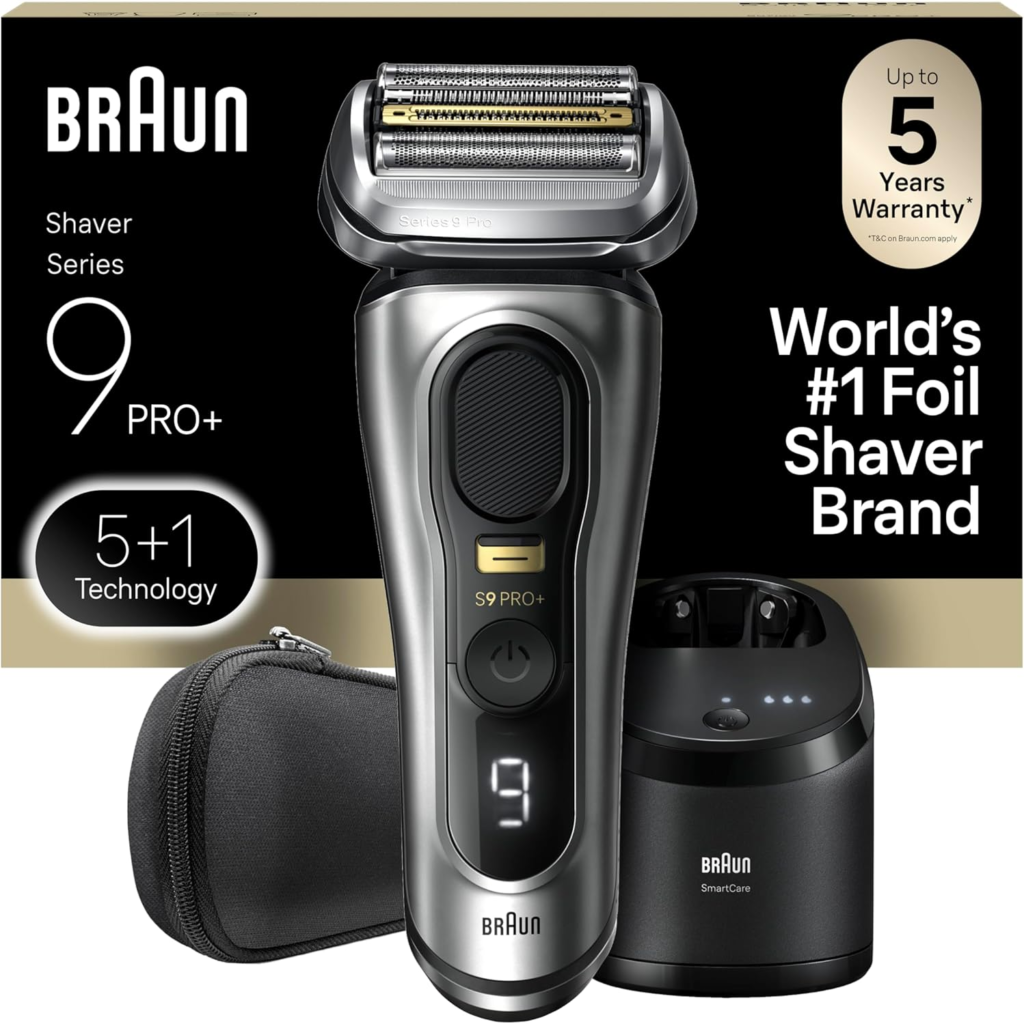
Key Specs:
- 5-sync cutting elements with ProLift active trimmer
- HyperGlide foil for ultra-smooth skin contact
- AutoSense motor with 10,000 CPM
- SensoFlex 10-direction head
- 60-minute battery with 5-minute quick charge
Pros:
- ProLift trimmer captures flat-lying hairs that all other foil designs miss, delivering the most complete single-pass shave available in any electric razor
- HyperGlide foil allows the shaver to cut closer to skin level with less friction than any previous foil technology
- AutoSense motor maintains consistent cutting speed through variable density zones for even closeness across the full face
Cons:
- Premium price requires significant investment
- Replacement cassettes are expensive
Best For: Men who want the absolute closest electric shave available without compromise, the benchmark for single-pass completeness in the foil shaver category.
👉 Check Latest Price on Amazon
Panasonic Arc5 ES-LV97
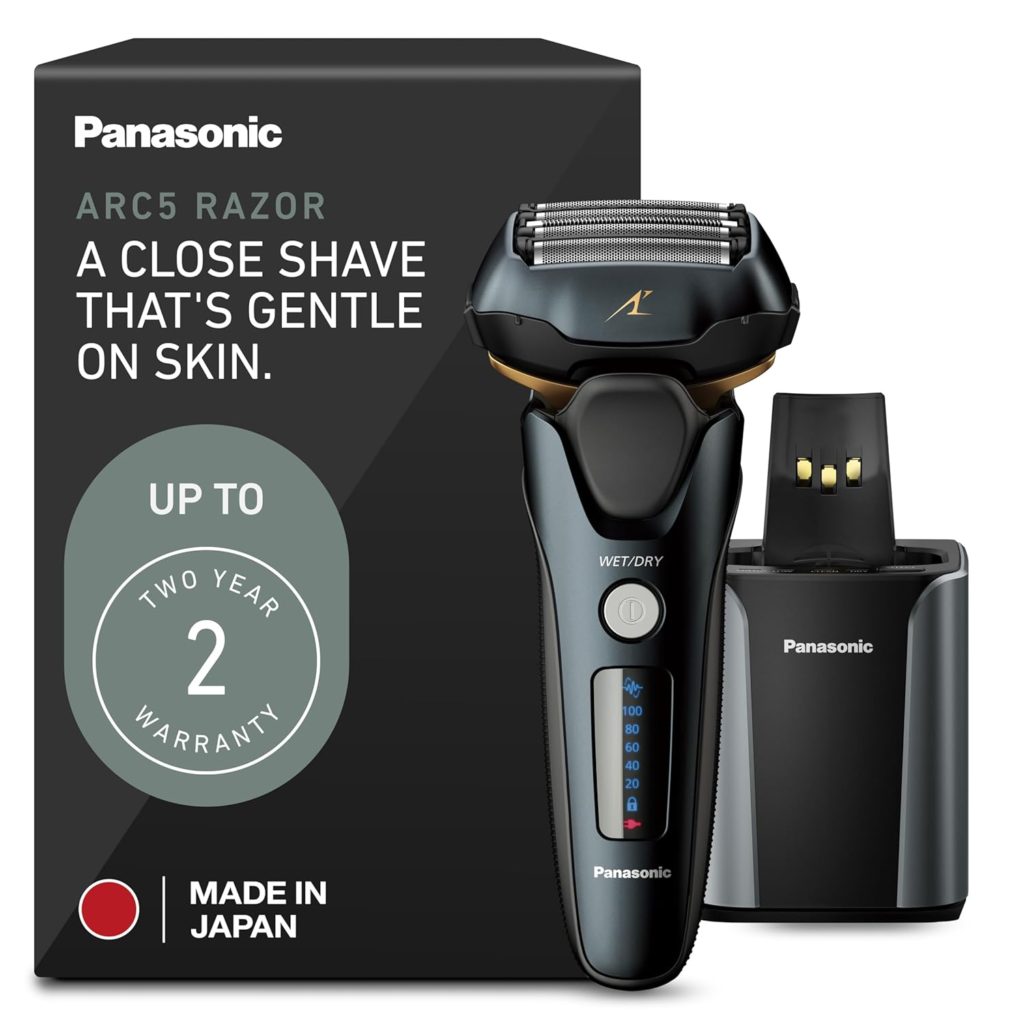
Key Specs:
- 5-blade system with nano-polished blades at 30-degree angle
- 14,000 CPM linear motor
- 16-direction multi-flex pivot head
- Wet and dry compatible
- 45-minute battery with 5-minute quick charge
Pros:
- 14,000 CPM is the fastest consumer electric shaver motor available, the speed that delivers clean single-pass cuts on the coarsest beards
- 30-degree nano-polished blade angle cuts hair at the optimal geometry for flush skin-level severing rather than the slightly above-surface cut of less precisely ground blades
- 16-direction pivot head maintains full blade contact across every facial contour without losing cutting efficiency
Cons:
- Bulkier design than Braun models
- Loud cleaning station
Best For: Men with thick or coarse beards who need maximum motor speed and blade precision for the closest possible wet or dry shave on heavy stubble.
👉 Check Latest Price on Amazon
Braun Series 7 71-N7171cc
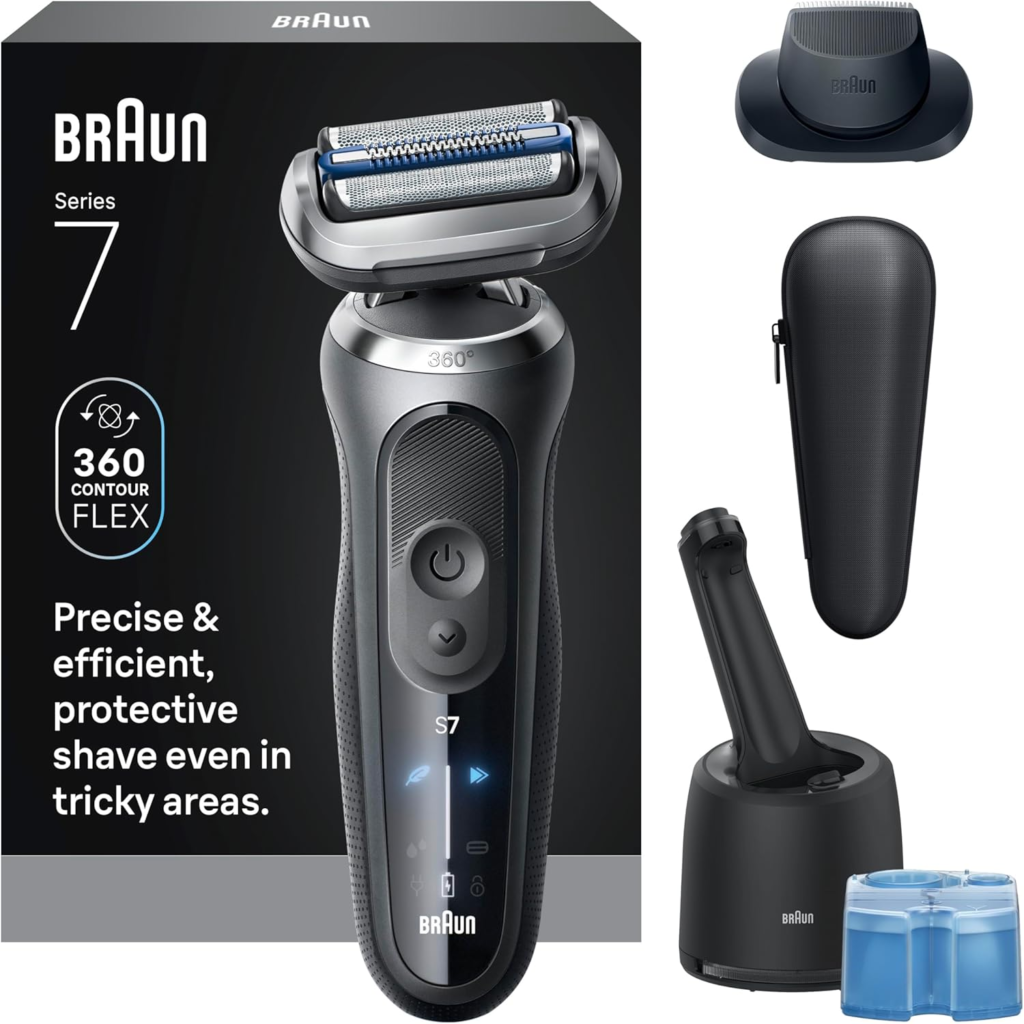
Key Specs:
- 4+1 cutting elements with Active Lift trimmer
- AutoSense motor at 10,000 CPM
- SensoFlex flex head
- IPX7 waterproof
- Includes Clean and Charge Station
Pros:
- Best mid-range closeness available, Active Lift trimmer captures flat-lying hairs for near-Series-9 single-pass completeness at a lower price
- AutoSense motor maintains full cutting speed through dense zones, no slowdown on heavier patches that would otherwise require a second pass
- Clean and Charge Station ensures the shaver is always performing at peak blade sharpness
Cons:
- One fewer cutting element than Series 9
- HyperGlide foil not present
Best For: Men who want the closest mid-range electric shave near-flagship closeness at a meaningful price saving versus the Series 9 Pro+.
👉 Check Latest Price on Amazon
Philips Norelco 9000 Prestige
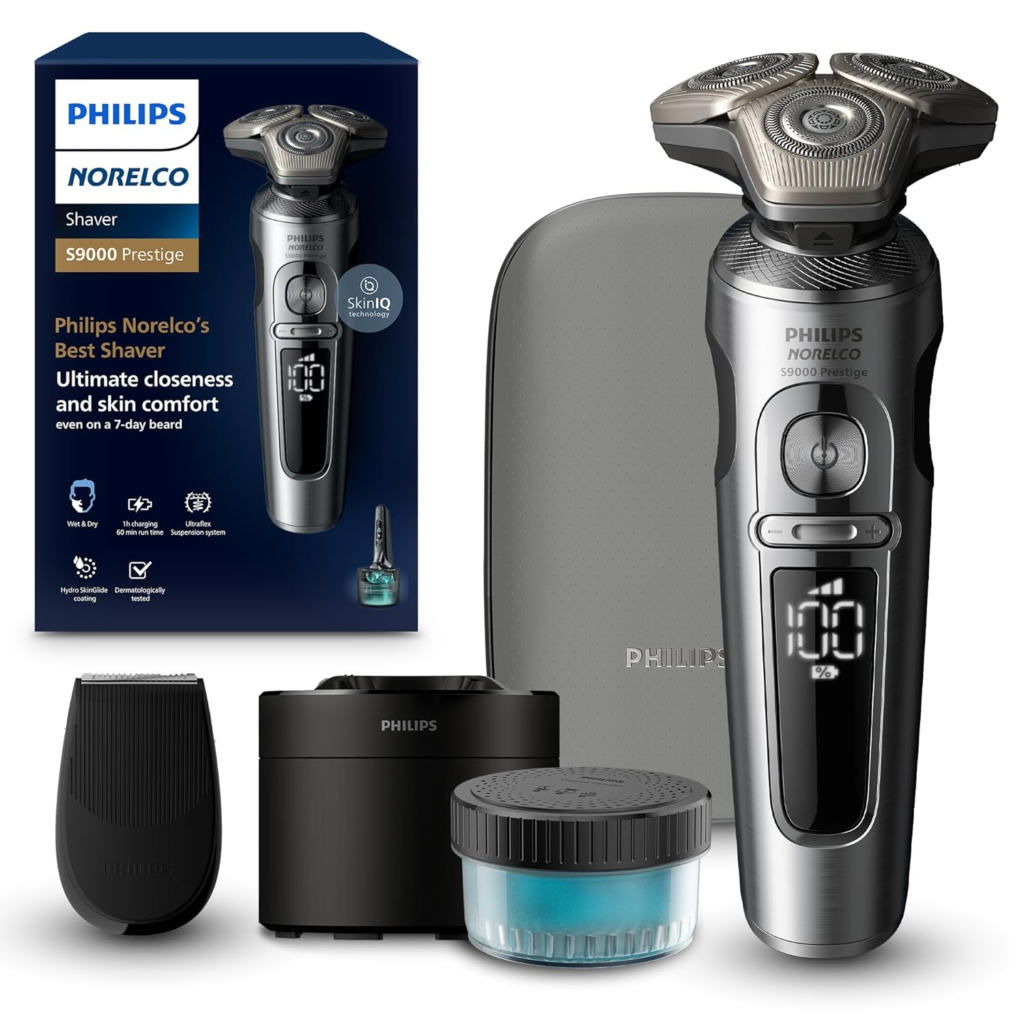
Key Specs:
- 3 V-Track precision heads
- BeardAdapt sensor
- Nano skin-friendly coating
- USB-C charging
- IPX7 waterproof
Pros:
- V-Track blades guide more hairs into the cutting element per rotation than standard rotary heads, delivering the closest rotary shave available
- BeardAdapt sensor maintains consistent motor speed through all beard densities, no reduced closeness on denser zones
- Best choice for men who prefer rotary shaving and want the maximum closeness that rotary technology can deliver
Cons:
- Rotary technology does not match premium foil closeness on coarse beards
- SmartClean station sold separately
Best For: Men committed to rotary shaving who want the closest possible rotary result, the benchmark for single-pass completeness in the rotary shaver category.
👉 Check Latest Price on Amazon
Common Mistakes That Reduce Shave Closeness
These habits are the most common reasons men do not get the closest shave their razor is capable of.
Pressing too hard. Excess pressure compresses skin against the foil, preventing hairs from standing through the perforations. Use only the pressure needed to maintain contact, let the motor do the work.
Using long sweeping strokes with a foil shaver. Long strokes sacrifice the contact time per area that short methodical strokes deliver. Use short overlapping strokes for maximum foil contact efficiency.
Shaving immediately after waking. Post-sleep facial puffiness slightly submerges hair follicles. Wait 20 minutes or shave post-shower for the closest result.
Never replacing blades. Worn blades bend hair before cutting rather than severing cleanly at skin level. Replace at 12 to 18 months proactively.
Skipping pre-shave preparation. Dry, stiff, unprepared hair creates maximum cutting resistance. Even a 30-second warm face wash before shaving makes a measurable difference.
Moving a rotary shaver in linear strokes. Linear strokes on a rotary shaver fight the design and reduce closeness significantly. Use circular motions.
Not shaving against the grain on the second pass. A with-the-grain-only shave leaves the flattest-lying hairs uncut. A second against-the-grain pass captures these for the closest possible result.
Who This Guide Is For
Men who switched from manual razors and are disappointed with electric shave closeness. The adaptation period is real, technique improvements and three to four weeks of consistent use resolve most closeness concerns without requiring a shaver upgrade.
Men whose electric shave quality has declined over time. Almost always a maintenance issue, blade replacement and a thorough deep clean restore closeness in most cases.
Men with coarse or thick beards who have never achieved a close electric shave. Motor speed and blade count are the limiting factors, this guide identifies the technique maximums and the shaver upgrade threshold.
Men who shave dry and want to improve their result without switching shavers. Pre-shave products and technique improvements deliver meaningful closeness gains from any existing waterproof or dry shaver.
Conclusion
Getting a closer shave with an electric razor is less about buying a better shaver and more about using any shaver correctly. Shave after a warm shower, use the right technique for your shaver type, keep blades clean and sharp, replace them on schedule, and use a pre-shave product if dry shaving. These changes alone deliver a meaningfully closer result from any quality electric shaver.
If all technique and maintenance improvements have been made and closeness is still unsatisfactory, the shaver itself becomes the limiting factor and our complete electric shaver buying guide will help you identify the right upgrade for your specific beard type and budget.
👉 Ready to upgrade your shaving technique or your shaver? Browse our top-rated options on Amazon and check current prices today.
AMAZON AFFILIATE DISCLAIMER
This post contains affiliate links. If you purchase through our links, we may earn a small commission at no extra cost to you.
FAQs
Q1: Why is my electric shaver not giving me a close enough shave?
The most common causes are worn blades that bend rather than sever hair cleanly, incorrect technique for the shaver type (linear strokes on a rotary or long sweeping strokes on a foil), inadequate preparation (dry unprepared skin and hair), or a shaver motor that is insufficient for your beard type. Work through the technique and maintenance improvements in this guide before concluding the shaver itself needs replacing.
Q2: Does shaving with an electric razor in the shower give a closer shave?
Generally yes particularly for men with coarse or medium beards. Warm water pre-softens the hair shaft, reducing cutting resistance and allowing blades to cut more cleanly at skin level. The combination of pre-softened hair and shaving gel lubrication typically delivers a visibly closer wet shave than the same shaver used dry on unprepared skin.
Q3: Should I shave with or against the grain for the closest electric shave?
Both in sequence. Make a first pass with the grain to remove the bulk of the hair with minimal skin irritation. Follow with a second pass against the grain to capture the flat-lying hairs the first pass missed. This two-pass approach delivers the closest possible result from any electric shaver. Men with sensitive skin should evaluate their skin response after the first pass before attempting the second.
Q4: How often should I replace electric shaver blades for the closest shave?
Every 12 months for regular users sooner than the standard 18-month guideline for maximum closeness. Proactive replacement at 12 months maintains the blade sharpness that delivers flush skin-level cutting. Waiting for noticeable performance decline means using blades that have been below optimal for months.
Q5: Does pressing harder with an electric shaver give a closer shave?
No pressing harder actually reduces closeness. Excess pressure compresses the skin surface against the foil, preventing hairs from standing upright through the perforations for cutting. It also increases skin irritation without any closeness benefit. Use the lightest pressure that maintains consistent foil contact with the skin.
Q6: What pre-shave product gives the closest electric shave?
For dry shaving, pre-shave powder (such as Lectric Shave) is the most effective, it lifts hairs away from oily skin for maximum foil capture. For wet shaving, a transparent shaving gel provides the best combination of hair softening and lubrication for flush-to-skin cutting. Pre-shave lotion bridges the two methods for men who want some benefit without full wet shaving.
Q7: Can technique alone improve my electric shave without buying a new shaver?
Yes for most men, technique and maintenance improvements deliver a noticeably closer shave from their existing shaver. Proper stroke direction, skin stretching, post-shower preparation, and proactive blade replacement account for the majority of the closeness gap between an average and an excellent electric shave. A shaver upgrade becomes necessary only when the motor speed or cutting element count is genuinely insufficient for the beard type.
Q8: How long does it take to get a close electric shave after switching from a manual razor?
Three to four weeks for most men. The skin adaptation period involves adjusting to the different mechanical action of electric cutting, and technique calibration to the specific shaver type takes consistent practice. Most men who persist through the adaptation period report their electric shave closeness matches or approaches their previous manual results within a month.