Walk into any wet shaving community online and ask which razor you should buy, and within minutes someone will ask you back: what handle length do you prefer? It seems like a minor detail. It is not. The handle of a safety razor is the only part you actually touch during a shave. Everything about how the razor feels in your hand, how much control you have over angle and pressure, how naturally the razor moves across different areas of your face and body, is determined by the handle.
Most beginners buy their first razor based on the head design and blade gap and treat the handle as an afterthought. Many experienced wet shavers will tell you they eventually realized that the handle mattered as much as anything else in determining whether a razor felt right for their specific shaving style. Getting the handle right from the beginning saves you from buying multiple razors to find the combination that works.
This guide covers everything you need to know about safety razor handle types. Length, weight, material, diameter, and knurling all play a role in how a razor handles during a shave. By the end of this guide you will understand exactly what each variable contributes and which combination suits your hand size, shaving style, and the areas you shave.
Quick Reference: Safety Razor Handle Types at a Glance
| Handle Type | Length | Best For | Example Razors |
| Short Handle | Under 3.2 inches | Precision, face shaving, experienced users | Merkur 34C |
| Standard Handle | 3.2 to 3.8 inches | Most face shavers, general use | Edwin Jagger DE89, Feather AS-D2 |
| Long Handle | 3.8 to 4.5 inches | Large hands, leg shaving, beginners | Merkur 23C, Parker 99R |
| Extra Long Handle | Over 4.5 inches | Women, body shaving, tall users | Hanni Weighted Razor |
| Knurled Handle | Any length | Wet grip, shower shaving | Parker 99R |
| Smooth Handle | Any length | Dry grip preference, aesthetics | Rex Ambassador |
| Lightweight Handle | Under 60g | Precision, sensitive touch shavers | Feather Popular |
| Heavyweight Handle | Over 100g | Zero-pressure technique, coarse beards | Rockwell 6S, Rex Ambassador |
Why Handle Length Matters
Handle length is the most discussed handle variable in wet shaving communities, and the discussion exists because it genuinely matters for different shavers in different ways. Here is what length actually affects during a shave.
Control and Leverage
A shorter handle places your hand closer to the razor head, which gives you more direct control over where and how the blade contacts the skin. Many experienced shavers who shave faces only prefer shorter handles for exactly this reason. The proximity to the head makes micro-adjustments to angle and pressure more immediate and responsive.
A longer handle moves your grip further from the head, which changes the leverage dynamics. You have more handle to work with but slightly less direct connection to the head. For large surface areas like legs, this trade-off works in favor of longer handles because the extra reach matters more than the micro-precision that shorter handles provide.
Reach for Different Shaving Areas
For face shaving, handle length is primarily a comfort and control question. Most face shavers can manage with handles anywhere from 3 to 4 inches depending on personal preference and hand size.
For leg shaving, handle length becomes a practical necessity. Reaching down a leg, navigating behind a knee, or working around an ankle requires enough handle to hold comfortably while your arm is extended. As covered in the how to shave legs with a safety razor guide on this site, handle length is one of the most important selection criteria for women shaving their legs.
For head shaving, a slightly longer handle gives you better reach to the back of the scalp. The safety razor for head shaving guide on this site covers this specific need in detail.
Hand Size Matching
A handle that is too short for a large hand produces a cramped, awkward grip that reduces control. A handle that is too long for a small hand can feel unwieldy and imprecise. Matching handle length to your hand size is the starting point for finding a comfortable razor.
A rough guide: men with hands under a standard medium size typically prefer handles in the 3 to 3.5 inch range. Men with standard to large hands typically prefer 3.5 to 4 inches. Men with very large hands or women shaving large body areas typically benefit from handles over 4 inches.
Short Handles: Under 3.2 Inches
Short-handled safety razors place the grip very close to the head and are a deliberate choice rather than a limitation. They offer specific advantages that make them the preferred option for a distinct group of experienced shavers.
Why Some Shavers Prefer Short Handles
The proximity of the grip to the head makes angle control more precise. When your hand is close to the razor head, small wrist movements translate more directly into head angle changes. This direct connection suits shavers who have developed very refined technique and make constant small angle adjustments throughout a shave.
Short handles also suit shavers who hold the razor near the top of the handle by preference. Many experienced wet shavers instinctively choke up on the handle during close work around the nose and upper lip, and a short handle accommodates this grip naturally.
Short Handle Limitations
Short handles reduce reach, which makes them unsuitable for body shaving. They can also feel cramped for men with larger hands who struggle to grip them comfortably without their fingers crowding the head area.
For beginners, short handles are not the ideal starting point. The learning phase benefits from a handle that gives you slightly more distance from the head and the associated leverage for learning the correct angle.
Best Short Handle Razors
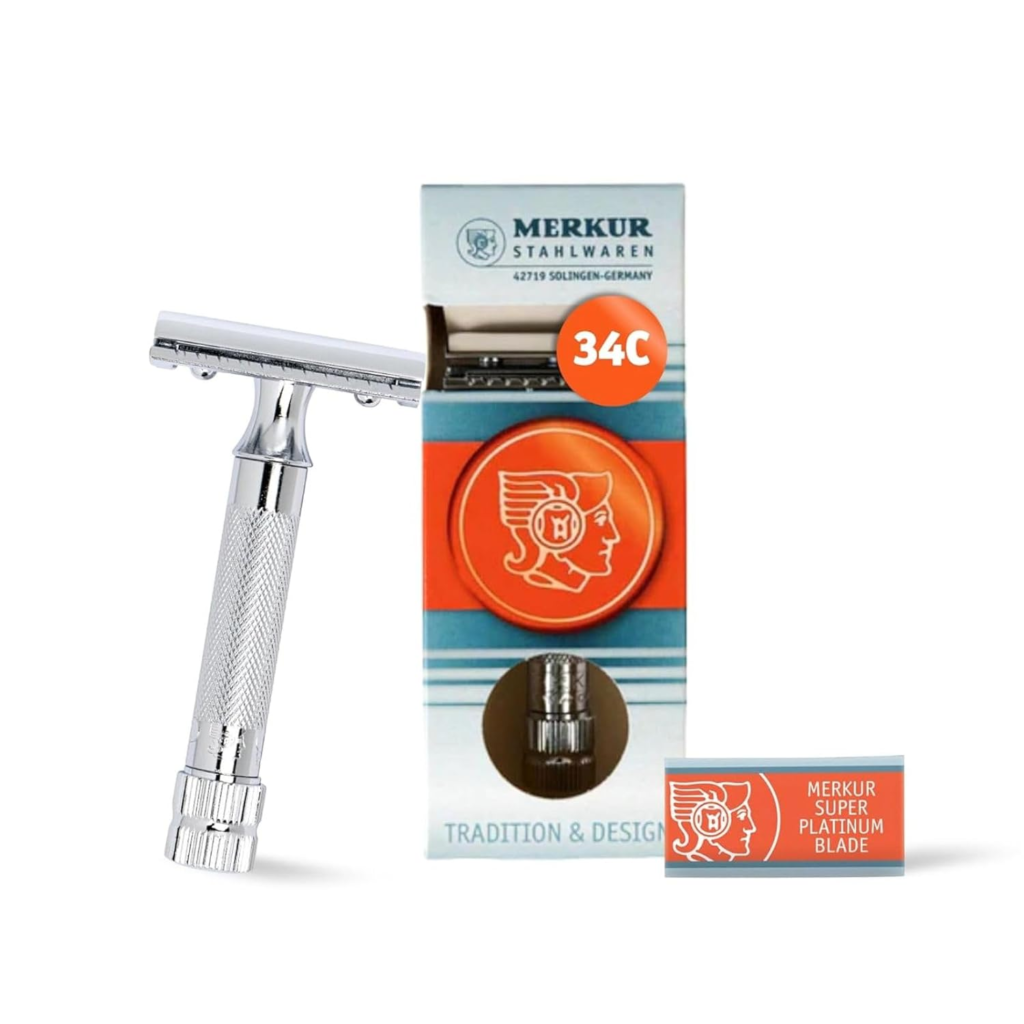
The Merkur 34C at 3.0 inches is the benchmark short-handle razor. Its wide, chunky handle compensates for the short length with exceptional grip security, and the extra girth makes it comfortable even for men with larger hands who might otherwise avoid a 3-inch razor.
👉 Check Merkur 34C Price on Amazon
Standard Handles: 3.2 to 3.8 Inches
Standard length handles represent the most common range in the safety razor market and suit the largest number of shavers. The majority of highly recommended razors in both the budget and premium segments fall into this category.
Why Standard Handles Work for Most Shavers
Standard handles offer a balance of control and reach that suits most face shaving scenarios. They are long enough for comfortable grip without the hand crowding the head, and short enough to maintain the direct control connection that face shaving benefits from.
For the majority of men who shave their faces and want one razor that handles all face shaving needs comfortably, a standard length handle is the right starting point. The Edwin Jagger DE89, Mühle R89, Feather AS-D2, and Rockwell 6S all fall in or near this range, which is not coincidental. These are the most widely recommended razors in the world because they suit the widest range of shavers.
Standard Handle Limitations
Standard handles work well for face shaving but can feel slightly short for leg shaving, particularly on the lower leg and ankle where reach and angle control are both important. Women who want one razor for face and body use often find the standard range barely adequate for legs and prefer the long handle category.
Best Standard Handle Razors
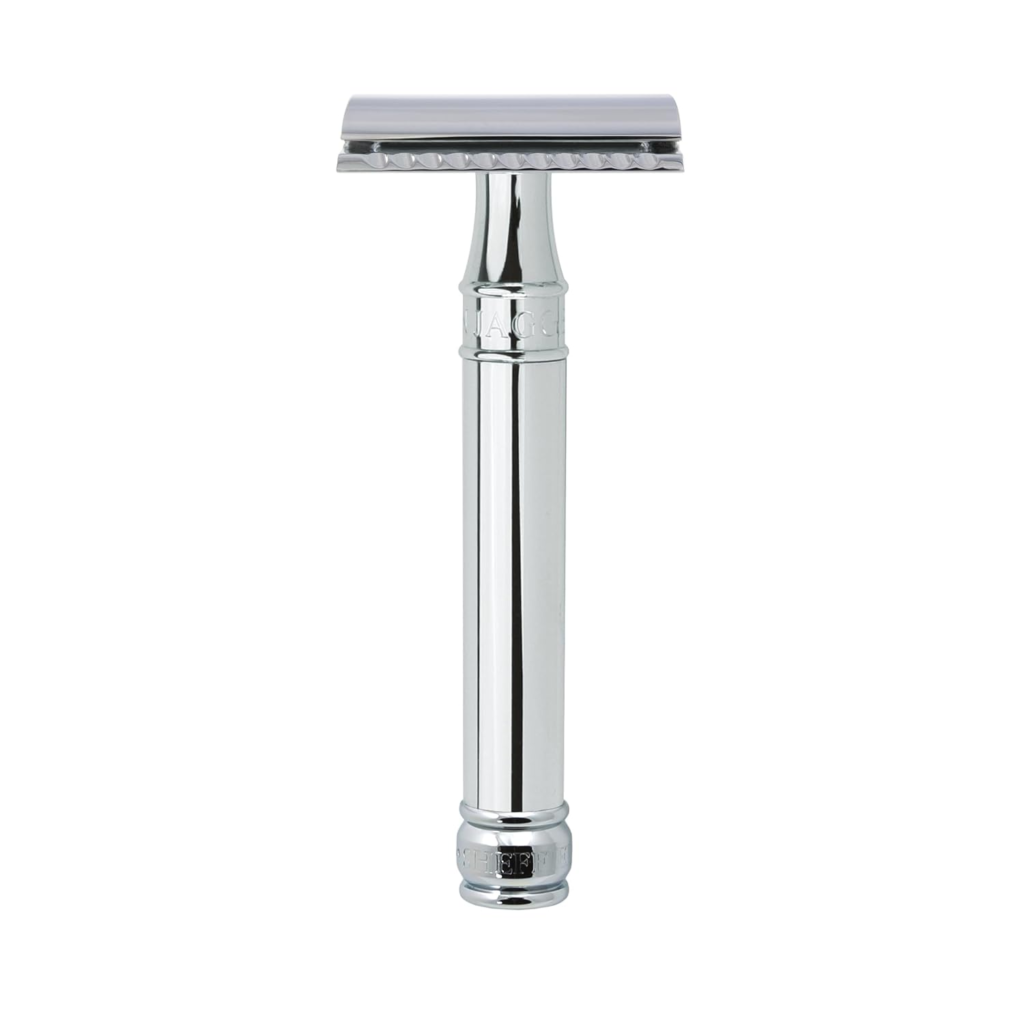
Edwin Jagger DE89 at 3.5 inches, Mühle R89 at 3.9 inches, Feather AS-D2 at 3.9 inches, and RazoRock Game Changer at 3.5 inches are the top recommendations in this range. Each is covered in detail in the best safety razors of 2026 guide on this site.
👉 Check Edwin Jagger DE89 Price on Amazon
Long Handles: 3.8 to 4.5 Inches
Long handles are the recommended starting point for several specific groups of shavers and are worth understanding in detail because the reasons for preferring them go beyond simple hand size.
Why Long Handles Work Better in Specific Situations
For leg shaving, the extra length is not just a comfort issue. A longer handle changes the leverage dynamics when the arm is extended downward toward the leg. With a short or standard handle extended at arm’s length, grip security diminishes as the effective lever arm becomes more awkward. A longer handle maintains comfortable grip and control even at full arm extension.
For beginners of any shaving area, a longer handle provides slightly more distance between the grip and the head, which many new shavers find makes the 30-degree angle easier to find and maintain. The handle is more visible relative to the skin when the arm is extended, which provides better visual feedback during the learning phase.
For men with larger hands, handles under 3.5 inches can feel cramped regardless of handle girth. A 4-inch handle gives full-sized hands enough room to grip comfortably without the fingers crowding each other.
Long Handle Limitations
Very long handles can feel unwieldy during close face work around the nose, upper lip, and chin. The extra length works against the precision needed for these areas by extending the lever arm beyond what face shaving requires. Experienced face shavers who have tried both lengths often find that they prefer the feel of a shorter handle for the precision work of face shaving even if a longer handle is better for body areas.
Best Long Handle Razors
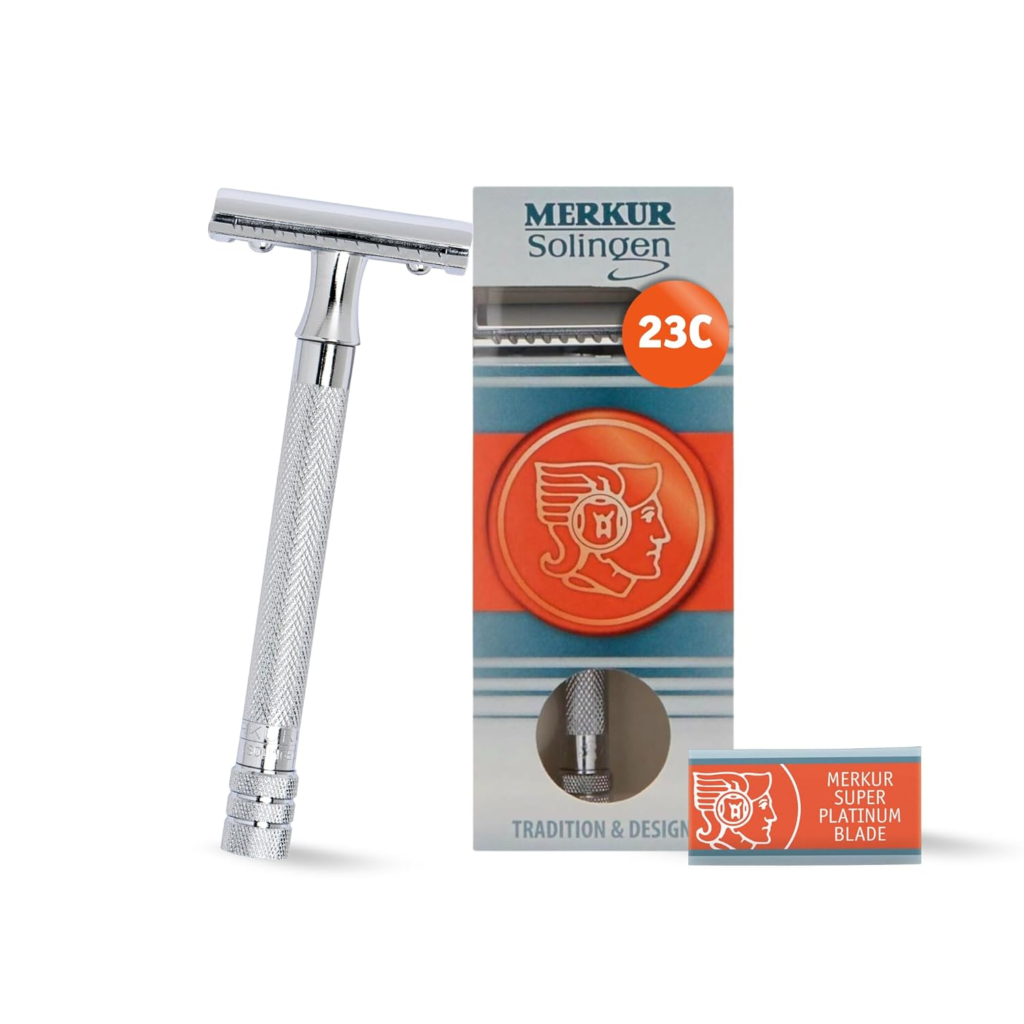
Merkur 23C at 4.0 inches is the top recommendation for men wanting a quality long handle razor. Parker 99R and Parker 29L both offer 4.0 inch handles at budget price points. The Hanni Weighted Razor at 4.5 inches is the top recommendation for women who prioritize maximum reach for leg and body shaving. All of these are covered in detail across the relevant guides on this site.
👉 Check Merkur 23C Price on Amazon
Handle Weight: Light vs Heavy
Weight is the handle variable that has the most direct impact on technique development, and it is underappreciated by most beginners who are focused on length and aggressiveness.
How Weight Affects Technique
A heavier razor naturally encourages the zero-pressure technique that produces the best safety razor shaves. The weight of the handle and head combination carries the blade across the skin without any additional force from the hand. Your job is to guide the direction, not to drive the blade. This division of labor between weight and hand is the foundation of good safety razor technique.
A lighter razor does not carry itself the same way. Beginners with lighter razors often compensate unconsciously by pressing down slightly, which is the single most common cause of irritation and nicks in the learning phase. The extra weight of a heavier razor provides constant passive feedback that guides the shaver toward the correct zero-pressure habit.
This is why the weighted handle design of the Hanni Weighted Razor is one of its most significant functional advantages for beginners rather than just a marketing feature. It is engineering a technique cue directly into the tool.
Light Handle Razors: When They Make Sense
Very light razors under 60g are not inherently problematic for experienced shavers who have fully internalized zero-pressure technique. A shaver with several months of consistent practice does not need the weight of the razor to remind them not to press. At that skill level, lighter razors offer a different tactile experience that some shavers actively prefer for the delicacy it enables in fine technique work.
The Feather Popular at approximately 60g is an example of a lighter razor that experienced shavers use deliberately for its feel. The lighter weight makes small angle adjustments feel more responsive in experienced hands.
Heavy Handle Razors: When They Make Sense
Heavier razors in the 90g to 120g range are the better choice for beginners and for shavers dealing with coarser beards that require slightly more cutting force per stroke. The Rockwell 6S at 118g is among the heaviest commonly available razors and its weight is a meaningful part of its appeal for shavers who want the razor to do as much of the mechanical work as possible.
The trade-off with heavy razors is fatigue during longer shaving sessions. A full leg shave covering both legs with a 118g razor can feel noticeably more tiring than the same shave with a 75g razor. Women who plan to use a razor primarily for full leg shaving often find a middle weight range of 75g to 90g represents the best balance of technique assistance and session comfort.
Handle Diameter and Shape
Handle diameter is less discussed than length and weight but it contributes meaningfully to grip comfort and control, particularly in wet shaving conditions.
Thin Handles
Thin handles in the 8mm to 10mm diameter range give more tactile feedback about the razor position in the hand. You can feel more precisely where the handle sits in your grip, which some experienced shavers prefer for the fine angle control it enables. The downside of thin handles is reduced surface area for grip, which can become a concern in wet shower conditions where maintaining a firm hold matters more.
Thick Handles
Thick handles in the 11mm to 14mm range provide more surface area for grip and feel more secure in wet hands. The Merkur 34C with its chunky handle is a well-known example of a thicker handle design that compensates for its shorter length with excellent grip security. For beginners shaving in the shower or for shavers with larger hands, thicker handles often feel more natural and controlled.
Handle Shape Variations
Most safety razor handles are cylindrical. Some feature a slight taper toward the head end, which creates a natural grip position. Others are straight cylinders throughout. A small number of premium handles feature shaped grip zones, flared ends, or ergonomic curves.
For most shavers, the shape of the handle matters less than length and weight. The cylindrical format of the vast majority of safety razors works well across a wide range of hand sizes and shaving styles.
Knurling: Everything You Need to Know
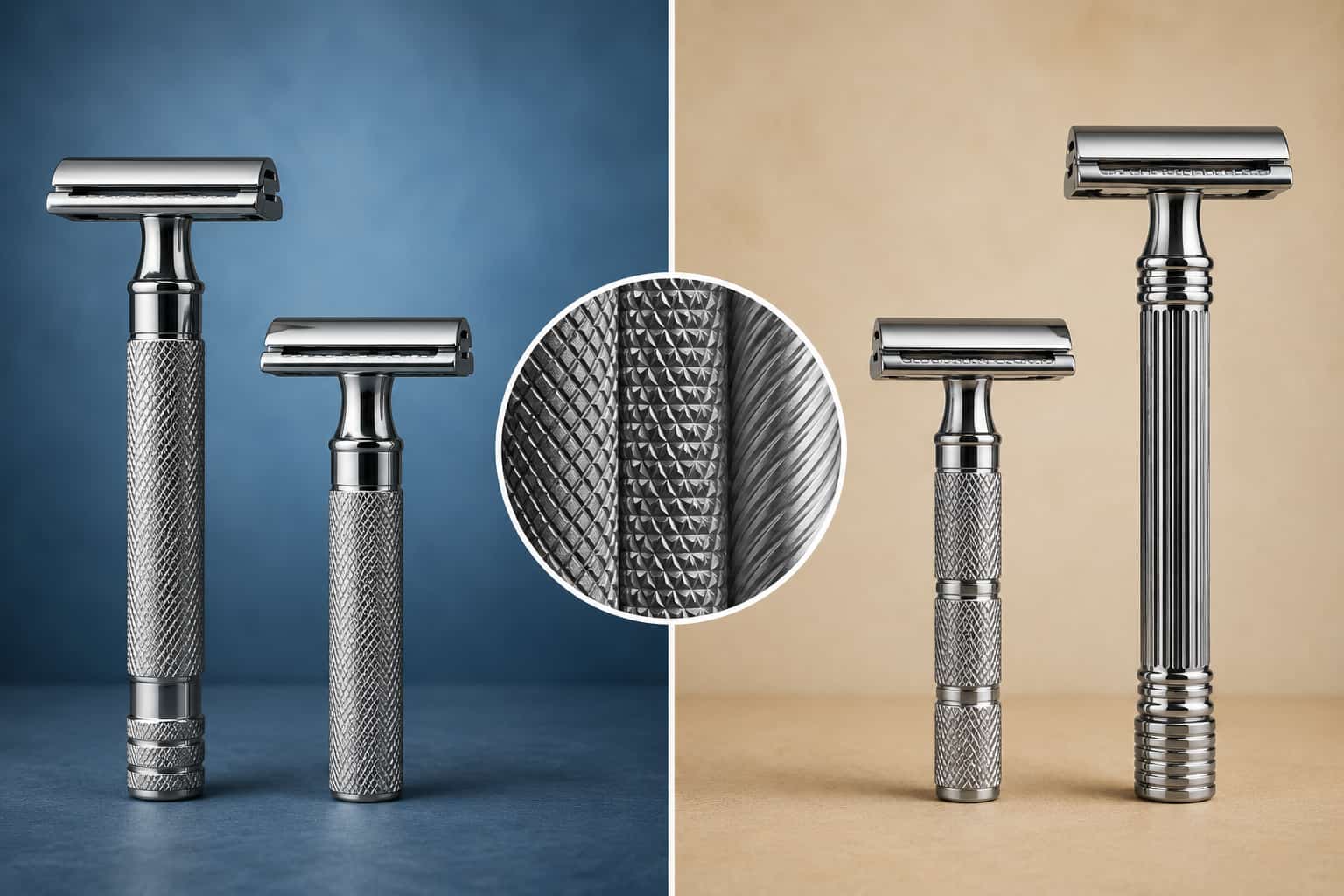
Knurling is the pattern of grooves, diamonds, or cross-hatching cut into the surface of a safety razor handle to improve grip. It is one of the most discussed aesthetic and functional aspects of safety razor handles, and the variety of knurling designs and depths across the market is remarkable.
What Knurling Does
The primary function of knurling is grip security in wet conditions. A smooth metal handle becomes slippery when covered in shaving cream, water, or skin oils. Knurling breaks up the smooth surface and creates edges and grooves that maintain friction against the fingertips even when both hands and handle are thoroughly wet.
The secondary function of knurling is tactile feedback. The texture of the handle in your grip communicates the handle’s position in your hand even without looking directly at it. Experienced shavers develop an intuitive sense of razor angle partly through this tactile feedback from the knurled surface.
Types of Knurling Patterns
Diamond knurling is the most common pattern in the safety razor market. It creates a grid of small diamond-shaped raised points across the handle surface. The intersection points of the grid are the primary grip surfaces. Diamond knurling in different sizes and depths produces noticeably different grip characters.
Fine diamond knurling uses small, closely spaced diamonds that produce a finely textured surface. It provides excellent grip without the pronounced texture of coarser patterns. Many premium razors use fine knurling because it suits the more delicate grip control of experienced shavers.
Coarse diamond knurling uses larger, more widely spaced diamonds with deeper grooves. The result is an aggressively textured surface that maximizes grip security in wet conditions. It is less comfortable for extended use but provides maximum confidence against slipping.
Cross-hatch knurling creates a pattern of parallel lines running in two perpendicular directions, producing a grid of raised squares rather than diamonds. The feel is slightly different from diamond knurling and is a matter of preference among shavers.
Straight knurling runs parallel grooves around the circumference of the handle without the intersecting pattern of diamond or cross-hatch variants. It provides directional grip along the handle axis and is used on some handles where a cleaner aesthetic is desired alongside functional texture.
Knurling Depth and Aggressiveness
Knurling depth is the dimension that determines how pronounced the texture feels in the hand. Shallow knurling provides a subtle texture that many shavers describe as premium in feel. Deep knurling provides aggressive grip but can feel rough against the fingers during longer shaving sessions.
The Edwin Jagger DE89 is frequently cited as an example of well-executed medium-depth knurling that provides excellent wet grip without feeling harsh. The Merkur 34C’s wider handle uses a similar medium-depth diamond knurling to good effect.
Premium razors from brands like Karve, Wolfman, and Rex Ambassador often feature extremely precise, fine knurling that reflects the machine accuracy of their manufacturing. The texture is consistent and refined in a way that mass-produced budget razors cannot replicate.
Smooth Handles: When No Knurling Works
Some safety razor handles are smooth or feature only minimal texturing. This is either a deliberate aesthetic choice or a production simplification depending on the manufacturer.
Smooth handles work fine for shavers who shave at the sink with dry hands after patting their face and keep a light but controlled grip. They become problematic in the shower or for shavers whose hands are consistently wet during the shave. Smooth premium handles on high-end razors sometimes feature subtle texturing that is not immediately visible but provides adequate grip. True mirror-polished smooth handles require more careful handling in wet conditions.
Handle Materials
Most safety razor handles are made from the same material as the head, but some manufacturers use different materials for the handle specifically.
Stainless Steel Handles
Stainless steel handles are the premium standard. They are durable, corrosion-resistant, and can be finished to a high polish or textured with precise knurling. The weight of stainless steel is good for technique purposes and the material feels genuinely premium in the hand. All the premium razors in the best premium safety razors worth the investment guide on this site use stainless steel.
Brass Handles
Brass handles are heavier than stainless steel and have a slightly warmer feel. They are commonly used in mid-range and some premium razors. Brass handles with chrome or gold plating are common in the classic safety razor aesthetic.
Zinc Alloy Handles
Zinc alloy handles are standard in the budget segment. They are cast rather than machined, which limits the precision of knurling and surface finishing compared to stainless steel. Chrome plating protects the zinc alloy but will wear over time. Perfectly adequate for the budget segment but not a long-term material.
Aluminum Handles
Some manufacturers use aluminum handles to reduce weight. Aluminum is significantly lighter than stainless steel or brass, which produces razors with a specific light, nimble feel. The RazoRock Game Changer uses an aluminum handle for exactly this reason. Aluminum is durable and corrosion-resistant but dents more easily than steel or brass under impact.
Bamboo Handles
Bamboo handles are used in eco-focused razors like the Bambaw Safety Razor. Bamboo is lightweight, sustainable, and has adequate grip even without knurling due to its natural surface texture. The limitation is moisture sensitivity. As covered in the safety razor maintenance guide on this site, bamboo handles should not be left in standing water because the material can swell and eventually crack with prolonged moisture exposure.
Resin and Acrylic Handles
Some specialty and vintage-style razors use resin or acrylic handles in various colors and patterns. These are primarily aesthetic choices and provide adequate grip in most shaving conditions. They are more fragile than metal handles and do not offer the same lifetime durability.
Matching Handle Type to Your Shaving Style
Here is a practical guide to matching handle specifications to your specific shaving needs.
For Face Shaving Only: Men
A standard handle in the 3.2 to 3.8 inch range suits most men who shave only their faces. Start with a handle that matches your hand size from the guidelines above. The Edwin Jagger DE89 at 3.5 inches and the Merkur 34C at 3.0 inches with its wider body are the two most widely recommended starting configurations.
Knurling type matters more for shower shavers than sink shavers. If you shave in the shower, prioritize medium to deep knurling for grip security. If you shave at a sink with a largely dry grip, knurling depth matters less.
Weight in the 65g to 90g range suits most face shavers. Heavier options like the Rockwell 6S at 118g work well for shavers who need the extra weight to establish zero-pressure technique but can feel heavy for extended face shaving sessions.
For Face and Body Shaving: Women
Women who shave both legs and facial areas benefit from a longer handle in the 3.8 to 4.5 inch range. The Merkur 23C at 4.0 inches and the Hanni Weighted Razor at 4.5 inches are the top recommendations. A weight in the 70g to 90g range provides technique assistance without causing fatigue during full leg shaving sessions.
Medium-depth knurling is the right specification for shower leg shaving where wet grip matters consistently throughout a longer shave session.
For Head Shaving
Head shaving benefits from a slightly longer handle for reach to the back of the scalp, in the 3.8 to 4.2 inch range. The specific demands of head shaving handle preferences are covered in the safety razor for head shaving guide on this site.
For Travel
Travel razor handle considerations are different from primary razor considerations. A compact razor that packs well and can be stored without blades for air travel is more important than optimizing for length and weight. The best travel safety razors guide on this site covers this specific category in detail.
How to Test Handle Compatibility Before Buying
Most safety razor handles are interchangeable within the standard DE razor thread specification. Many razors use a standard thread that allows mixing heads and handles from different brands. This modular capability lets experienced shavers experiment with handle length and weight combinations without buying complete new razors.
If you have a razor you like the head of but want a different handle length or weight, check whether the handle thread is compatible with aftermarket handle options. Several manufacturers including Bullgoose, UFO, and West Coast Shaving sell handles separately in various lengths and weights for exactly this purpose.
The Karve Christopher Bradley and several other premium razors also offer multiple handle lengths as purchase options, which allows you to specify your preferred handle at the time of purchase rather than buying a complete razor twice to find the right combination.
Common Handle Mistakes and How to Avoid Them
Buying a Short Handle Because It Looks Better
Many of the most aesthetically striking safety razors have shorter, more elegant handles. This is a legitimate aesthetic consideration. But buying a short handle that does not suit your hand size or shaving area because it looks better in photos is a reliable way to end up with a razor you do not enjoy using. Always prioritize ergonomics over aesthetics when the two conflict.
Ignoring Handle Weight When Buying a Beginner Razor
Beginners who buy very light razors under 60g and then struggle with zero-pressure technique often do not realize that the razor’s weight is working against them. If you are a beginner, choose a handle weight in the 75g to 100g range and let the weight do the technique teaching.
Assuming All Long Handles Are the Same
Long handles vary in diameter, weight, knurling, and material just as much as shorter ones do. A 4-inch aluminum handle with minimal knurling is a completely different shaving experience from a 4-inch stainless steel handle with deep diamond knurling. Specify all the variables, not just the length.
Overlooking Knurling for Shower Shaving
Shavers who shave at the sink sometimes switch to shower shaving and discover that their smooth or lightly knurled handle becomes slippery in full wet conditions. If you shave in the shower, always prioritize medium or deep knurling regardless of which other handle features appeal to you.
AMAZON AFFILIATE DISCLAIMER
This post contains affiliate links. If you purchase through our links, we may earn a small commission at no extra cost to you.
Frequently Asked Questions
Does handle length affect shave quality?
Handle length does not directly affect the cutting action of the blade. It affects how comfortably and precisely you can control the razor across different shaving areas. For face shaving, a well-matched handle length makes technique development easier. For body shaving, adequate handle length is a practical necessity for reach and control.
What handle length should a beginner choose?
A standard to long handle in the 3.5 to 4.0 inch range is the most forgiving starting point for most beginners. It provides enough reach for comfortable grip and enough distance from the head to make angle finding visually and tactilely clear. The Merkur 23C at 4.0 inches and the Edwin Jagger DE89 at 3.5 inches are the top beginner handle length recommendations.
Is heavier always better for safety razors?
Not always. Heavier razors are better for beginners because they teach zero-pressure technique through weight. For experienced shavers with ingrained technique, the ideal weight is a personal preference. Some advanced shavers prefer lighter razors for their responsiveness. For body shaving covering large areas, moderate weight in the 70g to 90g range is usually better than very heavy options that cause fatigue.
What is the best knurling for shower shaving?
Medium to deep diamond knurling provides the best wet grip for shower shaving. The Edwin Jagger DE89 and Merkur razors are frequently cited examples of well-executed knurling that balances grip security with comfort in wet conditions.
Can I replace the handle on my safety razor?
Many safety razors use standard thread specifications that allow handle replacement or mixing. Check whether your razor head and a desired handle share compatible threads. Several aftermarket handle suppliers offer a wide range of lengths and weights specifically for shavers who want to customize their setup.
Is bamboo a good handle material?
Bamboo is a sustainable, lightweight, and adequately grippy handle material that works well for shavers who prioritize environmental impact. Its main limitation is moisture sensitivity. Bamboo handles should be dried thoroughly after each use and not left in standing water. For a primary shower razor used daily, bamboo requires more care than metal alternatives.
Does handle material affect the shave?
Handle material does not affect the cutting action of the blade. It affects the weight, grip feel, durability, and aesthetic of the razor. Stainless steel provides the best combination of weight, durability, and grip texture. The choice of material should be driven by durability requirements and personal preference for feel rather than any direct effect on shave quality.
What handle do most experienced wet shavers prefer?
There is no universal answer because experienced shavers have diverse preferences based on their specific technique, hand size, and shaving areas. However, medium length handles in the 3.5 to 4.0 inch range with medium-depth knurling and weights in the 75g to 100g range represent the most common preferences across experienced wet shaving communities.