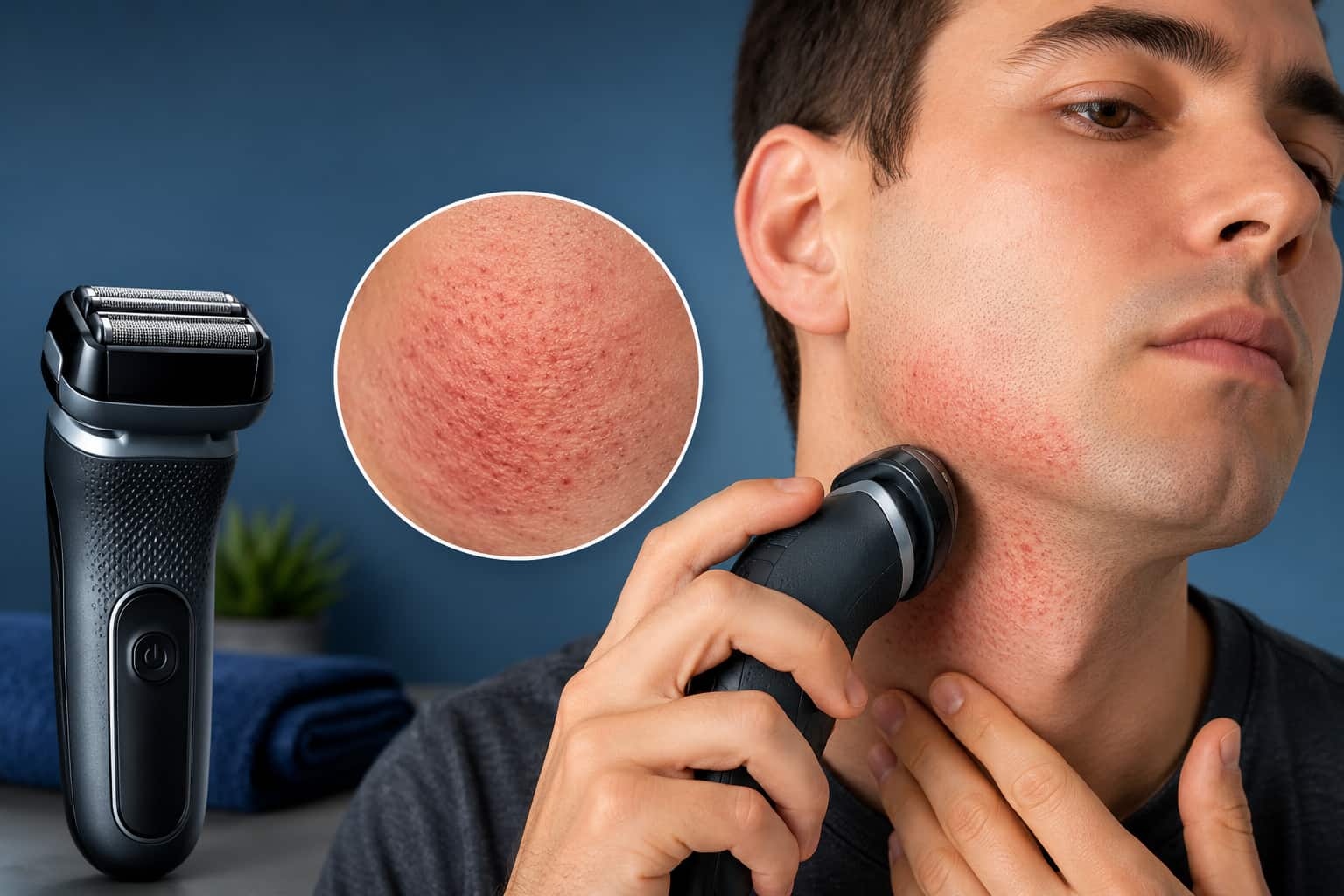
Electric shaver razor burn the redness, tightness, and irritation that appears on your skin after shaving, is one of the most common grooming complaints among electric shaver users. It is also one of the most misunderstood. Most men blame the shaver when the actual cause is something entirely different: a worn blade, excessive pressure, dry unprepared skin, or a shaving technique that works against the foil design rather than with it.
The good news is that electric shaver razor burn is almost always preventable. Understanding exactly what causes it is the first step because every cause has a specific fix. This guide covers every trigger of post-shave irritation from electric shaving and gives you actionable solutions for each one.
What Is Electric Shaver Razor Burn?
Electric shaver razor burn is a form of skin irritation caused by the mechanical friction and cutting action of the shaver against the skin surface. It presents as redness, tightness, a burning or stinging sensation, small red bumps, or a combination of these symptoms, typically appearing within minutes of finishing the shave and lasting anywhere from 30 minutes to several hours depending on severity.
It is distinct from razor bumps (pseudofolliculitis barbae), which are caused by ingrown hairs re-entering the skin and forming inflammatory papules. Razor burn is a surface friction and irritation response, razor bumps are a follicular inflammatory response. Both can occur simultaneously and share some prevention strategies, but they are different conditions with different primary causes.
Electric shaver razor burn is significantly less common than razor burn from manual razors because the foil guard prevents direct blade-to-skin contact. When it does occur with electric shavers, it is almost always the result of one or more of the specific causes below each of which is preventable.
Cause #1: Worn or Dull Blades
This is the most common cause of electric shaver razor burn and the most frequently overlooked.
Sharp blades sever hair cleanly in a single contact. Worn blades bend the hair before cutting it, the bending requires more force, generates more heat, and creates more mechanical stress on the surrounding skin tissue with every stroke. On a full face of shaving, thousands of these bending contacts add up to significant cumulative skin irritation that presents as razor burn along the most heavily shaved zones.
The insidious aspect of blade wear is how gradual it is. Blades do not go from sharp to dull overnight, they degrade slowly over months, and skin irritation escalates so gradually that many men accept increasing razor burn as normal aging of their skin rather than recognizing it as a blade maintenance issue.
The fix: Replace foil and blade cassettes every 12 to 18 months on a fixed schedule rather than waiting for performance to decline. If razor burn has recently increased without other changes to your routine, a fresh cassette is the first thing to try before any other intervention. Our guide on how to clean and maintain your electric shaver covers blade replacement in full detail including step-by-step instructions.
Cause #2: Too Much Pressure
Pressing the shaver hard against the face is the second most common cause of electric shaver razor burn — and the most counterintuitive one, because the instinct is that more pressure should mean a closer shave.
It does not. Excessive pressure compresses the skin surface against the foil, which does three things that directly cause razor burn:
It forces the foil screen harder against the skin surface, increasing friction per stroke. It prevents hairs from standing upright through the foil perforations for cutting, actually reducing closeness while increasing skin contact. And it concentrates heat from motor friction against a smaller compressed skin area, raising local skin temperature and triggering an inflammatory response.
The fix: Hold the shaver with just enough pressure to keep the foil in continuous contact with the skin. On a premium shaver with a well-designed flex head, the shaver should rest against your face under its own weight for most of the stroke with your hand guiding direction rather than pushing down. If you are not sure how much pressure you are using, consciously reduce it on your next shave and notice the difference.
Cause #3: Dry Unprepared Skin
Shaving on dry, unprepared skin significantly increases razor burn risk particularly for men with sensitive, dry, or mature skin types. Unprepared skin has no lubrication layer between the foil and the skin surface. Every stroke of the shaver makes direct frictional contact with skin that has been sitting in air conditioning, heating, or sleep-environment dryness overnight.
Additionally, dry, stiff hair on unprepared skin creates more cutting resistance — requiring more motor force per hair and generating more heat per stroke than softened, lubricated hair.
The fix: Shave after a warm shower. Two to three minutes of warm water and steam exposure softens both skin and hair, opens pores, and provides a baseline moisture level that dramatically reduces friction during the shave. If showering before every shave is not practical, a 30-second warm face wash immediately before shaving provides a meaningful fraction of the same benefit.
For men with chronically dry skin, wet shaving with a waterproof shaver and shaving gel is the most effective ongoing prevention. Shaving gel provides artificial lubrication that compensates for the natural oil deficit in dry skin. Our complete guide on wet vs dry electric shaving explains when wet shaving reduces irritation most significantly based on skin type.
Cause #4: Wrong Shaving Technique
Using incorrect technique for your shaver type generates more friction per pass than correct technique, producing razor burn in areas that should be shave-burn-free with the right approach.
Foil Shaver Technique Errors
Long sweeping strokes. Long strokes reduce the foil contact time per area and cause the shaver head to lift away from the skin between zones then re-contact with a bump rather than a glide. This repeated lift-and-contact cycle generates localized friction spikes that cause razor burn along the transition lines.
Fixed unidirectional passes. Shaving only in one direction misses hairs growing in other directions and requires additional passes over already-shaved skin. Additional passes on already-shaved skin is a primary razor burn trigger, each repeat pass adds friction and heat to skin that has already been exposed once.
The fix for foil: Short, overlapping strokes covering each zone methodically. Work systematically rather than rushing. One thorough systematic pass causes less cumulative skin exposure than three hurried passes over the same area.
Rotary Shaver Technique Errors
Linear strokes. Using a rotary shaver in straight linear passes rather than circular motions reduces cutting efficiency requiring more passes to achieve the same coverage as circular technique. More passes means more total skin exposure and more cumulative friction.
The fix for rotary: Slow, overlapping circular motions approximately coin-sized circles across each facial zone. Patience with rotary technique delivers significantly better results with less skin irritation than rushing with linear strokes.
Cause #5: Dirty or Clogged Shaver
A dirty shaver is a slow-building razor burn generator. Hair debris, dead skin cells, and dried skin oil accumulate inside the foil or rotary head with every shave. This debris does three things that directly cause razor burn:
It prevents the foil from lying flat against the skin, lifting the cutting surface away from the skin in debris-packed zones and causing it to catch rather than glide. It acts as an abrasive against the blade edges, accelerating wear beyond the normal rate. And it creates a physical obstruction that the blades must push through during cutting, generating extra heat and motor resistance that translates to skin friction.
The fix: Clean your shaver after every single shave without exception. A 30-second rinse or brush clean removes the fresh debris before it packs and hardens. A full wash with soap once per week removes the accumulated residue that quick rinses miss. Our detailed guide on how to clean and maintain your electric shaver covers the full cleaning routine for both foil and rotary shavers.
Cause #6: Shaving Against the Grain Too Aggressively
Shaving against the direction of hair growth cuts hairs shorter in some cases slightly below the skin surface — producing a closer result but increasing razor burn risk on sensitive or reactive skin. Against-the-grain passes generate more friction per stroke than with-the-grain passes because the hair shaft resists the blade direction more forcefully.
For men with sensitive skin, an aggressive against-the-grain first pass on dry unprepared skin is one of the highest-risk razor burn triggers available combining maximum hair resistance, maximum skin friction, and no lubrication in a single stroke.
The fix: Always make the first pass with the grain in the direction of hair growth. This removes the bulk of hair with minimal skin irritation. Only consider an against-the-grain second pass if your skin tolerates it without burning. On the neck specifically where razor burn is most common, always shave with the grain. The neck grain direction varies significantly from person to person and often changes direction mid-neck, so take a moment to map your neck grain before shaving this zone.
Cause #7: Wrong Shaver for Your Skin Type
Some razor burn is caused not by technique or maintenance but by a fundamental mismatch between the shaver’s technology and the user’s skin type.
Budget foils with rough-edged perforations, rotary heads that generate high surface friction, and shavers without adaptive motor technology all create more skin friction per stroke than premium models engineered specifically for sensitive skin. For men with highly reactive or sensitive skin, even correct technique with these shavers produces razor burn.
The fix: For sensitive skin, prioritize shavers with HyperGlide foil (Braun Series 9 Pro+), hypoallergenic blade coatings, and adaptive AutoSense technology that prevents over-working reactive skin zones. Our full guide on the best electric shavers for sensitive skin covers every model specifically engineered to minimize skin reaction.
Cause #8: Shaving Too Frequently or Infrequently
Too frequently: Shaving every day on skin that has not fully recovered from the previous day’s shave compounds existing micro-irritation. For men with sensitive or reactive skin, daily shaving on skin that is already slightly inflamed from the previous session escalates irritation progressively over multiple days. If daily shaving is causing persistent razor burn, a day off allows skin to recover fully before the next session.
Too infrequently: Letting stubble grow significantly longer than the shaver is designed to handle creates more cutting resistance per stroke requiring more passes and more skin exposure. Budget foil shavers in particular struggle with longer growth, requiring repeat passes that generate cumulative burn. Keeping stubble within the shaver’s optimal range by shaving more regularly reduces both cutting effort and skin exposure per session.
The fix: Find the shaving frequency that keeps stubble within your shaver’s optimal cutting range while giving your skin adequate recovery time between sessions. For most men with sensitive skin, every-other-day shaving balances both needs better than daily shaving.
Cause #9: Skin Adaptation Period
Men who have recently switched from manual razors to electric shavers often experience a two to four week period of increased skin irritation that resembles razor burn. This is the skin adaptation period, a temporary phase during which skin adjusts to the fundamentally different mechanical action of electric cutting.
Manual razor shaving involves a very different blade-to-skin dynamic than foil shaving. Skin accustomed to the manual blade action reacts more defensively to the oscillating foil motion during the first few weeks of electric use. This reaction mimics razor burn but is not caused by any of the fixable issues above, it resolves on its own as the skin adapts.
The fix: Persist through the adaptation period with good technique and proper preparation. Most men who stick with electric shaving through the first four weeks find their skin adjusts completely and razor burn frequency drops below what they experienced with manual razors. If irritation is severe during adaptation, wet shaving with shaving gel reduces the transition friction significantly.
How to Soothe Razor Burn After It Happens
When razor burn does occur despite prevention efforts, these measures reduce severity and recovery time.
Apply a cold compress immediately. A clean cloth dampened with cold water applied to the affected area for two to three minutes constricts blood vessels and reduces the inflammatory response that causes redness and burning sensation. This is the fastest first-response measure available.
Use an alcohol-free post-shave balm. Alcohol-based aftershaves sting and further dry irritated skin — the exact opposite of what razor-burned skin needs. Apply an alcohol-free post-shave balm or gel containing aloe vera, chamomile, or ceramides to calm the skin barrier and restore moisture. Apply within two minutes of finishing the shave while skin is still slightly warm.
Avoid touching or rubbing the affected area. Rubbing razor-burned skin introduces bacteria, increases friction, and prolongs the inflammatory response. Apply products with light patting motions rather than rubbing strokes.
Do not shave over active razor burn. Allow the affected skin to recover fully before the next shave. Shaving over actively irritated skin compounds the damage and extends recovery time significantly.
Apply a hydrocortisone cream for severe reactions. For significant redness and inflammation that does not resolve within a few hours, a 1 percent hydrocortisone cream applied thinly to the affected area reduces inflammation effectively. Use sparingly and only on severe reactions, not as a routine post-shave product.
Best Shavers for Razor Burn Prevention
These shavers are specifically engineered to minimize razor burn risk across every skin type. For full reviews, see our complete guide on the best electric shavers for sensitive skin.
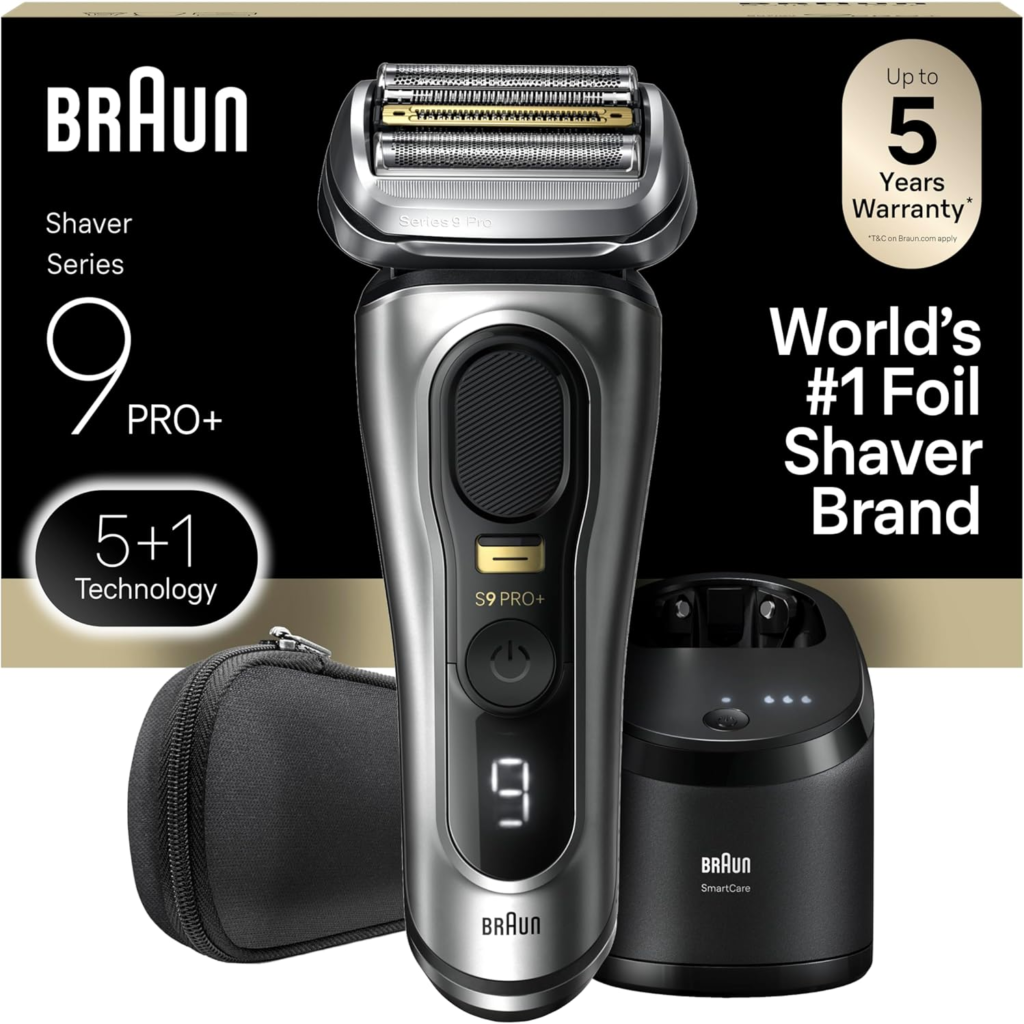
Braun Series 9 Pro+
Key Specs:
- HyperGlide foil lowest skin friction of any foil shaver
- AutoSense motor prevents over-working reactive skin zones
- ProLift trimmer captures hairs in fewer passes, less cumulative skin exposure
- IPX7 waterproof for wet shaving with gel
- 60-minute battery with 5-minute quick charge
Pros:
- HyperGlide foil is the most direct razor burn prevention feature available, engineered specifically to reduce blade-to-skin friction to the lowest achievable level in a foil shaver
- AutoSense automatically reduces motor aggression in thin, reactive skin zones on the neck and upper lip where razor burn is most common
- Wet shaving capability adds gel lubrication as an additional friction reduction layer for reactive skin
Cons:
- Premium price
- Expensive replacement cassettes
Best For: Men with sensitive or reactive skin who experience regular post-shave irritation and want the most skin-protective foil technology available.
👉 Check Latest Price on Amazon
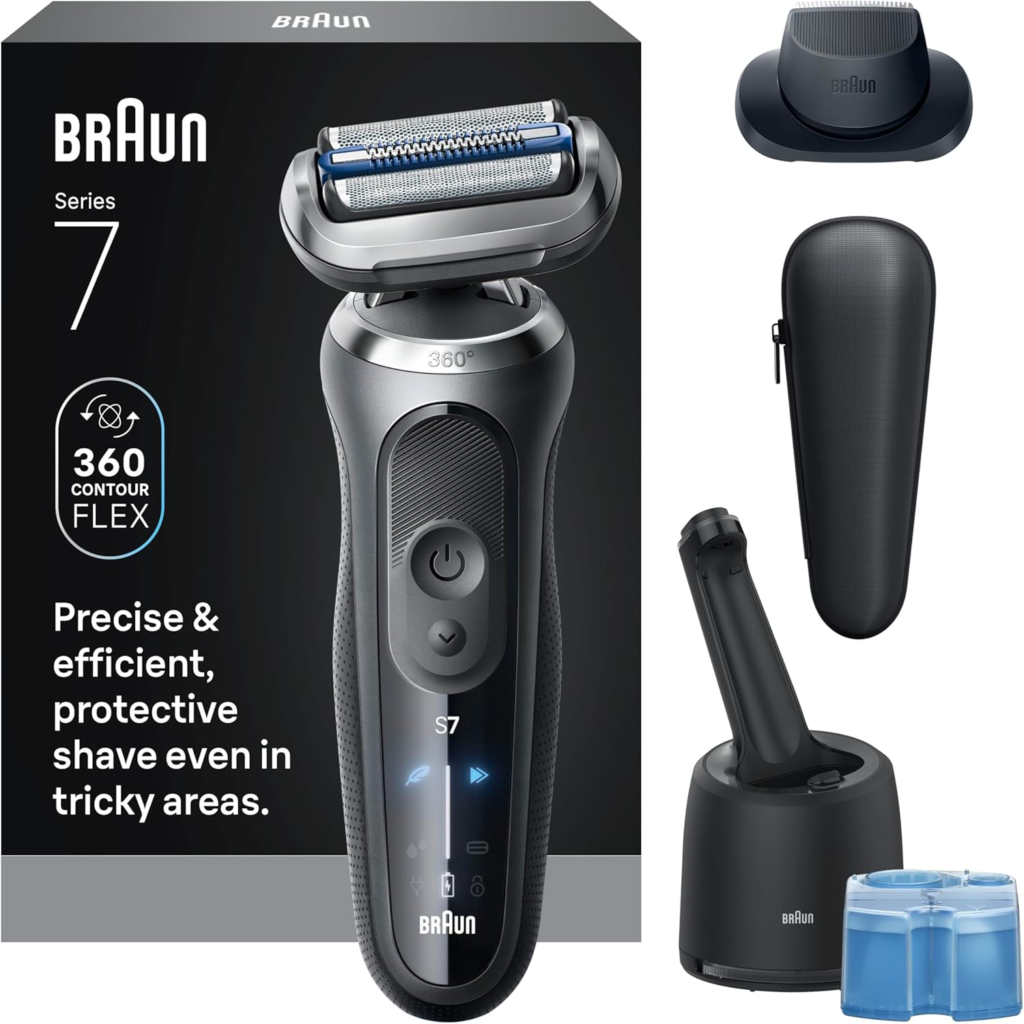
Braun Series 7 71-N7171cc
Key Specs:
- AutoSense motor with density and resistance sensing
- Active Lift trimmer reduces repeat passes on flat hairs
- SensoFlex flex head distributes pressure evenly
- IPX7 waterproof
- Clean and Charge Station included
Pros:
- AutoSense motor is the most impactful mid-range razor burn prevention feature automatically reducing power through sensitive skin zones prevents the over-cutting that triggers post-shave redness on the neck
- Active Lift trimmer captures flat-lying hairs without repeat passes, reducing total skin exposure during the shave
- Clean and Charge Station maintains blade sharpness automatically, eliminating one of the most common razor burn triggers
Cons:
- One fewer cutting element than Series 9
- HyperGlide foil not present
Best For: Men with sensitive skin on a mid-range budget who want AutoSense protection and automated maintenance without flagship pricing.
👉 Check Latest Price on Amazon
Braun Series 5 5118s
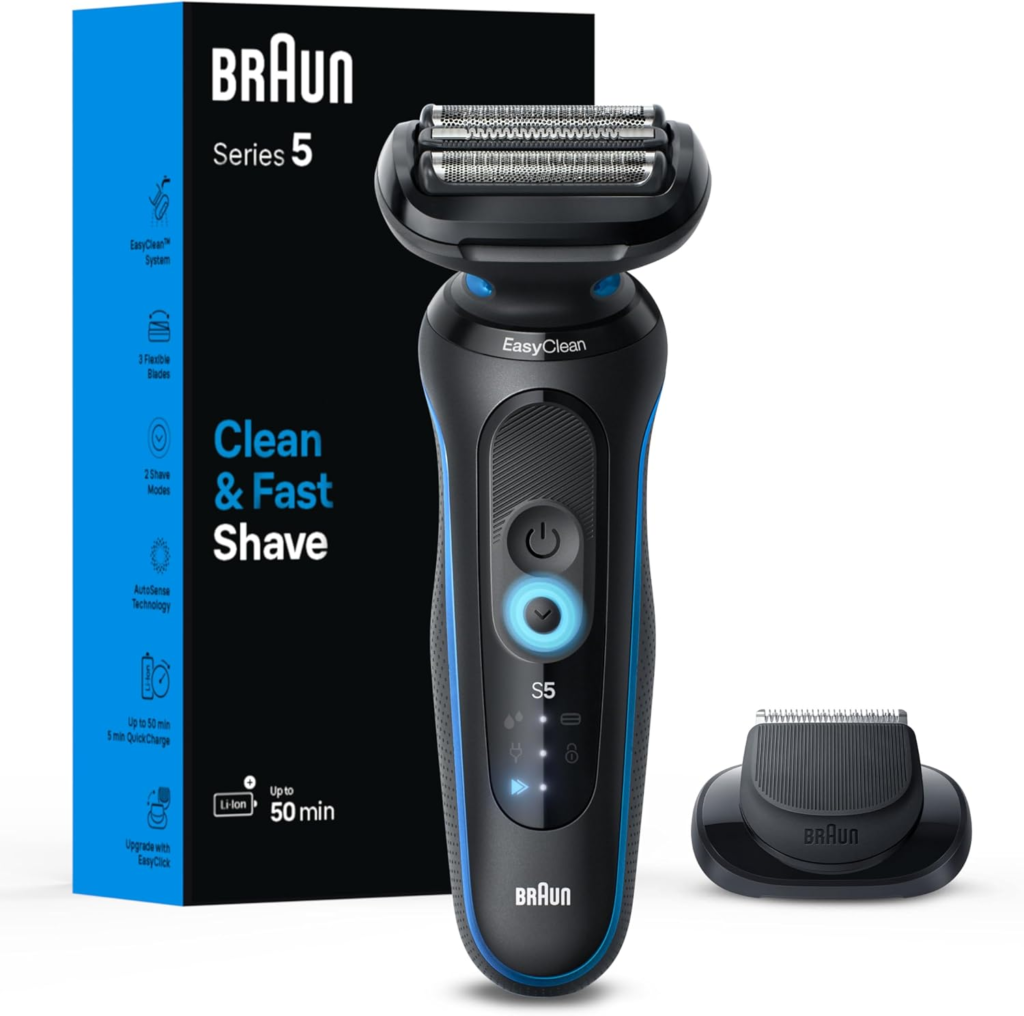
Key Specs:
- AutoSense motor at the most accessible Braun price
- EasyClean rinsing system
- Flexible head for even pressure distribution
- IPX7 waterproof
- 45-minute battery
Pros:
- AutoSense motor at the most accessible price point in the Braun lineup, the same intelligent density sensing that prevents razor burn in the Series 7 and 9, at a budget-friendly price
- Lightweight design reduces the instinct to press hard, lighter shavers in hand naturally encourage lighter technique
- EasyClean makes daily cleaning effortless, keeping blades sharp and eliminating debris-caused razor burn
Cons:
- Three cutting elements more passes needed on dense zones
- No Clean and Charge Station
Best For: Men with sensitive skin on a moderate budget who want Braun’s AutoSense razor burn protection at the lowest available price.
👉 Check Latest Price on Amazon
Panasonic Arc5 ES-LV97
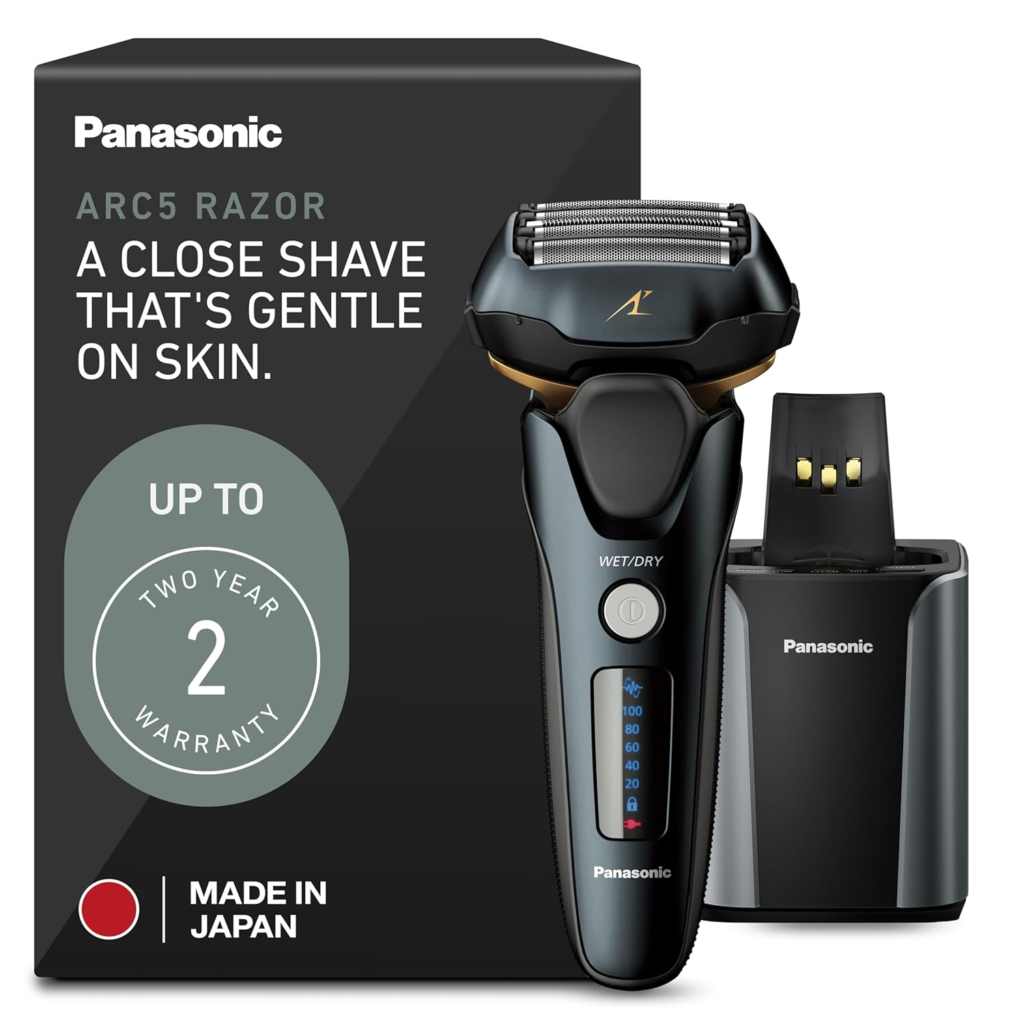
Key Specs:
- Nano-polished blades cut cleanly without bending
- 14,000 CPM severs hair before mechanical stress accumulates
- Multi-flex 16-direction head distributes shaving pressure
- IPX7 waterproof
- Automatic cleaning system
Pros:
- Nano-polished blades eliminate the bending-before-cutting action that is the primary mechanical cause of razor burn, clean cuts at skin level with minimal tissue disturbance
- 14,000 CPM speed means each hair receives less total blade contact time per cut, less contact time means less heat generation and less cumulative skin friction
- Best choice for men with coarse beards on sensitive skin handles heavy stubble without the repeat passes that cause razor burn on reactive skin
Cons:
- Bulkier design
- Loud cleaning station
Best For: Men with sensitive skin who also have coarse or thick beards where slower shavers require more passes and more cumulative friction on reactive skin.
👉 Check Latest Price on Amazon
Pre and Post Shave Routine for Sensitive Skin
This complete routine minimizes razor burn risk from preparation through post-shave care.
Pre-Shave (Before Picking Up the Shaver)
- Shower or wash face with warm water for two to three minutes
- Apply a thin layer of shaving gel if using a waterproof shaver
- Wait 20 minutes after waking before shaving, never shave on a freshly woken face
- Ensure shaver is clean and blades are within their replacement window
During the Shave
- Use short, light strokes, foil shavers in linear overlapping patterns, rotary shavers in circular motions
- Shave with the grain on the first pass always
- Use minimum pressure throughout guide the shaver, do not push it
- Stretch skin taut on the jaw and neck with the free hand
- Rinse the shaver head every 30 to 45 seconds during wet shaving
Post-Shave (Immediately After)
- Rinse face with cool water closes pores and reduces initial inflammation
- Pat dry gently, never rub
- Apply an alcohol-free post-shave balm within two minutes
- Allow balm to absorb fully before applying any other products
- Avoid hot environments (sun exposure, saunas) for 30 minutes after shaving
Who This Guide Is For
Men who experience regular post-shave redness or burning and have accepted it as normal, it is not normal and it is almost certainly preventable with the fixes in this guide.
Men who recently switched from manual razors to electric shavers and are experiencing the adaptation period, this guide helps distinguish temporary adaptation irritation from the fixable causes above.
Men who have recently noticed their post-shave irritation increasing after previously having no issues almost always a blade wear or cleaning issue that a fresh cassette and thorough clean resolves.
Men with sensitive or reactive skin who want a systematic approach to eliminating every razor burn trigger rather than managing symptoms after the fact.
Conclusion
Electric shaver razor burn is not an inevitable consequence of electric shaving, it is a signal that one or more specific, fixable problems exist in your shaver, your technique, or your routine. Worn blades, excessive pressure, dry unprepared skin, wrong technique, and dirty shavers account for the vast majority of post-shave irritation from electric razors. Address each one and razor burn becomes a rare exception rather than a daily experience.
Start with the most common fixes: replace blades if they are over 12 months old, reduce pressure, shave after a warm shower, and clean the shaver head thoroughly. These four changes alone resolve razor burn in most cases without any product purchases or shaver upgrades.
If irritation persists after all technique and maintenance improvements, the shaver itself may need upgrading to a model with better skin protection technology. Our complete guide on the best electric shavers for sensitive skin covers every model engineered specifically to minimize post-shave skin reactions.
👉 Ready to eliminate razor burn for good? Browse our top-rated shavers for sensitive skin on Amazon and check current prices today.
AMAZON AFFILIATE DISCLAIMER
This post contains affiliate links. If you purchase through our links, we may earn a small commission at no extra cost to you.
FAQs
Q1: Why does my electric shaver cause razor burn?
The most common causes are worn or dull blades that bend hair before cutting, too much pressure during shaving, dry unprepared skin with no lubrication, a dirty or clogged shaver head, and incorrect technique for the shaver type. In most cases, replacing the blade cassette, reducing pressure, and shaving after a warm shower resolves razor burn without any other changes.
Q2: How do I stop razor burn from my electric shaver?
Work through the causes in order of likelihood: replace blades if over 12 months old, reduce shaving pressure, start shaving after a warm shower, clean the shaver thoroughly, switch to wet shaving with gel if using a waterproof model, and ensure you are using correct technique for your shaver type. Most razor burn cases resolve after addressing two or three of these factors.
Q3: Is razor burn from electric shavers normal?
No, regular post-shave irritation from an electric shaver indicates something specific is wrong and fixable. Electric shavers are designed to shave without causing significant skin irritation. When used with correct technique, clean sharp blades, and proper preparation, electric shaving should cause minimal to no razor burn on most skin types.
Q4: Does shaving against the grain cause razor burn with electric shavers?
It can particularly on sensitive skin and the neck zone. Against-the-grain passes cut hairs shorter but generate more friction per stroke and can cut coarse hairs slightly below skin level. Always make the first pass with the grain. Only add an against-the-grain second pass if your skin tolerates it, and never on the neck if that is where your razor burn typically appears.
Q5: How do I soothe razor burn after electric shaving?
Apply a cold compress immediately to reduce initial inflammation, then apply an alcohol-free post-shave balm containing aloe vera or ceramides within two minutes of finishing. Avoid rubbing the affected area. Do not shave over active razor burn. For severe reactions, a thin application of 1 percent hydrocortisone cream reduces inflammation effectively.
Q6: Can a dirty electric shaver cause razor burn?
Yes, one of the most common and overlooked causes. Packed debris inside the foil or rotary head prevents the cutting surface from lying flat against the skin, acts as an abrasive against blade edges, and generates extra heat from motor resistance. A thorough deep clean often resolves razor burn that blade replacement alone did not fix.
Q7: What post-shave products help prevent electric shaver razor burn?
Alcohol-free post-shave balms and gels containing aloe vera, chamomile, witch hazel, or ceramides are the most effective post-shave products for razor burn prevention. Apply immediately after shaving while skin is still warm. Avoid alcohol-based aftershaves on sensitive or reactive skin, they further dry and irritate the compromised skin barrier.
Q8: Should I switch to wet shaving to prevent razor burn from my electric shaver?
For men with sensitive or dry skin experiencing regular razor burn from dry electric shaving, switching to wet shaving with a waterproof model and shaving gel is one of the most effective single changes available. The gel lubrication reduces blade-to-skin friction significantly, the primary mechanical cause of razor burn. Most sensitive skin users report a meaningful improvement in post-shave comfort after switching to wet electric shaving.