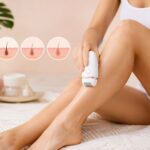
Ingrown hairs after epilating can be frustrating. You use an epilator because you want smooth skin for longer, but then small red bumps, itchy spots or trapped hairs appear a few days later. This does not mean epilation is bad for everyone. It usually means the skin needs better preparation, gentler technique or more consistent aftercare.
An epilator removes hair from the root using tiny rotating tweezers. Since the hair grows back from below the surface, it can sometimes get trapped under dead skin or curl back into the skin instead of growing outward. Mayo Clinic explains that ingrown hair can happen after hair removal methods such as shaving, tweezing or waxing when hair grows back and curves into the skin. Hair structure plus direction of growth can also play a role.
The good news is that many ingrown hairs can be reduced with simple habits. Gentle exfoliation, clean tools, slow epilation, loose clothing, proper moisturizing and avoiding repeated passes can make a big difference. This guide explains why ingrown hairs happen after epilating, how to prevent them, how to treat them safely at home, what not to do and when it is better to see a dermatologist.
Quick Answer: Why Do Ingrown Hairs Happen After Epilating?
Ingrown hairs happen after epilating when new hair grows back but does not come out through the skin properly. It may curl into the skin, grow sideways or become trapped under dead skin buildup.
| Cause | Why It Happens | What Helps |
| Dead skin buildup | Hair cannot grow out smoothly | Gentle exfoliation |
| Coarse or curly hair | Hair bends back into skin more easily | Regular aftercare |
| Tight clothing | Friction blocks or irritates follicles | Loose breathable clothing |
| Dry skin | Skin surface becomes rough | Moisturizing |
| Repeated epilator passes | Skin becomes irritated | Slow controlled technique |
| Dirty epilator head | Follicles may become irritated | Clean device before and after use |
| Epilating too often | Skin does not recover | Space out sessions |
What Do Ingrown Hairs Look Like After Epilating?
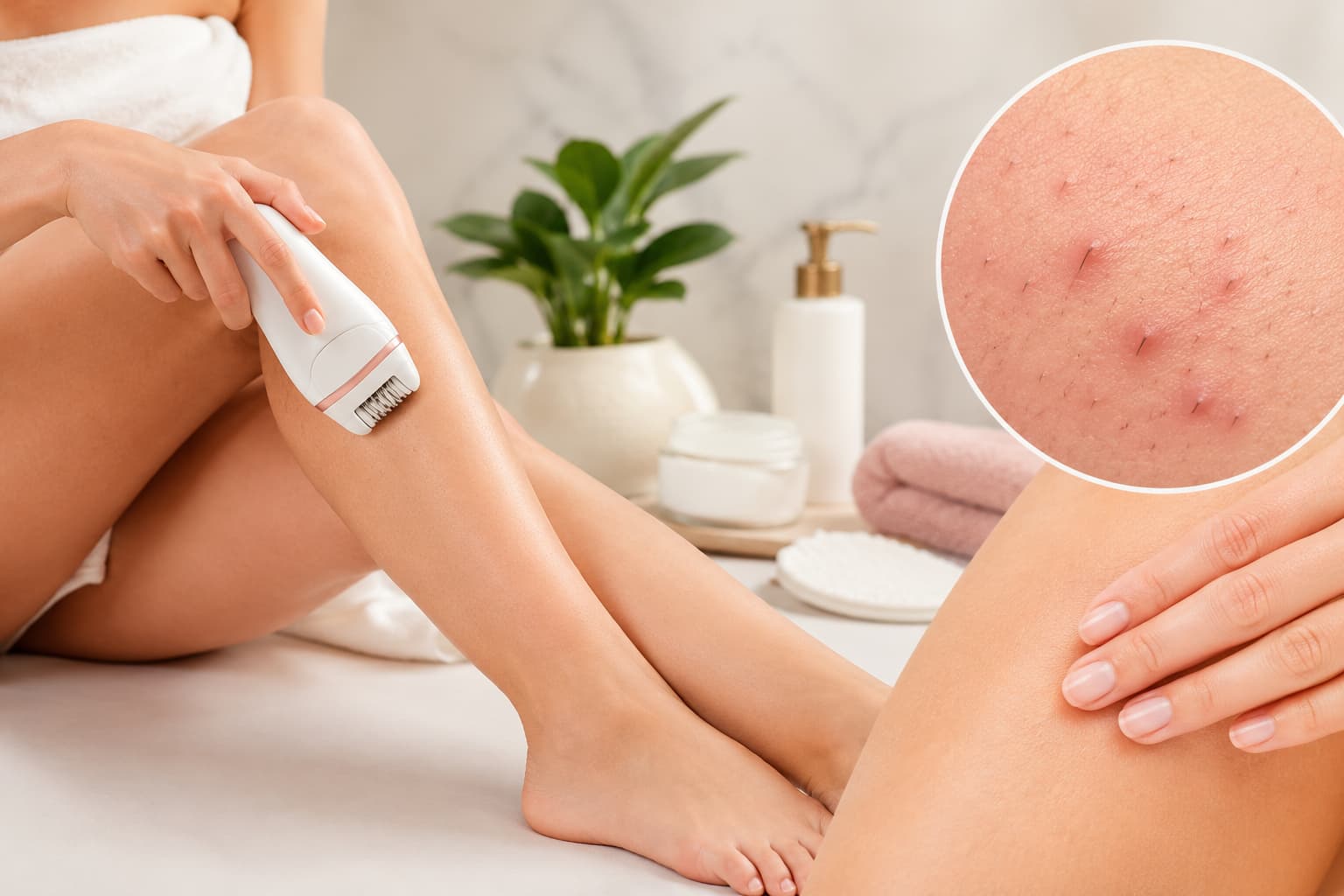
Ingrown hairs after epilation can look different from person to person. Some are small red bumps. Some look like tiny pimples. Some feel itchy or tender. Sometimes you may see a small hair trapped under the skin. Common signs include:
- Small red bumps
- Itchy spots after epilation
- Tender bumps around hair follicles
- Small pimple like marks
- Dark spots after bumps heal
- A visible trapped hair under skin
- Rough texture after hair starts growing back
Cleveland Clinic explains that ingrown hairs can appear after hair removal and may be painful or itchy. They are more common in areas such as legs, armpits and pubic areas.
Are Ingrown Hairs Normal After Epilating?
Ingrown hairs can happen after epilating, especially when you are new to the method. They are more likely if your hair is coarse, curly or thick. They can also happen if you skip exfoliation, wear tight clothing right after epilation or use poor technique.
A few small bumps may not be a serious problem but frequent painful bumps, pus filled spots, swelling or repeated dark marks mean your routine needs adjustment. If the same area keeps reacting badly, pause epilation there and let the skin heal before trying again.
Why Epilating Can Cause Ingrown Hairs
Hair Is Removed From the Root
Epilation pulls hair from the root. When the hair grows back, it has to travel through the follicle and out through the skin surface. If dead skin blocks the opening, the hair may become trapped.
Hair Can Grow at an Angle
Some hair naturally grows at an angle. Curly or coarse hair may curve back into the skin more easily. Mayo Clinic notes that hair structure and growth direction can contribute to ingrown hair.
Skin Can Become Irritated
If you press too hard, move too fast or repeat the same area many times, the skin can become inflamed. Irritated skin is more likely to trap hair.
Dry Skin Makes It Worse
Dry skin can create a rough surface. This can make it harder for new hair to grow out smoothly.
Tight Clothing Adds Friction
Tight jeans, leggings or underwear can rub freshly epilated skin. Friction can irritate follicles and make bumps worse.
Best Areas Where Ingrown Hairs Happen After Epilating
Legs
Legs are the most common epilation area, so ingrown hairs often appear here. They may show on calves, thighs or around knees. Dry skin plus tight pants can make leg bumps worse.
Underarms
Underarms are sensitive. Sweat, deodorant, friction and hair growing in different directions can increase irritation. If you epilate underarms, wait before applying deodorant.
Bikini Line
The bikini line is one of the most common areas for ingrown hairs because hair is often thicker and more curved. Cleveland Clinic specifically discusses ingrown pubic hairs after hair removal methods such as shaving, waxing or plucking.
Arms
Arm hair is often finer but ingrown hairs can still happen if the skin is dry or if you use repeated passes.
Face
Facial epilation can cause bumps if the device is not designed for the face or if you go over the same area too much. Use only a facial epilator for facial hair.
How to Prevent Ingrown Hairs After Epilating
1. Learn Proper Epilator Technique
The first prevention step is learning how to use an epilator correctly. Poor technique is one of the biggest reasons people get bumps after epilation. Good technique means:
- Hold skin taut
- Move slowly
- Do not press hard
- Use the correct angle
- Start with lower speed
- Avoid repeated passes
- Clean the device after use
- Do not epilate irritated skin
If your skin gets bumps often, review a full how to use an epilator guide before your next session.
2. Exfoliate Gently Before Epilation
Exfoliation helps remove dead skin cells that can block hair from growing outward. Do not scrub aggressively. Harsh exfoliation can irritate the skin before epilation. A good routine is gentle exfoliation the day before epilating. This gives the skin time to calm down before hair removal. You can use:
- Soft exfoliating glove
- Gentle body scrub
- Mild chemical exfoliant
- Soft washcloth
- Body brush with light pressure
Avoid rough scrubbing right before epilation.
3. Moisturize Regularly
Dry skin can make ingrown hairs worse. Moisturizing keeps the skin surface softer, which may help hair grow out more smoothly. Use a gentle fragrance free lotion after the skin calms. Keep moisturizing between sessions, especially on legs and arms.
4. Trim Long Hair Before Epilating
Long hair pulls harder. It can make epilation more painful and increase irritation. If hair is long, trim it first. The epilator should catch short hair cleanly. It should not tug long strands aggressively.
5. Use a Gentle Epilator for Sensitive Skin
If your skin gets red or bumpy easily, the device matters. The best epilators for sensitive skin usually include wet and dry use, massage caps, sensitive area caps, speed settings and better skin contact. A basic dry only epilator can still work but it may feel harsher for sensitive users.
6. Avoid Tight Clothing After Epilation
Freshly epilated skin needs breathing space. Tight clothing can rub the skin and trap hair. After epilating legs or bikini line, avoid tight jeans, leggings or tight underwear for a few hours. Loose cotton clothing is usually better.
7. Do Not Epilate Too Often
Epilating too often can irritate the skin before it has recovered. If your skin is still red, sore or bumpy, wait. Most women do better with epilation every 2 to 4 weeks after they build a routine. Touchups can be done earlier only if the skin is calm and the hair is long enough to grip.
8. Clean the Epilator Before and After Use
A dirty epilator head can irritate follicles. Remove trapped hair after every session. Use the cleaning brush. If the head is washable, rinse only as the manual allows. Let the head dry fully before storing.
9. Do Not Epilate Over Bumps
If you already have bumps, do not run the epilator over them. This can make irritation worse. Wait until the skin heals. Use gentle care in the meantime.
How to Treat Ingrown Hairs After Epilating
Most mild ingrown hairs improve with patience and gentle care. The goal is to calm the skin and help the hair release naturally.
Step 1: Stop Epilating That Area
Do not epilate over ingrown hairs. Stop hair removal in that area until the bumps improve. Mayo Clinic says treatment for ingrown hair can involve stopping shaving, tweezing or waxing until the condition improves.
Step 2: Use a Warm Compress
A warm compress can soften the skin and help the trapped hair come closer to the surface. Cleveland Clinic recommends warm compresses for 10 to 15 minutes to help open pores and make it easier for ingrown hairs to release. Use a clean warm washcloth. Do not use water that is too hot.
Step 3: Exfoliate Gently
Once the skin is not painful, use gentle exfoliation. This can help remove dead skin that may be trapping the hair. Do not scrub hard. Do not use strong acids on broken skin.
Step 4: Keep the Area Moisturized
Use a gentle fragrance free moisturizer. Dry skin can make bumps look worse and feel itchier.
Step 5: Avoid Picking or Digging
Do not dig into the skin with needles, nails or sharp tweezers. This can cause infection, scarring or dark marks. If the hair is clearly above the skin surface, some people carefully release it with clean tweezers but avoid digging. If you are not sure, leave it alone or ask a professional.
Step 6: Use an Ingrown Hair Treatment Carefully
Some ingrown hair treatments use ingredients like salicylic acid, glycolic acid or lactic acid to exfoliate the skin surface. These can help some people but they can also sting if your skin is sensitive. Use these carefully:
- Patch test first
- Avoid broken skin
- Do not use right after epilation
- Start slowly
- Stop if burning or irritation happens
- Avoid strong products on bikini line unless made for that area
Step 7: Wear Loose Clothing
Friction can make bumps worse. Wear loose clothing until the area calms.
What Not to Do With Ingrown Hairs
Avoid these mistakes:
- Do not pick bumps
- Do not squeeze pus filled spots
- Do not dig with a needle
- Do not epilate over active ingrown hairs
- Do not use harsh scrubs on irritated skin
- Do not apply strong acids on broken skin
- Do not wear tight clothing right after epilation
- Do not use perfume products on fresh bumps
- Do not ignore painful swelling
- Do not share your epilator with another person
The Canadian Dermatology Association notes that ingrown hairs can sometimes become infected or lead to skin color changes or scarring, especially when scratched or picked. It advises contacting a doctor or dermatologist if signs of possible infection appear.
Best Aftercare Routine to Prevent Ingrown Hairs
Right After Epilation
- Rinse skin gently if needed
- Pat dry with a clean towel
- Avoid tight clothing
- Avoid perfume products
- Avoid deodorant on irritated underarms
- Do not exfoliate immediately
- Let redness calm down
Later the Same Day
- Apply fragrance free moisturizer
- Wear loose breathable clothing
- Avoid heavy workouts if skin feels tender
- Do not scratch
Next Day
- Moisturize again
- Check for bumps
- Avoid harsh scrubs if skin is still red
- Use gentle exfoliation only if skin feels calm
Between Sessions
- Exfoliate gently 1 to 2 times per week
- Moisturize regularly
- Keep tools clean
- Avoid tight clothing after hair removal
- Do not epilate until hair is long enough
- Pause if bumps appear
Best Products That May Help
Gentle Exfoliating Glove
A soft exfoliating glove can help remove dead skin from legs and arms. Do not use strong pressure. The goal is gentle smoothing, not scraping.
Mild Body Scrub
A mild body scrub can help if your skin is not too sensitive. Avoid large rough particles that scratch the skin.
Salicylic Acid Body Treatment
Salicylic acid can help exfoliate inside pores. It may be useful for bumps, but it can sting on sensitive skin. Do not apply right after epilation.
Glycolic or Lactic Acid Lotion
These ingredients can smooth rough skin texture. Use slowly and avoid the bikini area unless the product is made for sensitive areas.
Fragrance Free Moisturizer
Moisturizer helps keep the skin barrier comfortable. This is important if your legs or arms get dry after epilation.
Soothing Gel
Aloe based or calming gels can help skin feel more comfortable after hair removal. Choose simple formulas without heavy fragrance.
Ingrown Hairs After Epilating Legs
Legs are usually easier to epilate but ingrown hairs can happen if skin is dry or if you wear tight clothing after hair removal. To prevent leg bumps:
- Exfoliate gently before epilation
- Moisturize between sessions
- Avoid tight leggings right after
- Use slow controlled passes
- Do not epilate every few days
- Clean the epilator after each use
Ingrown Hairs After Epilating Underarms
Underarms are more sensitive because of sweat, friction and deodorant use. To reduce underarm bumps:
- Trim long hair first
- Use a sensitive cap
- Hold skin taut
- Avoid deodorant right after
- Wear loose sleeves
- Clean the area gently
- Do not epilate again if bumps appear
Ingrown Hairs After Epilating Bikini Line
The bikini line needs extra care because hair can be coarse and curved. It is also more likely to react to tight clothing. To reduce bikini line ingrown hairs:
- Use an epilator only on the outer bikini line
- Trim first
- Do a small test patch
- Avoid tight underwear after
- Do not attempt full Brazilian epilation as a beginner
- Use gentle aftercare
- Switch to a bikini trimmer if bumps keep coming back
Ingrown Hairs After Facial Epilation
Facial bumps can be noticeable and annoying. Use only a facial epilator, not a large body epilator. To reduce facial ingrown hairs:
- Clean the face first
- Clean the device
- Avoid active acne
- Hold skin taut
- Do not repeat too many passes
- Use calming moisturizer
- Avoid acids or retinoids right after
Epilator vs Waxing: Which Causes More Ingrown Hairs?
Both epilation and waxing can cause ingrown hairs because both remove hair from the root. The difference is technique and skin reaction. Waxing removes hair quickly in larger sections. It can also pull on the skin, which may irritate sensitive users. Epilation gives more control because you can pause, move slowly and avoid certain spots.
If waxing gives you bumps, epilation may be worth trying. If epilation gives you repeated bumps, waxing or trimming may be better.
Epilator vs Shaving for Ingrown Hairs
Shaving can cause ingrown hairs because the cut hair may grow back into the skin, especially when hair is curly or coarse. Epilation can also cause ingrown hairs because regrowth starts from the root.
If shaving gives you razor bumps, epilation may help some people. If epilation traps hair under the skin, shaving with proper technique or using an electric shaver may be better. There is no perfect method for everyone. Your hair type and skin response matter.
When Should You Stop Epilating?
Stop epilating an area if:
- Bumps are painful
- Redness keeps getting worse
- You see pus
- The skin feels hot or swollen
- Ingrown hairs keep returning
- Dark marks are getting worse
- The area bleeds
- You have a rash
- You feel burning after every session
Give the skin time to heal before trying again.
When to See a Dermatologist
See a dermatologist or healthcare professional if ingrown hairs are painful, infected, spreading or recurring often. Cleveland Clinic notes that painful cysts or ones showing signs of infection need medical treatment. You should get medical advice if you notice:
- Pus
- Increasing swelling
- Severe pain
- Warmth around the bump
- Fever
- Redness spreading
- Repeated cyst like lumps
- Scarring
- Dark marks that keep worsening
- Ingrown hairs that do not improve
How to Adjust Your Epilation Routine After Ingrown Hairs
If you get ingrown hairs often, do not quit immediately. First, adjust your routine.
Change Your Prep
Exfoliate gently the day before. Trim long hair. Make sure skin is clean.
Change Your Device
If your current device is harsh, try a sensitive skin epilator with wet and dry use, lower speed and comfort caps.
Change Your Technique
Move slowly, hold skin taut and avoid repeated passes.
Change Your Aftercare
Moisturize regularly. Avoid tight clothing. Use gentle exfoliation between sessions.
Change Your Frequency
Do not epilate too often. Give the skin enough recovery time.
Simple Weekly Routine for Ingrown Hair Prevention
| Day | Routine |
| Day 1 | Epilate at night, then moisturize after skin calms |
| Day 2 | Moisturize, avoid harsh exfoliation |
| Day 3 | Gentle exfoliation if skin is calm |
| Day 4 | Moisturize |
| Day 5 | Gentle exfoliation if needed |
| Day 6 | Moisturize |
| Day 7 | Rest skin and check for bumps |
Repeat based on your hair growth. Do not exfoliate harshly or daily if your skin is sensitive.
Final Verdict: How to Prevent and Treat Ingrown Hairs After Epilating
Ingrown hairs after epilating usually happen when hair grows back but gets trapped under the skin or curls back into the follicle. They are more common if you have coarse or curly hair, dry skin, tight clothing, poor technique or skipped aftercare. The best prevention routine is simple. Exfoliate gently before epilation, trim long hair, use a clean device, hold skin taut, move slowly, avoid repeated passes and moisturize after the skin calms. Between sessions, keep the skin soft and avoid friction.
If ingrown hairs appear, stop epilating that area, use warm compresses, moisturize gently and avoid picking. If bumps become painful, swollen, infected or recurring, see a dermatologist. Epilation can still be a good hair removal method, but smooth results need more than the device. Prep, technique and aftercare are what keep your skin looking clear.
FAQs
Why do I get ingrown hairs after epilating?
You may get ingrown hairs after epilating because hair grows back from the root but gets trapped under dead skin or curls back into the skin.
Are ingrown hairs normal after epilation?
A few small bumps can happen, especially for beginners. Frequent painful bumps mean you should adjust your routine or pause epilation.
How do I prevent ingrown hairs after epilating?
Exfoliate gently before epilation, moisturize regularly, use a clean device, hold skin taut, move slowly and avoid tight clothing right after.
Should I exfoliate before or after epilating?
Exfoliate gently before epilating, ideally the day before. Avoid harsh exfoliation right after epilation because the skin may be sensitive.
Can I epilate over ingrown hairs?
No, do not epilate over ingrown hairs. Wait until the area heals to avoid making irritation worse.
What helps ingrown hairs after epilating?
Warm compresses, gentle exfoliation, fragrance free moisturizer and pausing hair removal can help mild ingrown hairs improve.
Should I pull out an ingrown hair?
Do not dig or pick at the skin. If the hair is not easily visible above the surface, leave it alone or ask a professional.
Can epilating cause dark spots?
Yes, repeated irritation or picking at bumps can lead to dark marks, especially on sensitive or deeper skin tones.
Is waxing better than epilating for ingrown hairs?
Not always. Both can cause ingrown hairs because both remove hair from the root. The better option depends on your skin and technique.
When should I see a doctor for ingrown hairs?
See a doctor if you have pus, severe pain, swelling, warmth, spreading redness, repeated cysts or bumps that do not improve.