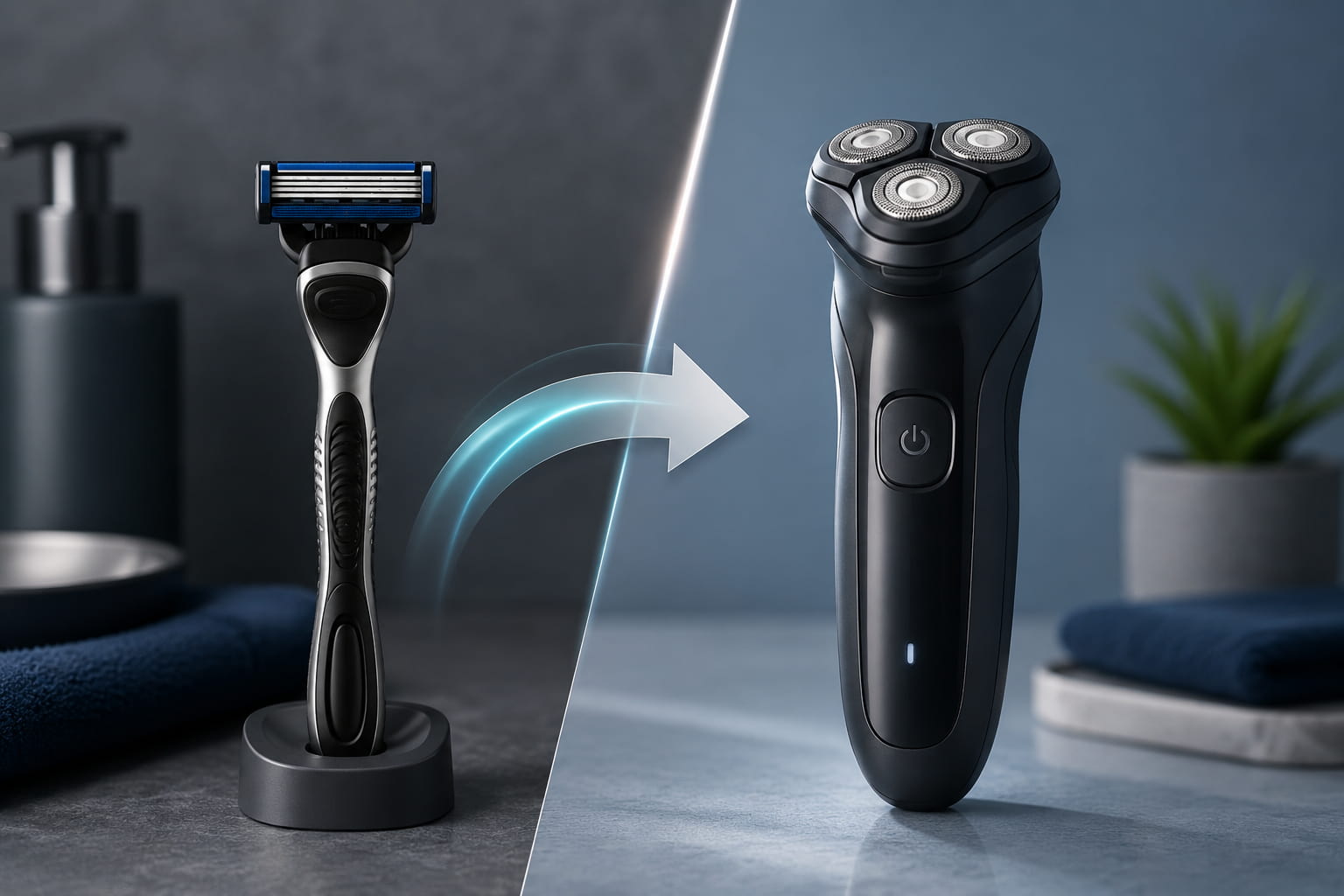
Switching from a cartridge razor to an electric shaver is one of the smartest grooming decisions most men make but it rarely goes smoothly in the first few weeks. The skin needs time to adapt. The technique is different. The result feels unfamiliar. And most men who abandon electric shaving within the first month do so right before the adaptation period ends and the real benefits begin.
This guide covers everything you need to know to make the switch successfully, what to expect during each week of the adaptation period, the exact technique differences between cartridge and electric shaving, how to choose the right electric shaver for your specific beard and skin type, and the habits that turn a frustrating transition into a permanently better shaving routine.
Why Switch from Cartridge to Electric Shaver?
Before committing to the transition, it helps to understand exactly what you are gaining and what trade-offs to expect.
What You Gain
Speed and convenience. An electric shave takes two to four minutes with no water, no gel, no rinsing, no cleanup. A cartridge shave with proper preparation takes eight to twelve minutes. Over a year of daily shaving, that difference adds up to thirty or more hours.
Lower long-term cost. A quality electric shaver with annual blade cassette replacement costs significantly less per shave than a cartridge razor with regular blade head replacements. The upfront investment is higher but the ongoing cost is lower.
Reduced skin irritation over time. Cartridge razors, particularly multi blade designs, cut hair slightly below skin level on each pass, increasing the risk of ingrown hairs, razor bumps, and post-shave redness on sensitive skin. Electric shavers cut at or above skin level with no direct blade-to-skin contact.
No cuts or nicks. The foil or rotary guard on an electric shaver prevents direct blade contact with skin entirely. The cuts and nicks that are a routine risk with exposed cartridge blades become essentially impossible with an electric shaver.
What You Trade Off
Absolute closeness. A fresh multi-blade cartridge razor cuts hair slightly below skin level, delivering a marginally closer result than most electric shavers. Premium electric shavers close this gap significantly, but a cartridge razor on smooth, prepared skin still edges ahead on raw closeness for most men.
Initial skin comfort during adaptation. The first two to four weeks of electric shaving often feel worse than the cartridge experience you are leaving behind. This is temporary but it is real.
What to Expect: The Adaptation Period Week by Week
The adaptation period is the most important concept in this entire guide. Understanding it prevents the most common reason men abandon electric shaving — quitting just before the benefits kick in.
Week One: The Hardest Week
The first week of electric shaving is the most uncomfortable for most men. Your skin is accustomed to the cartridge blade’s smooth, direct cutting action. The oscillating foil or spinning rotary heads feel mechanically different, more surface contact, a different vibration, a different post-shave sensation.
Common week-one experiences:
- Shave feels less close than your cartridge result
- Mild redness or irritation in previously comfortable shaving zones
- Technique feels unfamiliar and unnatural
- The face feels slightly rougher to the touch after shaving than you are used to
What is actually happening: Your skin is responding to a new mechanical stimulus. The foil is making contact with skin zones that previously only experienced the smooth glide of a cartridge blade. Hair follicles are adjusting to a different cutting geometry. None of this is permanent.
Week Two: Marginal Improvement
By week two, skin inflammation from the new technique begins to subside. The foil technique starts to feel more natural. Closeness begins to improve as your stroke patterns become more methodical and calibrated to the new shaver type.
Common week-two experiences:
- Reduced redness compared to week one
- Technique becoming more confident and consistent
- Shave closeness improving noticeably from week-one results
- Some shaving sessions feeling genuinely good
Week Three: The Turning Point
Week three is where most men who have stuck with the transition notice the first genuinely positive result. Skin is now adapted to the foil contact. Technique is largely calibrated. The morning shave starts to feel comfortable and fast.
Common week-three experiences:
- Post-shave irritation significantly reduced or absent
- Closeness approaching cartridge results on good sessions
- Morning shaving time noticeably faster than cartridge routine
- The convenience advantage of electric shaving becoming apparent
Week Four: Full Adaptation
By week four, skin is fully adapted to electric shaving. The foil contact that felt aggressive in week one now feels normal. Technique is settled. Results are consistent. The full benefits of electric shaving, speed, convenience, reduced cuts, lower long-term cost, are now available without the transition friction of the early weeks.
Most men at week four report that returning to a cartridge razor feels foreign rather than comfortable, the adaptation goes both ways.
Key Technique Differences: Cartridge vs Electric
This is where most switching failures originate. Men apply their cartridge technique to an electric shaver and are confused when it does not work.
Pressure
Cartridge: You apply meaningful downward pressure to draw the blade edge across the skin surface. Pressing harder generally helps the cartridge blade reach closer to skin level.
Electric: You use the lightest possible pressure, just enough to keep the foil in contact with the skin. Pressing harder with an electric shaver compresses the skin against the foil, prevents hairs from standing through the perforations, and causes irritation without improving closeness. This is the single most common technique error during the switch.
Stroke Direction and Length
Cartridge: Long, smooth strokes typically two to four inches per pass, following the contour of the face in a single fluid motion.
Electric foil: Short, overlapping strokes approximately one to two inches per pass, working systematically across each facial zone. Think methodical coverage rather than fluid motion.
Electric rotary: Slow, circular motions approximately coin-sized circles, overlapping across each zone. Completely different from cartridge linear strokes.
Preparation
Cartridge: Requires warm water, shaving cream or gel, and a thorough post-shave rinse. Preparation is mandatory for both performance and comfort.
Electric (dry): Requires no preparation whatsoever. Pick up and shave. This is one of the core convenience advantages but feels abrupt when transitioning from a preparation-dependent routine.
Electric (wet): Optional preparation with shaving gel for waterproof models, delivering better results than dry electric shaving, particularly during the adaptation period.
Post-Shave Feel
Cartridge: Immediately smooth to the touch the below-skin-level cut leaves no stubble detectable by running a finger across the shaved surface for several hours.
Electric: The at-skin-level cut leaves a very fine stubble detectable by touch immediately after shaving, though not visible. This tactile difference is the most common source of “it’s not as close” complaints from new electric shaver users. The difference is felt but rarely seen. After adaptation, most men stop noticing it.
How to Choose Your First Electric Shaver
The right first electric shaver significantly affects how smooth the adaptation period is. Here are the key selection criteria for switchers.
Foil First
For men switching from cartridge razors, foil shavers are the recommended starting point. The linear cutting motion of foil shavers is closer to the directional stroke technique of cartridge shaving than the circular rotary method making the technique transition less dramatic. Foil also delivers a closer result on most beard types, which eases the closeness comparison anxiety during the early weeks.
Adaptive Motor Technology
For switchers, adaptive motor technology (Braun’s AutoSense) makes a significant difference during the adaptation period. The motor automatically reduces aggression on reactive or thinning skin zones, directly reducing the week-one irritation that causes most men to abandon the switch prematurely.
Waterproof for Wet Option
Having the wet shaving option available during the switch is valuable. Wet electric shaving with shaving gel during the adaptation period provides the lubrication that cartridge-accustomed skin expects, easing the mechanical transition significantly. A waterproof IPX7 shaver gives you the flexibility to shave dry when convenient and wet when your skin needs the extra comfort.
Quality Level
Do not start the switch with a budget shaver. This is perhaps the most impactful recommendation in this guide. Budget shavers have lower motor speeds, less precise foil quality, and no adaptive technology, they require a longer adaptation period and deliver a less close result than mid-range and premium models. A man who switches to a $35 budget shaver and experiences a frustrating adaptation period may conclude that electric shaving does not work for him when the actual problem is the shaver quality, not the technology.
Starting with at minimum a mid-range shaver (Braun Series 5 or above, Panasonic Arc4 or above) gives the adaptation period the best possible conditions for success. Our complete electric shaver buying guide covers every specification worth evaluating before making your first purchase.
Step-by-Step Transition Guide
Follow this sequence for the smoothest possible switch from cartridge to electric.
Before the Switch
Step 1: Choose the right shaver. Select a mid-range or premium foil shaver based on your beard type and skin sensitivity. Do not start with a budget model. The Braun Series 7 is the benchmark recommendation for most switchers.
Step 2: Read the manual. Understand your specific model’s technique recommendations, cleaning requirements, and charging instructions before the first use.
Step 3: Set a four-week commitment. Decide before you start that you will use the electric shaver exclusively for four full weeks before evaluating. If you switch back to your cartridge razor during week one or two, you are quitting during the hardest part of the adaptation period before the benefits are available.
During the Switch (Weeks One to Four)
Step 4: Shave after a warm shower every time. During the adaptation period especially, post-shower shaving provides the warm water skin softening that your skin needs to compensate for the new mechanical action.
Step 5: Use shaving gel if your shaver is waterproof. Wet electric shaving during the adaptation period eases the transition significantly for men with sensitive or reactive skin.
Step 6: Use the lightest possible pressure. Remind yourself before every shave during the first two weeks: lighter pressure than feels natural.
Step 7: Use short, systematic strokes. Do not use your cartridge long-stroke technique. Short, overlapping, methodical passes.
Step 8: Do not compare to your cartridge result. Evaluate the electric shave on its own terms during the adaptation period, not against the cartridge result you are used to. The closeness comparison improves every week.
Step 9: Clean after every single shave. During adaptation your skin is more reactive, a dirty shaver exacerbates this. Clean after every use without exception.
After Adaptation (Week Four Onward)
Step 10: Optimize your routine. At week four, begin experimenting with dry versus wet shaving, with-grain versus against-grain second passes, and shaving timing to find what works best for your specific beard and skin combination.
Common Mistakes During the Switch
These errors cause most failed transitions, all easily avoided.
Quitting during weeks one or two. The most common and most consequential mistake. The adaptation period peaks in week one and resolves by week four. Men who quit in weeks one or two never reach the point where electric shaving delivers its full benefits.
Using a budget shaver for the transition. Budget motors, lower-quality foils, and no adaptive technology make the adaptation period longer and more uncomfortable than necessary. Start mid-range at minimum.
Applying cartridge pressure to the electric shaver. Heavy downward pressure that works on a cartridge razor causes irritation and reduced closeness on an electric shaver. Consciously reduce pressure to the minimum contact level.
Using long cartridge strokes with a foil shaver. Long strokes reduce foil contact time per area and cause the head to lift between zones. Short, systematic, overlapping strokes are required.
Switching back and forth. Alternating between cartridge and electric shavers during the adaptation period resets the skin’s adaptation progress. Commit to exclusive electric shaving for the four-week period.
Skipping post-shave moisturizing. Cartridge-accustomed skin receives the lubrication of shaving cream during the shave. Electric dry shaving removes this, the skin feels drier afterward. Post-shave moisturizer during the adaptation period compensates for this difference.
How to Speed Up the Adaptation Period
These practices reduce adaptation period discomfort and accelerate the timeline to settled-in electric shaving comfort.
Wet shave with gel every session during week one. The lubrication reduces mechanical irritation dramatically during the period when skin is most reactive to the new foil contact.
Use a pre-shave powder or spray. Pre-shave products lift hairs away from the skin and reduce surface friction — easing the transition for skin accustomed to the smooth cartridge glide.
Apply an alcohol-free post-shave balm immediately after every shave. Post-shave balm restores the moisture barrier that cartridge shaving cream previously maintained during the shave. Apply within two minutes of finishing.
Do not shave the same area more than twice per session. During adaptation, limit repeat passes to two per zone maximum. More than two passes on the same area during adaptation generates excessive cumulative friction on reactive skin.
Keep the shaver immaculately clean. A clean shaver on adapting skin makes a meaningful difference. Clean after every use during the adaptation period without exception.
Best Electric Shavers for Cartridge Razor Switchers
These models offer the best adaptation period conditions for men switching from cartridge razors. For full reviews see our complete guide to the best electric shavers for men.
Braun Series 7 71-N7171cc
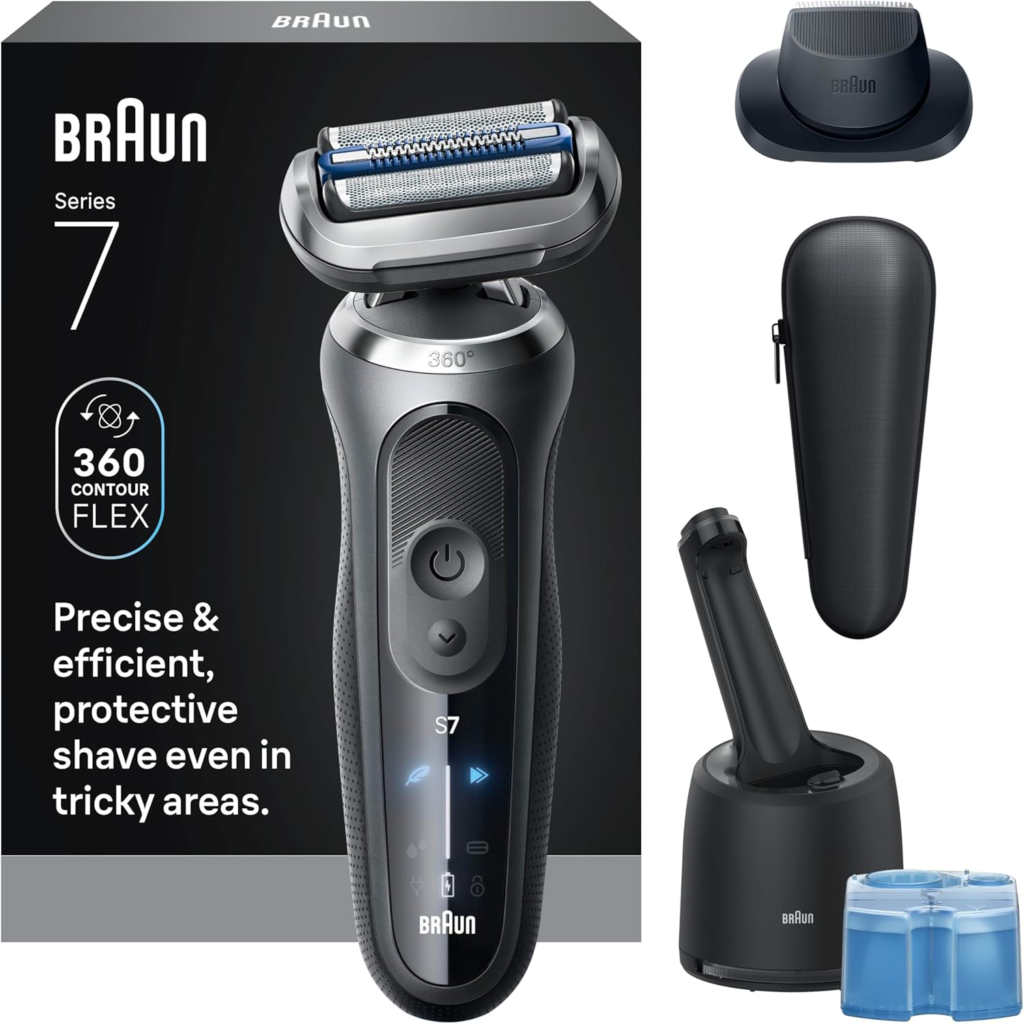
Key Specs:
- 4+1 cutting elements with Active Lift trimmer
- AutoSense motor adjusts to beard density
- SensoFlex flex head adapts to face contours
- IPX7 waterproof, wet and dry
- Includes Clean and Charge Station
- 50-minute battery with 5-minute quick charge
Pros:
- AutoSense motor is the most valuable adaptation period feature, automatically reduces aggression on reactive skin zones that are adjusting to the new foil contact, directly reducing week-one and week-two irritation
- Active Lift trimmer captures more hairs per pass than standard foil, reducing total pass count during adaptation when minimizing skin exposure is most important
- Clean and Charge Station automates maintenance, removing one variable during a period when building new habits is already demanding enough
Cons:
- One fewer cutting element than Series 9
- HyperGlide foil not present
Best For: The benchmark recommendation for most cartridge-to-electric switchers, AutoSense protection, Active Lift efficiency, and automated maintenance at a mid-range price that does not require premium commitment on a first electric shaver.
👉 Check Latest Price on Amazon
Braun Series 5 5120s
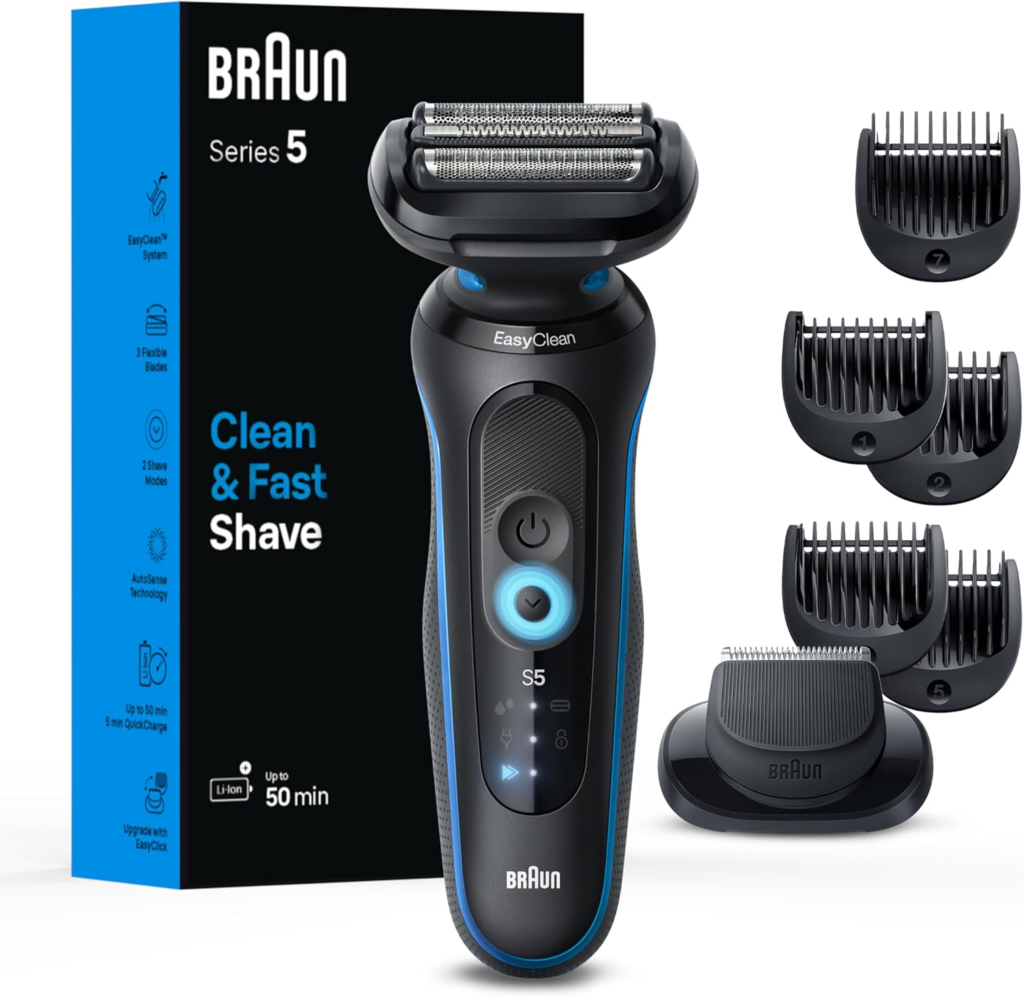
Key Specs:
- 3+1 cutting elements with AutoSense motor
- EasyClean rinsing under tap
- Flexible head
- IPX7 waterproof
- 45-minute battery
Pros:
- AutoSense at the most accessible Braun price, the intelligent density sensing that protects reactive skin during adaptation at a lower entry point than Series 7
- Lightweight design naturally encourages the lighter pressure that new electric shaver users need to learn
- EasyClean simplifies post-shave cleaning during adaptation when building consistent habits
Cons:
- Three cutting elements, more passes needed on dense zones
- No Clean and Charge Station
Best For: Budget-conscious switchers who want Braun’s AutoSense skin protection at the most accessible price in the lineup, the best value for adaptation period skin protection under $120.
👉 Check Latest Price on Amazon
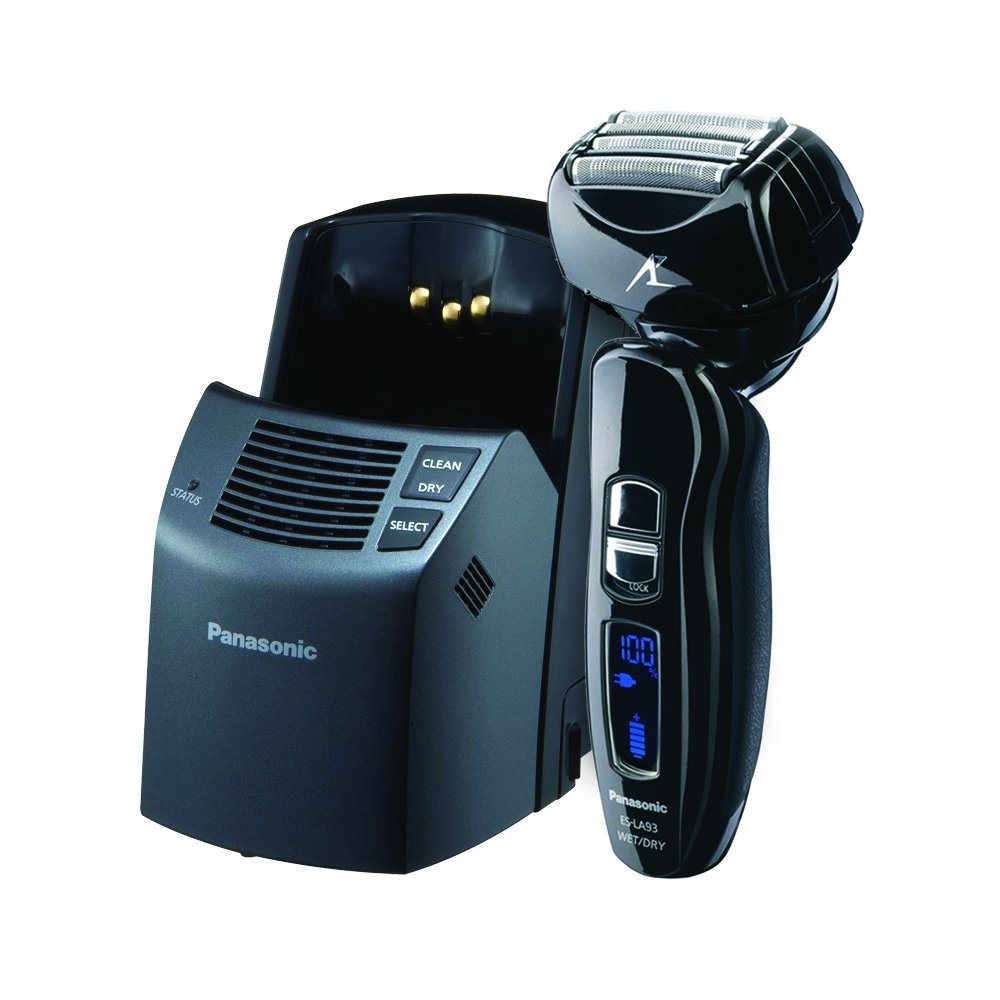
Panasonic Arc4 ES-LA93-K
Key Specs:
- 4-blade system with nano-polished blades
- 13,000 CPM linear motor
- Multi-flex pivoting head
- IPX7 waterproof
- 45-minute battery
Pros:
- 13,000 CPM motor delivers clean single-pass cutting efficiency during adaptation, minimizing the repeat passes that cause cumulative irritation on skin adjusting to electric shaving
- Nano-polished blades cut with less mechanical force per hair than standard blades, reducing the blade-bending action that causes post-shave irritation during adaptation
- Strong recommendation for switchers with coarse or thick beards where motor speed determines first-week results most directly
Cons:
- No adaptive motor technology, fixed power
- No auto-cleaning station
Best For: Switchers with coarse or medium-to-thick beards who want near-Arc5 motor power to minimize the multiple passes during adaptation that coarse hair demands from slower shavers.
👉 Check Latest Price on Amazon
Braun Series 9 Pro+
Key Specs:
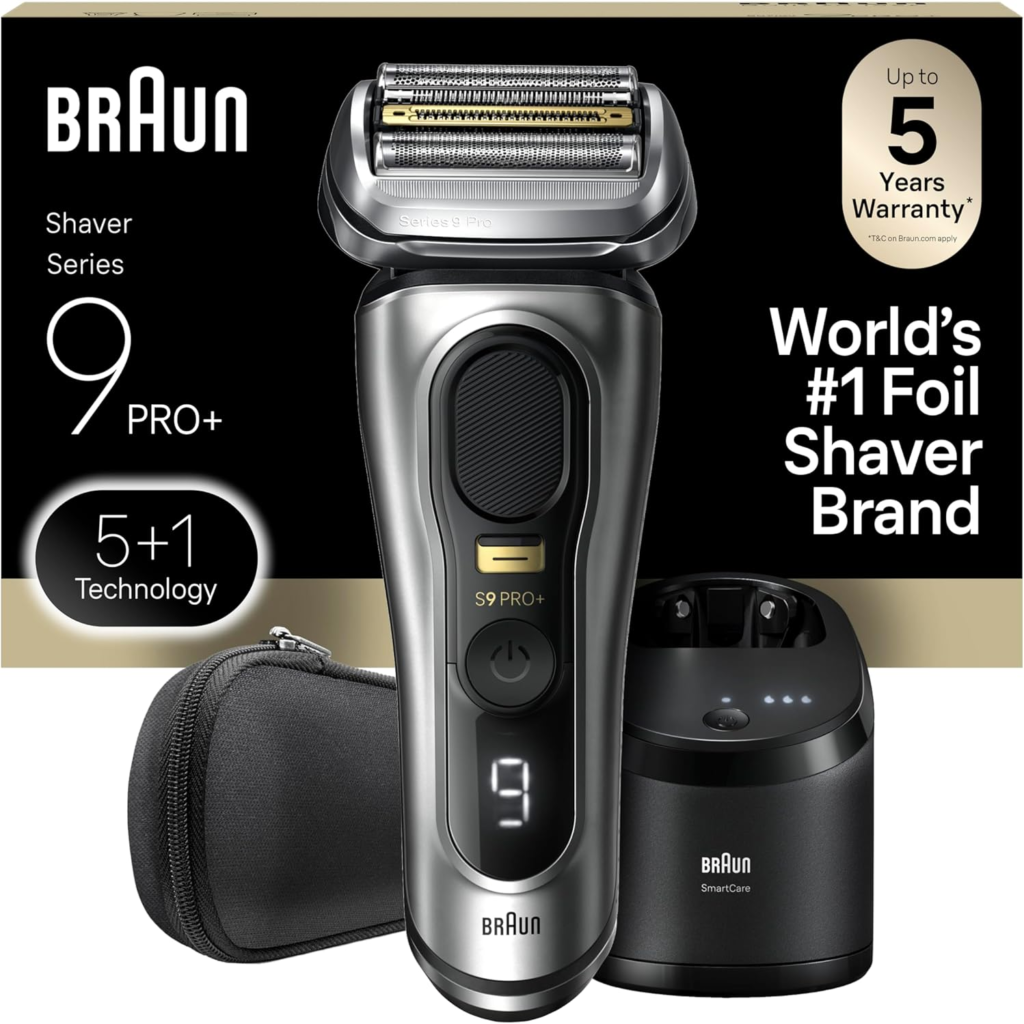
- 5-sync cutting elements with ProLift trimmer
- HyperGlide foil
- AutoSense motor
- IPX7 waterproof
- 60-minute battery with 5-minute quick charge
- Clean and Charge Station
Pros:
- HyperGlide foil delivers the most comfortable adaptation period of any foil shaver, the lowest friction skin contact available minimizes the week-one irritation that causes most switching failures
- ProLift trimmer captures the maximum number of hairs per pass, fewest repeat passes during adaptation means fewest opportunities for cumulative irritation
- AutoSense provides the most sophisticated skin zone protection available, the gold standard for sensitive skin during the transition period
Cons:
- Premium price is a significant first-shaver investment
- May be more shaver than needed for fine-to-medium beards
Best For: Switchers who want to guarantee the smoothest possible adaptation period and are willing to invest in the best available technology, particularly those with sensitive skin or coarse beards where the premium features make the most difference.
👉 Check Latest Price on Amazon
Electric vs Cartridge: The Long-Term Comparison
Once fully adapted, how does electric shaving compare to the cartridge experience you left behind?
Closeness
Cartridge razors maintain a marginal closeness advantage over all but the most premium electric shavers on fine to medium beards. For coarse beards, the Panasonic Arc5 and Braun Series 9 Pro+ close this gap to near-imperceptible levels. For daily shavers who shave before stubble has time to grow significantly, the closeness difference is academic.
Speed
Electric shaving wins comprehensively. Two to four minutes versus eight to twelve minutes. No preparation. No cleanup. Every morning, for the rest of your shaving life.
Skin Health
Electric shaving wins for most men over time. No cuts, no below-skin-level cuts increasing ingrown hair risk, no daily chemical exposure from shaving cream preservatives. Men with sensitive skin or those prone to razor bumps consistently report significant improvement in skin condition after switching fully to electric shaving.
Cost
Electric shaving wins after the first year. Ongoing blade cassette cost is lower than ongoing cartridge head replacement cost for most men. For a full cost comparison breakdown, our guide on electric shaver vs safety razor covers the numbers in detail, the principles apply to cartridge comparison equally.
Convenience
Electric shaving wins by a wide margin. Anywhere, anytime, no accessories required.
Who This Guide Is For
Men considering the switch from cartridge to electric who want to understand what the transition actually involves before committing.
Men who tried electric shaving once, had a bad experience in weeks one or two, and concluded it was not for them, this guide explains why that experience was normal and temporary, and how a second attempt with the right approach would yield a completely different result.
Men who have recently switched and are in the adaptation period struggling with reduced closeness or mild irritation, this guide confirms what they are experiencing is normal and gives them the tools to get through it faster.
Conclusion
Switching from a cartridge razor to an electric shaver is one of the best grooming decisions most men can make but only if they make it correctly. The four-week adaptation period is real and requires commitment to push through. The technique differences are significant and must be actively learned rather than assumed. The shaver quality at entry matters enormously, starting with a mid-range model like the Braun Series 7 gives the transition the best possible conditions for success.
Make the commitment, follow the technique, and in four weeks you will wonder why you waited this long to make the switch.
For help choosing the right first electric shaver based on your beard type and budget, our complete electric shaver buying guide covers every specification worth evaluating, and our guide to the best electric shavers for men covers the top models across every price tier.
👉 Ready to make the switch? Browse our top recommended first electric shavers on Amazon and check current prices today.
FAQs
Q1: How long does it take to adapt to an electric shaver from a cartridge razor?
The adaptation period typically lasts three to four weeks. Week one is the hardest, skin reacts to the new mechanical action of the foil with mild irritation and the shave feels less close than the cartridge result. By week three most men notice genuine improvement. By week four skin is fully adapted and the electric shave feels natural and comfortable.
Q2: Why does my electric shaver feel less close than my cartridge razor?
Two reasons. First, cartridge razors cut hair slightly below skin level, leaving a result that is marginally smoother to the touch. Electric shavers cut at skin level, the result is very close but slightly more detectable by touch. Second, during the adaptation period your skin and technique are both adjusting, closeness improves significantly over the four weeks as technique calibrates to the new shaver.
Q3: Can I switch between my cartridge razor and electric shaver during the adaptation period?
No, this is one of the most common mistakes. Alternating between the two shaving methods resets skin adaptation progress. Commit to exclusive electric shaving for four full weeks before evaluating. The adaptation period only progresses when the skin is consistently experiencing the same mechanical stimulus.
Q4: What is the best electric shaver to switch to from a cartridge razor?
The Braun Series 7 71-N7171cc is our top recommendation for cartridge-to-electric switchers. Its AutoSense motor automatically reduces aggression on reactive skin zones during adaptation, the Active Lift trimmer minimizes repeat passes, and the Clean and Charge Station removes maintenance complexity during a period when building new habits is already demanding. For men on a tighter budget, the Braun Series 5 delivers the same AutoSense protection at a lower price.
Q5: Should I shave wet or dry when switching from cartridge to electric? Wet shaving with gel during the adaptation period is strongly recommended, particularly in weeks one and two. Shaving gel provides the lubrication that cartridge-accustomed skin expects and significantly reduces the mechanical irritation of the transition. Once fully adapted, you can experiment with dry shaving for convenience. Starting wet gives the adaptation period the best possible conditions.
Q6: Will my skin always feel less smooth after electric shaving compared to a cartridge razor?
No, the at-skin-level cut of an electric shaver produces a result that is very smooth to the touch, though marginally less so than a fresh cartridge blade cutting slightly below skin level. For most men, this difference is undetectable by sight and only barely detectable by touch. After full adaptation, most men report they no longer notice the difference in daily life.
Q7: What should I do if my skin is very irritated during the first week of electric shaving?
Switch to wet shaving with gel for the remainder of the first week, the lubrication dramatically reduces the irritation of the new foil contact. Apply an alcohol-free post-shave balm immediately after each shave. Reduce pressure to the absolute minimum. If irritation is severe, take one day off shaving to allow skin to recover before continuing. Do not switch back to the cartridge razor permanently, push through with the adjustments above.
Q8: Is electric shaving better than cartridge shaving long-term?
For most men, yes. Electric shaving is faster, cheaper in the long run, eliminates cuts and nicks, reduces ingrown hair risk, causes less skin irritation over time, and works anywhere without preparation. The only advantage cartridge razors maintain is marginal closeness on smooth, well-prepared skin, a trade-off most men consider worthwhile once fully adapted to electric shaving.