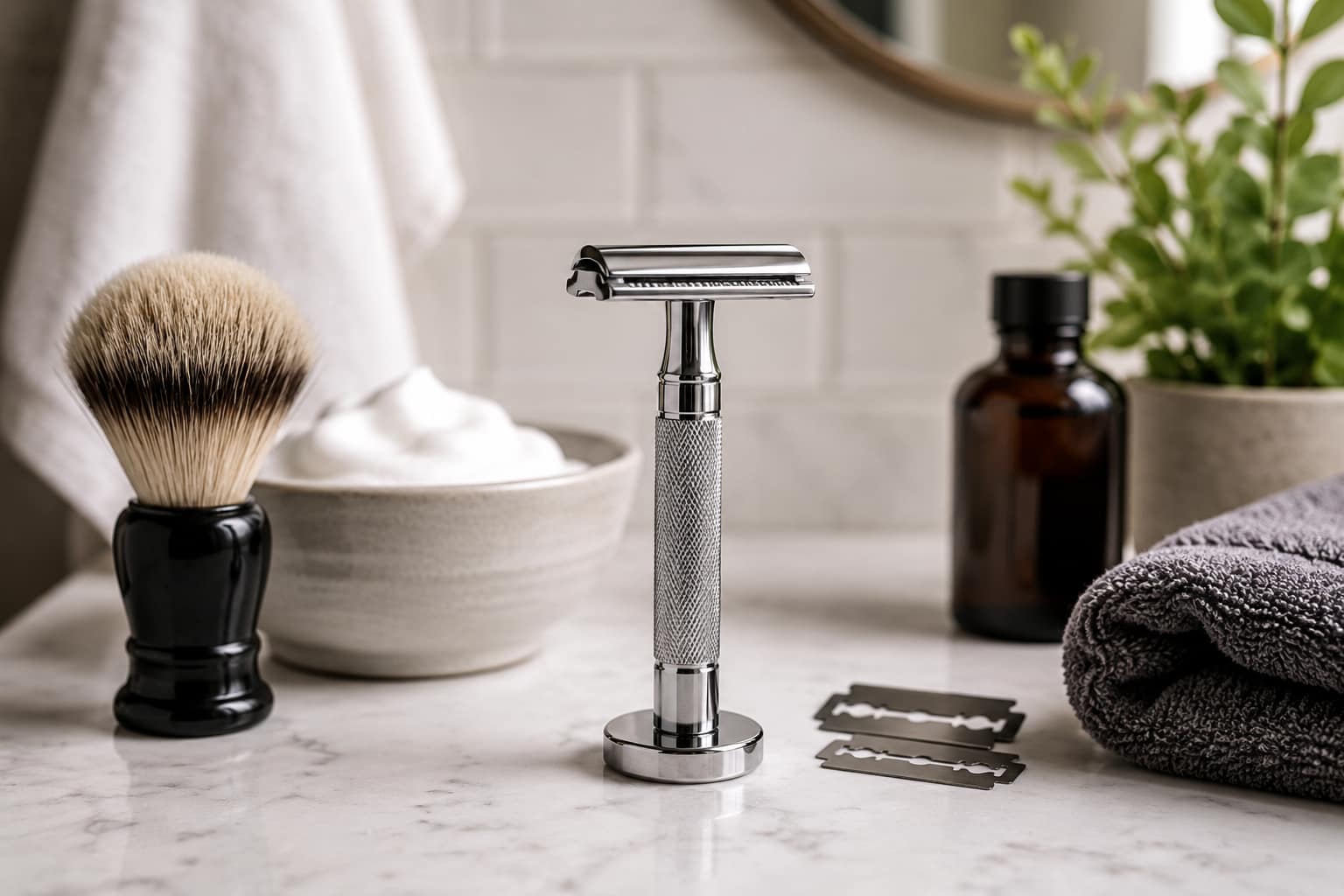
Most men pick up a safety razor for the first time, make a beginner mistake or two, cut themselves or get a mediocre shave and then blame the razor. The reality is that shaving with a safety razor is a skill and like any skill it needs a little foundation before the results click into place.
The good news is that the learning curve is short. Most men are getting genuinely good shaves within one to two weeks of steady practice and some nail it on the very first try. What separates a great first shave from a frustrating one is nearly always preparation and technique, not the razor. This guide walks you through exactly how to use a safety razor, also called a double edge or DE razor, from start to finish. Follow it consistently and you will be shaving better than you ever did with a cartridge razor inside a week.
Why Technique Matters More Than the Razor
Before the steps, it helps to understand why technique is the biggest variable in safety razor shaving. A $15 razor used with good technique beats a $150 razor used carelessly every single time.
Cartridge razors are built to forgive. The multiple blades, the pivoting head, the lubricating strip all cover for bad habits, so you can press hard and drag at any angle and still get a passable shave. A safety razor does not work that way. It rewards good technique and punishes bad habits, so the angle, the pressure and the direction of your strokes all matter. Once you understand the fundamentals and build the habit, cartridge shaving will feel like instant coffee after you have discovered proper espresso.
The best safety razors for beginners are made to be forgiving during this learning phase. A mild closed comb razor leaves room for small mistakes without drawing blood and once your technique is locked in you can decide whether to stay mild or move to something with more bite.
Best Safety Razor for Beginners
If you have not bought a razor yet, start mild. The two most widely recommended beginner safety razors are the Merkur 34C and the Edwin Jagger DE89. Both are mild, well balanced and forgiving, they take essentially every blade brand and they are the razors most experienced wet shavers point new shavers toward. The Edwin Jagger DE89 in particular suits sensitive skin.
Avoid starting with an aggressive or adjustable razor turned up high, because you want a razor that lets you focus on technique rather than punishing every small slip. A complete starter kit that pairs a mild razor with a brush, soap and a blade sampler is the easiest way to get everything you need in one go.
Shop Safety Razor Starter Kits on Amazon
What You Need Before You Start
Getting your tools together before the first shave makes everything smoother. Here is what you need.
The Razor
Any quality mild safety razor works well for a beginner. The Merkur 34C and Edwin Jagger DE89 are the two most recommended starting points, both mild, balanced and forgiving through the learning phase. Steer clear of aggressive or high setting adjustable razors to begin with.
The Blades
Blade choice matters more than beginners expect. Do not use the blade bundled with the razor for your first shave, since those are often low quality fillers. Buy a sampler pack with brands like Astra Superior Platinum, Gillette Silver Blue, Gillette Platinum and Voskhod, start with one of those. For learning, Astra Superior Platinum and Gillette Platinum are the most commonly recommended, sharp enough to cut cleanly yet forgiving for new technique.
Shaving Soap or Cream
A quality shaving soap or cream applied with a brush makes a far better lather than canned foam. The lather cushions the blade, lubricates the skin and lets the razor glide instead of drag, so it is not optional for safety razor shaving. If you are not ready for a brush yet, a good cream like Proraso or Taylor of Old Bond Street applied with your fingers works. Canned foam is fine for practice but gives clearly weaker results.
Pre-Shave Products
A pre shave oil is an optional but worthwhile addition. Rubbed into damp skin before lathering, it adds a layer of glide and many men with sensitive skin find it makes a real difference in the early weeks.
Post-Shave Products
You need something to soothe and protect the skin afterward. An alum block is a traditional, effective option: wet it, rub it gently across your face, let it sit for 30 seconds, then rinse. It closes minor nicks, tightens the skin and is mildly antiseptic. Follow it with an aftershave balm or splash suited to your skin.
Shop Safety Razor Starter Kits on Amazon
How to Use a Safety Razor: Step by Step
Step 1: Load the Blade Correctly
Getting the blade in correctly sounds simple but trips up more beginners than you would think. For a two or three piece razor, unscrew the handle, separate the top cap and base plate, lay the blade flat on the base plate so its holes line up with the posts, put the top cap on and screw the handle back until snug. Finger tight is enough, do not overtighten. For a butterfly razor, twist the handle base to open the flaps, drop the blade in flat, and twist to close. Always hold blades by the short ends and never the cutting edges. Once loaded, look at the head from the front, the blade should sit evenly on both sides, and if not, re-center it.
Step 2: Prepare Your Skin
Skin prep is the step most beginners skip and skipping it is a top reason first shaves disappoint. The best time to shave is right after a warm shower, since the warm water and steam soften the beard and open the pores, so the blade cuts more cleanly. A well hydrated beard cuts with roughly 30 percent less force than a dry one. If you are not showering first, hold a warm wet face cloth against your beard for two to three minutes. Apply pre shave oil now if you use it.
Step 3: Build Your Lather
Soak your brush in warm water and shake out the excess. With a soap puck, load the brush in small circles for 30 to 45 seconds until a thick cream builds on the bristles. With a tube cream, put an almond sized amount on the brush. Work it onto your face in small circles until you have a thick, creamy, glossy lather that coats every hair. If it is thin or vanishes fast, use more soap and less water. Good lather feels slick and cushioning between your fingers.
Step 4: Understand the Angle
This is the most important technical step. A safety razor is held at roughly 30 degrees from the face, which is very different from a cartridge razor. To find it, hold the handle straight out with the head flat against your cheek, then slowly tilt the handle down toward your jaw while keeping the head still. The moment the blade engages the hair is about the right angle. Do not tilt further than that, since more tilt means more blade exposure and more risk of cuts, while too little means the razor rides the guard and will not cut. Think of it like painting your face with light strokes, not scraping it.
Step 5: Apply Zero Pressure
This is the single most important habit and the hardest to build because it is the opposite of what cartridge razors teach. With a safety razor, pressing harder is how you get cuts. The razor is heavy enough to do the work on its own, so your job is to guide it, not press it. Hold it with the lightest grip that still gives control and let the head’s weight carry the blade. If it drags or skips, the fix is more lather, not more pressure. Practice this on the first few strokes of every shave until it feels automatic.
Step 6: First Pass With the Grain
Your first pass always goes with the grain, in the direction the hair grows, which for most men is downward on the cheeks and chin. If you are unsure, run a finger across your beard, the smoother direction is with the grain. Use short strokes of two to three inches, and rinse the razor every three to four strokes to clear hair and lather. Keep the skin taut with your free hand and work one section at a time. Do not rush.
Step 7: Rinse and Assess
After the first pass, rinse with cool water and feel your beard, it should already be noticeably shorter. Check for redness and if your skin looks angry after one pass you are likely pressing too hard or holding the wrong angle, so adjust before continuing. Re-lather before the next pass, since you should never shave over dry skin.
Step 8: Second Pass Across the Grain
The second pass goes across the grain, perpendicular to hair growth, which on the cheeks usually means shaving horizontally. This clears the stubble the first pass left. With good lather and technique, two passes give a very close, comfortable shave for most men and for a beginner two passes is plenty.
Step 9: Optional Third Pass Against the Grain
Once you are confident with two passes, usually after two to three weeks, you can add a third pass against the grain for extra closeness. This is the most demanding pass on your skin, so use light pressure, fresh lather, and go slowly. If you have sensitive skin and two passes is your comfortable limit, that is completely fine, since a two pass shave with good technique beats a three pass shave with bad technique.
Step 10: Post-Shave Care
Rinse your face with cold water to soothe the skin and close the pores, then feel for any missed patches. If you nicked yourself, press a wet alum block against the cut for 20 to 30 seconds, then rinse it off after a minute. Apply your aftershave balm or splash and let the skin rest. Rinse the razor, shake off the excess, and leave it open to air dry, never stored wet with the blade in.
Shop Post-Shave Products on Amazon
Common Beginner Mistakes and How to Fix Them
Mistake 1: Wrong Angle
The most common mistake by far. Most beginners hold the handle too upright, so the blade is nearly perpendicular and the guard cannot do its job. Fix it with the Step 4 method: start flat and tilt only until the blade just engages.
Mistake 2: Too Much Pressure
The second most common one, since the instinct to press is baked in from cartridge razors. Consciously lighten your grip at the start of each session, and if you are getting nicks or redness, pressure is almost certainly the cause.
Mistake 3: Skipping Preparation
Shaving with no shower, no warm water, and no proper lather, then blaming the razor. Never shave without softening the beard and building a good lather because this one change improves the shave more than any razor upgrade.
Mistake 4: Going Against the Grain Too Soon
New shavers who attempt an against the grain pass on the first or second shave get irritated and decide safety razors are harsh. Stick to with the grain then across the grain until your technique is solid.
Mistake 5: Not Rinsing the Blade
A blade clogged with hair and lather drags instead of cutting. Rinse under running water every three to four strokes and tap the razor gently on the sink if needed but never bang it hard.
Mistake 6: Using a Dull Blade
A dull blade needs more pressure, which defeats the zero pressure technique and causes irritation. Change your blade every five to seven shaves or sooner if it starts to tug. Blades are cheap.
Mistake 7: Rushing
Safety razor shaving takes longer than dragging a cartridge across your face. Budget 10 to 15 minutes for your first few shaves and stay slow and deliberate in the early weeks.
Shaving Different Areas of the Face
Different areas have different grain directions and skin textures, so here is how to approach each.
The cheeks are the easiest area and a good place to practice angle and pressure, with hair usually growing downward, so use long smooth strokes from cheekbone to jawline. The upper lip needs shorter strokes, so pull the skin taut by pressing your lip over your teeth. The chin has variable grain that often differs from the rest of the face, so use short careful strokes. The jawline is where many beginners nick themselves, because the angle has to change as you follow the curve, so slow down and adjust your wrist. The neck is the trickiest area, since neck hair often grows in several directions on the same man, so map your neck grain with a finger first and shave each section in the smooth direction rather than assuming it matches your face.
Safety Razor Tips for a Closer Shave
If you want the quick version, these tips give you the closest, most comfortable shave once the basics are in place. Always shave after a warm shower on softened hair. Build a thick, slick lather and re-lather before every pass. Keep the angle shallow, around 30 degrees and let the razor’s weight do the work with zero pressure. Keep the skin taut with your free hand. Do a with the grain pass first, then across the grain, and only add an against the grain pass once your technique is solid. Rinse the blade often, use a fresh blade, and finish with cold water and a soothing balm. Small, patient adjustments beat force every time.
How to Read Your Shave
After each shave, take 30 seconds to assess what happened, because this feedback loop is what speeds up learning. Run your fingers over your face and neck and note where the shave is closest, where you missed, and where there is redness. A good shave leaves skin smooth, comfortable, and at most mildly pink. Real redness or burning means too much pressure or a bad angle. Missed patches usually mean the razor was riding the guard, so the angle was too flat. Nicks usually mean the angle was too steep or you pressed on a tricky spot. Each read gives you something to fix next time and most men have a clear picture within five to seven shaves.
Caring for Your Razor After Each Shave
Good care is simple but matters. Rinse the razor thoroughly under warm running water after every shave, moving it back and forth to flush the head and blade gap, since leftover hair and lather corrode the blade faster. Shake off the excess firmly and do not dry with a towel, because the fibres catch and damage the edge, so let it air dry. Leave the razor assembled for storage unless you are deep cleaning and stand it upright in a stand if you can, out of any pooled water.
When to Upgrade Your Razor
Most beginners ask this too early. The honest answer is to upgrade only when your technique is consistently good and the razor is genuinely the limiting factor, not before. If you are still getting nicks or uneven results, a pricier razor will not fix it, because the issue is technique and technique is free to improve. Once you are getting reliably smooth, comfortable two pass shaves with a mild beginner razor, you will be in a well informed position to decide whether a different razor suits your beard and skin.
Frequently Asked Questions
How long does it take to learn to use a safety razor?
Most men are comfortable and getting good shaves within five to seven shaves. Daily practice speeds the learning curve, while long gaps slow it down. The fundamentals of angle, pressure and preparation become automatic faster than most beginners expect.
How many passes should a beginner do?
Start with one pass with the grain and assess, then add a second across the grain once you are comfortable. Stick to two passes until your technique is solid, since a third against the grain pass is an advanced step.
What is the best safety razor for a complete beginner?
The Merkur 34C is the most widely recommended first safety razor: mild, balanced, widely available, and compatible with nearly every blade. The Edwin Jagger DE89 is an equally strong choice, especially for sensitive skin.
Is it normal to get nicks when starting out?
Yes. Minor nicks in the first week or two are normal, particularly around the jawline and neck, and they are almost always a technique issue rather than a razor issue. They become rare quickly as your technique improves.
Should I shave every day while learning?
Shaving daily while learning speeds up your progress, because daily repetition builds muscle memory faster and keeps you working with a manageable amount of growth.
Can I use canned shaving foam with a safety razor?
You can, but it gives clearly weaker results than a quality soap or cream, since canned foam lacks the lubrication and cushioning that proper lather provides. If you are investing in a good razor and technique, a proper soap or cream is worth the small extra cost.
How do I know if my blade is at the right angle?
You will hear and feel a light, clean cutting sound, almost a soft scraping, when the angle is right. If you hear nothing, the angle is too flat and the blade is not engaging. If the blade drags on skin rather than cutting hair, the angle is too steep or the pressure is too high.
How do I get a close shave with a safety razor?
Prep well, build a slick lather, keep a shallow angle with zero pressure, and build closeness gradually across passes: with the grain, then across, then against once your skin can handle it. Chasing closeness with pressure or a steep angle just causes irritation.