Every tool that requires any degree of skill has myths built up around it. The more unfamiliar the tool, the more elaborate the myths. Safety razors have accumulated a particularly rich mythology over the decades during which cartridge razors dominated the market and most men had no direct experience with the single-blade alternative.
The result is that many men who would genuinely benefit from switching to a safety razor never do, because they have absorbed a set of beliefs about safety razors that are either entirely false, significantly exaggerated, or based on experiences with the wrong razor, wrong blade, or wrong technique. These beliefs stop real people from making a switch that would improve their daily shave, reduce their grooming costs, and in many cases solve chronic skin problems that they have been incorrectly attributing to their skin type rather than their razor.
This guide addresses the most persistent safety razor myths directly, honestly, and with specific evidence. By the end, you will have a clear picture of what is true, what is false, and what is more nuanced than a simple true or false answer.
The Myths: Quick Reference
| Myth | Verdict | Reality |
| Safety razors are dangerous | False | Designed as a safer alternative to straight razors |
| Safety razors cause more cuts | Exaggerated | Short learning phase, then cuts become rare |
| Safety razors are only for experienced shavers | False | Mild options specifically designed for beginners |
| Safety razors are harder to use than cartridge razors | Partly true | Learning curve is real but short (1 to 2 weeks) |
| Safety razors cost more than cartridge razors | False long-term | Higher upfront, dramatically lower ongoing cost |
| Safety razors are not available anymore | False | Larger market than at any time in decades |
| Safety razors are only for men | False | Widely used by women for legs and body |
| Safety razors cause more ingrown hairs | False | Single blade causes significantly fewer ingrown hairs |
| All safety razors are the same | False | Enormous variety in geometry, material, aggressiveness |
| Safety razors are not suitable for sensitive skin | False | Often better for sensitive skin than cartridge razors |
| You need expensive products to use a safety razor | False | Basic setup under $75 delivers excellent results |
| Safety razor blades are hard to find | False | Universally available globally |
Myth 1: Safety Razors Are Dangerous
This is the most persistent and most damaging myth in the safety razor world. It stops more people from trying safety razors than any other belief and it is fundamentally incorrect.
The Origin of the Myth
The name confusion is partly responsible. Safety razors were invented specifically as a safer alternative to straight razors, which required professional skill to use without injury. The word safety in safety razor refers to the safety bar, the design element that protects the skin from the blade. This protection is the defining engineering characteristic of the entire product category.
When people hear safety razor and focus on the word razor rather than the word safety, they create an association with danger that was never intended by the name. The name was chosen specifically to communicate safety over its predecessor, not to warn of inherent risk.
What the Safety Bar Actually Does
The safety bar is the metal bar or comb beneath the blade that limits how much of the blade edge makes contact with the skin. It stretches the skin ahead of the blade, creates a consistent angle between blade and skin, and physically prevents the blade from making the deep, direct contact that a straight razor can make.
This engineering is not cosmetic. It genuinely limits the severity of any accidental contact between blade and skin. A momentary lapse in technique with a safety razor produces at worst a minor surface nick. The same momentary lapse with a straight razor can produce a significant cut.
The Minor Nick Reality
It is true that beginners learning safety razor technique sometimes experience minor nicks, particularly in the first one to two weeks and particularly around the more complex areas of the jaw, chin, and neck. These nicks are surface-level. They bleed briefly and resolve within minutes, typically with nothing more than an alum block application.
As covered in detail in the how to stop bleeding from a safety razor cut guide on this site, managing minor safety razor nicks is straightforward and the nicks themselves are typically shallower than paper cuts. Calling this level of occasional consequence dangerous is a significant misrepresentation of the experience.
The Comparison Context
The same beginner who gets occasional minor nicks in their first week of safety razor shaving is likely getting daily razor burn, chronic ingrown hairs, and persistent post-shave redness with their current cartridge razor. The minor nick is visible for ten minutes. The razor burn from a multi-blade cartridge on sensitive skin is visible for hours and cumulates damage over months and years.
When the safety razor is called dangerous and the cartridge razor is considered safe, the comparison is not being made on equal terms. Both tools can cause skin problems. The cartridge razor’s problems are chronic and dermatologically documented. The safety razor’s problems are temporary and technique-dependent.
👉 Shop Mild Safety Razors on Amazon
Myth 2: Safety Razors Cause More Cuts Than Cartridge Razors
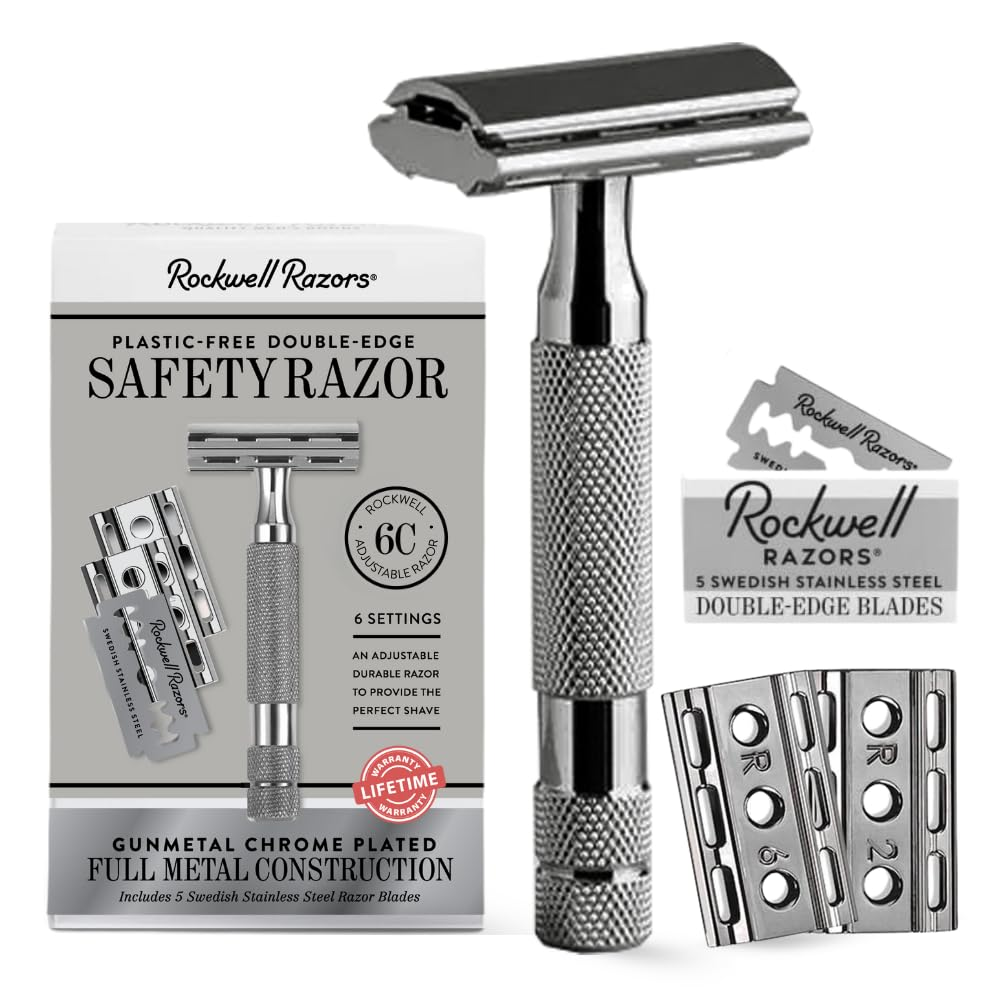
This myth contains a grain of truth that is significantly overstated in its impact and misunderstood in its duration.
The Grain of Truth
In the first week or two of safety razor shaving, inexperienced technique does produce more nicks than the same person would experience with their familiar cartridge razor. This is a real phenomenon and acknowledging it honestly is important.
The reason is that cartridge razors are engineered to compensate for technique errors. The pivoting head, the lubricating strip, and the multiple blades create a system that is highly forgiving of angle variation, pressure variation, and grain direction errors. Years of cartridge shaving develop habits that a safety razor punishes rather than accommodates.
Why the Grain Becomes an Overstated Myth
The adjustment period for safety razor technique is one to two weeks for most daily shavers. After this period, consistent technique produces nicks at a rate that most experienced safety razor users describe as essentially zero under normal conditions. The rate of occasional nicks becomes comparable to or lower than what they experienced with cartridge razors once the technique is established.
The permanent impression of more cuts comes from people who tried a safety razor once, nicked themselves, and concluded that safety razors are nick-prone without ever working through the brief adjustment period. This is like concluding that bicycles are impossible to balance after one unsuccessful attempt without handlebars.
The Net Skin Health Comparison
The chronic razor burn, ingrown hairs, and persistent follicular inflammation that multi-blade cartridge razors cause is more damaging to skin health over a year of daily shaving than the occasional minor nick during the learning phase of safety razor use. The comparison is not close. As covered in the safety razor vs cartridge razor guide on this site, the dermatological case for single blade shaving is well-established.
Myth 3: Safety Razors Are Only for Experienced Shavers
This myth appears to have originated from the association between safety razors and barbershop tradition, where the razor was a professional’s tool. It has no basis in the modern safety razor market.
The Mild Razor Reality
The modern safety razor market specifically produces razors for beginners. The Merkur 34C, Edwin Jagger DE89, Parker 99R, and numerous other mild closed-comb razors are specifically engineered to be forgiving, safe, and effective for shavers who have never held a safety razor before.
As covered in the best double edge safety razors for beginners guide on this site, mild safety razors have such conservative blade exposure that technique errors produce minimal consequences. A beginner using a Merkur 34C incorrectly gets less consequence than an intermediate shaver using the same razor correctly would expect from a more aggressive option.
Who Is Actually Using Safety Razors
The wet shaving community that has grown around safety razors in the 2010s and 2020s is dominated by new converts, not lifelong practitioners. The average wet shaving forum member today started with a cartridge razor and switched to a safety razor as an adult, often without any prior wet shaving experience. The idea that safety razors require prior experience is simply not supported by the composition of the actual safety razor user community.
👉 Shop Safety Razors on Amazon
Myth 4: Safety Razors Are Too Complicated
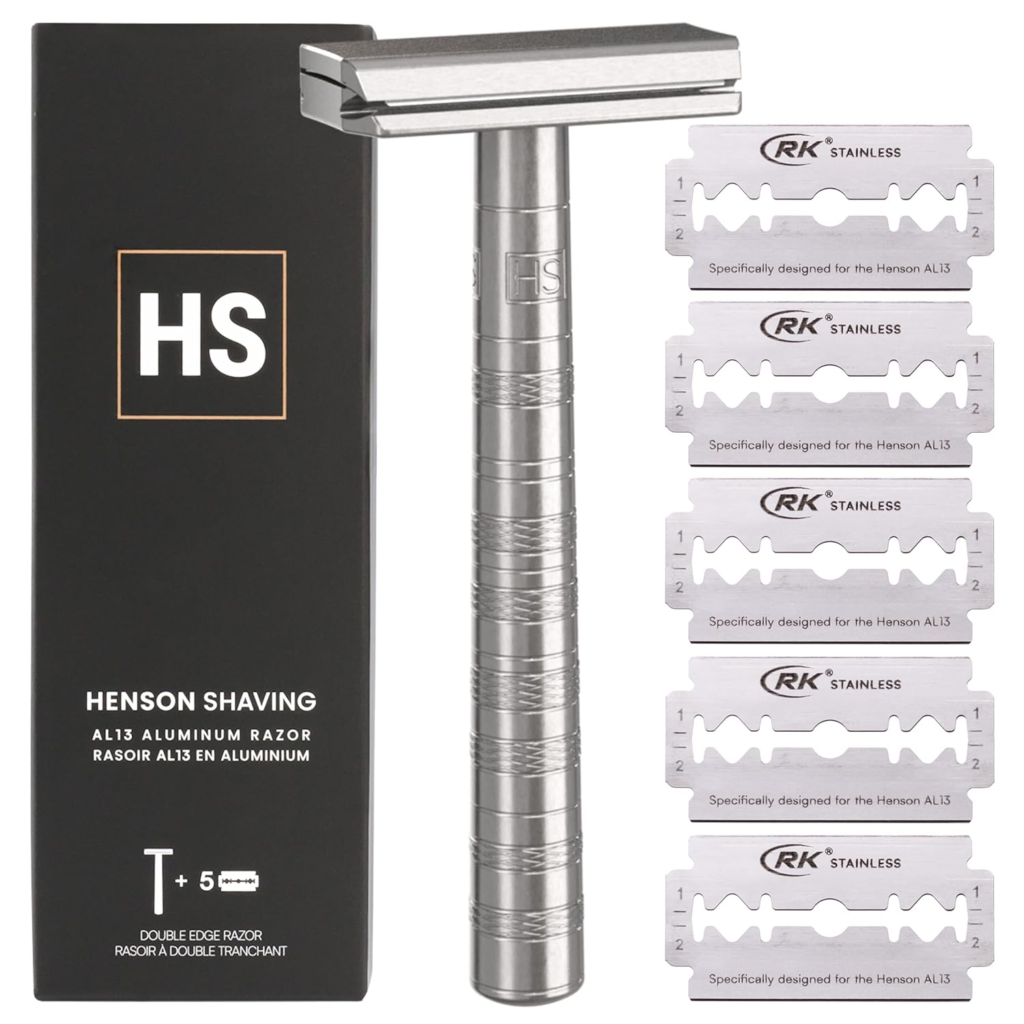
The complication myth conflates the short initial learning curve with permanent complexity. The two are entirely different things.
What the Learning Curve Actually Involves
Learning to shave with a safety razor requires developing three skills. Finding and maintaining the approximately 30-degree blade angle. Applying zero pressure and letting the razor’s weight do the work. Understanding your grain direction and shaving with it on the first pass.
These are not complex technical skills. They are simple physical habits that most people establish comfortably within one to two weeks of consistent daily practice. The safety razor shaving angles and pressure guide on this site covers each of these elements in detail that any beginner can follow from the first shave.
The Ongoing Experience
Once the technique habits are established, safety razor shaving is no more complicated than any other shaving method. Many experienced safety razor users describe the shave as more meditative than complicated, a pleasant focused practice rather than a technical challenge. The complication is temporary and exists only during the learning phase.
Compared to Other Skills
The learning curve for safety razor technique is shorter than learning to parallel park, shorter than learning to chop vegetables efficiently, and shorter than learning to play a simple chord on a guitar. Describing it as too complicated positions it alongside genuinely difficult skill sets it does not belong near.
Myth 5: Safety Razors Are More Expensive Than Cartridge Razors
This myth has a partial truth for year one that reverses decisively from year two onward.
Year One: The Partial Truth
A quality beginner safety razor like the Merkur 34C costs $35 to $45. A comparable cartridge razor handle costs $10 to $20. In year one, adding a blade sampler, shaving soap, and a brush to the safety razor setup puts the total first-year cost higher than a basic cartridge setup.
This year-one cost comparison is the basis for the myth. It is a real difference that affects the initial investment decision.
Year Two and Beyond: Where the Myth Collapses
From year two onward, the safety razor shaver’s ongoing cost is approximately $15 to $30 per year for DE blade supply. The cartridge razor shaver continues spending $80 to $200 per year on replacement cartridges. The crossover point where the safety razor becomes cheaper overall typically occurs somewhere in year two depending on the initial setup cost and the cartridge razor brand used.
Over five years of daily shaving, the average safety razor shaver saves $300 to $800 compared to cartridge razor shaving. Over a lifetime, this saving is in the thousands. The myth that safety razors are more expensive survives only by ignoring everything past the first few months.
The best budget safety razors under $30 guide on this site provides specific cost comparisons for different starting budgets.
Myth 6: Safety Razors Are Not Made Anymore
This myth appears occasionally from people who associate safety razors with a previous era and have not investigated the current market.
The Modern Safety Razor Market
The safety razor market in 2026 is larger, more diverse, and more active than it has been at any point in decades. Hundreds of razor models from dozens of manufacturers across Japan, Germany, USA, UK, Russia, India, Egypt, Turkey, Canada, and more are commercially available. New razor brands enter the market regularly. Established brands expand their lineups consistently.
Premium brands like Karve, Timeless, Rex, and Wolfman, which are covered in the best safety razors made in USA and best premium safety razors worth the investment guides on this site, produce some of the finest precision-machined razors in the history of the format. None of these brands existed forty years ago.
The Blade Market
The DE blade market is equally active. Blades are manufactured in Japan, Russia, Germany, USA, Turkey, Egypt, Israel, and other countries. Global production of DE blades runs into the billions of units per year. The idea that DE blades are discontinued or difficult to find is so far from reality as to be the most demonstrably incorrect myth on this list.
👉 Shop Budget Safety Razors on Amazon
Myth 7: Safety Razors Are Only for Men
This myth reflects the marketing history of safety razors rather than the physical reality of what they do.
The Physical Reality
A safety razor cuts hair. It does not discriminate based on where on the body that hair is or who the body belongs to. The same mild closed-comb razor that works on a man’s face works on a woman’s legs, underarms, and bikini area. The same principles of angle, pressure, and grain direction apply in every application.
The best safety razors for women 2026 guide and the how to shave legs with a safety razor guide on this site both cover women’s safety razor use in comprehensive detail. Women’s use of safety razors has grown significantly as the cost, skin health, and environmental advantages become more widely understood.
The Historical Context
Safety razors were marketed almost exclusively to men through most of the twentieth century. This marketing history created the cultural association between safety razors and male grooming that the myth reflects. The marketing was never a description of the product’s physical capabilities.
Women who have made the switch from cartridge razors to safety razors for leg and body shaving consistently report the same improvements in shave quality, cost reduction, and skin health that men report for facial shaving.
Myth 8: Safety Razors Cause More Ingrown Hairs
This is not just false. It is the direct opposite of the truth. The single blade safety razor is the primary dermatological recommendation for reducing ingrown hairs and razor bumps.
The Mechanism
Multi-blade cartridge razors cut hair below the skin surface through hysteresis. The hair retracts below skin level after the stroke and can curl back into the skin during regrowth. This is the primary mechanical cause of ingrown hairs. It is a design feature of multi-blade razors, not an accident.
Single blade safety razors cut hair at approximately the skin surface level. The hair tip starts regrowth at the surface rather than below it. The probability of it curling back into the skin before emerging is dramatically lower.
The Clinical Evidence
Multiple dermatology studies have documented the relationship between multi-blade razor use and pseudofolliculitis barbae. The American Academy of Dermatology recommends single blade razors as the first-line intervention for patients with chronic razor bumps and ingrown hairs.
The safety razor ingrown hairs and razor bumps prevention guide and the safety razor for Black men guide on this site cover this clinical evidence in detail.
Myth 9: All Safety Razors Are the Same
This myth leads beginners to buy the wrong razor and conclude that safety razors in general do not work for them, when in reality they bought a razor unsuited to their needs.
The Actual Variety
Safety razors vary enormously across every meaningful dimension. Blade gap ranges from under 0.5mm in ultra-mild options to over 1.0mm in aggressive configurations. Blade exposure varies from negative to strongly positive. Handle lengths range from under 3 inches to over 4.5 inches. Weights range from under 50g to over 120g. Materials include zinc alloy, brass, aluminum, stainless steel, and bamboo. Head designs include closed comb, open comb, slant bar, and pivot options. Blade formats include double edge, single edge injector, Artist Club, and GEM.
The idea that all safety razors are the same is like saying all kitchen knives are the same because they all cut food. The variety within the category is vast and every dimension of that variety has genuine impact on the shave experience.
The aggressive vs mild safety razors guide, safety razor handle types guide, best closed comb vs open comb safety razors guide, and single edge vs double edge safety razors guide on this site each cover specific dimensions of this variety in detail.
👉 Shop Latest Safety Razors on Amazon
Myth 10: Safety Razors Are Not Suitable for Sensitive Skin
This myth is not just false. The truth is closer to the opposite.
The Single Blade Advantage for Sensitive Skin
The mechanical causes of razor burn, redness, and post-shave irritation are the same as the mechanical causes of ingrown hairs. Multiple blades making multiple passes over the same skin in a single stroke, below-surface cutting that causes hair to retract and create inflammation during regrowth, and the pressure that cartridge razor design encourages all contribute to the chronic irritation that sensitive skin sufferers experience.
A mild single blade safety razor used with correct technique eliminates the multiple-blade passes, eliminates the below-surface cutting, and encourages zero-pressure technique through the weight of the razor. The result for most sensitive skin shavers is dramatically less post-shave irritation within the first two to three weeks of switching.
The best safety razors for sensitive skin guide on this site covers this in comprehensive detail and includes specific product recommendations for highly reactive skin.
Myth 11: You Need Expensive Products to Get Good Results
This myth discourages budget-conscious shavers from making the switch and is not supported by the reality of the product market.
The Budget Reality
A complete safety razor starter kit that delivers genuinely excellent shave quality can be assembled for under $75. A Parker 99R or Merkur 23C razor, a blade sampler pack, a tube of Proraso White shaving cream, a basic synthetic brush, and an alum block. This is not a compromise setup. These components each perform their job properly and produce shave quality that is significantly better than any cartridge razor system at any price.
The expensive products in the wet shaving market exist for enjoyment of the hobby rather than necessity. A $150 artisan shaving soap smells extraordinary and produces excellent lather. A $12 tube of Proraso White produces lather that is functionally indistinguishable in shave quality. The $138 difference is a luxury, not a requirement.
👉 Check Prices of Safety Razors on Amazon
Myth 12: Safety Razor Blades Are Hard to Find
DE blades are among the most globally available shaving products in existence. They are manufactured in at least a dozen countries and sold in pharmacies, supermarkets, barbers, and online retailers across virtually every country in the world.
A 100-blade pack of Astra Superior Platinum is available on Amazon in most countries with next-day delivery. Gillette, BIC, Derby, Shark, and dozens of other brands are stocked in pharmacies and convenience stores globally. Finding DE blades in an unfamiliar city anywhere in the developed world takes at most a brief internet search. In most cities, a walk to the nearest pharmacy is sufficient.
The best travel safety razors guide on this site addresses blade availability specifically for international travelers and confirms that DE blades are reliably available across the destinations most travelers visit.
Addressing the Legitimate Concerns
While the myths above are false or exaggerated, there are legitimate concerns about safety razors that deserve honest acknowledgment.
The Learning Curve Is Real
Two weeks of daily practice is a real time investment. For some people, this is genuinely inconvenient. For people who shave infrequently, the learning curve extends because technique develops more slowly without daily repetition. This is not a myth. It is a real consideration that some people will reasonably decide is not worth making.
The Blade Restriction for Air Travel Is Real
DE blades cannot go in carry-on luggage. This is a genuine logistical consideration for frequent flyers who travel with carry-on only. It is solvable through the strategies covered in the best travel safety razors guide on this site, but it is not imaginary.
Not All Skin Types Benefit Equally
While single blade shaving improves most skin conditions associated with cartridge razor use, some people with specific skin conditions unrelated to shaving mechanics may not see the same improvements. The safety razor is not a universal solution to all skin problems. It addresses the mechanical causes of shaving-related skin issues specifically.
AMAZON AFFILIATE DISCLAIMER
This post contains affiliate links. If you purchase through our links, we may earn a small commission at no extra cost to you.
Frequently Asked Questions
Is a safety razor actually safe?
Yes. The safety bar design specifically limits blade-to-skin contact and prevents the blade from making deep cuts. With basic technique, safety razors are no more dangerous than any other shaving tool. The name safety razor was chosen to communicate safety relative to straight razors, not to warn of inherent risk.
Do safety razors cut you more often than cartridge razors?
In the first one to two weeks of the learning phase, yes. After technique is established, no. Most experienced safety razor users report nicks as rare occurrences rather than regular events. The chronic razor burn from cartridge razors causes more cumulative skin damage than the occasional minor nick from a safety razor.
Why do people think safety razors are dangerous?
The combination of unfamiliarity with the tool, the word razor in the name, and experiences with the wrong razor or technique during a brief learning phase contribute to the perception. People who nicked themselves in week one and never persisted to week three perpetuate the experience as representative of all safety razor shaving.
Are safety razors better for sensitive skin than cartridge razors?
For most people with sensitive skin, yes. The single blade design eliminates the multiple-pass-per-stroke and below-surface cutting mechanisms that cause the majority of razor burn, ingrown hairs, and post-shave redness associated with cartridge razors.
Do you need special skills to use a safety razor?
No special skills beyond what is described in a basic technique guide. Finding and maintaining an angle, applying zero pressure, and knowing your grain direction are the core skills. Most people develop these comfortably within two weeks of daily practice.
Are there safety razors that are specifically safe for beginners?
Yes. Mild closed-comb razors like the Merkur 34C and Edwin Jagger DE89 are specifically engineered to be safe and forgiving for beginners. Their conservative blade exposure creates significant margin for technique errors without consequence. The best double edge safety razors for beginners guide on this site covers these options in detail.