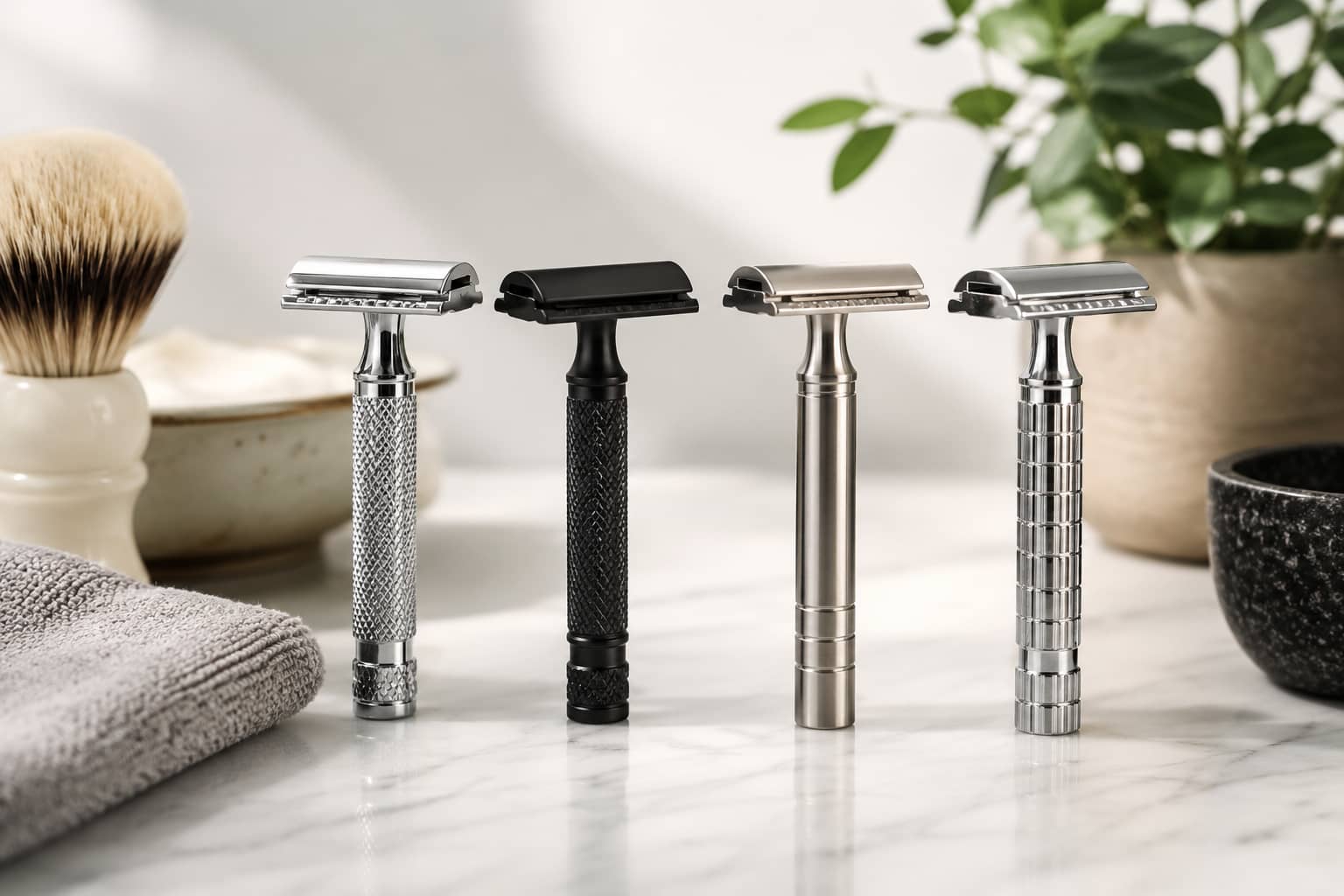
Starting out with a double edge safety razor is one of the best grooming decisions a man can make. But walking into the world of safety razors for the first time can feel overwhelming. There are dozens of brands, hundreds of models, multiple head designs, varying aggressiveness levels, different handle lengths and weights, and an entire subculture of wet shaving enthusiasts with strong opinions about all of it.
The good news is that for a beginner, the decision is actually straightforward. You do not need an aggressive razor. You do not need an adjustable razor with six plates. You do not need a vintage razor sourced from an estate sale in Germany. You need a well-made, mild, reliable razor that gives your technique room to develop without punishing every small mistake with a cut or a patch of irritation.
This guide cuts through all of the noise and gives you the clearest, most practical breakdown of the best double edge safety razors for beginners available in 2026. Every razor on this list was selected based on four criteria: forgiveness, build quality, value for money, and how well it prepares you for the rest of your safety razor journey.
Quick Picks: Best DE Safety Razors for Beginners 2026
| Razor | Handle Length | Weight | Aggressiveness | Best For |
| Merkur 34C | 3.0 inches | 79g | Mild | Overall best beginner razor |
| Edwin Jagger DE89 | 3.5 inches | 68g | Mild | Sensitive skin beginners |
| Parker 99R | 4.0 inches | 95g | Mild | Budget beginners, large hands |
| Mühle R89 | 3.9 inches | 74g | Mild | Mid-range beginners, gift buyers |
| Merkur 23C | 4.0 inches | 71g | Mild | Long handle preference |
| Van Der Hagen Razor | 3.5 inches | 65g | Mild | Ultra-budget entry point |
| Wilkinson Sword Classic | 3.3 inches | 55g | Mild | Cheapest reliable entry |
| Rockwell 6S | 3.5 inches | 118g | Adjustable | Beginners wanting long-term flexibility |
Why Starting With the Right Razor Matters
The razor you start with has a disproportionate impact on whether you stick with safety razor shaving long enough to experience its full benefits. Many people who try a safety razor once, have a bad experience, and go back to cartridge razors did not fail because safety razors are difficult. They failed because they started with the wrong razor.
Starting with an aggressive razor is the most common version of this mistake. An aggressive razor in the hands of a developing technique is a reliable path to cuts, irritation, and frustration. The instinct to reach for the most efficient tool available is understandable, but efficiency means nothing if the tool requires skills you have not yet built.
Starting with a high-quality mild razor does three things. It creates a safe learning environment where technique errors have minimal consequences. It delivers a noticeably better shave than a cartridge razor even in the early stages, which provides the positive reinforcement that keeps new shavers motivated. It builds the foundational habits correct angle, zero pressure, with-the-grain first pass that every safety razor skill from beginner to advanced is built on.
The aggressive vs mild safety razors guide on this site covers the full spectrum of razor aggressiveness in detail. For now, the only thing a beginner needs to know is this: always start mild.
What Makes a Good Beginner Razor
Before diving into specific recommendations, here is a clear framework for what distinguishes a good beginner razor from a mediocre one.
Mild Blade Gap
A small blade gap means more of the blade is protected by the safety bar and less is exposed to the skin. For a beginner whose angle and pressure are still inconsistent, this is the single most important safety feature. A mild blade gap turns a small technique error into nothing. A large blade gap turns the same error into a nick.
Closed Comb Design
A closed comb, a solid safety bar beneath the blade is standard on most beginner razors and for good reason. It stretches and guides the skin smoothly into the blade, creates a consistent shaving surface, and is significantly more forgiving than an open comb design. Best closed comb vs open comb safety razors explained covers this topic fully, but for beginners the summary is simple: closed comb is the right choice.
Good Weight and Balance
A razor with appropriate weight typically between 60g and 100g, naturally encourages the correct zero-pressure technique. Too light and beginners tend to press down to compensate. Too heavy and the razor can feel tiring or difficult to control during a first shave. Most quality beginner razors fall comfortably within this range.
Standard DE Blade Compatibility
All double edge safety razors accept the same standard blade size, but it is worth noting that some razors are more particular about blade brand performance than others. Good beginner razors work well across a wide range of blade brands, which gives you flexibility during the blade sampling phase where you are finding your ideal match. The best safety razor blades 2026 guide on this site covers the sampling process in detail.
Durable Build Quality
A beginner razor should be built to last. Cheap, poorly made razors have inconsistent blade alignment, which creates unpredictable shave geometry that makes the learning process harder than it needs to be. Spending $30 to $50 on a well-made beginner razor is a better investment than spending $10 on something that does not hold the blade consistently.
Simple Blade Loading
Blade loading should be as straightforward as possible for a beginner. Three-piece razors are the simplest to understand, you unscrew the handle, place the blade on the base plate, and reassemble. Butterfly razors twist open from the bottom, which some beginners find even more intuitive. Either design works well as long as the mechanism is reliable.
👉 Check Beginner Safety Razor Deals on Amazon
Best Double Edge Safety Razors for Beginners: Full Reviews
1. Merkur 34C — Best Overall Beginner Razor
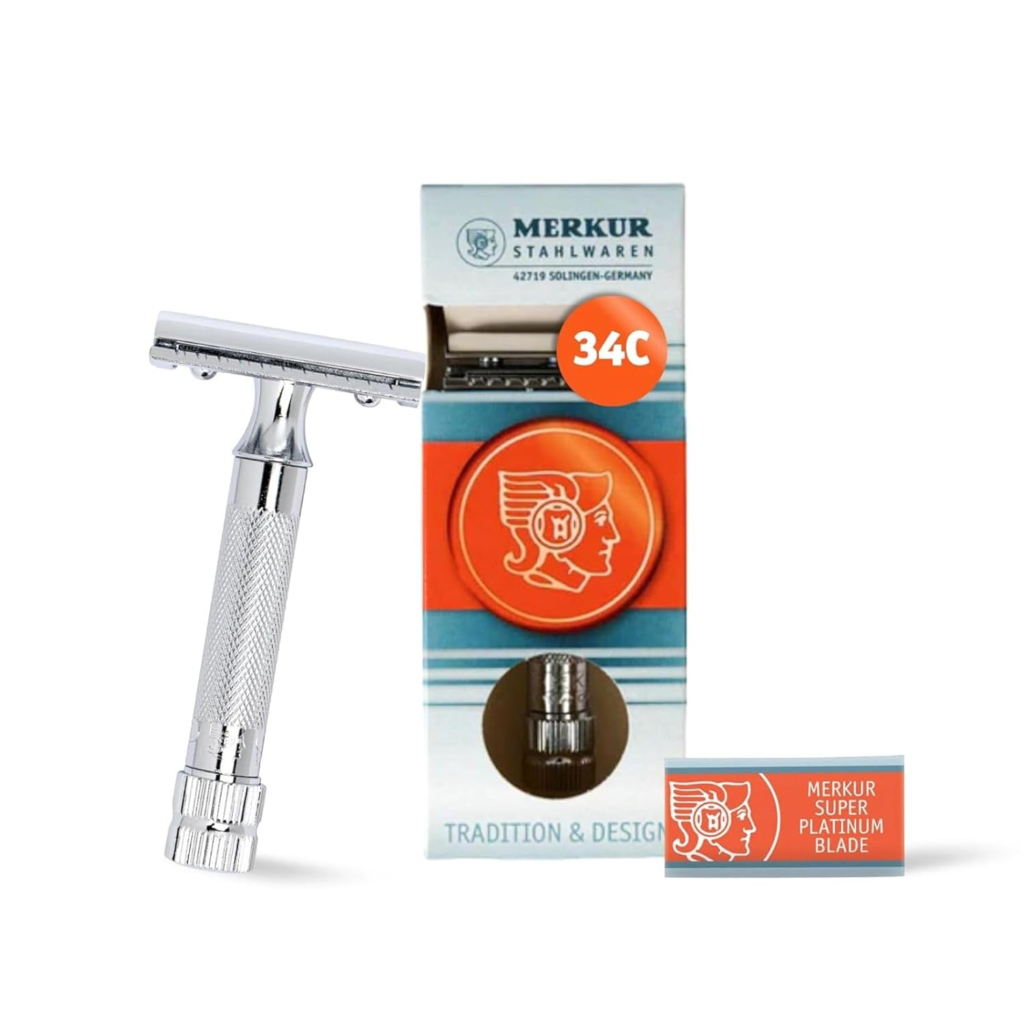
There is a reason the Merkur 34C appears at the top of virtually every beginner safety razor list published anywhere in the wet shaving world. It has been the benchmark recommendation for new DE shavers for over two decades and nothing has come along to genuinely displace it. The combination of mild blade gap, excellent build quality, and reliable performance across all blade brands makes it the safest and most consistent first razor purchase a beginner can make.
The 34C is a two-piece razor with a short, wide handle that gives excellent grip and control. The chrome-plated zinc construction is durable and holds blade alignment precisely, which creates a consistent and predictable shave every time. At under 3 inches of handle length, it suits most hand sizes comfortably for face shaving, though men with very large hands may prefer the longer Merkur 23C.
It works beautifully with every blade brand on the market, which is particularly valuable during the blade sampling phase. Whatever blades you test, the 34C will give you an accurate read on how each one performs rather than introducing razor-specific variables that cloud the comparison.
Specifications:
- Weight: 79g
- Handle length: 3.0 inches
- Comb type: Closed comb
- Material: Chrome-plated zinc alloy
- Blade loading: Two-piece
- Best for: All beginner men, sensitive skin, daily shavers
Pros:
- The most consistently recommended beginner razor in the world
- Mild blade gap is extremely forgiving of technique errors
- Excellent build quality at an accessible price
- Works well with every standard DE blade brand
- Short wide handle gives superb grip and control
- Will last for years with basic maintenance
Cons:
- Short handle may not suit men with large hands
- Chrome-plated zinc less durable than stainless steel options
- Not adjustable, cannot dial up aggressiveness as skills improve
- Some shavers find the short handle slightly awkward when learning
👉 Check Merkur 34C Price on Amazon
2. Edwin Jagger DE89 — Best for Sensitive-Skinned Beginners
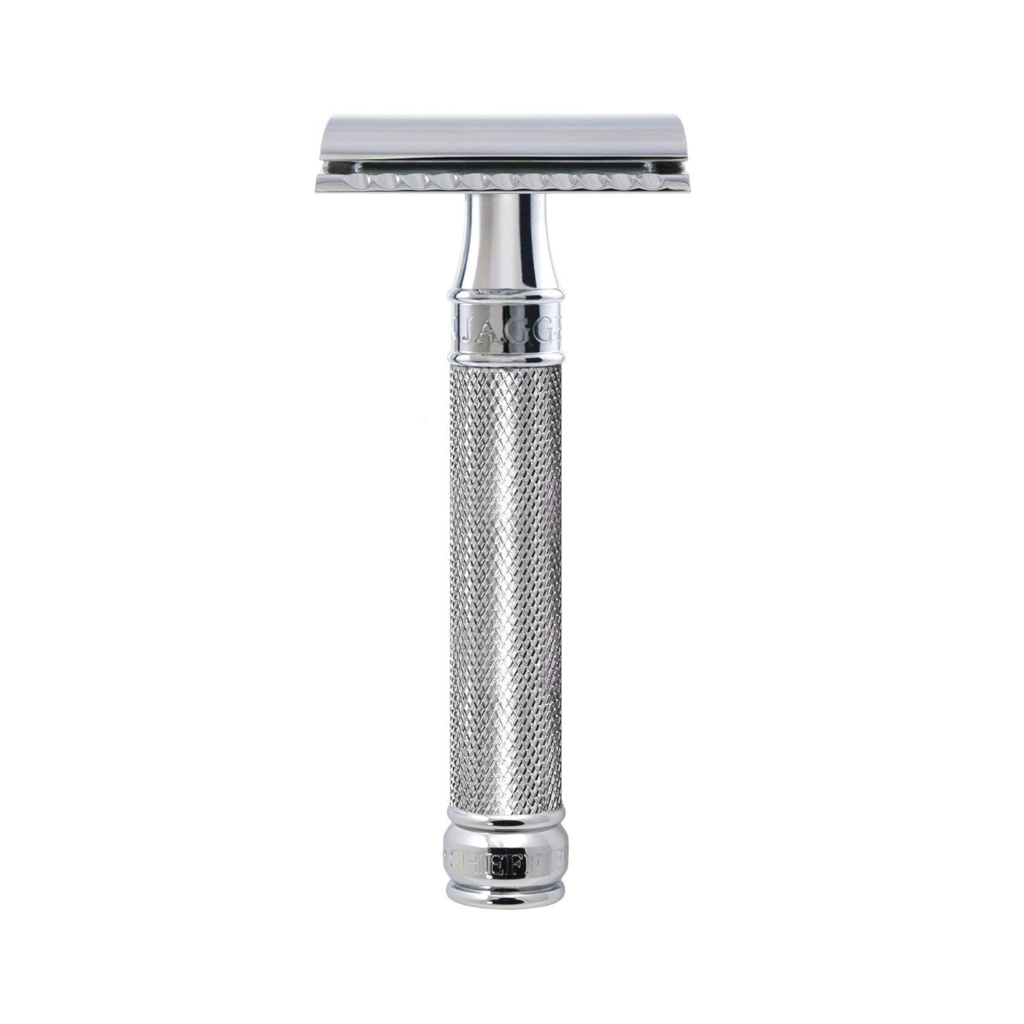
The Edwin Jagger DE89 is the other razor that consistently appears alongside the Merkur 34C in every beginner recommendation list. Made in Sheffield, England, it offers comparable mild performance to the 34C but with a slightly longer handle, a chrome-plated brass head rather than zinc, and the refinement of British manufacturing that comes with a heritage razor brand.
For beginners with sensitive skin specifically, the DE89 has a slight edge over the Merkur 34C. Its blade gap is marginally more conservative in some configurations, and the knurled handle provides a secure grip in wet shower conditions that reduces the chance of the razor slipping during a learning-phase shave. It is also one of the most widely cited recommendations in the best safety razors for sensitive skin guide on this site.
The DE89 is available in several handle finishes and lengths, including longer-handle variants that suit men who prefer more reach. This range of options makes it a versatile recommendation across different hand sizes and preferences.
Specifications:
- Weight: 68g
- Handle length: 3.5 inches
- Comb type: Closed comb
- Material: Chrome-plated brass head
- Blade loading: Three-piece
- Best for: Sensitive-skinned beginners, everyday use, men who prefer a slightly longer handle
Pros:
- Excellent for sensitive and reactive skin
- British manufacturing with consistent quality control
- Secure knurled grip even in wet conditions
- Slightly longer handle than Merkur 34C — suits more hand sizes
- Available in multiple finishes and handle lengths
- Works with all standard DE blades
Cons:
- Chrome plating shows wear over extended years of daily use
- Slightly lighter than Merkur 34C — less weight to encourage zero-pressure technique
- Head design shared with Mühle — less differentiated in the premium market
- Mildness may feel insufficient for beginners with very coarse beards
👉 Check Edwin Jagger DE89 Price on Amazon
3. Parker 99R — Best Budget Beginner Razor
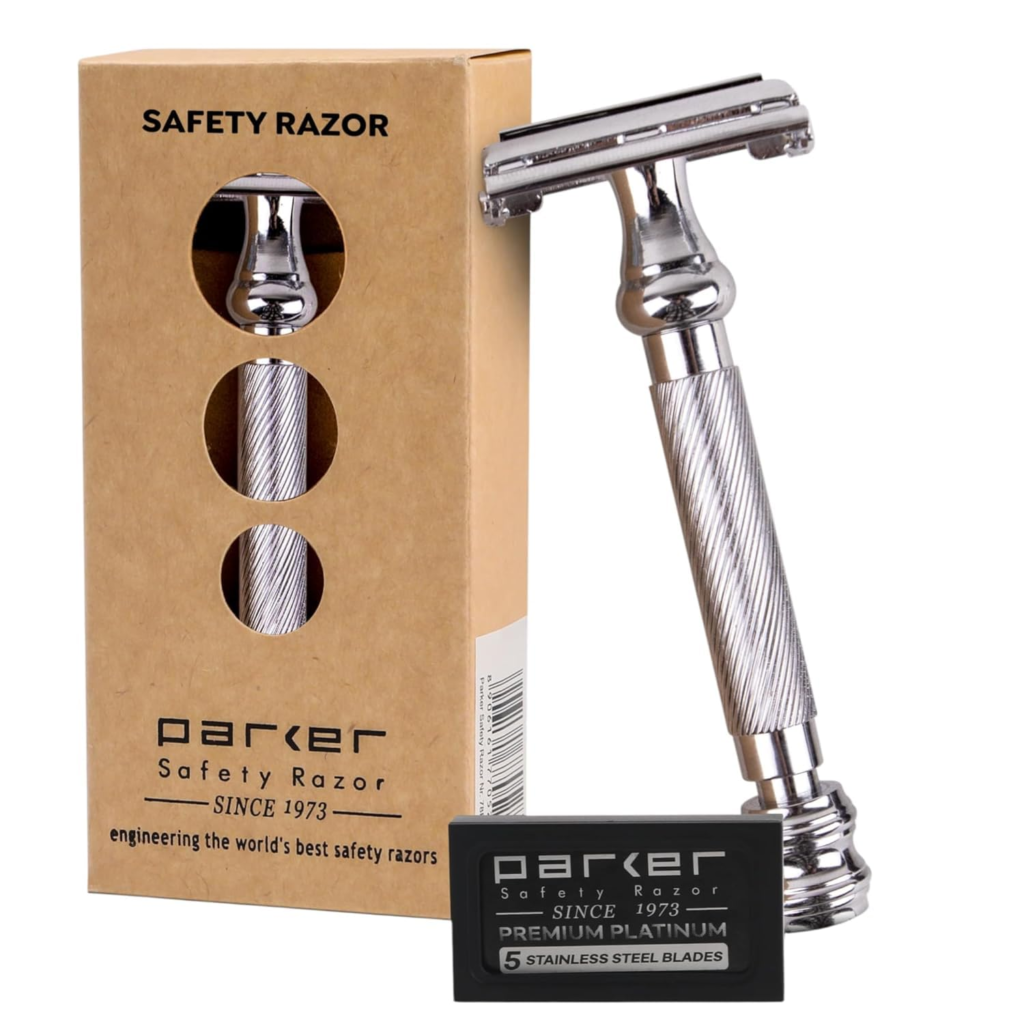
The Parker 99R is the most recommended budget entry point into double edge safety razor shaving. For beginners who want to try the format before committing to a premium purchase, the 99R delivers enough performance to make the trial meaningful without the financial risk of a larger investment.
Parker is an Indian brand with decades of safety razor manufacturing history. The 99R features a butterfly-opening mechanism that makes blade loading exceptionally easy for beginners, you simply twist the handle bottom to open the two butterfly flaps, place the blade flat on the head, and twist back to close. There is no disassembly required.
The long handle makes it comfortable for men with larger hands and suits the range of shaving positions that beginners are still figuring out. The weight is good, the build quality is adequate for the price, and the shave is smooth enough to give an accurate first impression of what safety razor shaving can offer.
Specifications:
- Weight: 95g
- Handle length: 4.0 inches
- Comb type: Closed comb
- Material: Chrome-plated brass
- Blade loading: Butterfly (twist to open)
- Best for: Budget beginners, men with large hands, anyone wanting a low-risk first razor
Pros:
- Very affordable lowest financial risk for a first safety razor
- Butterfly opening makes blade loading simple and intuitive
- Long handle comfortable for larger hands
- Good weight naturally encourages correct technique
- Decades of Parker manufacturing reliability
- Widely available online with quick delivery
Cons:
- Build quality noticeably below Merkur and Edwin Jagger
- Butterfly mechanism can loosen over extended heavy use
- Chrome finish shows wear faster than premium options
- Blade alignment slightly less precise than higher-end razors
👉 Check Parker 99R Price on Amazon
4. Mühle R89 — Best Mid-Range Beginner Razor
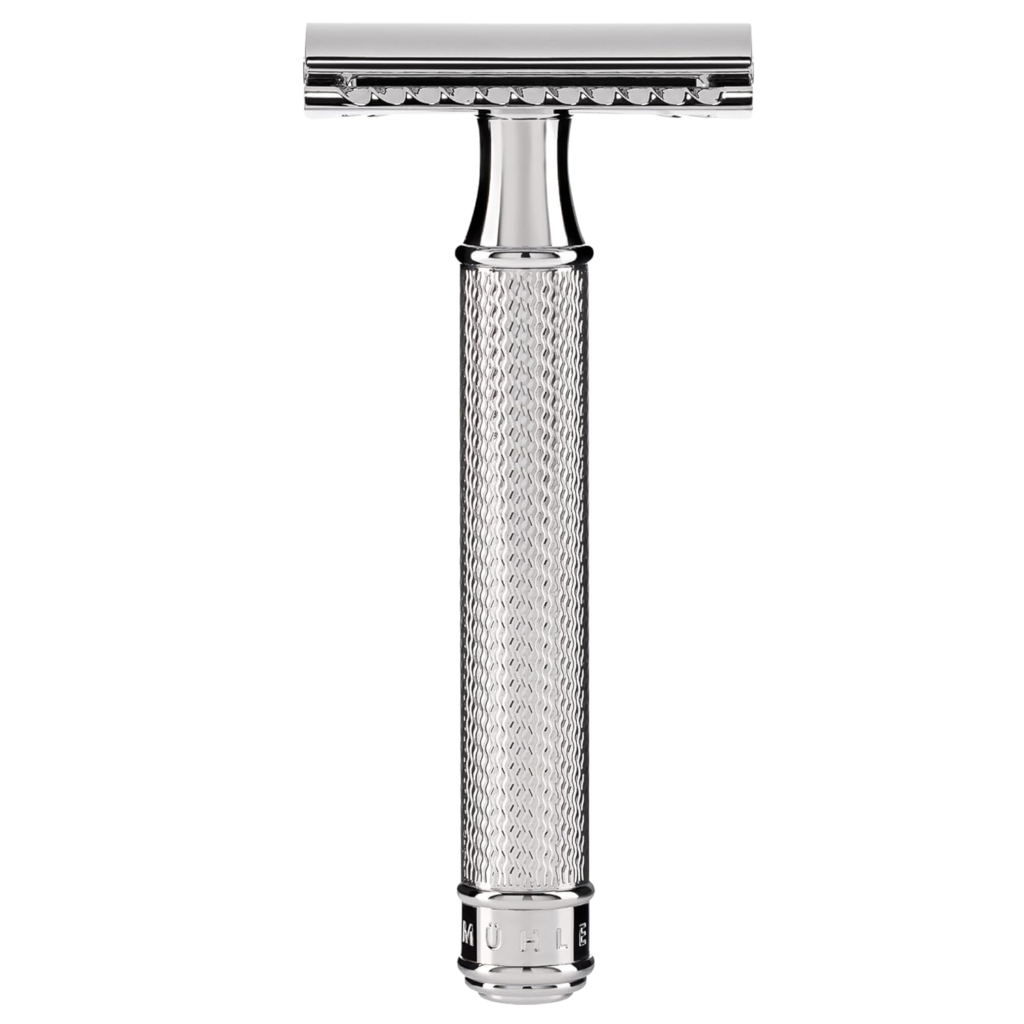
For beginners who want to start with something that feels genuinely premium without jumping to the top of the price range, the Mühle R89 is the answer. German-engineered and available in an impressive range of handle finishes including chrome, rosegold, brushed black chrome, and more, it sits at the intersection of performance and aesthetics in a way that few beginner razors achieve.
The R89 uses the same head geometry as the Edwin Jagger DE89, which means identical mild shave performance but with a wider range of handle options and a slightly more premium overall feel. For beginners who appreciate design and want a razor that looks as good as it performs, the R89 is the top recommendation in the mid-range beginner segment.
It also makes an outstanding gift for someone who is receiving their first safety razor, the presentation and quality feel communicate genuine thoughtfulness in a way that a budget razor cannot match.
Specifications:
- Weight: 74g
- Handle length: 3.9 inches
- Comb type: Closed comb
- Material: Chrome-plated brass head, various handle materials
- Blade loading: Three-piece
- Best for: Beginners wanting premium aesthetics, gift buyers, everyday use
Pros:
- Premium aesthetics with wide handle finish range
- Proven mild head design identical to Edwin Jagger DE89
- Excellent German build quality and quality control
- Slightly longer handle than Merkur 34C, suits more hand sizes
- Works beautifully as a complete starter gift set
- Consistent performance across years of daily use
Cons:
- Higher price than Merkur 34C or Edwin Jagger for near-identical shave performance
- Not stainless steel, brass head with chrome coating
- Fixed mild gap, no adjustability as skills develop
- Head design shared with Edwin Jagger not entirely unique
👉 Check Mühle R89 Price on Amazon
5. Merkur 23C — Best Long-Handle Beginner Razor
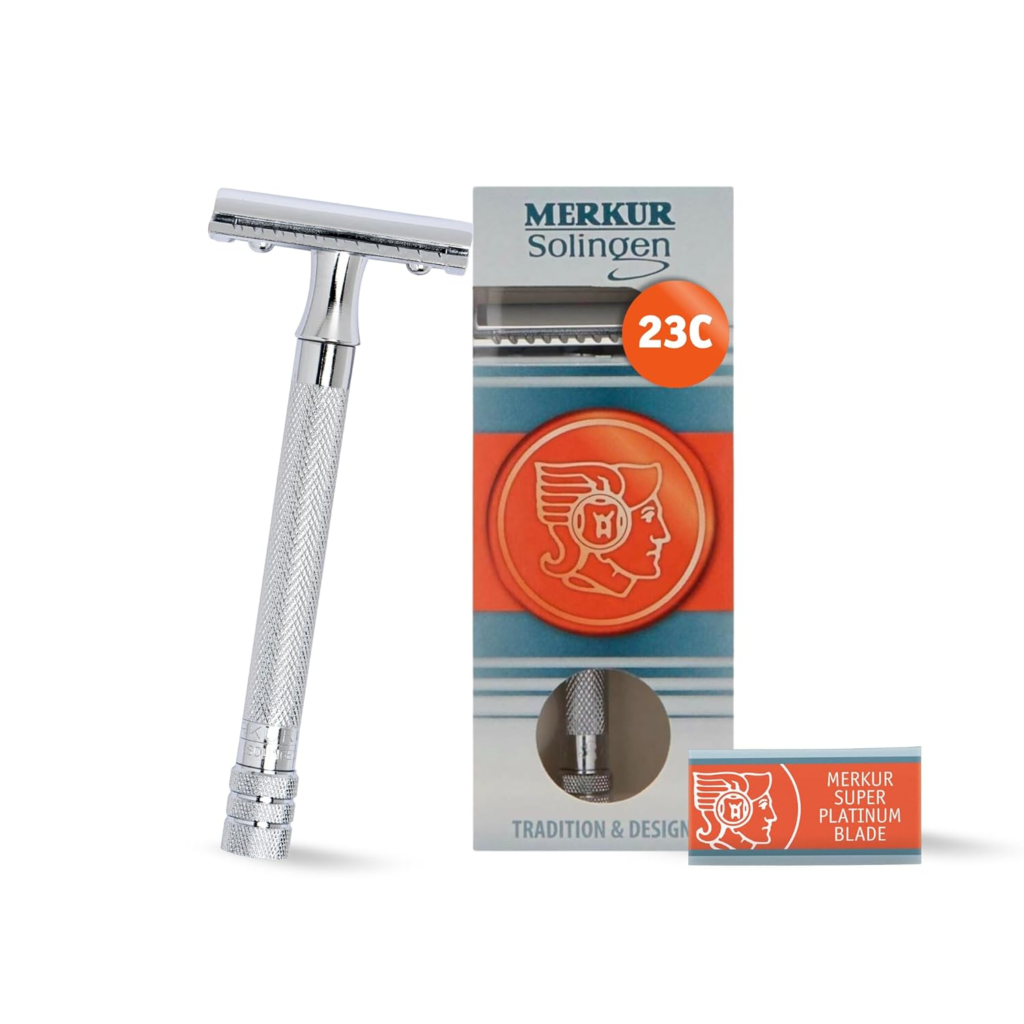
The Merkur 23C is the long-handle variant of the classic Merkur lineup and the top recommendation for beginners who specifically want or need more handle length. At 4 inches of handle length, it provides noticeably more reach and leverage than the 34C, which suits men with larger hands and shavers who prefer a longer grip for control during the learning phase.
It shares the same mild blade geometry as the rest of the Merkur beginner lineup and delivers an identically forgiving shave. The longer handle also makes it the top Merkur recommendation for men who plan to try head shaving where handle length is particularly useful for navigating the back of the scalp. The safety razor for head shaving guide on this site covers this in more detail.
Specifications:
- Weight: 71g
- Handle length: 4.0 inches
- Comb type: Closed comb
- Material: Chrome-plated zinc alloy
- Blade loading: Three-piece
- Best for: Beginners with larger hands, head shaving candidates, long-handle preference
Pros:
- Long handle provides better reach and leverage than short-handle options
- Mild Merkur geometry identical to the 34C
- Trusted Merkur quality and reliability
- Better suited for head shaving than shorter-handled alternatives
- Works with all standard DE blades
- Good choice for beginners who find the 34C handle slightly short
Cons:
- Longer handle can feel slightly unwieldy for beginners shaving the face only
- Chrome-plated zinc less durable than stainless steel
- Not adjustable, fixed mild gap throughout
- Handle length advantage is minimal for face-only shavers
👉 Check Merkur 23C Price on Amazon
6. Van Der Hagen Razor — Best Ultra-Budget Entry
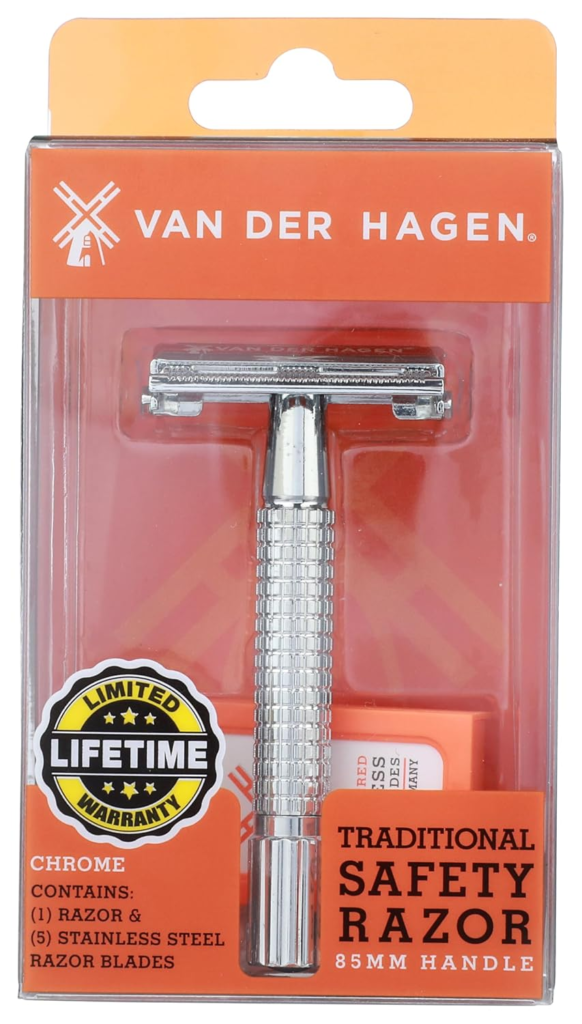
The Van Der Hagen Safety Razor is one of the most accessible entry points into double edge shaving in terms of price. It is frequently available at big box retailers and pharmacies as well as online, which makes it the rare safety razor you can actually find in a physical store without ordering online.
Build quality is entry-level and the shave experience is basic rather than refined. But for a shaver who wants to try double edge shaving for the absolute minimum financial commitment or who needs a razor immediately from a local store, the Van Der Hagen is a serviceable starting point. It is mild enough to be safe for beginners and consistent enough to give a fair impression of what safety razor shaving involves.
It should be viewed as a taster rather than a long-term razor. Most shavers who start with a Van Der Hagen upgrade relatively quickly once they are committed to safety razor shaving.
Specifications:
- Weight: 65g
- Handle length: 3.5 inches
- Comb type: Closed comb
- Material: Chrome-plated zinc
- Blade loading: Three-piece
- Best for: Ultra-budget beginners, in-store availability seekers
Pros:
- Extremely low price, minimal financial risk
- Available in physical retail stores
- Mild enough to be safe for complete beginners
- Decent enough performance to give a fair trial of the format
- Works with standard DE blades
- Good impulse purchase for curious cartridge razor users
Cons:
- Build quality below every other razor on this list
- Blade alignment less precise than quality options
- Chrome finish wears quickly
- Not a long-term keeper, most users upgrade within months
- Slightly light, less weight to guide technique than better options
👉 Check Van Der Hagen Razor Price on Amazon
7. Wilkinson Sword Classic — Best European Budget Beginner
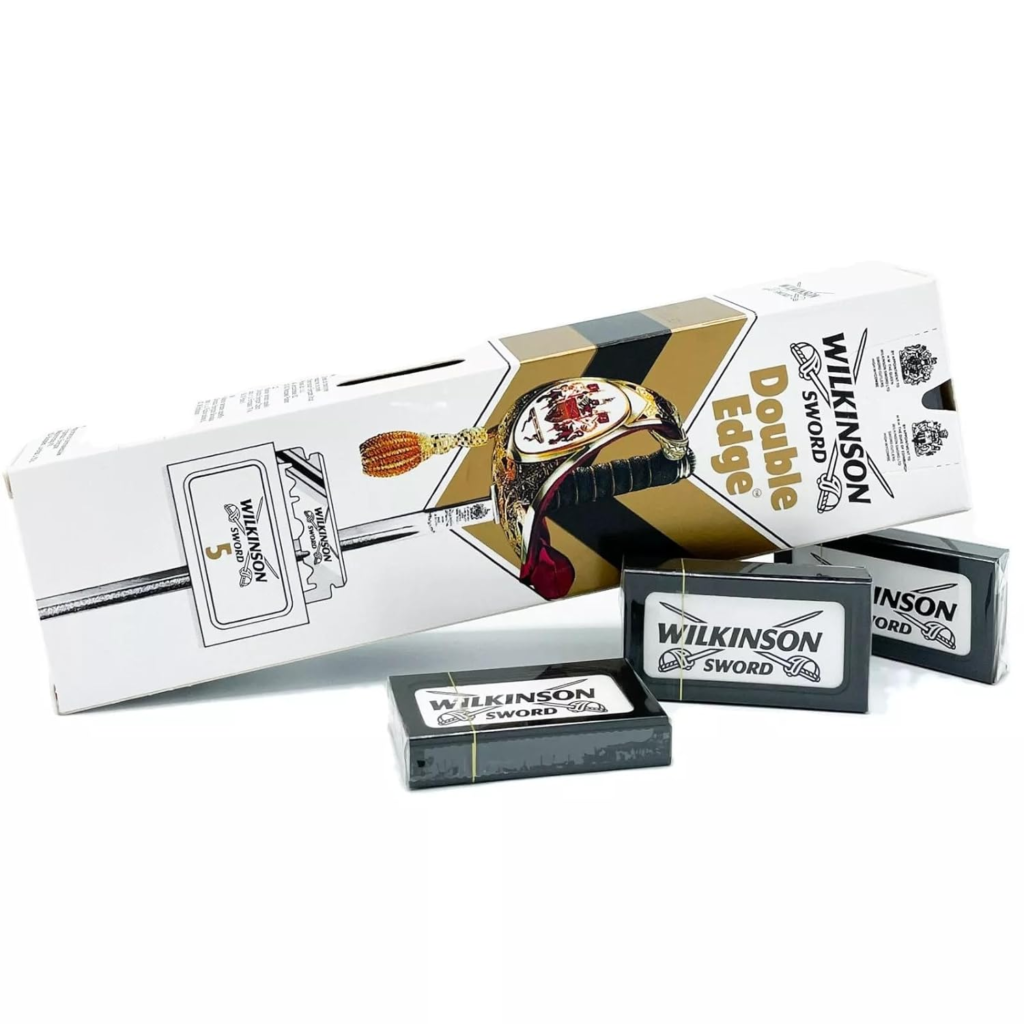
The Wilkinson Sword Classic is a widely available European budget razor that offers slightly better build quality than the Van Der Hagen at a similarly low price point. It is a plastic-handled razor with a metal head an unusual combination but the head geometry is mild and consistent, and the shave it produces is perfectly adequate for a beginner.
The plastic handle is the main quality concern with this razor. It is lighter and less premium-feeling than metal-handled alternatives, and the grip is less secure in wet conditions. However, for the price it delivers a shave that is genuinely better than any cartridge razor, which is the point of entry for new safety razor converts.
Specifications:
- Weight: 55g
- Handle length: 3.3 inches
- Comb type: Closed comb
- Material: Chrome metal head, plastic handle
- Blade loading: Three-piece
- Best for: European market beginners, ultra-budget entry
Pros:
- Very affordable with reasonable build quality for the price
- Mild head geometry safe for absolute beginners
- Widely available in European pharmacies and supermarkets
- Works with all standard DE blades
- Good enough to deliver a convincing first safety razor experience
Cons:
- Plastic handle less durable and less premium than metal options
- Light weight encourages pressing, counterproductive for technique learning
- Less secure grip in wet conditions
- Handle length on the shorter side
- Not a long-term keeper
👉 Check Wilkinson Sword Classic Price on Amazon
8. Rockwell 6S — Best Beginner Razor for Long-Term Value
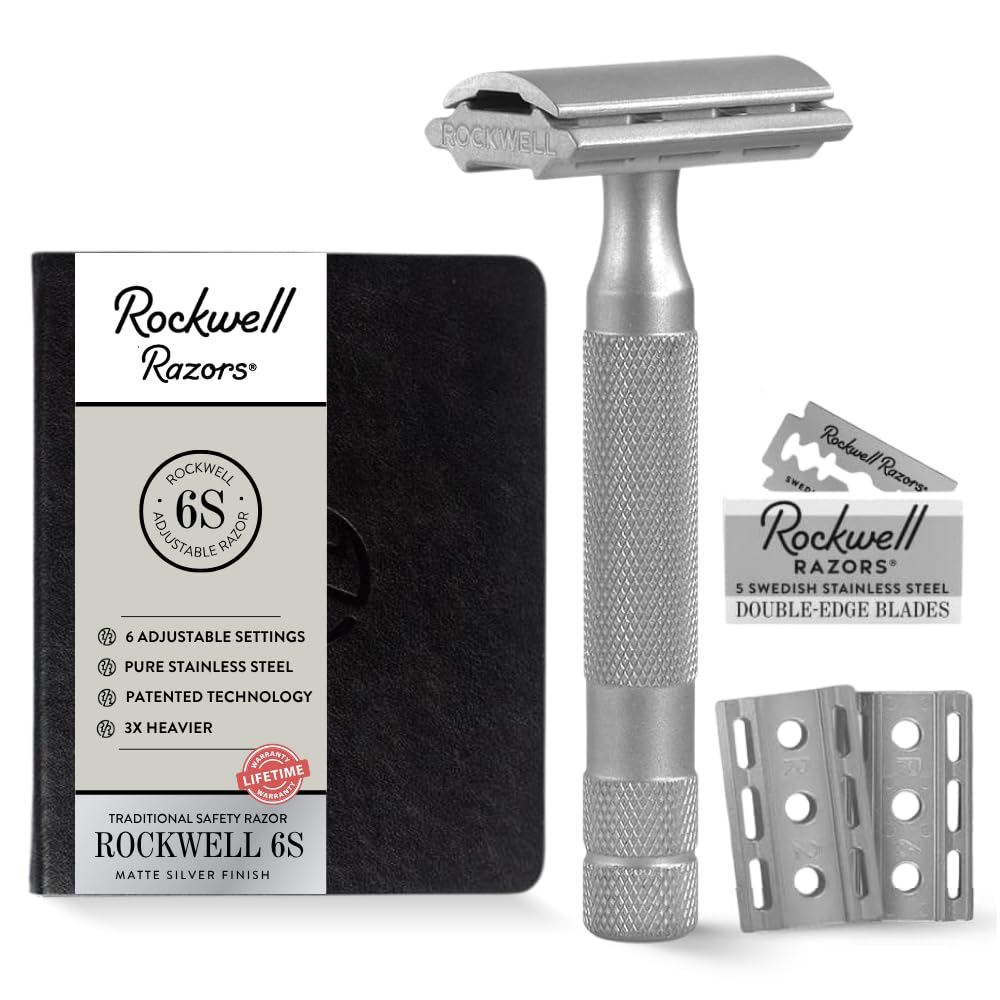
The Rockwell 6S is not a traditional beginner recommendation because of its price point, but it deserves inclusion on this list for shavers who know they are committed to safety razor shaving long-term and want a single razor that will serve them from their first shave through to advanced technique.
On plates 1 and 2, the Rockwell 6S is among the mildest shaves available, conservative enough for the most cautious beginner. As technique develops over weeks and months, you can gradually work up through plates 3, 4, 5, and eventually 6, which gives a significantly more aggressive shave. This eliminates the need to buy multiple razors as your skills grow.
The full stainless steel construction means it will last indefinitely. As covered in the best premium safety razors worth the investment guide on this site, the Rockwell 6S represents one of the strongest long-term value propositions in the safety razor market.
Specifications:
- Weight: 118g
- Handle length: 3.5 inches
- Comb type: Closed comb (all plates)
- Material: Full stainless steel
- Blade loading: Three-piece (plate swap)
- Best for: Committed beginners wanting one razor for life, long-term value seekers
Pros:
- Start mild on plate 1 and grow into more aggressive settings over time
- Full stainless steel, the most durable construction available
- No need to buy a new razor as technique and preferences evolve
- Excellent investment for committed safety razor users
- Works with all standard DE blades across every plate setting
- Strong community and wide availability of reviews for guidance
Cons:
- Higher upfront cost than other options on this list
- Heavy at 118g can feel tiring for longer shaving sessions
- Plate system adds a layer of complexity not needed in the beginner phase
- Handle shorter than some beginners prefer for face navigation
👉 Check Rockwell 6S Price on Amazon
How to Set Up Your First Safety Razor Shave
Buying the right razor is only the first step. Setting up your first shave correctly determines whether your introduction to safety razor shaving is positive or frustrating. Here is the most important pre-shave checklist for beginners.
Load the Blade Carefully
Handle the blade by its short ends only never touch the long cutting edges. For a three-piece razor, unscrew the handle, separate the head into top cap and base plate, place the blade flat on the base plate, replace the top cap, and screw the handle back until finger-tight. Do not overtighten.
For a butterfly razor, twist the handle base to open the flaps, place the blade flat on the head, and twist back to close. Check that the blade is centered evenly on both sides before shaving.
Choose Your First Blade Wisely
Do not use the sample blade that came with your razor for your very first shave if possible. Buy a small pack of Astra Superior Platinum or Gillette Platinum blades as your starting blade. Both are forgiving, smooth, and widely recommended for beginners. The full breakdown of which blades suit beginners best is in the best safety razor blades 2026 guide on this site.
Prepare Your Skin
Shave after a warm shower or apply a warm wet cloth to your face for two to three minutes before shaving. Softened, hydrated beard hair cuts more cleanly and requires less force, which directly reduces the chance of irritation during the learning phase.
Build Real Lather
Use a quality shaving soap or cream rather than canned foam. The extra lubrication from proper lather makes a meaningful difference to how the razor glides across your skin. This is particularly important in the beginner phase when your angle and pressure are still inconsistent.
Learn the Angle Before You Start
Before your first stroke, take thirty seconds to find the correct angle on your cheek. Hold the handle parallel to the floor and tilt slightly until the blade just makes contact. That is approximately 30 degrees, the right starting angle for most razors. The full technique guide in the how to shave with a safety razor walkthrough on this site covers angle, pressure, and pass direction in detail.
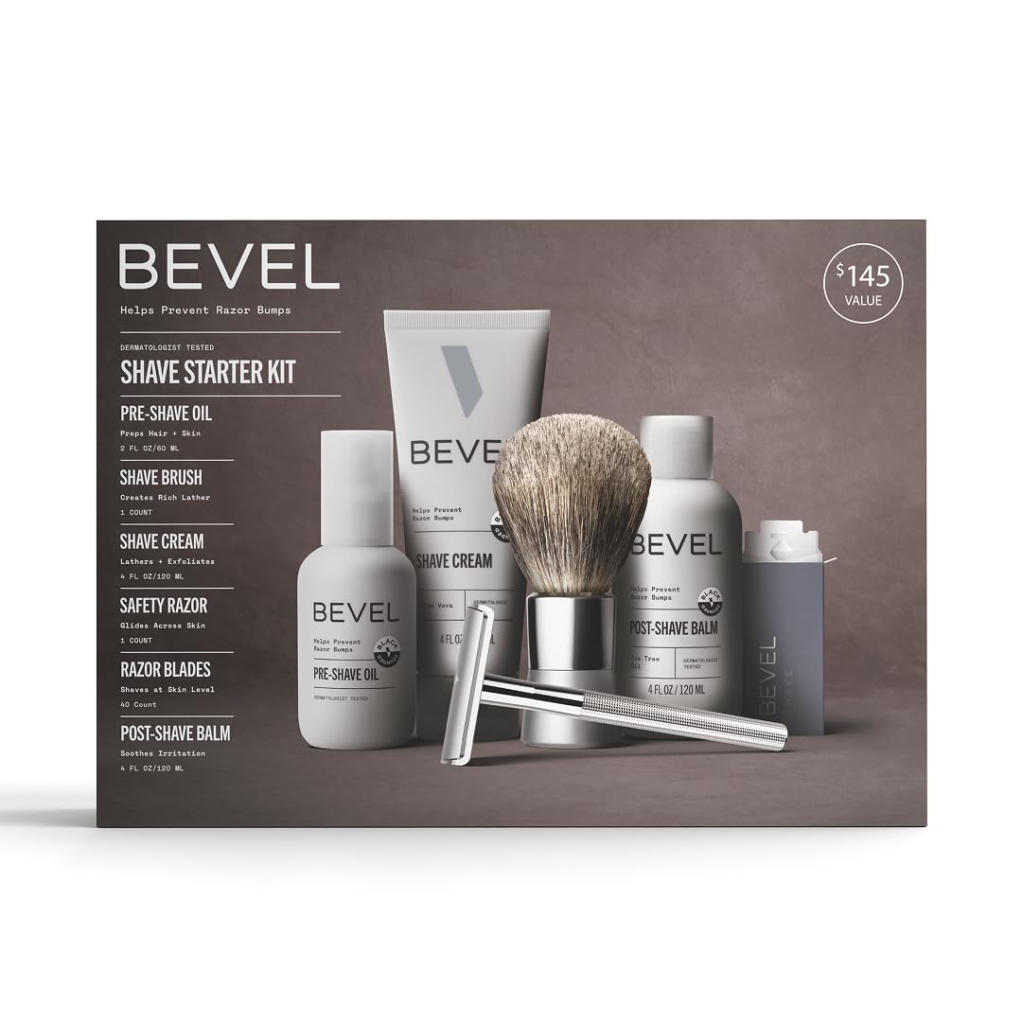
👉 Shop Complete Beginner Safety Razor Starter Kits on Amazon
The Essential Starter Kit Beyond the Razor
A razor alone is not a complete beginner setup. Here is what else you need for your first proper safety razor shave.
Blades
A sampler pack containing six to eight different blade brands is the ideal first blade purchase. Astra Superior Platinum, Gillette Silver Blue, Gillette Platinum, and Voskhod are the most beginner-friendly blades in any sampler. Test each brand for three shaves before moving to the next.
Shaving Soap or Cream
Proraso White is the most widely recommended beginner shaving cream affordable, easy to lather, and gentle enough for sensitive skin. Taylor of Old Bond Street and The Body Shop Maca Root Shaving Cream are also excellent starting options. Any of these will produce far better lather than canned foam.
Shaving Brush
A basic synthetic shaving brush is sufficient for beginners. Synthetic brushes are inexpensive, easy to maintain, do not require breaking in, and generate good lather quickly. A boar or badger brush is a worthwhile upgrade later but unnecessary at the start.
Alum Block
An alum block is a traditional post-shave tool that closes minor nicks, tightens the skin, and has mild antiseptic properties. Essential for the learning phase when minor nicks are part of the experience. Wet it, rub it gently across your face, let it sit for 30 seconds, then rinse.
Aftershave Balm
A fragrance-free aftershave balm suited to your skin type completes the post-shave routine. Avoid alcohol-heavy splashes in the early weeks, they will sting significantly on any areas of irritation from technique development. A soothing balm is more forgiving and helps your skin recover between shaves.
A complete safety razor starter kit guide on this site covers everything you need from day one in one consolidated resource.
Building Your Technique During the First Month
The first month of safety razor shaving is where the most important skill-building happens. Here is a simple week-by-week framework for new shavers.
Week One: Focus on Angle Only
In your first week, focus exclusively on finding and maintaining the correct angle on every stroke. Do not worry about passes, grain direction, or closeness. Just find 30 degrees and hold it consistently. One with-the-grain pass is enough for week one. Assess how your skin feels the next morning and adjust angle slightly if there is redness or irritation.
Week Two: Add Pressure Awareness
Once angle feels reasonably consistent, add pressure awareness. Actively think about releasing grip pressure before each stroke. The razor should rest in your hand rather than be gripped. If you feel the blade dragging rather than gliding, it is almost always pressure, not the blade or the razor.
Week Three: Add a Second Pass
Once angle and pressure feel consistent, add a second across-the-grain pass. Re-lather before the second pass. Assess how your skin responds and whether the second pass adds meaningful closeness without adding meaningful irritation.
Week Four: Refine and Consolidate
By week four, most beginners have a reliable two-pass shave with good angle and zero-pressure technique. This is when you can start experimenting with different blades in your sampler pack to find your ideal blade match. The how to shave with a safety razor guide on this site covers the full technique development process step by step.
AMAZON AFFILIATE DISCLAIMER
This post contains affiliate links. If you purchase through our links, we may earn a small commission at no extra cost to you.
Frequently Asked Questions
What is the best safety razor for an absolute beginner?
The Merkur 34C is the most consistently recommended first safety razor for absolute beginners. It is mild, well-built, widely available, and works with every standard DE blade. The Edwin Jagger DE89 is an equally strong alternative, particularly for men with sensitive skin.
Should a beginner buy a cheap or expensive safety razor?
A mid-range razor in the $30 to $50 range represents the best value for beginners. Cheap razors have inconsistent blade alignment that makes technique development harder. Expensive premium razors are wasted on developing technique that cannot yet take advantage of their qualities. The Merkur 34C and Edwin Jagger DE89 sit in the ideal beginner price range.
How long does it take to get good at shaving with a safety razor?
Most beginners are getting reliably good shaves within two to three weeks of consistent daily practice. Occasional shavers take longer because the muscle memory develops more slowly. Daily shaving during the learning phase accelerates improvement significantly.
Is a butterfly razor easier for beginners than a three-piece razor?
Many beginners find butterfly razors easier to load because there is no disassembly involved. The Parker 99R uses a butterfly mechanism and is consistently recommended for beginners partly for this reason. Three-piece razors are equally straightforward once you understand the simple assembly process.
What blade should I start with as a beginner?
Astra Superior Platinum and Gillette Platinum are the two most recommended starting blades for beginners. Both are forgiving, smooth, and work well across a wide range of razor types. After the first two to three shaves, expand to a sampler pack to find your ideal personal match.
Can I use a safety razor every day as a beginner?
Yes, and daily shaving during the learning phase is actually recommended because it accelerates technique development through consistent repetition. Use a mild razor, quality lather, and fresh blades, and daily shaving is perfectly safe for most skin types.
Do I need a shaving brush to use a safety razor?
A brush is not strictly required but it significantly improves the quality of lather compared to fingers or canned foam. A basic synthetic brush costs under $10 and makes a meaningful difference to how the razor performs on every shave. It is a worthwhile addition to any beginner setup.
When should I upgrade from my beginner razor?
Upgrade when your technique is consistently good, meaning reliable two-pass shaves with no nicks and minimal irritation and the razor itself feels like the limiting factor rather than your technique. For most shavers this is three to six months in. The aggressive vs mild safety razors guide on this site covers what to look for when you are ready to step up.