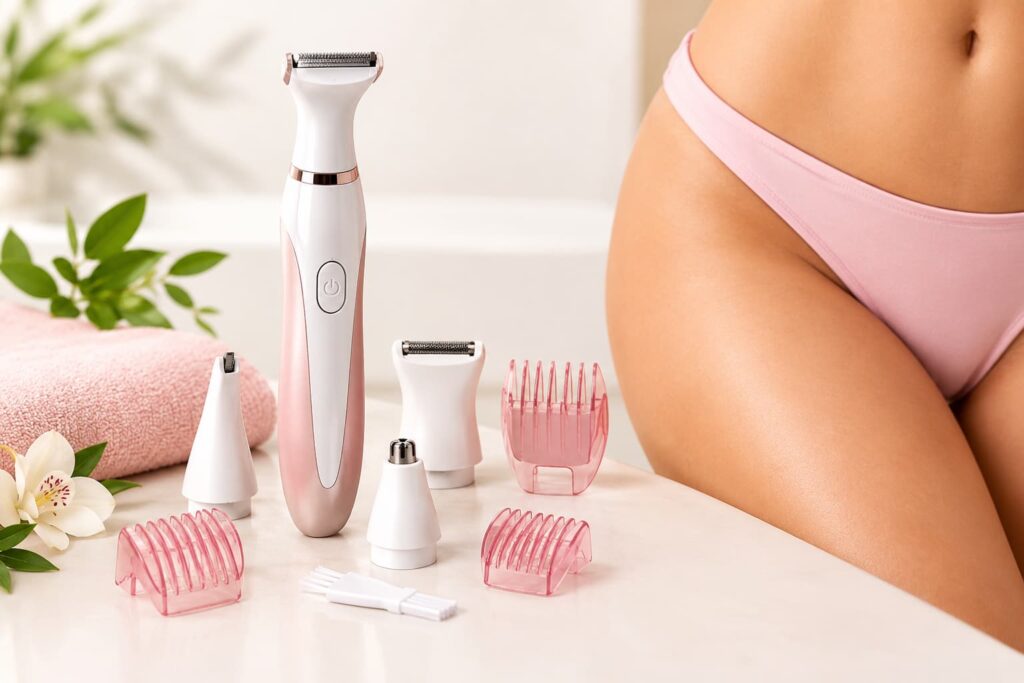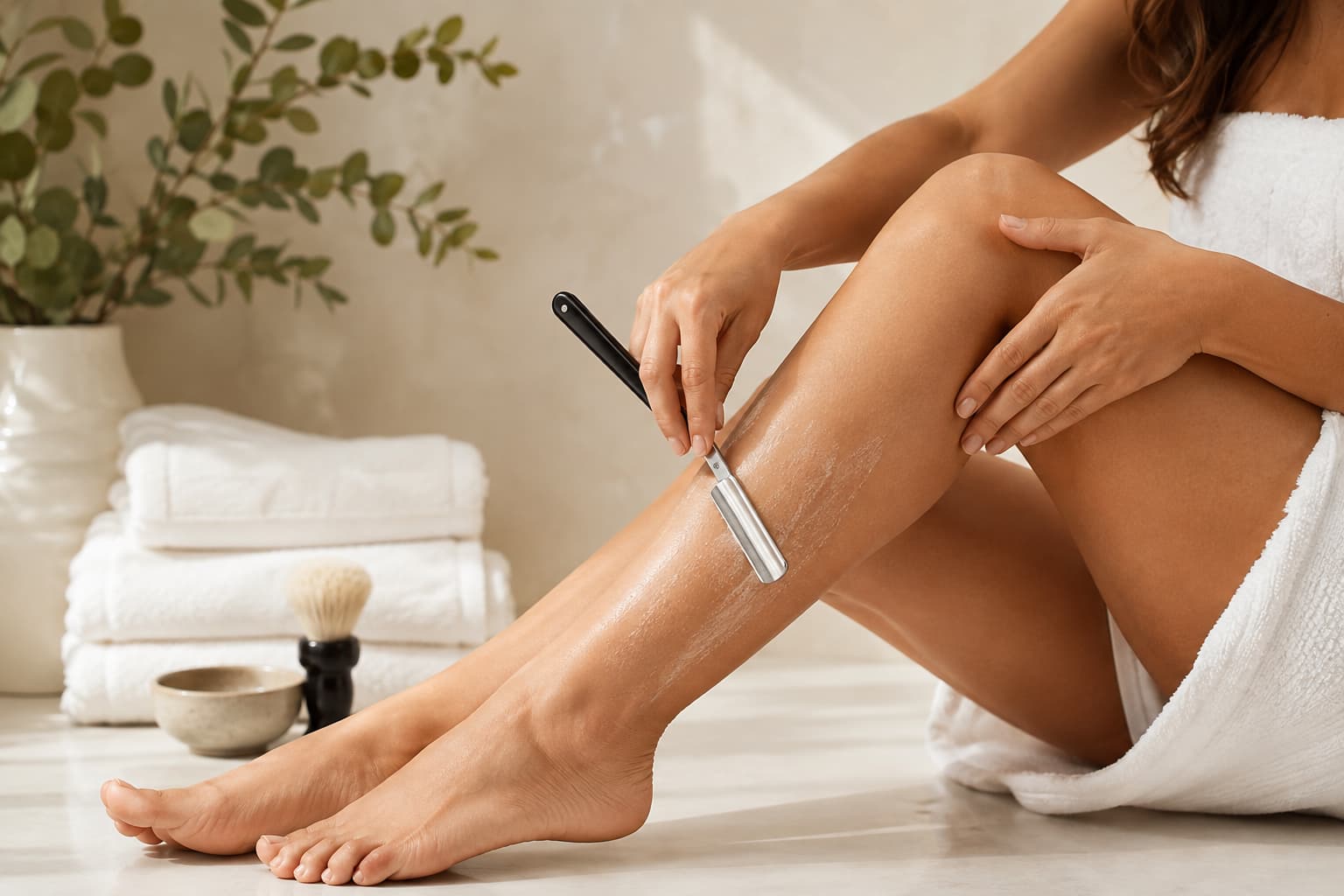
Women can use a straight razor, but it is not the easiest or safest choice for every body area. A straight razor gives excellent control on flat skin, but legs, knees, ankles, underarms plus bikini areas have curves that make open blade shaving more difficult.
For face shaving or careful detail work, a straight razor can work when used with proper technique. For full leg shaving or body shaving, most women will find a safety razor, cartridge razor or body trimmer easier. That does not mean a straight razor is impossible. It only means you need patience, light pressure, slick lather and extra caution. The biggest thing to understand is that a straight razor has no guard. Your hand controls the blade angle completely. This can be helpful on flat areas like the lower legs, but risky around knees, ankles, underarms and intimate areas.
In this guide, you will learn whether women should use a straight razor, which body areas are safer, which areas need caution, how to prepare the skin, how to shave legs with a straight razor, what mistakes to avoid plus when a safety razor is the better option.
Quick Answer
| Question | Simple Answer |
| Can women use a straight razor? | Yes, but careful technique is required |
| Is it good for legs? | It can work on flat leg areas but needs patience |
| Is it good for knees? | Not ideal for beginners because knees are curved |
| Is it good for underarms? | Usually not recommended for beginners |
| Is it good for bikini area? | Use extreme caution, safer tools are usually better |
| Is it better than a safety razor? | Not for most women’s body shaving routines |
| Does it reduce irritation? | It can, but only with proper prep and technique |
| Best beginner alternative | Safety razor or body trimmer |
Should Women Use a Straight Razor?
Women can use a straight razor if they understand the risk and learn slowly. The tool itself is not only for men. A blade can shave hair from many areas of the body. The real issue is whether the tool is practical for the area you want to shave. A straight razor gives a clean shave because the blade is fully exposed. This can be useful for precise lines, small sections plus careful shaving on flat skin. Body shaving often includes curves, softer skin plus areas where visibility is limited. That makes the learning curve harder.
Women who want a straight razor should start with easy areas first. The lower leg is usually easier than knees, ankles, underarms or bikini lines. Do not start with the hardest area. Learn the angle and pressure first. If you have never used one before, read a full how to shave with a straight razor guide before trying it on your legs or body.
Straight Razor for Women: Pros and Cons
| Pros | Cons |
| Gives very close control | No guard means higher cut risk |
| Can reduce plastic waste if fixed blade | Takes more time than normal shaving |
| Useful for careful detail work | Harder around curves |
| Can feel premium and traditional | Not ideal for rushed body shaving |
| One blade can reduce repeated scraping | Needs excellent technique |
| Traditional razor can last years | Fixed blade needs maintenance |
| Shavette blades are easy to replace | Disposable shavette blades can feel harsh |
A straight razor is best for women who enjoy careful grooming and want to learn a skill. It is not best for women who want the fastest possible shower shave.
Straight Razor vs Safety Razor for Women
A safety razor is usually a better choice for women’s legs and body shaving. It has a guarded head that controls blade exposure. This makes it easier on curves and safer for beginners.
A straight razor has no guard. It gives more control, but it also gives less protection. This is why many women should consider safety razors for women’s legs and bikini area before trying a straight razor for body shaving.
| Feature | Straight Razor | Safety Razor |
| Blade guard | No | Yes |
| Beginner ease | Harder | Easier |
| Leg shaving | Possible but slow | Better for most users |
| Knee shaving | Difficult | Easier |
| Bikini line | High caution needed | Safer with care |
| Maintenance | Higher for fixed blade | Lower |
| Shave closeness | Very close with skill | Close with less skill |
| Best for | Careful detail shaving | Regular body shaving |
If you are new to traditional shaving, a safety razor is usually the better first step.
Best Body Areas for Women to Use a Straight Razor
Not every body area is equally suitable for a straight razor.
| Body Area | Straight Razor Suitability | Beginner Advice |
| Lower legs | Possible | Best area to start |
| Thighs | Possible | Use light pressure |
| Knees | Difficult | Avoid until experienced |
| Ankles | Difficult | Use safer razor first |
| Arms | Possible | Use slow short strokes |
| Underarms | Not ideal | Curved skin makes it risky |
| Bikini line | High caution | Safer tools are usually better |
| Face peach fuzz | Possible | Use proper facial shaving technique |
| Stomach | Possible on flat areas | Avoid moles or bumps |
| Toes and fingers | Not recommended | Too many small curves |
The safest starting area is a flat section of the lower leg. Avoid curved or sensitive areas until you understand the blade.
Who Should Avoid Using a Straight Razor on the Body?
A straight razor is not right for everyone. You may want to avoid it if you:
- Shave quickly in the shower.
- Have shaky hands.
- Have many raised moles or bumps.
- Have active cuts, rashes or irritation.
- Cannot clearly see the area being shaved.
- Are shaving around very curved skin.
- Want a low effort routine.
- Are not willing to use proper lather.
- Do not want to learn blade angle.
- Prefer a tool with a guard.
If your skin is very reactive, read straight razor shaving for sensitive skin before trying it.
Traditional Straight Razor or Shavette for Women?
Women can use either, but they are different.
Traditional Straight Razor
A traditional straight razor has a fixed blade. It needs stropping, drying, careful storage plus occasional honing. It can feel smoother when properly maintained. This is better for women who want a long term tool and enjoy traditional shaving.
Shavette
A shavette uses replaceable blades. It does not need stropping or honing. When the blade gets dull, you replace it. This is easier for beginners in terms of maintenance but the blade can feel very sharp and direct. Some women may find it harsh on sensitive body areas.
Which Is Better?
For most women who are only curious, a safety razor is better. If you specifically want an open blade experience, a shavette is easier to maintain. If you want a traditional ritual, choose a fixed blade straight razor.
How to Prepare Skin Before Body Shaving
Preparation matters more with a straight razor because the blade is fully exposed.
Take a Warm Shower First
Warm water softens body hair and helps the blade glide better. A warm shower before shaving is easier than trying to shave dry or cold skin. Avoid shaving when your skin is very cold because the blade may drag more.
Clean the Skin
Use a gentle cleanser to remove sweat, oil and lotion. Clean skin helps the razor move smoothly. Do not use harsh exfoliating scrubs right before straight razor shaving. Scrubs can make skin more sensitive before blade contact.
Use Pre Shave Oil or Cream
A thin layer of pre shave oil or cream can help reduce drag. This is useful for legs, thighs plus areas where hair feels coarse. Use a small amount only. Too much oil can make the blade harder to control.
Use Slick Shaving Cream
A straight razor needs slick lather. Do not use thin dry foam. Use a shaving cream or soap that stays wet and smooth.
How to Shave Legs With a Straight Razor
Legs are the most realistic body area for women who want to try a straight razor. Start with the lower legs because the skin is flatter.
Step 1: Sit in a Stable Position
Do not stand on one leg in the shower while learning. Sit safely where you can see your leg clearly. Keep your skin dry enough to control your hand, but wet and lathered where you are shaving.
Step 2: Apply Slick Lather
Cover only a small section at a time. Do not lather the entire leg if the cream will dry before you reach it.
Step 3: Hold Skin Taut
Use your free hand to stretch the skin gently. Flat skin is easier and safer to shave.
Step 4: Keep the Blade Angle Shallow
Do not lift the spine too high. A steep angle can scrape the skin. Keep the blade low and controlled.
Step 5: Use Short Strokes
Use short strokes of one to two inches. Do not use long sweeping strokes at first. Short strokes give more control.
Step 6: Shave With Hair Growth First
Leg hair may grow downward or at slight angles. Start with the grain or in the easiest direction. Do not chase perfect smoothness immediately.
Step 7: Rinse the Blade Often
Rinse away hair and cream so the blade stays clean.
Step 8: Avoid Knees at First
The knee is curved and easier to cut. Use another razor on knees until you are confident.
Step 9: Rinse and Apply Balm
After shaving, rinse with cool water. Apply gentle body lotion or aftershave balm.
How to Shave Thighs With a Straight Razor
Thighs can be easier than knees but harder than lower legs because the skin may be softer. Use gentle stretching and light pressure. Work in small sections. Keep the blade angle shallow. Reapply lather if it dries. Be careful around inner thighs because the skin is more sensitive. If the area feels awkward, use a safety razor instead.
Can You Use a Straight Razor on Knees?
You can, but beginners should avoid it. Knees are difficult because they are curved, bony and uneven. The skin can fold when the leg is bent. Straight razors work best on flat skin, so knees are not beginner friendly. If you try later, bend the knee slightly to stretch the skin. Use tiny strokes. Never rush. For most women, a safety razor is still more practical for knees.
Can You Use a Straight Razor on Ankles?
Ankles are also difficult because the shape is bony and curved. It is easy for the blade to catch. Beginners should avoid using a straight razor around ankles. Use a guarded razor or trimmer until you have more experience.
Can You Use a Straight Razor on Underarms?
Underarms are not ideal for straight razor beginners. The skin is soft, curved and hard to stretch evenly. Visibility can also be limited. Underarm hair may grow in multiple directions, which increases irritation risk. A straight razor can work in skilled hands, but most women will have an easier time with a safety razor, cartridge razor or electric trimmer.
If you try, use very short strokes, fresh lather plus almost no pressure. Stop immediately if the skin feels irritated.
Can You Use a Straight Razor on Bikini Area?
A straight razor is not the best beginner tool for the bikini area. The skin is sensitive, the area has curves, visibility is limited plus nicks can be more uncomfortable. For bikini line shaving, a safety razor, bikini trimmer or guarded tool is usually safer. If you are using any blade near the bikini line, trim longer hair first, use warm water, apply slick shaving cream plus shave slowly.
Avoid using a straight razor on intimate areas or any area you cannot clearly see and control. If you want a cleaner bikini line, safer tools are usually better.
Can Women Use a Straight Razor for Face Shaving?
Some women use facial razors or dermaplaning style tools for peach fuzz. A traditional straight razor can remove facial hair, but it requires careful technique. For most women, a dedicated facial razor or dermaplaning tool is easier and safer than a full straight razor.
If using a straight razor near the face, avoid active acne, irritated skin, raised moles plus any area where the blade can catch. Use very light pressure and short strokes.
Straight Razor Body Shaving Tips for Sensitive Skin
Sensitive skin needs extra care.
- Use warm water prep.
- Avoid harsh scrubs before shaving.
- Use fragrance free shaving cream if needed.
- Use a sharp clean blade.
- Shave with light pressure.
- Avoid repeated passes.
- Do not shave over irritation.
- Rinse with cool water after shaving.
- Apply soothing balm or lotion.
- Give skin rest between shaves.
If your skin burns, stings or becomes red quickly, stop using the straight razor and switch to a safer shaving tool.
How to Avoid Cuts When Women Use a Straight Razor
The most important rule is this, never move the blade sideways on the skin. A straight razor should move in the direction of the stroke only. Follow these safety tips:
- Sit in a stable position.
- Shave only areas you can clearly see.
- Stretch the skin gently.
- Use short strokes.
- Keep the angle shallow.
- Use light pressure.
- Reapply lather often.
- Avoid bony curves at first.
- Keep fingers away from the blade path.
- Stop if your hand feels tired.
Straight razor body shaving requires focus. Do not do it while rushing.
Common Mistakes Women Make With Straight Razors
Starting on the Bikini Area
This is one of the worst places to start. Begin with a flat lower leg section.
Shaving in the Shower While Standing
Standing in a slippery shower increases risk. Sit safely while learning.
Using Long Strokes
Long strokes are harder to control. Use short strokes.
Pressing Too Hard
Pressure causes cuts and irritation. Let the blade glide.
Using Dry Lather
Dry lather increases drag. Keep the shaving cream wet and slick.
Shaving Over Knees Too Early
Knees are curved and difficult. Use safer tools there at first.
Using a Dull Blade
A dull blade pulls hair and makes you press harder. Use a sharp, smooth edge.
Skipping Aftercare
Body skin can get dry after shaving. Apply balm or lotion.
Best Alternatives for Women’s Body Shaving
A straight razor is not always the best choice. These alternatives may be safer and easier.
| Tool | Best For | Why It May Be Better |
| Safety razor | Legs and bikini line | Guarded blade with close shave |
| Cartridge razor | Quick body shaving | Easy around curves |
| Electric body trimmer | Bikini and sensitive areas | Lower cut risk |
| Facial razor | Peach fuzz | Easier than straight razor |
| Epilator | Longer lasting hair removal | No blade shaving |
| Waxing | Longer smoothness | Removes hair from root |
For most women, a safety razor gives the best balance of closeness, control and safety for legs.
Straight Razor Body Shaving Routine
| Step | Action | Tip |
| 1 | Take warm shower | Soften hair first |
| 2 | Sit safely | Avoid slippery standing shave |
| 3 | Apply pre shave product | Use a thin layer |
| 4 | Apply slick shaving cream | Work in small sections |
| 5 | Stretch skin | Keep surface flat |
| 6 | Use short strokes | Move slowly |
| 7 | Avoid curves at first | Skip knees and ankles |
| 8 | Rinse cool | Calm skin |
| 9 | Apply balm or lotion | Reduce dryness |
| 10 | Clean the razor | Keep blade safe and hygienic |
Aftercare for Women’s Body Shaving
After shaving, rinse the skin with cool water. Pat dry with a clean towel. Do not rub harshly. Apply a gentle lotion, body balm or aftershave balm. Avoid strong fragrance if your skin is sensitive.
Do not apply harsh exfoliating acids immediately after shaving unless your skin is used to them. Let the skin calm first. If you get small nicks, rinse the area and use an alum block or styptic product carefully. For larger cuts or ongoing irritation, stop shaving that area and let it heal.
Should Women Buy a Straight Razor?
Buy a straight razor if you want to learn a traditional shaving skill, enjoy slow grooming routines and are willing to practice. It can be a satisfying tool but it is not the easiest body shaving option.
Do not buy a straight razor only because it looks elegant or eco friendly. You need to be comfortable with blade control.
Buy It If
- You enjoy careful grooming.
- You are willing to learn technique.
- You want to reduce disposable plastic.
- You like traditional tools.
- You will avoid risky areas at first.
- You have time for slow shaving.
Skip It If
- You shave quickly in the shower.
- You want a tool for bikini area only.
- You dislike maintenance.
- You have very sensitive skin.
- You are nervous around open blades.
- You want the easiest leg shaving option.
Final Verdict
Women can use a straight razor, but it is not the best first choice for every body area. It can work on flat areas like the lower legs when you use warm prep, slick lather, short strokes, light pressure plus careful skin stretching. For knees, ankles, underarms and bikini areas, a safety razor or body trimmer is usually safer and easier. A straight razor has no guard, so it requires more skill than most body shaving tools.
If you still want to try one, start slowly. Practice on a small lower leg section. Avoid sensitive or curved areas until your technique improves. Focus on comfort first, not perfect smoothness. For most women, the best routine may be a combination. Use a safety razor for regular legs and bikini line shaving. Use a straight razor only for careful flat area practice or detail work if you enjoy the traditional shaving experience.
Amazon Affiliate Disclosure
As an Amazon Associate I earn from qualifying purchases. This means we may earn a small commission when you buy through links on this page at no extra cost to you.
FAQs
Can women use a straight razor on legs?
Yes, women can use a straight razor on legs, especially flat lower leg areas. Beginners should avoid knees and ankles at first because those areas are curved.
Is a straight razor safe for women?
It can be safe with proper technique, but it has a higher learning curve than a safety razor or cartridge razor because there is no guard.
Can I use a straight razor on my bikini line?
It is not recommended for beginners. The bikini area is sensitive and curved, so a safety razor or bikini trimmer is usually safer.
Is a straight razor better than a safety razor for women?
Not for most body shaving routines. A safety razor is usually easier and safer for legs, knees and bikini line shaving.
Can I use a straight razor on underarms?
It is possible, but not ideal for beginners. Underarm skin is soft and curved, which makes open blade shaving harder.
Does straight razor shaving reduce razor bumps?
It may help some people because it uses one blade edge, but poor technique can make bumps worse. Use light pressure, slick lather and avoid repeated passes.
Should women use a shavette or traditional straight razor?
A shavette is easier to maintain because it uses replaceable blades. A traditional straight razor feels more classic but needs stropping and honing.
What is the safest area to start with?
The lower leg is usually the safest starting area because it has flatter skin and better visibility.
What should I apply after body shaving?
Use a gentle body lotion or aftershave balm. Avoid harsh fragrance if your skin is sensitive.
What should I do if I cut myself?
Rinse the area with clean water. For small nicks, use an alum block or styptic product. Stop shaving that area until the skin calms.