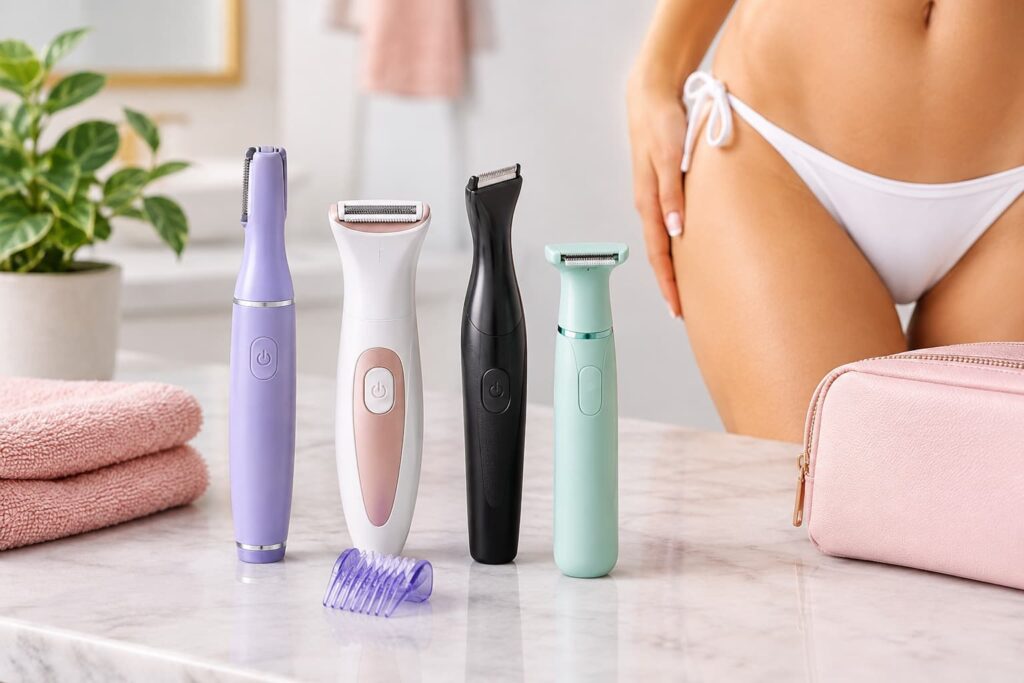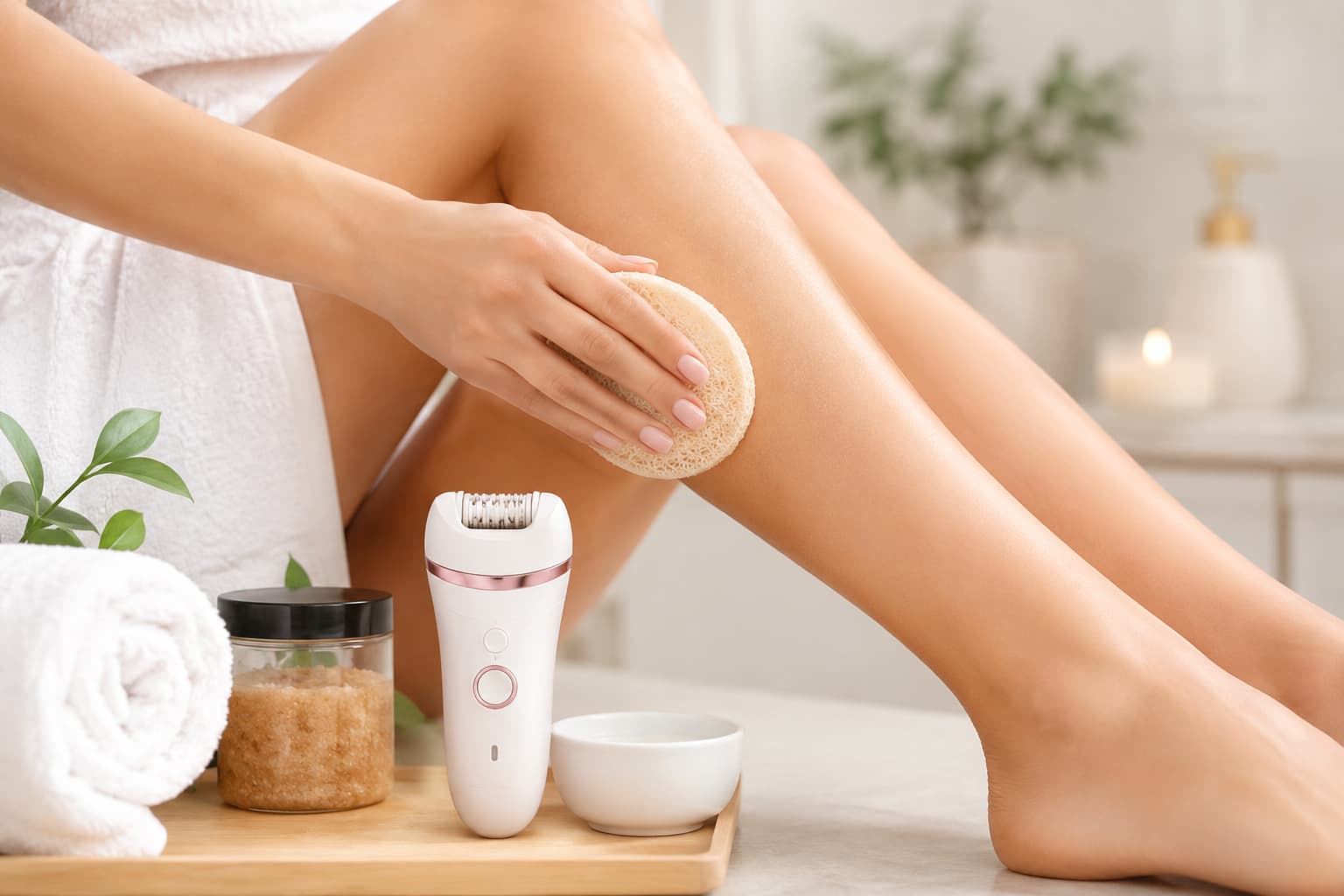
Preparing your skin before epilating can make the whole process smoother, cleaner and easier to manage. Many beginners focus only on the epilator itself but skin prep is just as important as the device. If your skin is dry, rough or covered with dead skin buildup, the epilator may miss hairs, pull unevenly or leave more bumps after the session.
An epilator removes hair from the root using tiny rotating tweezers because the hair grows back from below the skin surface, good exfoliation and aftercare can help reduce trapped hair, rough texture and ingrown hairs. Cleveland Clinic explains that gentle exfoliation removes dead skin cells and can help release ingrown hairs.
The best way to prepare skin before epilating is simple, exfoliate gently before the session, trim long hair, clean the skin, avoid heavy lotion right before use, hold the skin taut and moisturize after the skin calms.
This guide explains exactly how to prepare skin before epilating, when to exfoliate, what type of exfoliation to use, what to avoid, how to prep each body area and how to reduce pain plus irritation.
Quick Answer: How to Prepare Skin Before Epilating
| Step | What to Do | Best Timing |
| Exfoliate gently | Remove dead skin buildup | 24 hours before epilation |
| Trim long hair | Shorten hair so it pulls cleanly | Same day or day before |
| Clean skin | Remove sweat, oil and product buildup | Right before epilation |
| Dry skin if using dry mode | Helps hair stand up better | Right before epilation |
| Use warm water if wet mode | Helps skin feel more relaxed | During shower use |
| Hold skin taut | Helps the epilator grip hair cleanly | During epilation |
| Moisturize gently | Soothe dryness after skin calms | After epilation |
Why Skin Prep Matters Before Epilating
Skin prep matters because epilation is a root level hair removal method. The epilator needs to grip hair cleanly. If hair is hidden under dead skin buildup or lying flat against dry skin, the device may need extra passes. More passes can mean more redness, bumps and discomfort. Good prep helps with:
- Better hair grip
- Fewer missed hairs
- Less tugging
- Reduced roughness
- Lower chance of ingrown hairs
- Easier first sessions
- Better aftercare results
- Smoother looking skin
The American Academy of Dermatology says exfoliation can remove dead skin cells, but the right method depends on skin type, since mechanical exfoliation may irritate dry, sensitive or acne prone skin. That is why the goal is not aggressive scrubbing. The goal is gentle skin preparation.
Should You Exfoliate Before Epilating?
Yes, you should exfoliate before epilating, but gently. Exfoliation helps remove dead skin cells that can block hair from coming out cleanly. The best time to exfoliate is usually the day before epilation. This gives your skin time to calm down before the epilator pulls hair from the root.
Avoid harsh exfoliation immediately before epilating. If you scrub hard right before a session, the skin may become more sensitive, which can make epilation feel worse.
Should You Exfoliate After Epilating?
Not immediately. Right after epilation, your skin may be red, tender or slightly warm. Exfoliating at that time can irritate the skin. Wait until the skin calms, usually the next day or later. If the area still feels sore, wait longer. A simple rule:
- Exfoliate gently the day before epilation
- Do not exfoliate right after epilation
- Resume gentle exfoliation only when skin feels calm
Physical vs Chemical Exfoliation Before Epilating
There are two main types of exfoliation: physical and chemical. Both can help, but not every skin type handles them the same way.
Physical Exfoliation
Physical exfoliation uses texture or movement to remove dead skin cells. Examples include:
- Soft washcloth
- Exfoliating glove
- Body brush
- Gentle body scrub
- Silicone body scrubber
Physical exfoliation is easy to understand and works well for legs or arms. But harsh scrubs or rough gloves can scratch or irritate the skin.
Chemical Exfoliation
Chemical exfoliation uses ingredients that help loosen dead skin cells. Examples include:
- Salicylic acid
- Glycolic acid
- Lactic acid
- Mandelic acid
- Polyhydroxy acids
Chemical exfoliants can be useful for rough skin, bumps or ingrown hair prone areas, but they should be introduced slowly. AAD advises choosing an exfoliation method based on skin type and being careful because some products can increase sensitivity.
Which Is Better Before Epilating?
For beginners, a soft washcloth or gentle exfoliating glove is usually easier. For users with frequent bumps or ingrown hairs, a mild chemical exfoliant may help between sessions. Do not use strong acids right before epilating. Do not combine harsh scrub plus chemical exfoliant on the same day if your skin is sensitive.
Best Exfoliation Timing Before Epilation
2 Days Before
Use gentle exfoliation if your skin is sensitive or dry. This gives extra recovery time.
1 Day Before
This is the best timing for most people. Exfoliate gently, rinse well, moisturize lightly and let the skin rest.
Same Day
Use only very mild prep, such as a warm shower and soft washcloth. Avoid harsh scrubbing.
Right Before Epilation
Clean the skin. Dry it if using a dry epilator. Do not apply oily lotion right before dry epilation because it can make hair harder to grip.
How to Prepare Skin Before Epilating Step by Step
Step 1: Check Your Skin First
Do not epilate over broken, irritated, sunburned or infected skin. If you have painful bumps or rash, wait. Mayo Clinic says stopping hair removal methods such as shaving, tweezing or waxing may be needed until ingrown hair improves. The same cautious idea applies if your skin is already irritated before epilation.
Step 2: Trim Long Hair
Long hair hurts more when pulled from the root. It can also tug unevenly. If hair is long, trim it first. The hair should be short enough for clean grip, but not so short that the epilator cannot catch it.
Step 3: Exfoliate Gently
Use a soft glove, washcloth or mild body exfoliant. Move in light circular motions. Do not scrub until the skin turns red. For legs and arms, gentle physical exfoliation works well. For bikini line or underarms, use extra caution because the skin is more sensitive.
Step 4: Rinse Well
Remove scrub particles, cleanser and product residue. Leftover product can make the epilator head dirty or make skin feel sticky.
Step 5: Let Skin Calm
If you exfoliated the day before, let the skin rest. If the skin feels raw or itchy, postpone epilation.
Step 6: Shower Before Epilating
A warm shower can soften skin and clean away sweat. If using dry mode, dry the skin fully after showering. If using wet mode, use the device only if it is made for shower use.
Step 7: Avoid Heavy Lotion Right Before Dry Epilation
Moisturizing is good, but heavy lotion right before dry epilation can make hair lie flat. This may reduce grip.
Use lotion after epilation instead, once the skin calms.
Step 8: Hold Skin Taut
During epilation, stretch the skin gently with your free hand. This helps the device catch hair cleanly and reduces tugging.
Step 9: Move Slowly
Do not rush. Slow movement gives the tweezers time to grip hair.
Step 10: Moisturize After Skin Calms
After epilation, wait until redness settles, then apply a gentle fragrance free moisturizer.
How to Prepare Legs Before Epilating
Legs are the easiest area for most beginners. Lower legs are usually less sensitive than underarms or bikini line.
Best Leg Prep Routine
- Exfoliate gently the day before
- Trim long hair if needed
- Take a warm shower
- Dry skin fully for dry mode
- Start on lower legs
- Hold skin taut
- Move slowly from ankle upward
- Moisturize after skin calms
Legs can become dry after epilation, so regular moisturizing between sessions helps keep the skin smoother.
How to Prepare Underarms Before Epilating
Underarms need careful prep because the skin is soft, curved and often exposed to deodorant.
Best Underarm Prep Routine
- Trim long hair first
- Wash away deodorant and sweat
- Avoid harsh scrubbing
- Use a sensitive cap if available
- Lift the arm fully to stretch skin
- Start with low speed
- Avoid deodorant right after epilation
Underarms can react to friction and products, so keep aftercare simple. DermNet notes that folliculitis can happen in hair bearing areas and irritation from hair removal can contribute to skin problems.
How to Prepare Bikini Line Before Epilating
The bikini line is sensitive, so do not treat it like legs. Only use an epilator on the outer bikini line if your device allows it.
Best Bikini Line Prep Routine
- Trim hair first
- Clean the area gently
- Avoid harsh scrubs
- Test a small outer patch
- Use a sensitive area cap
- Hold skin taut
- Move slowly
- Wear loose underwear after
- Stop if pain feels too strong
Do not use an epilator internally or on delicate areas not approved by the manual.
How to Prepare Arms Before Epilating
Arm hair is often finer, so visibility and grip matter.
Best Arm Prep Routine
- Exfoliate gently
- Use bright lighting
- Keep skin dry for dry mode
- Hold skin taut
- Move slowly
- Change direction if hair lies flat
- Moisturize after skin calms
If your arm hair is very fine, a built in light on the epilator can help.
How to Prepare Face Before Epilating
Facial skin is delicate. Use only a facial epilator or a device with a proper facial attachment.
Best Face Prep Routine
- Wash your face
- Remove makeup and sunscreen
- Clean the facial epilator head
- Avoid active acne or irritated patches
- Test a small area
- Hold skin taut
- Move slowly
- Avoid acids or retinoids right after
- Moisturize gently
Do not use a full size body epilator on the face unless the manual clearly says it is safe.
Best Exfoliation Tools Before Epilating
Soft Washcloth
A soft washcloth is the safest basic option. It is good for beginners, sensitive skin and light exfoliation.
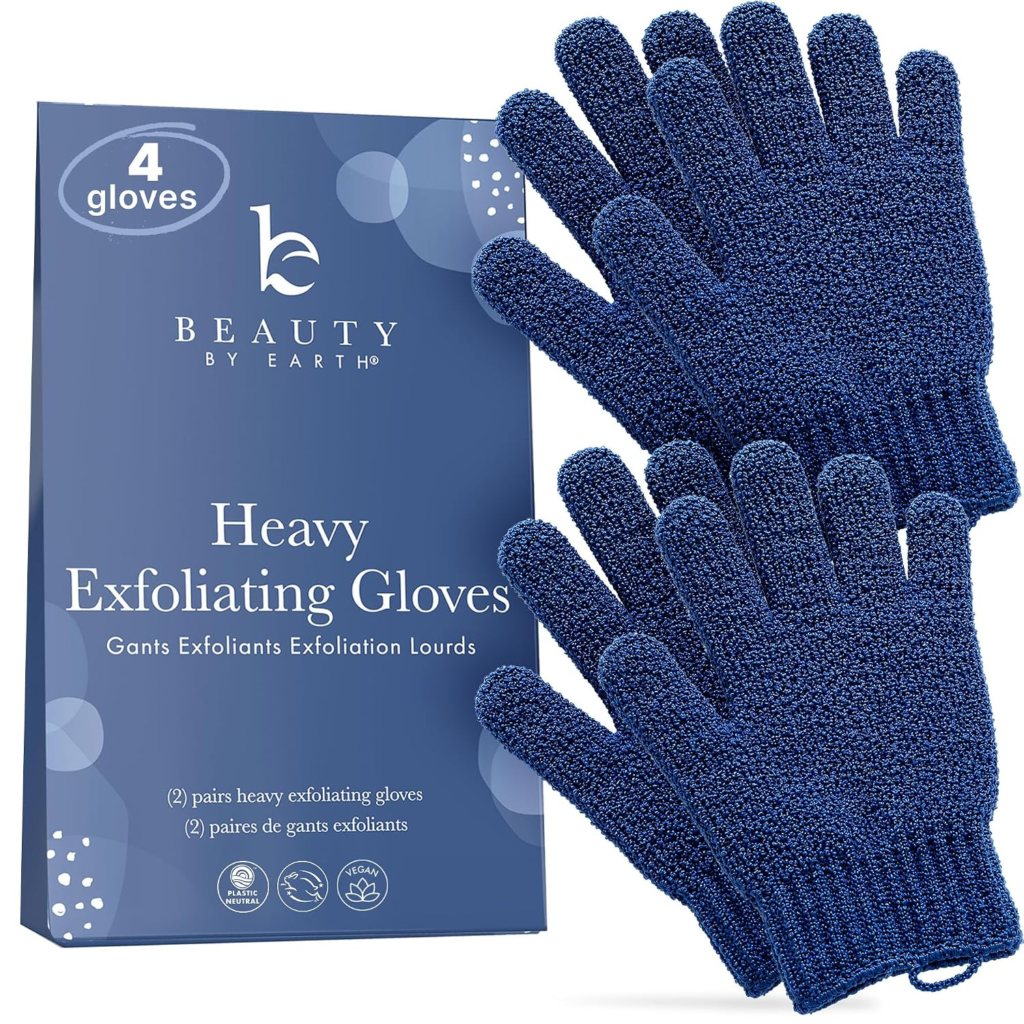
Exfoliating Glove
A gentle exfoliating glove works well for legs and arms. Avoid rough pressure.
Silicone Body Scrubber
A silicone scrubber can be gentler than rough body brushes. It is easy to clean and good for regular body care.
Mild Body Scrub
Choose a smooth mild scrub. Avoid sharp particles or gritty formulas that scratch the skin.
Chemical Body Lotion
A lotion with mild exfoliating ingredients may help rough or bump prone skin between epilation sessions. Do not use it right before epilation if it irritates your skin.
Ingrown Hair Treatment
Ingrown hair treatments may help users who often get bumps, but introduce them slowly. Avoid broken skin and stop if burning happens.
Products to Avoid Before Epilating
Avoid these right before epilation:
- Harsh sugar scrubs
- Rough salt scrubs
- Strong acid peels
- Retinoids on the body area
- Perfumed lotions
- Heavy body oils
- Self tanner
- Alcohol based products
- Strong deodorant
- Exfoliating brush with hard pressure
If a product leaves your skin stinging, hot or red, do not epilate over it.
Amazon CTA: Skin Prep Products for Epilation
Good skin prep can make your epilator routine easier. Choose gentle tools that support smooth skin without harsh scrubbing.
👉See Gentle Exfoliating Gloves, Fragrance Free Body Lotions on Amazon
How Exfoliation Helps With Ingrown Hairs
Ingrown hairs happen when hair grows back into the skin or becomes trapped. Exfoliation helps by removing dead skin cells from the surface.
Cleveland Clinic explains that gently exfoliating with warm water and small circular motions can help remove dead skin cells and release ingrown hairs. For epilation, this matters because hair is removed from the root. When it grows back, it needs a clear path out of the follicle. Dead skin buildup can make that harder.
Can You Over Exfoliate Before Epilating?
Yes. Over exfoliation can make skin red, tight, dry, itchy or sensitive. Epilating over over exfoliated skin can feel more painful and may cause more irritation. Signs you are over exfoliating:
- Skin feels raw
- Burning after lotion
- Extra redness
- Dry patches
- Itchy skin
- Stinging during shower
- More bumps after hair removal
- Tight shiny skin
If this happens, stop exfoliating for a few days. Moisturize gently and wait before epilating.
Best Routine for Sensitive Skin
Sensitive skin needs slower prep.
Sensitive Skin Schedule
| Timing | What to Do |
| 48 hours before | Gentle washcloth exfoliation |
| 24 hours before | Moisturize lightly |
| Epilation day | Warm shower, no harsh scrub |
| During epilation | Low speed, small sections |
| After epilation | Fragrance free moisturizer after skin calms |
| Next day | No harsh exfoliation if skin is red |
If sensitive skin is your main concern, choose a gentle device from the best epilators for sensitive skin category and learn does epilating hurt tips before your first full session.
Best Routine for Dry Skin
Dry skin needs moisture before and after epilation, but not heavy lotion right before dry mode.
Dry Skin Schedule
- Moisturize daily between sessions
- Exfoliate gently 1 day before
- Avoid hot showers
- Use fragrance free moisturizer
- Do not epilate cracked or flaky skin
- Moisturize after redness calms
Dry skin can make epilation feel rougher, so do not skip body lotion between sessions.
Best Routine for Coarse Hair
Coarse hair can hurt more when pulled from the root.
Coarse Hair Prep
- Trim long hair first
- Exfoliate gently the day before
- Use warm water if using wet mode
- Start with low speed
- Hold skin taut
- Move slowly
- Avoid repeating the same area many times
If coarse hair is dense, the right epilator matters. A weak device may miss hair and cause extra irritation.
Best Routine for Fine Hair
Fine hair can be hard to see and grip.
Fine Hair Prep
- Use bright lighting
- Exfoliate gently to lift flat hairs
- Use dry mode for better visibility
- Hold skin taut
- Move slowly
- Use a built in light if available
- Avoid overworking missed patches
If the epilator is not catching the hair, wait a few more days.
Should You Shower Before Epilating?
Yes, a warm shower can help clean the skin and soften the area. For dry epilation, dry the skin fully after showering. For wet epilation, use the device only if it is designed for wet and dry use. Do not use a corded dry only epilator in water.
Should You Moisturize Before Epilating?
Moisturize regularly between sessions, but avoid heavy lotion right before dry epilation. Oily or slippery skin can make hair harder to grip. Best approach:
- Moisturize daily between sessions
- Avoid heavy lotion right before dry use
- Moisturize after epilation once skin calms
Should You Use Baby Powder Before Epilating?
Some people use powder to keep skin dry before epilation. This can help if the skin is sweaty, but it is not necessary for everyone. If you use powder, keep it light. Too much powder can build up in the epilator head. Avoid powder on irritated skin or intimate areas unless the product is safe for that use.
What to Do Right After Epilating
After epilation, focus on calming the skin. Do this:
- Rinse gently if needed
- Pat dry with a clean towel
- Wait for redness to settle
- Apply gentle moisturizer
- Wear loose clothing
- Avoid perfume products
- Avoid harsh exfoliation
- Avoid hot baths right away
- Avoid heavy workouts if skin feels tender
Do not pick at red dots or bumps.
What Not to Do Before Epilating
Avoid these mistakes:
- Scrubbing aggressively
- Exfoliating right before a full session
- Epilating over irritated skin
- Using strong acids too close to epilation
- Applying heavy oil before dry epilation
- Skipping trimming on long hair
- Using a dirty epilator
- Starting with bikini line or underarms as a beginner
- Rushing through the session
- Pressing too hard
- Repeating the same patch too many times
Beginner Friendly Epilation Prep Routine
For beginners, keep it simple.
Day Before
Exfoliate gently with a soft washcloth or mild glove. Moisturize lightly after showering.
Epilation Day
Take a warm shower. Dry skin fully if using dry mode. Trim long hair if needed. Start with lower legs. Use low speed. Move slowly.
After Epilation
Wait until redness calms. Apply fragrance free moisturizer. Wear loose clothing. Do not exfoliate right away. This routine works well with a proper how to use an epilator guide because the prep and the technique support each other.
How Often Should You Exfoliate Between Epilation Sessions?
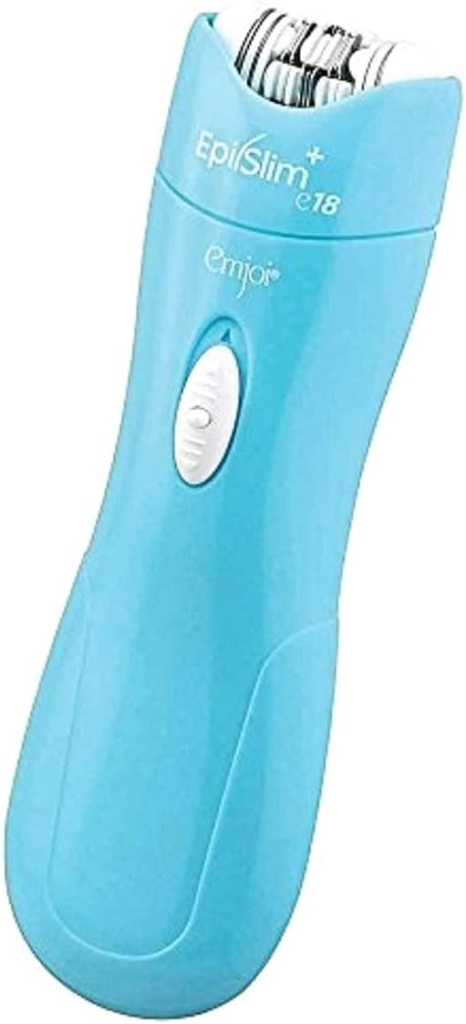
Most people can exfoliate gently 1 to 2 times per week between sessions. Sensitive skin may need less. Coarse hair or ingrown hair prone areas may need consistent gentle exfoliation, but not harsh scrubbing.
A simple weekly routine:
| Day | Routine |
| Day 1 | Epilate |
| Day 2 | Moisturize only |
| Day 3 | Gentle exfoliation if skin is calm |
| Day 4 | Moisturize |
| Day 5 | Gentle exfoliation if needed |
| Day 6 | Moisturize |
| Day 7 | Rest skin |
Adjust based on skin reaction. If redness or burning appears, reduce exfoliation.
When to Stop and Let Skin Heal
Stop epilating and pause exfoliation if you notice:
- Painful bumps
- Pus
- Swelling
- Spreading redness
- Burning skin
- Raw patches
- Bleeding
- Severe itch
- Dark marks getting worse
- Repeated ingrown hairs
DermNet notes that irritant folliculitis linked with hair removal may require stopping hair removal until the condition settles. If symptoms are painful, spreading or not improving, get medical advice.
👉See Ingrown Hair Treatments on Amazon
Final Verdict: How to Prepare Skin Before Epilating
The best way to prepare skin before epilating is to exfoliate gently the day before, trim long hair, clean the skin, avoid heavy lotion right before dry use, hold skin taut and moisturize after the skin calms.
Do not scrub aggressively. Do not epilate over irritated skin. Do not exfoliate immediately after epilation. The goal is smooth prep, not harsh skin treatment. For beginners, start with lower legs and a simple routine. Once you learn how your skin reacts, you can adjust exfoliation, timing and aftercare for underarms, arms, face or bikini line.
Good skin prep will not make epilation completely painless, but it can reduce missed hairs, rough texture, bumps and ingrown hairs. A gentle routine is the key to smoother results.
👉See Wet and Dry Epilators on Amazon
Amazon Associate Disclosure: As an Amazon Associate I earn from qualifying purchases. This does not affect the price you pay.
FAQs
Should I exfoliate before epilating?
Yes, gentle exfoliation before epilating can help remove dead skin buildup and reduce the chance of trapped hairs.
When should I exfoliate before epilating?
The best time is usually 24 hours before epilation. Sensitive skin may do better with 48 hours.
Can I exfoliate right before epilating?
You can use very mild prep like a soft washcloth, but avoid harsh scrubbing right before epilation because it can irritate skin.
Should I exfoliate after epilating?
Do not exfoliate immediately after epilating. Wait until the skin calms, usually the next day or later.
What is the best exfoliator before epilating?
A soft washcloth, gentle exfoliating glove or mild body scrub works well for many beginners. Sensitive skin should avoid rough scrubs.
Should I shower before epilating?
Yes, a warm shower helps clean the skin. Dry the skin fully if using dry mode.
Should I moisturize before epilating?
Moisturize regularly between sessions, but avoid heavy lotion right before dry epilation because it can make hair harder to grip.
How do I prevent ingrown hairs before epilating?
Exfoliate gently, trim long hair, use a clean epilator, move slowly and moisturize after the skin calms.
Can over exfoliation make epilation worse?
Yes, over exfoliation can make skin raw, red and more painful during epilation.
What should I avoid before epilating?
Avoid harsh scrubs, strong acids, heavy oils, irritated skin, sunburned skin and dirty epilator heads before epilation.