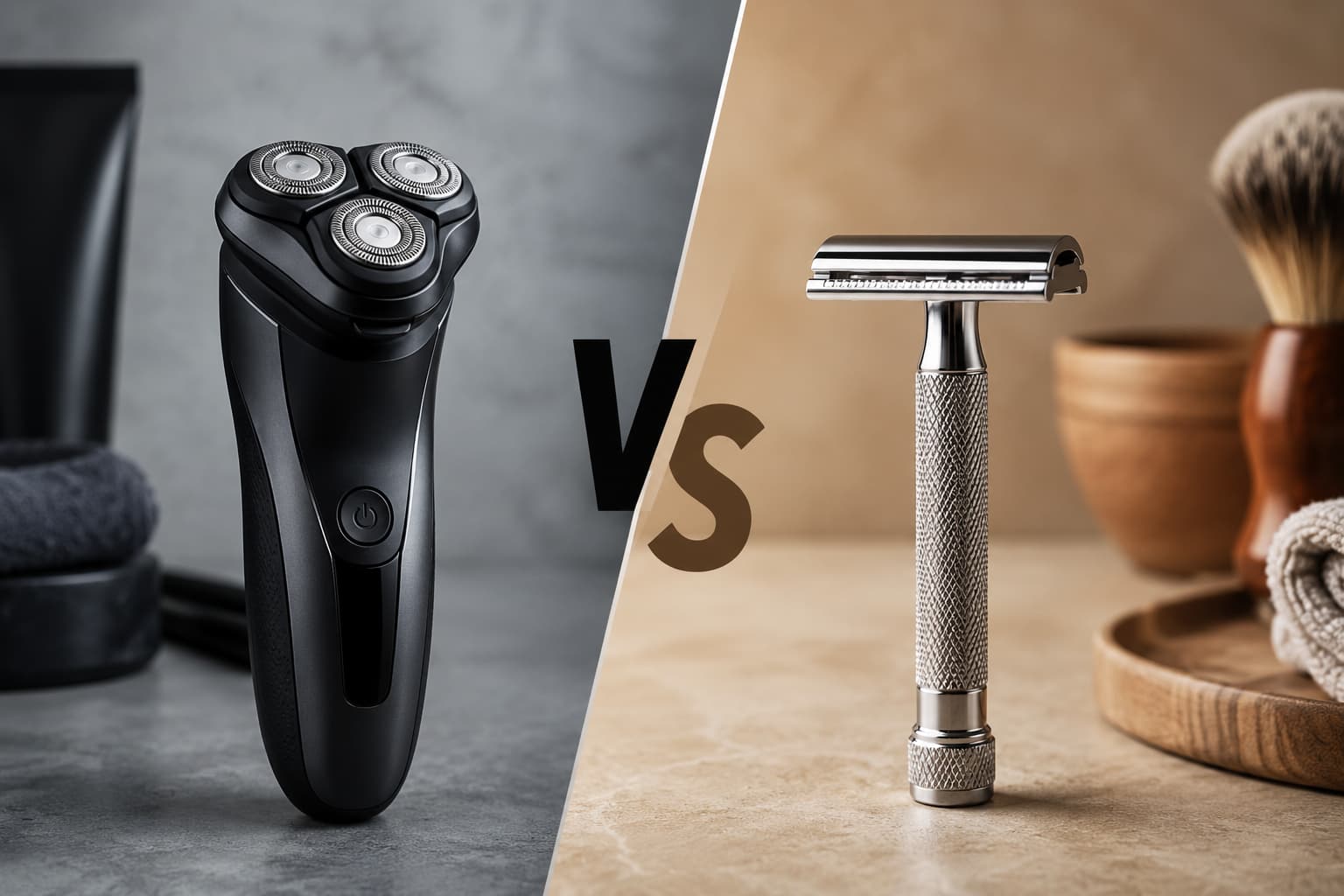
The electric shaver vs safety razor debate has been going on for decades and it is still one of the most common questions men ask when evaluating their grooming routine. Both tools have genuine strengths. Both have real limitations. The right choice comes down to your skin type, beard type, lifestyle, and how much value you place on convenience versus shave closeness.
This guide gives you an honest, complete comparison across every factor that matters closeness, skin comfort, cost over time, convenience, learning curve, and long-term value. By the end you will know clearly which one belongs in your bathroom and why.
What Is an Electric Shaver?
An electric shaver uses a motorized cutting system, either oscillating foil blades or spinning rotary heads to cut facial hair without direct blade-to-skin contact. The foil or rotary guard sits between the blade and your skin, reducing the risk of cuts and skin irritation significantly compared to exposed blade shaving.
Modern electric shavers range from basic single-foil models to sophisticated five-blade systems with adaptive motors, auto-cleaning stations, and wet shaving compatibility. They require charging or battery replacement, periodic blade cassette replacement, and regular cleaning to maintain performance.
The core appeal of electric shavers is speed, safety, and convenience. You can shave anywhere, anytime, without water or any additional product.
What Is a Safety Razor?
A safety razor is a manual shaving tool that uses a single double-edge razor blade exposed on both sides, protected by a safety bar that reduces the risk of deep cuts compared to a straight razor. The razor blade sits at a fixed angle in a metal handle and makes direct contact with the skin during shaving.
Safety razors were the dominant shaving tool for most of the twentieth century before electric shavers and multi-blade cartridge razors became widespread. They have experienced a significant revival among men who value shave closeness, low ongoing cost, and a more deliberate grooming ritual.
Safety razors require water and shaving soap or cream for every use, a specific technique to avoid irritation, and regular blade replacement typically every three to seven shaves depending on beard coarseness.
Electric Shaver vs Safety Razor: Head-to-Head Comparison
| Factor | Electric Shaver | Safety Razor |
| Closeness of Shave | Very good — excellent with premium models | Outstanding — the closest shave possible |
| Skin Comfort | Better for sensitive skin — no direct blade contact | More irritation risk — direct blade contact |
| Upfront Cost | Higher — $30 to $280 | Lower — $20 to $80 for quality handle |
| Ongoing Cost | Blade cassettes every 12 to 18 months ($20 to $60) | Blades every 3 to 7 shaves ($0.10 to $0.50 each) |
| Long-Term Cost | Moderate | Very low after initial handle purchase |
| Speed | Fast — 2 to 4 minutes | Slower — 5 to 10 minutes with prep |
| Convenience | Very high — no prep needed | Lower — requires water, soap or cream |
| Learning Curve | Minimal | Moderate — technique matters significantly |
| Travel Friendliness | Excellent — no liquids required | Good — blades restricted in some locations |
| Environmental Impact | Moderate — electronic waste, cartridge waste | Low — recyclable metal blades |
| Risk of Cuts | Very low | Low to moderate until technique is learned |
| Wet Shaving Required | Optional | Always required |
Closeness of Shave: Which Wins?
Safety razor wins on raw closeness. A double-edge blade makes direct contact with the skin surface and cuts hair at or slightly below skin level. A skilled safety razor user can achieve a shave so close it is indistinguishable from a professional barber finish.
Electric shavers even premium five-element models do not match this. The foil or rotary guard sits between the blade and skin, which is great for reducing irritation but inherently limits how close the cut can get to skin level. Premium electric shavers like the Braun Series 9 Pro+ and Panasonic Arc5 come remarkably close to safety razor results, but not completely equal.
The practical reality: For most men in most situations, a premium electric shaver delivers a shave close enough that the difference is academic. You would need to run your finger across both results to notice. For men pursuing the absolute closest shave possible, particularly for special occasions or formal settings, a safety razor edges ahead.
Skin Comfort and Irritation: Which Is Gentler?
Electric shavers win on skin comfort particularly for men with sensitive skin or those prone to razor burn.
The foil or rotary guard prevents direct blade-to-skin contact. A quality electric shaver with sharp blades and a smooth foil can shave the entire face without leaving redness, irritation, or razor burn on skin that would react badly to a safety razor.
Safety razors make direct skin contact with every stroke. In the hands of an experienced user with good technique, a safety razor is gentler than a multi-blade cartridge razor. But the learning curve for irritation-free safety razor shaving is real during the first few months, razor burn and occasional nicks are common.
For men with chronic skin sensitivity or conditions like pseudofolliculitis barbae (razor bumps), electric shavers are the safer long-term choice. Our guide on the best electric shavers for sensitive skin covers the models specifically engineered to minimize skin reaction.
Cost Comparison: Which Is Cheaper Long-Term?
This is where the comparison gets genuinely interesting because the result flips depending on your time horizon.
Year One Cost
Electric shaver: $80 to $280 for the shaver itself. Minimal additional costs in year one since blade replacement is not needed yet.
Safety razor: $20 to $80 for a quality handle. $10 to $20 for a 100-pack of blades. $15 to $30 for shaving soap or cream. Total year one: $45 to $130.
Safety razors are cheaper in year one for most men.
Year Two and Beyond
Electric shaver: $20 to $60 for annual blade cassette replacement. No other significant costs.
Safety razor: $5 to $15 per year for blade replacement. $15 to $30 per year for shaving soap or cream. Total ongoing: $20 to $45 per year.
Safety razors are cheaper in ongoing costs — primarily because double-edge blades cost a fraction of electric shaver replacement cassettes.
Five-Year Total Cost Estimate
| Item | Electric Shaver | Safety Razor |
| Initial purchase | $150 (mid-range) | $40 (quality handle) |
| Blades/cassettes (5 years) | $150 ($30/year) | $25 ($5/year) |
| Shaving products | $0 | $100 ($20/year) |
| Total | $300 | $165 |
Over five years, safety razor shaving costs roughly half as much as electric shaving at mid-range price points. At budget electric shaver prices the gap narrows; at premium electric shaver prices the gap widens.
The verdict: Safety razors are cheaper long-term for budget-conscious shavers. Electric shavers justify their higher cost through convenience, time saved, and reduced skin irritation risk.
Convenience and Speed: Which Fits Your Routine?
Electric shavers win on convenience by a wide margin.
An electric shave takes two to four minutes from picking up the shaver to putting it down. No water required. No shaving soap. No bowl. No brush. No waiting for the skin to prepare. You can shave in the car, at your desk, or in a dark hotel room without a mirror.
A safety razor shave requires warm water, shaving soap or cream, lathering technique, a precise blade angle, slow deliberate strokes, and post-shave rinsing. A good safety razor shave takes eight to twelve minutes. For men who enjoy the ritual, this is a feature. For men who need to move fast in the morning, it is a genuine barrier.
If your morning routine has ten spare minutes and you enjoy a mindful grooming ritual, a safety razor rewards that investment. If you need to shave in three minutes before a meeting, an electric shaver is the only sensible choice.
Learning Curve: Which Is Easier to Use?
Electric shavers are dramatically easier to learn.
Pick up an electric shaver and you are shaving correctly within thirty seconds. The foil or rotary head does the work you simply move it across your face. There is a brief skin adaptation period of one to two weeks for men switching from manual razors, but the technique itself requires no learning.
Safety razors require genuine technique. The correct blade angle typically 30 degrees to the skin must be maintained throughout every stroke. Too steep and you cut skin. Too shallow and you drag rather than cut. Neck and jawline curves require adjusted technique. Most men experience nicks, irritation, and inconsistent results for the first four to eight weeks before developing reliable technique.
For beginners to shaving entirely, or for men who simply want a shave that works without investment of time in technique, electric shavers are the obvious starting point. Our guide on how to switch from a cartridge to an electric shaver walks through exactly what to expect during the transition period
Travel Friendliness: Which Wins on the Road?
Electric shavers are more travel-friendly for most men.
A cordless electric shaver with a full charge requires nothing else no liquids, no accessories, no special storage. It fits in any bag, passes through airport security without question, and works in any hotel room with the right voltage adapter.
Safety razors travel well in terms of size, the handle is compact and durable. The challenge is blades. Double-edge razor blades are prohibited in carry-on luggage in most countries and must be checked. Losing or forgetting blades while travelling means the razor becomes useless. Replacement blades are not always easy to find outside major cities.
For frequent flyers and light packers, the electric shaver wins on travel practicality. For men who check luggage and travel with a full kit, safety razors are a viable and cost-effective travel companion.
Environmental Impact: Which Is Greener?
Safety razors have a meaningful environmental advantage.
Double-edge razor blades are made entirely of recyclable metal, they can be collected in a blade bank and recycled at end of life. The handle itself lasts indefinitely with proper care. Total plastic waste from safety razor shaving is essentially zero.
Electric shavers generate electronic waste at end of life. Blade cassettes contain mixed materials, metal blades in plastic housings that are difficult to recycle in standard streams. The environmental footprint of manufacturing and disposing of electric shavers is higher than safety razors on a per-unit basis.
For environmentally conscious shavers, safety razors are the greener choice by a clear margin.
Who Should Choose an Electric Shaver?
An electric shaver is the right choice if:
- You have sensitive, reactive, or easily irritated skin
- You value speed and convenience over ritual and closeness
- You shave daily and need a fast, consistent routine
- You travel frequently and cannot carry liquids or checked blades
- You are new to shaving and want a zero-learning-curve tool
- You have a physical condition that makes precise manual shaving difficult
- You want to shave in the shower or in non-bathroom environments
For the best models across every budget and skin type, our complete guide to the best electric shavers for men covers every top-rated option with full reviews.
Who Should Choose a Safety Razor?
A safety razor is the right choice if:
- You prioritize the absolute closest shave possible
- You enjoy a deliberate, ritualistic grooming routine
- You want to minimize long-term shaving costs
- You are committed to learning proper technique over four to eight weeks
- You care about environmental impact and want zero plastic waste
- You have normal to oily skin that handles direct blade contact well
Top Electric Shaver Picks
Braun Series 9 Pro+
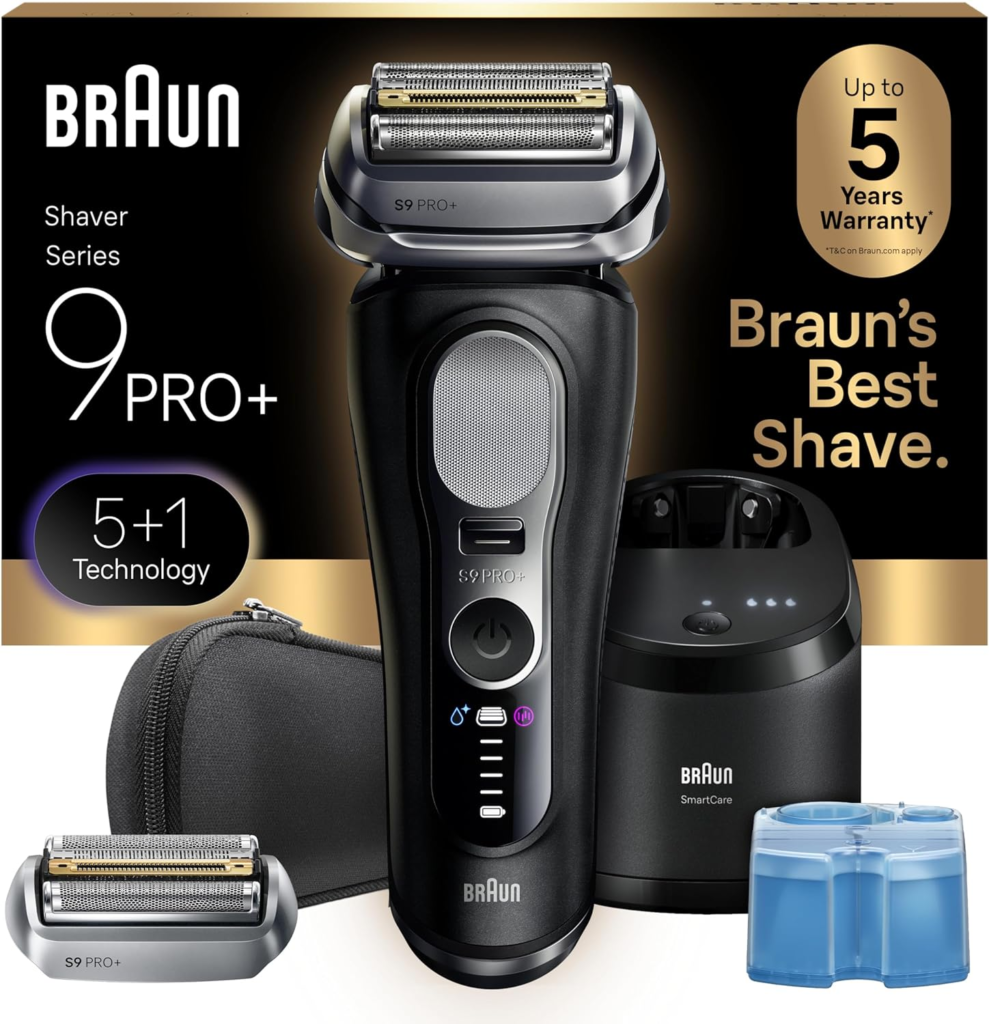
Key Specs:
- 5-sync cutting elements with ProLift trimmer
- HyperGlide foil for ultra-smooth skin contact
- 60-minute battery, 5-minute quick charge
- 100% waterproof
- Compatible with Clean and Charge Station
Pros:
- Comes closest to safety razor shave quality of any electric shaver available
- HyperGlide foil minimizes skin friction on sensitive skin
- Five cutting elements capture multi-directional growth in fewer passes
Cons:
- Premium price point
- Replacement cassettes are expensive
Best For: Men who want electric shaver convenience with the closest possible electric shave result.
👉 Check Latest Price on Amazon
Braun Series 7 7177cc
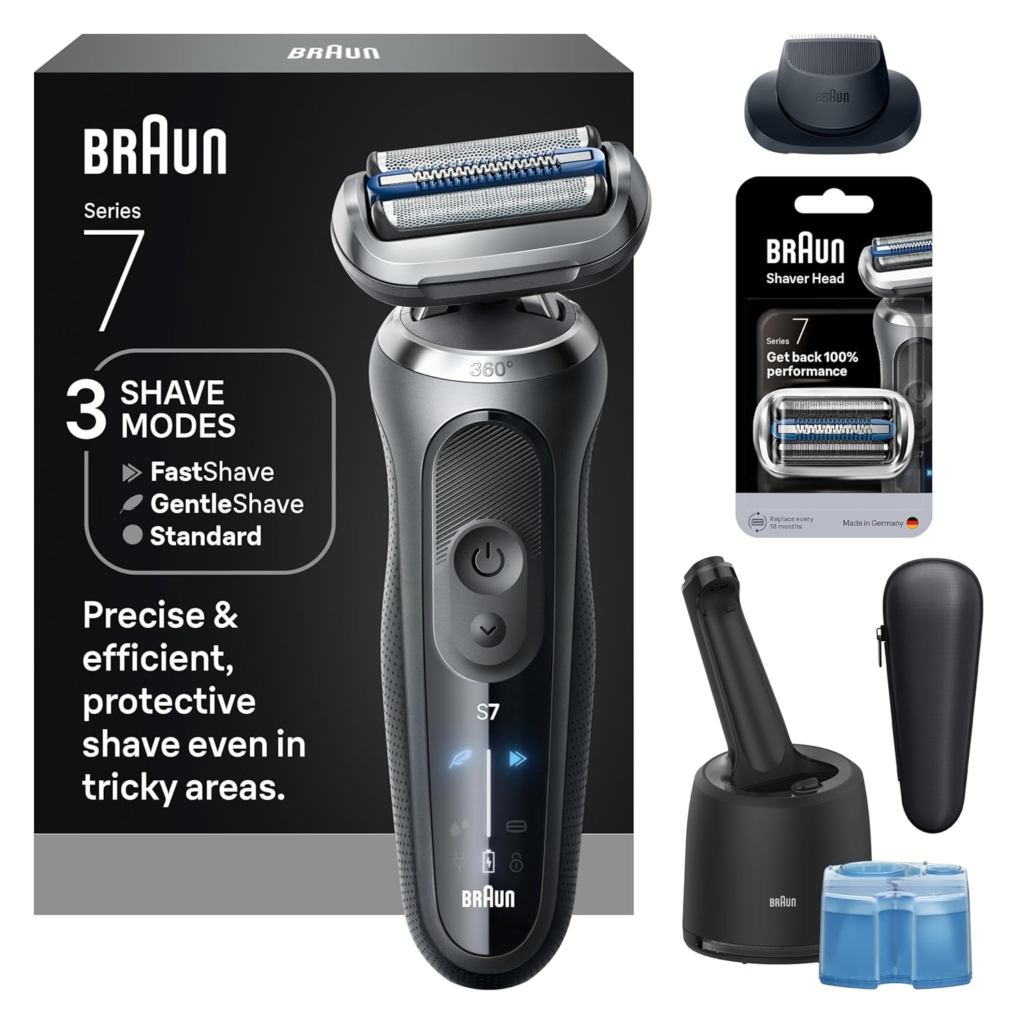
Key Specs:
- 4+1 cutting elements with AutoSense motor
- SensoFlex head adapts to face contours
- 100% waterproof
- Includes Clean and Charge Station
- 50-minute battery
Pros:
- AutoSense motor delivers near-Series-9 shave quality at a lower price
- Clean and Charge station handles all maintenance automatically
- Consistent performer on all beard types
Cons:
- One fewer cutting element than Series 9
- Cleaning station is bulky
Best For: Men who want flagship-adjacent electric shaver performance at a mid-range price.
👉 Check Latest Price on Amazon
Top Safety Razor Picks
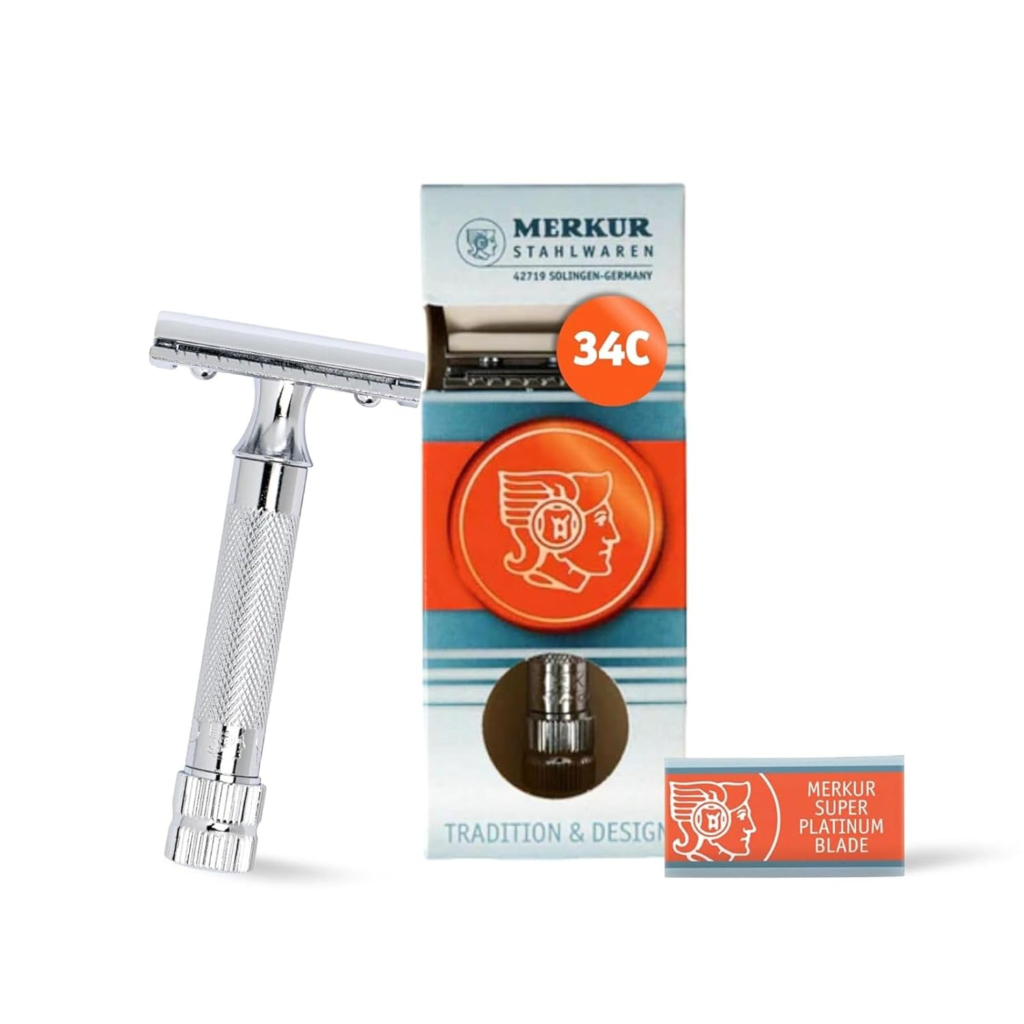
Merkur 34C Heavy Duty Safety Razor
Key Specs:
- Short handle design for maximum control
- Closed comb safety bar for gentle shaving
- Chrome-plated solid brass construction
- Compatible with all standard double-edge blades
- Made in Germany
Pros:
- Short, heavy handle provides excellent balance and control, ideal for learning correct technique
- Closed comb design is the most forgiving option for beginners transitioning from cartridge razors
- Built to last a lifetime with proper care, no plastic components
Cons:
- Shorter handle is less comfortable for men with large hands
- Requires separate blade purchase
Best For: Men new to safety razor shaving who want a forgiving, well-balanced beginner razor that teaches correct technique.
👉 Check Latest Price on Amazon
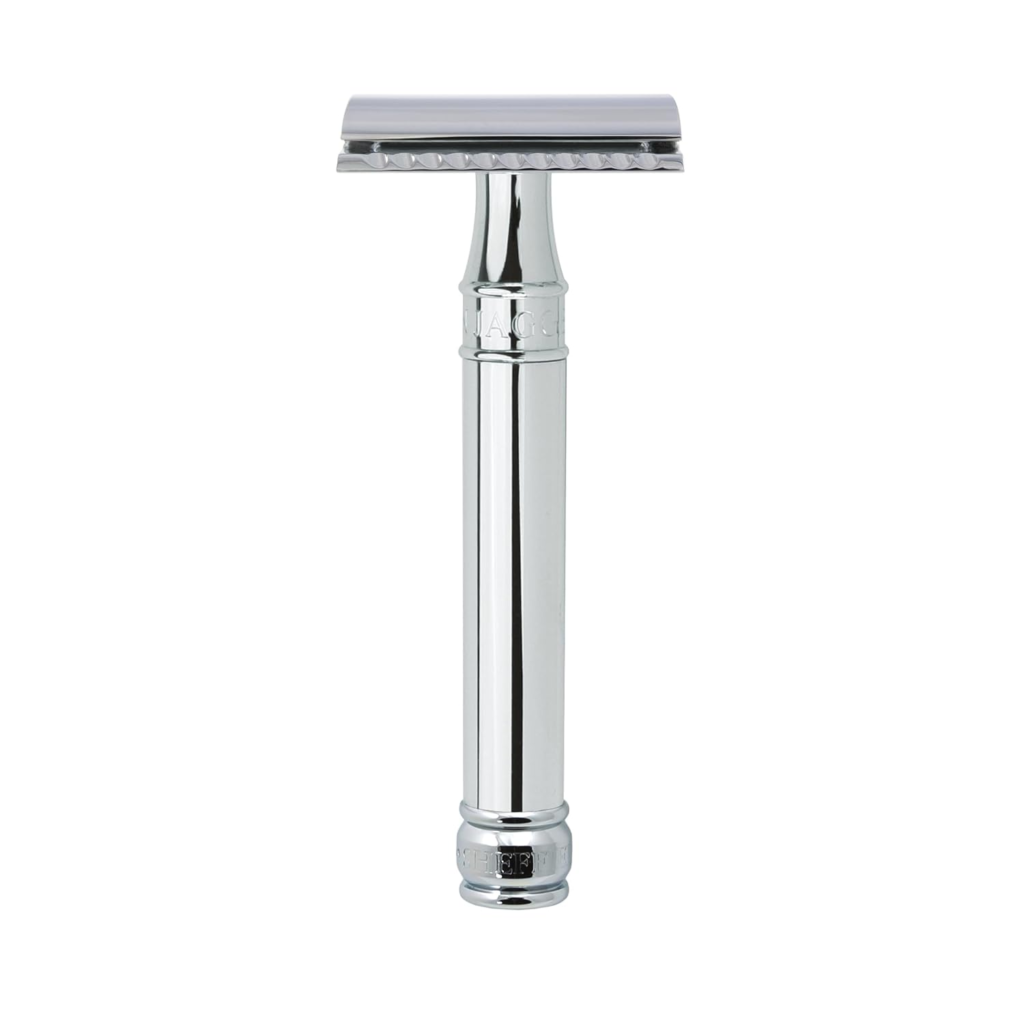
Edwin Jagger DE89
Key Specs:
- Lined handle for secure wet grip
- Chrome-plated brass head
- Compatible with all standard double-edge blades
- Longer handle than Merkur 34C
- Made in Sheffield, England
Pros:
- Longer handle suits men with larger hands and provides more leverage for neck and jawline strokes
- Lined grip is noticeably more secure in wet conditions than smooth chrome handles
- Excellent build quality at an accessible price point
Cons:
- Slightly more aggressive blade exposure than the Merkur 34C — less forgiving during the learning phase
- No blade included
Best For: Men with larger hands who want a quality entry-level safety razor with a longer, more secure handle.
👉 Check Latest Price on Amazon
Who Should Buy What
You want the fastest possible daily shave: Electric shaver — Braun Series 7 or Series 9
You want the absolute closest shave: Safety razor — Merkur 34C or Edwin Jagger DE89
You have sensitive or reactive skin: Electric shaver — reduces direct blade-to-skin contact
You want the lowest long-term cost: Safety razor — blade costs of pennies per shave
You are a complete beginner to shaving: Electric shaver — zero learning curve
You travel constantly with carry-on only: Electric shaver — no liquid restrictions, no blade concerns
You care about environmental impact: Safety razor — fully recyclable metal blades, zero plastic
You enjoy a morning grooming ritual: Safety razor — the deliberate process is part of the appeal
👉 Whether you choose electric or safety razor, both categories have excellent options on Amazon. Check current prices and deals before you decide.
Conclusion
The electric shaver vs safety razor debate does not have a universal winner, it has a winner for each individual based on their priorities. Safety razors deliver the closest shave and the lowest long-term cost. Electric shavers deliver unmatched convenience, better skin comfort, and a zero-learning-curve experience.
For most modern men who shave daily and need a fast, reliable routine with minimal skin irritation, an electric shaver is the practical choice. For men who enjoy the ritual of wet shaving, want the absolute closest result, or are conscious of long-term cost and environmental impact, a safety razor rewards the investment of learning.
If you are leaning toward electric, our complete guide to the best electric shavers for men covers every top model with honest reviews across all price ranges. If you are considering the switch between methods, our guide on how to switch from a cartridge to an electric shaver walks through exactly what to expect.
👉 Ready to upgrade your shave? Check the latest prices on our top electric shaver and safety razor recommendations on Amazon today.
AMAZON AFFILIATE DISCLAIMER
This post contains affiliate links. If you purchase through our links, we may earn a small commission at no extra cost to you.
FAQs
Q1: Does an electric shaver give as close a shave as a safety razor?
Not quite but the gap is smaller than most people expect with a premium electric shaver. Safety razors make direct blade-to-skin contact and cut slightly closer. Premium electric shavers like the Braun Series 9 Pro+ come remarkably close to safety razor results. For everyday shaving, most men cannot tell the difference in practice.
Q2: Is an electric shaver or safety razor better for sensitive skin?
Electric shavers are better for sensitive skin. The foil or rotary guard prevents direct blade-to-skin contact, significantly reducing friction and irritation. Safety razors require precise technique to avoid razor burn and are less forgiving on reactive skin, particularly during the learning phase.
Q3: Which is cheaper, an electric shaver or a safety razor?
Safety razors are cheaper long-term. Double-edge blades cost pennies each. Over five years, safety razor shaving costs roughly half as much as mid-range electric shaving when you factor in blade cassette replacements and shaving products. Electric shavers have higher upfront and ongoing costs but justify them through convenience and time saved.
Q4: Can I switch from a safety razor to an electric shaver?
Yes and the transition is easier in this direction than the reverse. Your skin may need one to two weeks to adapt to the different cutting method, but most men find electric shaving more comfortable within the first week. The technique adjustment is minimal compared to learning a safety razor from scratch.
Q5: Is a safety razor better for the environment than an electric shaver?
Yes significantly. Double-edge blades are fully recyclable metal with zero plastic. Safety razor handles last indefinitely. Electric shavers generate electronic waste at end of life and use blade cassettes with mixed materials that are difficult to recycle. For environmentally conscious shavers, safety razors are the clear green choice.
Q6: How long does a safety razor shave take compared to electric?
A safety razor shave takes eight to twelve minutes including prep, lathering, shaving, and rinsing. An electric shave takes two to four minutes with no preparation. Over a year of daily shaving, this time difference adds up to roughly thirty to forty hours, a meaningful factor for busy men.
Q7: Which is better for a beginner, electric shaver or safety razor?
Electric shavers are significantly better for beginners. The technique is intuitive, the risk of cuts is minimal, and results are consistent from the first use. Safety razors require four to eight weeks to develop reliable technique and carry a higher irritation and nick risk during the learning period.
Q8: Can I use a safety razor and electric shaver interchangeably?
Yes many experienced shavers use both depending on circumstances. Electric for weekday speed and convenience, safety razor for weekend close shaves or special occasions. There is no rule against using both tools, and each brings something the other cannot fully replicate.