Nicking yourself while shaving is one of those things beginners worry about far more than they need to. The truth is that a typical razor cut is a shallow surface nick that bleeds briefly, stings for a moment and heals with no more than basic first aid. The classic image of someone leaving the bathroom with bits of tissue stuck to their face belongs to the learning phase, not to shaving in general.
Still, knowing how to stop the bleeding quickly is genuinely useful, not because these cuts are serious but because nobody wants to wait ten minutes for a minor nick when the right tool closes it in thirty seconds. This guide covers how to stop bleeding from a razor cut or shaving nick fast, which tools work best, how to care for the cut afterward, why these cuts bleed the way they do and how to make them rare. It applies to any manual or wet shave, whether you use a safety razor, a cartridge razor or a straight razor.
The Fastest Way to Stop a Razor Cut from Bleeding
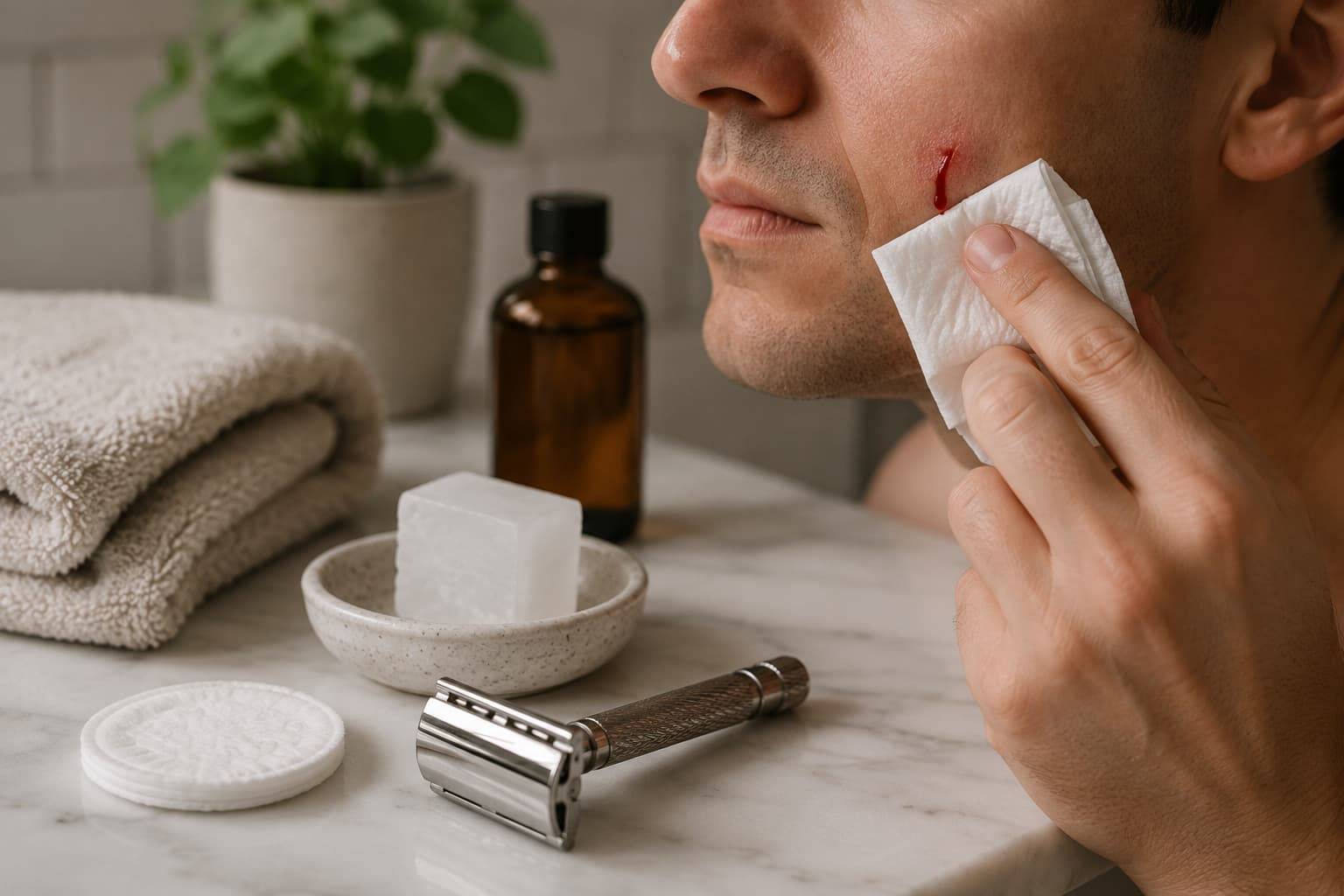
If you just need the quick answer, here it is. The fastest way to stop a razor or shaving cut is to press a wet alum block firmly against it for twenty to thirty seconds or dab it with a wet styptic pencil for ten to twenty seconds. Both contain alum, which contracts the tissue and speeds up clotting, so most nicks close within about thirty seconds. If you do not have either, hold the cut under cold running water and apply firm pressure with a clean cloth, which slows the bleeding until a clot forms. The rest of this guide explains each method and when to reach for it.
Why Do Razor Cuts Bleed So Much?
A lot of people are surprised at how much a tiny shaving cut bleeds, and there is a simple reason. The skin on the face and neck is highly vascular, meaning it is packed with small blood vessels close to the surface. So even a shallow nick less than half a millimeter deep opens several of these tiny vessels and bleeds more than a cut of the same size would elsewhere on the body. The bleeding looks dramatic relative to the size of the cut but it is not a sign of a serious wound. It also means your body’s natural clotting easily handles it and your job is just to help the clot form faster and protect it.
Why Razor and Shaving Cuts Happen
Understanding the cause of a nick is the first step to both treating it and preventing the next one.
The Most Common Causes
Most razor nicks come from one of four things. An incorrect angle, where the blade is too steep and bites into the skin instead of gliding across it. Too much pressure, where your hand drives the razor rather than letting its weight do the work. Poor skin stretching, where loose skin on the jaw, chin or neck folds into the blade and technique slips on tricky areas like the jawline, the neck and around bony spots. Most nicks are really pressure problems, since the instinct to push harder on a difficult patch, carried over from years of cartridge shaving, is the most reliable way to catch the skin.
Why the Cuts Are Shallow
With a safety razor, the safety bar sits below the blade and acts as a mechanical stop, so any accidental contact stays shallow, almost always under half a millimeter deep. Cartridge razors similarly limit depth with their guard design, that is why the treatment is simple and recovery is fast. You are dealing with a paper cut depth wound in a very vascular area, which the body clots on its own without trouble.
The Trickiest Areas
Some areas produce more nicks during the learning phase than others. The angle changes fast around the jawline, where the razor has to move from face geometry to neck geometry. The neck has variable grain and loose skin. The area under the nose has an awkward approach and the chin changes direction in ways that need constant small wrist adjustments. None of these stay difficult forever, they just need extra attention until the technique becomes automatic.
👉Shop Alum Blocks and Styptic Products on Amazon
The Best Tools to Stop Bleeding
Several tools stop shaving cuts effectively, ranging from free to inexpensive, each suited to slightly different situations.
The Alum Block: The Most Useful Tool
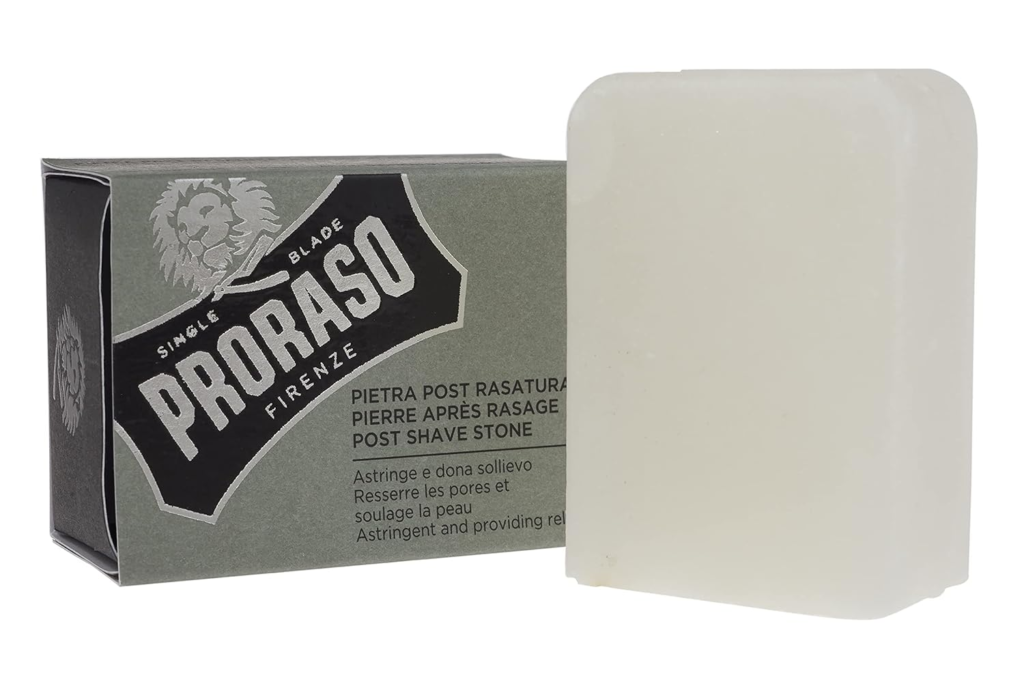
An alum block is a solid block of potassium alum used in post shave care for centuries, and it is the single most useful tool for managing shaving nicks. It works two ways at once: as an astringent that makes the tissue around the cut contract and close, and as a mild clotting agent that speeds up the process that stops the bleeding. To use it on a nick, wet the block, press it firmly against the cut for twenty to thirty seconds, then check, repeating once more for a stubborn nick.
After treating any cuts, run the wet block across the whole shaved area for thirty to sixty seconds as normal post shave care, which closes tiny abrasions that were not actively bleeding, then rinse it off and follow with balm. The alum block also gives useful feedback, since it stings in proportion to how much the shave irritated the skin, so a clean shave feels neutral and a rough one stings in the problem spots.
The Styptic Pencil or Shave Stick: Precise Application
A styptic pencil, sometimes called a shave stick for stopping bleeding, holds alum or aluminum sulfate in a solid pencil form so you can target a single cut with precision without treating the surrounding skin. Wet the tip and press it firmly against the bleeding nick for ten to twenty seconds. The sting is immediate and brief, and most minor nicks respond to one application within thirty seconds. It is ideal for a single isolated cut in an otherwise smooth shave. Styptic pencils cost about $5 to $10 and last many months, and many shavers keep both an alum block for general care and a styptic pencil for pinpoint work.
Cold Water: The Zero-Cost Option
Cold running water does two things: the cold makes the surrounding vessels constrict and slow the bleeding, and the water flow clears away blood so the clot can form. Hold the cut under cold water for thirty seconds to a minute and add firm pressure with a clean damp cloth if you have one. It is slower than alum or styptic but needs nothing beyond a tap, and it is the right first response for any nick that happens mid shave before you reach your other tools.
Lip Balm or Petroleum Jelly: A Protective Barrier
A thin layer of plain lip balm or petroleum jelly over a small nick that has already stopped creates a barrier that protects the clot from being disturbed by further razor strokes if you need to keep shaving. Apply it only after the bleeding is controlled with cold water, then shave the remaining area while avoiding the spot. This protects an existing clot rather than stopping bleeding itself.
Eye Drops as a Backup
Some shavers put a drop of redness relief eye drops containing tetrahydrozoline, a vasoconstrictor, directly on a stubborn nick to help slow it. This is a backup rather than a go to, since an alum block or styptic pencil handles the vast majority of shaving cuts reliably.
Step by Step: How to Stop the Bleeding
If You Find a Nick During the Shave
Rinse the area under cold running water for ten to fifteen seconds to slow the bleeding and stop blood interfering with your next strokes. Do not try alum or styptic mid shave, since the wet, soapy conditions blunt their effect. If the nick is small and the area is stable, dab a thin barrier of petroleum jelly over it and carry on, avoiding the spot. If it is more significant or in a spot you cannot avoid, pause, hold cold water pressure for thirty seconds, then resume carefully. Deal with all nicks properly during your post shave routine.
If You Find Nicks After the Shave
After rinsing off the lather with cold water, run your fingers over the shaved area to find any nicks, most of which will already be close to stopping. Wet the alum block and run it firmly across all shaved surfaces for thirty to sixty seconds, pressing it against any visibly bleeding nick for twenty to thirty seconds. For any nick still bleeding after that, apply the styptic pencil directly for fifteen to twenty seconds. Rinse the alum off after about a minute and finish with a fragrance free balm.
If the Cut Will Not Stop Bleeding
Occasionally a nick in a very vascular spot, often the upper lip or jawline, bleeds more persistently. Apply the alum block with firm, sustained pressure for a full sixty seconds without lifting to check, since uninterrupted pressure works better than repeated brief dabs. If that does not control it after two sixty second applications, switch to the styptic pencil with firm pressure for thirty seconds. If it still will not stop, hold direct pressure with a clean cloth for two to three minutes to let the clot form undisturbed. A shaving cut that is still actively bleeding after five to ten minutes of this is unusual and warrants concern, so if you cannot control it in that time, seek medical attention. This is genuinely rare with normal shaving but worth knowing.
How to Stop a Bleeding Lip from Shaving
A cut on or near the lip tends to bleed more and feel more alarming, again because the area is so vascular. The approach is the same but slightly more careful: rinse briefly with cold water, then press a wet styptic pencil directly on the spot for fifteen to twenty seconds, since its precision suits the small, mobile area of the lip better than a broad alum block. Keep your lip still and taut while you hold pressure, avoid licking or wiping the spot afterward and give the clot an hour to set before eating or drinking anything hot. If a lip cut will not settle after a few minutes of firm pressure, hold a clean damp cloth against it steadily rather than dabbing repeatedly.
After the Bleeding Stops: Caring for the Cut
Once the bleeding is controlled, a little basic care helps the nick heal cleanly.
Keep the area clean and do not keep touching the nick with unwashed hands, which introduces bacteria to an open wound, and it will usually seal with a thin scab within an hour or two. Avoid retraumatizing it, since the fresh clot is fragile for the first one to two hours, so do not scratch or pick at it, and if it sits where a collar will rub, a small bandage for the first hour protects it. Apply a fragrance free aftershave balm across the whole shaved area including the nicks, since strongly scented products can sting a fresh cut. As for antiseptic, it is usually unnecessary for a clean blade in a clean setting, because alum has mild antiseptic properties and the skin handles minor surface wounds on its own, but a little mild antiseptic is worth it if the blade was stored wet, looked corroded or the setting was not clean.
Using Nicks as Technique Feedback
The location of a nick is not random and each one tells you where your technique slipped.
A nick on the jawline almost always means the wrist adjustment following the curve of the jaw was too abrupt or the angle went too steep during the transition, so slowing down there and tracking the angle change fixes it. A nick on the neck usually means you shaved against the grain on the first pass or did not stretch the loose neck skin, so mapping the neck grain and keeping the skin taut prevents most of them. A nick on the upper lip typically comes from too steep an angle or not stretching the lip, so pull the lip down over the teeth and use short one to two inch strokes. A nick on the chin often follows the grain change many men have there, so identify the chin grain and adjust your stroke direction. And if you track which spots nick over your first few weeks, a pattern emerges, usually one or two problem areas and focusing on those specifically clears it up faster than trying to improve everything at once.
Common Mistakes When Treating Cuts
Using bits of toilet or tissue paper is the classic improvisation and it backfires because the fibres stick to the clot and pull it away when removed, reopening the wound and tissue is not clean enough for an open cut, so use alum, a styptic pencil or clean cloth pressure instead. Pressing too hard with the styptic pencil can disturb the forming clot, so use firm steady pressure, not aggressive force. Checking the nick too often lifts the tool and risks the clot, so hold it for the full time without peeking. Shaving directly over an active nick tears the clot with every stroke, so skip the spot and return later or pause to let it slow and assuming a nick means the razor is faulty is usually wrong, since for beginners it is nearly always technique, though a nick that recurs in the exact same spot despite correction can occasionally point to an uneven blade, so check the blade is centered with equal exposure on both sides.
How to Prevent Razor Cuts and Nicks
The best treatment is prevention and a few habits make nicks rare.
Keep the angle at about thirty degrees between the handle and the skin throughout each stroke, finding it by starting flat and tilting to engagement rather than starting steep. Use zero pressure and let the weight of the razor do the cutting, since the urge to press on difficult areas is the top cause of nicks. Stretch the skin taut with your free hand anywhere it is loose, like the jaw, neck, under the chin and upper lip because flat skin is far less likely to fold into the blade. Use a fresh blade, since a dull one needs more pressure and drags, which raises nick risk, so change blades on schedule. Use a razor that suits your level: if you want fewer cuts, a mild razor is the safest choice and beginners should start mild regardless of how efficient a more aggressive razor looks. If cuts are a persistent problem for you, choosing a gentle, mild razor designed for a forgiving shave is one of the most effective changes you can make.
👉Shop Styptic Products on Amazon
Amazon Affiliate Disclaimer
This post contains affiliate links. If you buy through one of them, we may earn a small commission at no extra cost to you.
Frequently Asked Questions
How do I stop a razor cut from bleeding fast?
Press a wet alum block firmly against the cut for twenty to thirty seconds, or dab it with a wet styptic pencil for ten to twenty seconds. Both use alum to contract the tissue and speed up clotting, so most cuts close within about thirty seconds. Cold water with firm pressure is the backup if you have neither.
Why do razor cuts bleed so much? Due to facial and neck skin is highly vascular, with many small blood vessels near the surface. Even a shallow nick opens several of them, so it bleeds more than a similar cut elsewhere on the body. It looks dramatic but is not serious and it clots quickly with a little help.
How long does it take for a shaving cut to stop bleeding?
Most minor nicks stop within thirty to sixty seconds with an alum block. Left alone, the same nick usually stops within two to five minutes as the body clots naturally. Very minor cuts can stop in under thirty seconds on their own.
How do I stop a bleeding lip from shaving?
Rinse briefly with cold water, then press a wet styptic pencil directly on the spot for fifteen to twenty seconds, keeping the lip still and taut. The lip bleeds more because it is vascular, so give the clot an hour before anything hot and hold steady cloth pressure if it will not settle.
My shaving cut will not stop bleeding, what should I do?
Apply an alum block with firm, sustained pressure for sixty seconds without lifting it, then try a styptic pencil for thirty seconds, then hold clean cloth pressure for two to three minutes. If it is still actively bleeding after five to ten minutes, seek medical attention, though this is rare with normal shaving.
Is it normal to get cuts when learning to shave with a safety razor?
Yes, minor nicks during the first week or two of daily use are normal as your technique develops and they become rare once your angle and pressure habits settle. Most experienced shavers go weeks or months between nicks.
Can I keep shaving after a nick?
Usually yes. Skip the immediate area or dab a thin barrier of petroleum jelly over it, shave the rest normally and treat the nick fully afterward. Never shave directly over an actively bleeding cut.
Is an alum block or a styptic pencil better?
They overlap but suit different jobs. An alum block is better for general post shave care and mild to moderate nicks across the whole face, while a styptic pencil is better for pinpoint treatment of a single stubborn cut. Having both covers every situation.
Will a shaving cut leave a scar?
Almost never. Typical shaving nicks are too shallow to reach the dermis where scarring forms, so superficial cuts heal without scarring. Repeated nicks in the exact same spot over time can occasionally cause minor texture changes, which is solved by fixing the technique behind the repeat nick.
What is the best razor to avoid nicks and cuts?
A mild razor with limited blade exposure is the most forgiving and the best choice if you are prone to cuts. Beginners in particular should start mild rather than reaching for an aggressive razor and pairing a mild razor with good angle, zero pressure and a fresh blade makes nicks rare.