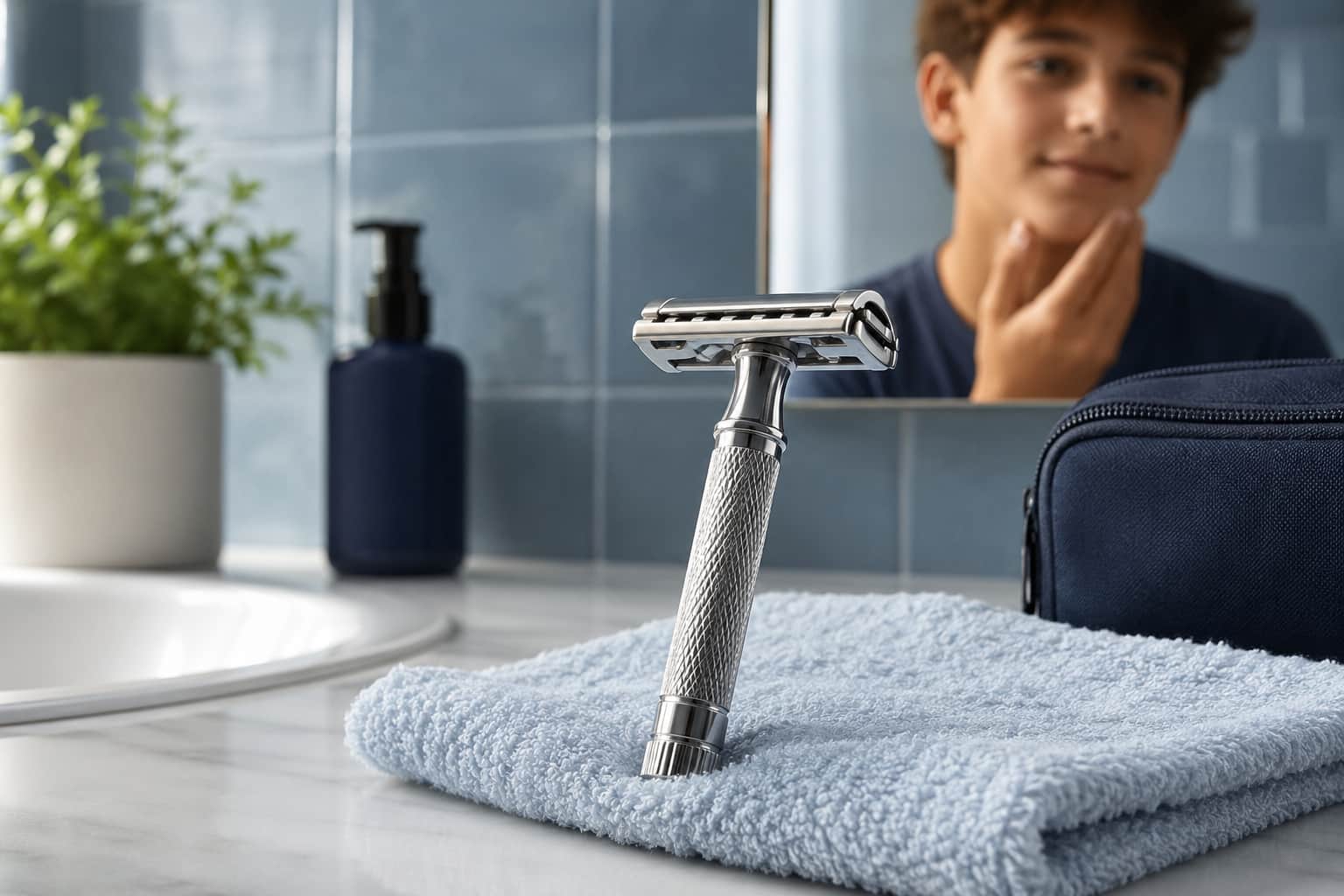
The teenage years are when most people begin shaving for the first time. The razor that gets handed to a teenager, or that a teenager picks up on their own at the drugstore, tends to be whatever is most heavily marketed and most immediately available. That almost always means a multi-blade cartridge razor with a plastic handle, chosen for brand recognition rather than any consideration of what actually works best for developing skin and a first-time shaver.
The result is predictable. Razor burn on the first few shaves. Technique habits built around a forgiving but inferior tool. And a grooming routine that costs more than it needs to and delivers less than it could.
This guide addresses whether a safety razor is appropriate for teenagers, what the honest answer looks like across different ages and maturity levels, and which specific razors and setups make the most sense for a young person starting out. It also covers what parents need to know before handing a teenager a safety razor and how to teach the basics in a way that sets up good habits from the start.
Quick Reference: Safety Razors for Teenagers
| Factor | Under 14 | 14 to 16 | 16 to 18 | 18 Plus |
| Safety Razor Appropriate | With close supervision | With initial supervision | Yes, independently | Yes |
| Recommended Aggressiveness | Ultra-mild only | Mild | Mild | Mild to medium |
| Best Starting Razor | Parker 99R or Merkur 34C | Merkur 34C or Edwin Jagger DE89 | Any mild razor | Full range |
| Supervision Required | Close adult supervision | Initial instruction | Technique guidance | Independent |
| Learning Curve Concern | Higher (developing coordination) | Moderate | Normal | Normal |
| Long-Term Cost Benefit | High | High | High | High |
Is a Safety Razor Safe for Teenagers?
The honest answer is yes, with appropriate guidance and the right starting razor. The more important question is not whether safety razors are safe for teenagers but whether the teenager has the maturity, coordination, and patience to learn the technique correctly.
The Age Question
There is no universally correct minimum age for beginning to use a safety razor. A thirteen-year-old who is careful, patient, and willing to learn technique properly is a better safety razor candidate than an impulsive sixteen-year-old who wants to rush through a shave without thinking about angle or pressure.
Coordination, patience, and willingness to follow instructions matter more than age for safety razor suitability. These qualities vary enormously between individuals at every age.
For teenagers under fourteen who are beginning to shave, close adult supervision during the first several sessions is strongly recommended. For teenagers between fourteen and sixteen, initial instruction and supervision for the first few shaves followed by independent use is typically appropriate. For teenagers sixteen and over, normal safety razor guidance applies as it would for any adult beginner.
Why Safety Razors Are Actually Appropriate for Teenagers
The argument for introducing teenagers to safety razors rather than cartridge razors is compelling precisely because habits formed early in a shaving career tend to persist. A teenager who learns correct safety razor technique from the first shave develops zero-pressure habits, angle awareness, and skin preparation discipline that will serve them for decades.
A teenager who starts with a cartridge razor develops the pressing, rushing habits that cartridge razors reward and that safety razors punish. Breaking these habits as an adult takes deliberate effort. Building the correct habits from the beginning requires no effort once the initial learning phase is complete.
The Safety Bar Protection
As covered in the safety razor myths debunked guide on this site, the safety bar design physically limits how much damage can occur from technique errors. The bar prevents the blade from making deep contact with the skin regardless of how the razor is held. A teenager learning with a mild safety razor has meaningful protection from technique errors built into the tool itself.
A mild razor like the Merkur 34C or Edwin Jagger DE89 is so forgiving of angle and pressure errors that technique mistakes produce at worst minor surface nicks that resolve in minutes. This is not a significantly higher risk than any other shaving tool.
👉 Shop Mild Safety Razors for Beginners on Amazon
What Parents Need to Know
If you are a parent considering introducing your teenager to a safety razor, or if your teenager has asked about switching, here is the practical information that matters.
The Supervision Protocol
For a teenager’s first three to five safety razor shaves, an adult who is experienced with safety razors should be present. Not to take over the shave but to observe, correct technique errors in real time, and provide guidance on angle and pressure.
The most effective teaching approach is demonstration before the teenager tries. Shave a small area of your own face or arm while describing what you are doing. Then watch the teenager attempt the same on their face and provide specific feedback on what you observe.
After the first several supervised shaves, most teenagers can proceed independently with occasional check-ins. The technique fundamentals taught in the first few supervised sessions establish the habits that carry forward.
The Right Starting Equipment
A mild razor, a blade sampler with forgiving brands, quality shaving cream, and an alum block are the essential components. Do not start a teenager on an aggressive razor. Do not hand them Feather blades for the first shave. The forgiving combination of a mild razor and a medium-smooth blade creates the widest possible margin for developing technique.
The safety razor starter kit guide on this site covers the complete beginner setup in detail and applies directly to teenage first-time shavers with no modifications.
The Cost Conversation
Introducing a teenager to safety razor shaving is also an opportunity to have a practical conversation about cost over time. A 100-blade pack of Astra Superior Platinum costs approximately $10 to $14 and represents a year or more of supply. A monthly cartridge refill pack costs $10 to $20 and needs replacing every four to eight weeks.
A teenager who understands from the beginning that their shaving tool costs them pennies per shave rather than dollars has a more financially literate relationship with their grooming routine from the start.
Managing Expectations About the Learning Phase
Prepare teenagers for the reality of the learning curve. The first week or two will involve occasional minor nicks and inconsistent results. This is normal and expected. It does not mean the safety razor is the wrong choice. It means technique is developing and improvement is happening with every shave.
The how to shave with a safety razor guide on this site is written for adult beginners but applies entirely to teenage beginners as well. Reading it together before the first shave establishes shared expectations and a common framework for technique feedback.
Choosing the Right Safety Razor for a Teenager
The razor selection criteria for a teenage beginner are the same as for any adult beginner with extra emphasis on forgiveness and simplicity.
Mild Blade Gap Is Non-Negotiable
A mild razor creates the most forgiving learning environment. Developing teenage technique needs maximum margin for error. Any razor from the ultra-mild to mild range is appropriate. Any razor from the medium-aggressive to aggressive range is not appropriate until technique is reliably established over several months of consistent shaving.
Simple Loading Mechanism
Blade loading should be straightforward and clear. Both the butterfly-opening mechanism of razors like the Parker 99R and the three-piece mechanism of razors like the Merkur 34C work well. The butterfly opening is often more intuitive for a complete beginner because there is no disassembly. The three-piece is equally appropriate once a brief explanation of assembly has been given.
Appropriate Weight
A razor in the 70g to 100g range provides enough weight to encourage zero-pressure technique without being so heavy that a younger hand finds it fatiguing. The weight-does-the-work principle is actually easier for teenagers to grasp than adults because they do not have years of counter-productive pressing habits to overcome.
Handle Length
Standard to long handle in the 3.5 to 4.0 inch range suits most teenagers. Very short handles in the 3.0 inch range can feel cramped for teenage hands that are still growing.
Best Safety Razors for Teenagers: Full Reviews
1. Parker 99R — Best Budget Option for Teenage Beginners
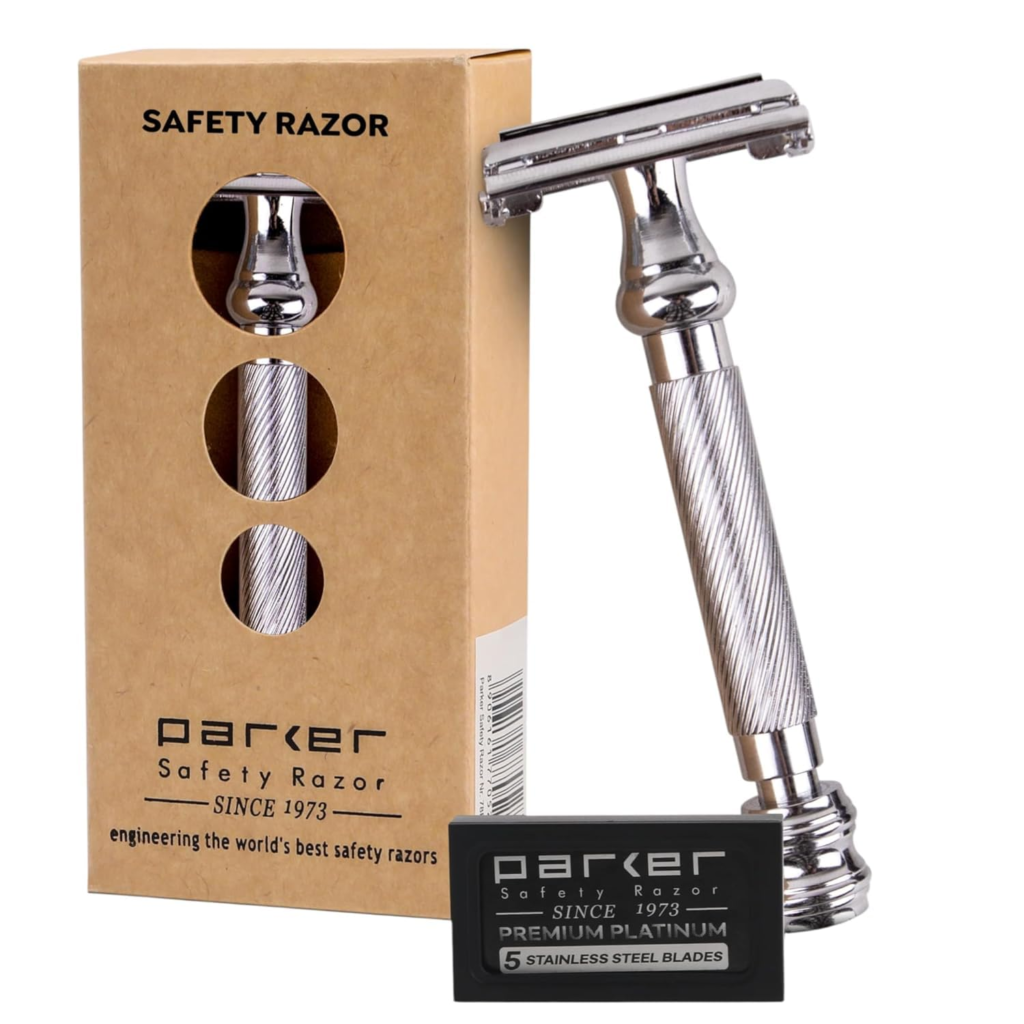
The Parker 99R is the top budget recommendation for teenage beginners for the same reasons it is the top budget recommendation for all beginners. Its butterfly-opening mechanism makes blade loading clear and intuitive. The long 4-inch handle suits growing hands. The mild blade gap is maximally forgiving of technique errors. And the under-$20 price means the initial investment is not significant enough to create pressure during the learning phase.
If a teenager cuts themselves or decides safety razor shaving is not for them after two weeks, the financial loss is minimal. If they take to it well, they have a perfectly serviceable razor that will serve them throughout their teens and beyond.
As covered in the best double edge safety razors for beginners and best budget safety razors under $30 guides on this site, the Parker 99R consistently delivers more value than its price suggests.
Specifications:
- Weight: 95g
- Handle length: 4.0 inches
- Comb type: Closed comb
- Material: Chrome-plated brass
- Blade loading: Butterfly twist-to-open
Pros:
- Very affordable, minimizes financial risk for first safety razor
- Butterfly opening most intuitive loading mechanism for beginners
- Mild blade gap maximally forgiving of technique errors
- Long handle suits teenage hand sizes well
- Good weight encourages zero-pressure technique habit
- Widely available for easy purchase or replacement
Cons:
- Build quality below Merkur and premium alternatives
- Butterfly mechanism can loosen with heavy extended use
- Chrome finish wears faster than stainless options
- Not a long-term keeper for most shavers
👉 Check Parker 99R Price on Amazon
2. Merkur 34C — Best Quality Beginner Razor for Teenagers
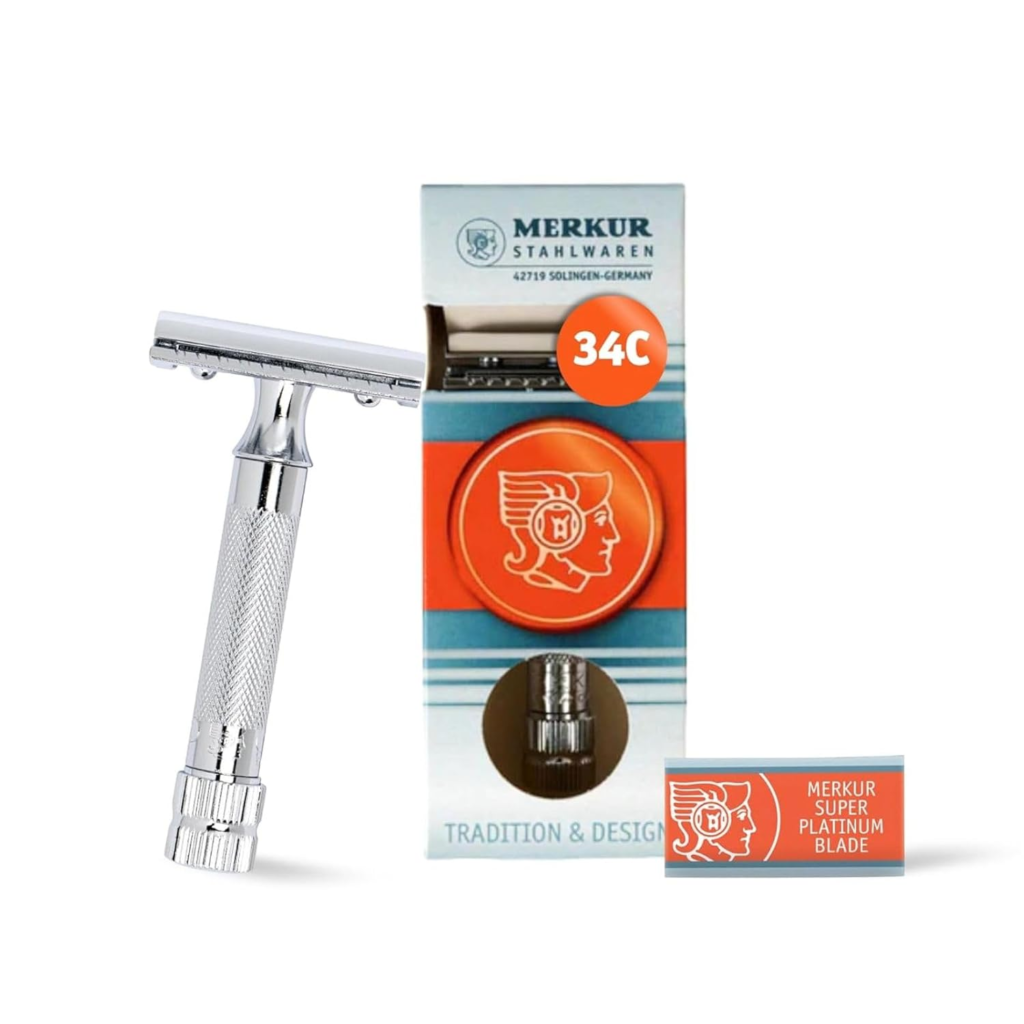
The Merkur 34C is the most consistently recommended beginner safety razor in the world and its qualities are particularly well-suited for teenage beginners. The tight blade alignment from German manufacturing creates a consistent, predictable shave that helps beginners develop reliable technique. The mild blade gap creates maximum forgiveness. The chunky, wide handle provides excellent grip security even in wet conditions.
A teenager given a Merkur 34C as their first safety razor has a better tool than most adult beginners start with. It will last years of daily use, which means a teenage shaver who receives one at fifteen will likely still be using it in their mid-twenties.
Full details are in the best double edge safety razors for beginners guide on this site.
Specifications:
- Weight: 79g
- Handle length: 3.0 inches
- Comb type: Closed comb
- Material: Chrome-plated zinc alloy
- Blade loading: Two-piece
Pros:
- German manufacturing quality delivers consistent, predictable shave
- Mildest blade gap of any major brand, maximum forgiveness
- Wide, chunky handle provides excellent wet grip
- Works with all standard DE blades
- Builds good technique habits from the first shave
- Will last years of daily use
Cons:
- Shorter handle may feel slightly cramped for some teenagers
- Two-piece loading requires brief explanation of assembly
- Chrome-plated zinc rather than stainless steel
- Slightly higher price than Parker 99R
👉 Check Merkur 34C Price on Amazon
3. Edwin Jagger DE89 — Best for Teenagers with Sensitive Skin
Teenage skin, particularly in the early stages of regular shaving, can be more reactive than mature adult skin. The hormonal changes of adolescence affect skin sensitivity and oil production in ways that make the post-shave experience more variable for teenagers than for adults who have been shaving for years.
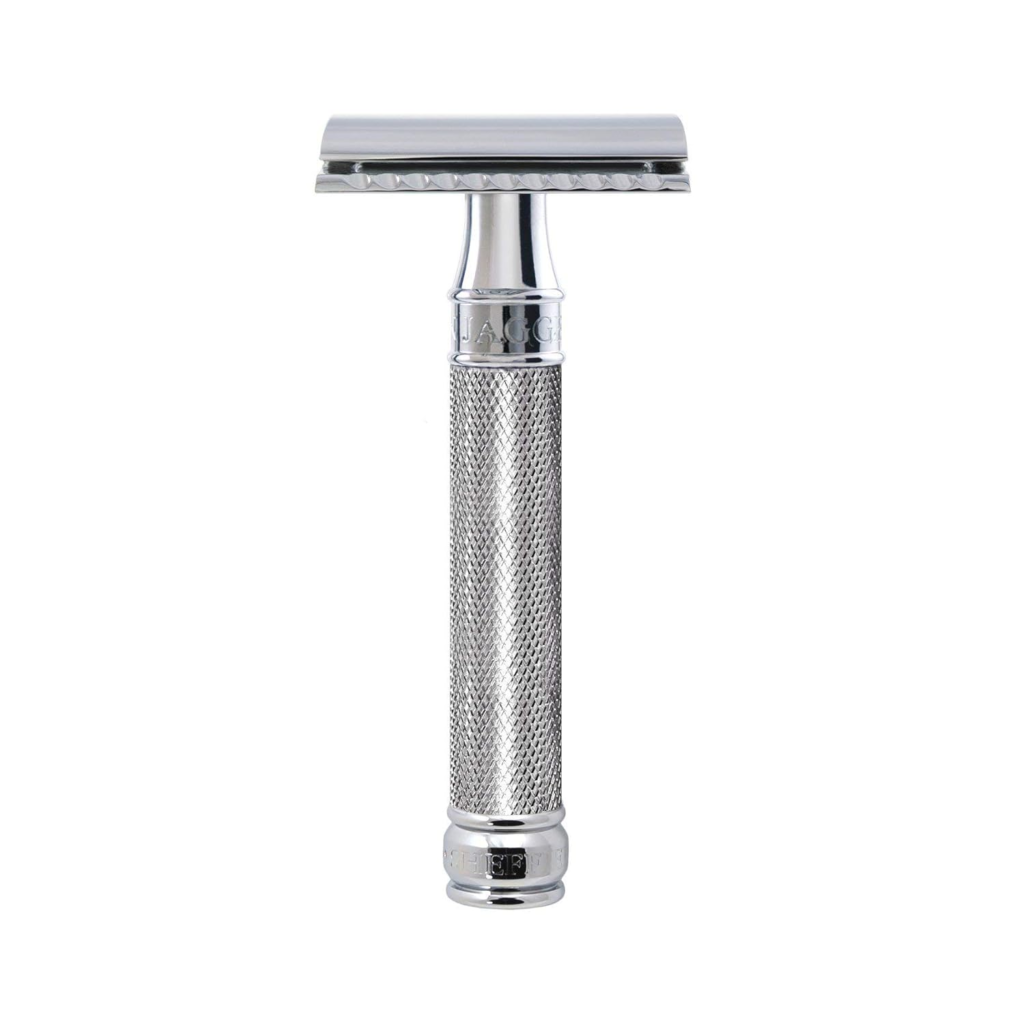
The Edwin Jagger DE89 is the top recommendation for teenagers with sensitive or acne-prone skin. Its conservative blade gap is mild enough to minimize mechanical irritation, its British manufacturing quality ensures consistent blade alignment, and its knurled handle provides secure grip in wet conditions.
As covered in the best safety razors for sensitive skin guide on this site, the DE89 is one of the best mild razors for reactive skin at any age.
Specifications:
- Weight: 68g
- Handle length: 3.5 inches
- Comb type: Closed comb
- Material: Chrome-plated brass head
- Blade loading: Three-piece
Pros:
- Excellent for sensitive or acne-prone teenage skin
- Very mild blade gap minimizes irritation
- Knurled handle provides secure grip in wet conditions
- Slightly longer handle than Merkur 34C suits most teenage hands
- British manufacturing quality
- Works beautifully with sensitive-skin blade choices
Cons:
- Three-piece loading requires explanation of assembly
- Chrome plating shows wear over extended years of use
- Lighter at 68g than some alternatives
- Slightly higher price than Parker 99R
👉 Check Edwin Jagger DE89 Price on Amazon
4. Merkur 23C — Best for Teenagers Starting with Head or Body Shaving
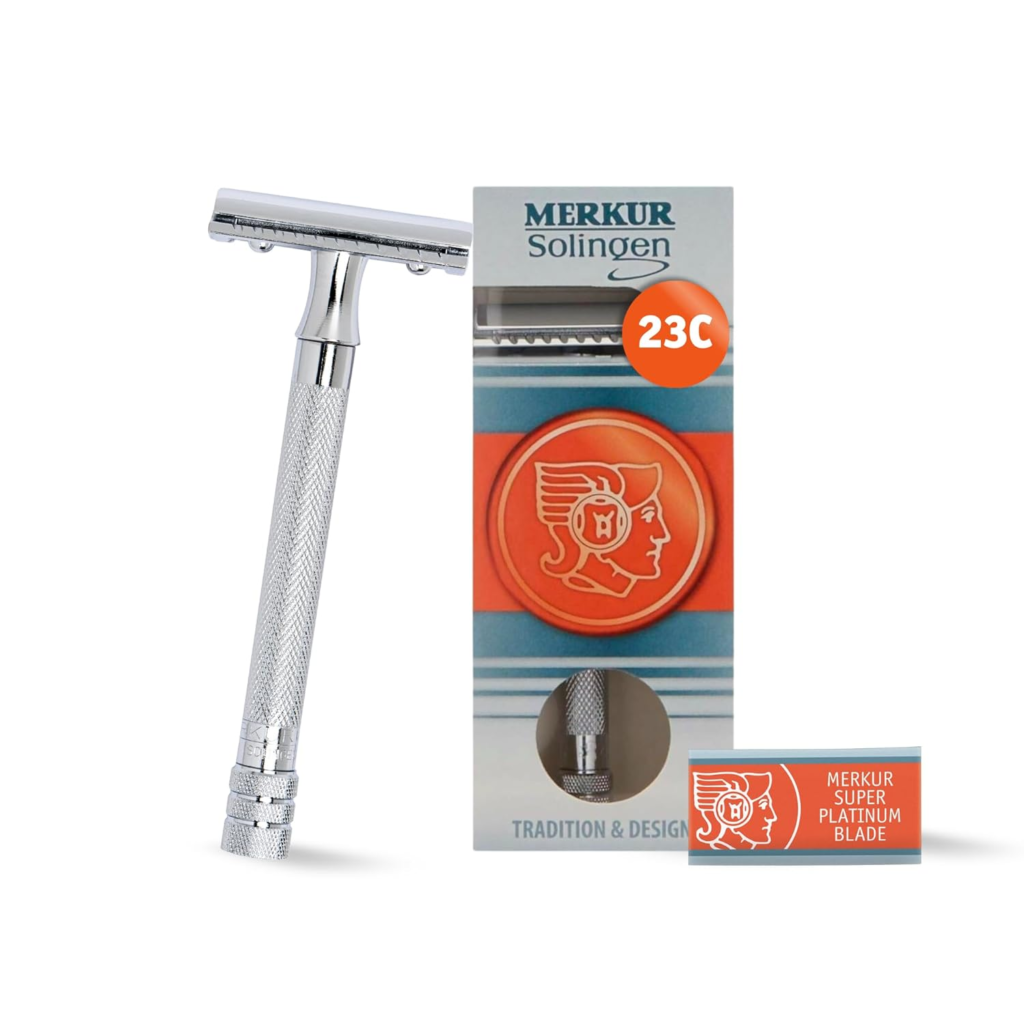
Some teenagers begin shaving areas beyond the face from the start, including their heads or body areas. The Merkur 23C with its 4-inch handle is the top recommendation for teenage shavers who specifically need reach for head or body shaving alongside facial shaving.
As covered in the safety razor for head shaving guide on this site, handle length is a meaningful practical consideration for scalp navigation. A teenage boy who wants to shave his head benefits from the same handle length advantage as an adult doing the same.
Specifications:
- Weight: 71g
- Handle length: 4.0 inches
- Comb type: Closed comb
- Material: Chrome-plated zinc alloy
- Blade loading: Three-piece
Pros:
- Long handle for head and body shaving reach
- Mild Merkur geometry identical to the 34C
- Suits teenage hands across a range of sizes
- Good starting point for multi-area shavers
- Trusted Merkur quality and consistency
- Works with all standard DE blades
Cons:
- Longer handle slightly less precise for face-only shaving
- Chrome-plated zinc less durable than stainless steel
- Not adjustable as technique develops
👉 Check Merkur 23C Price on Amazon
5. Van Der Hagen Razor — Best Accessible First Razor for Young Teenagers
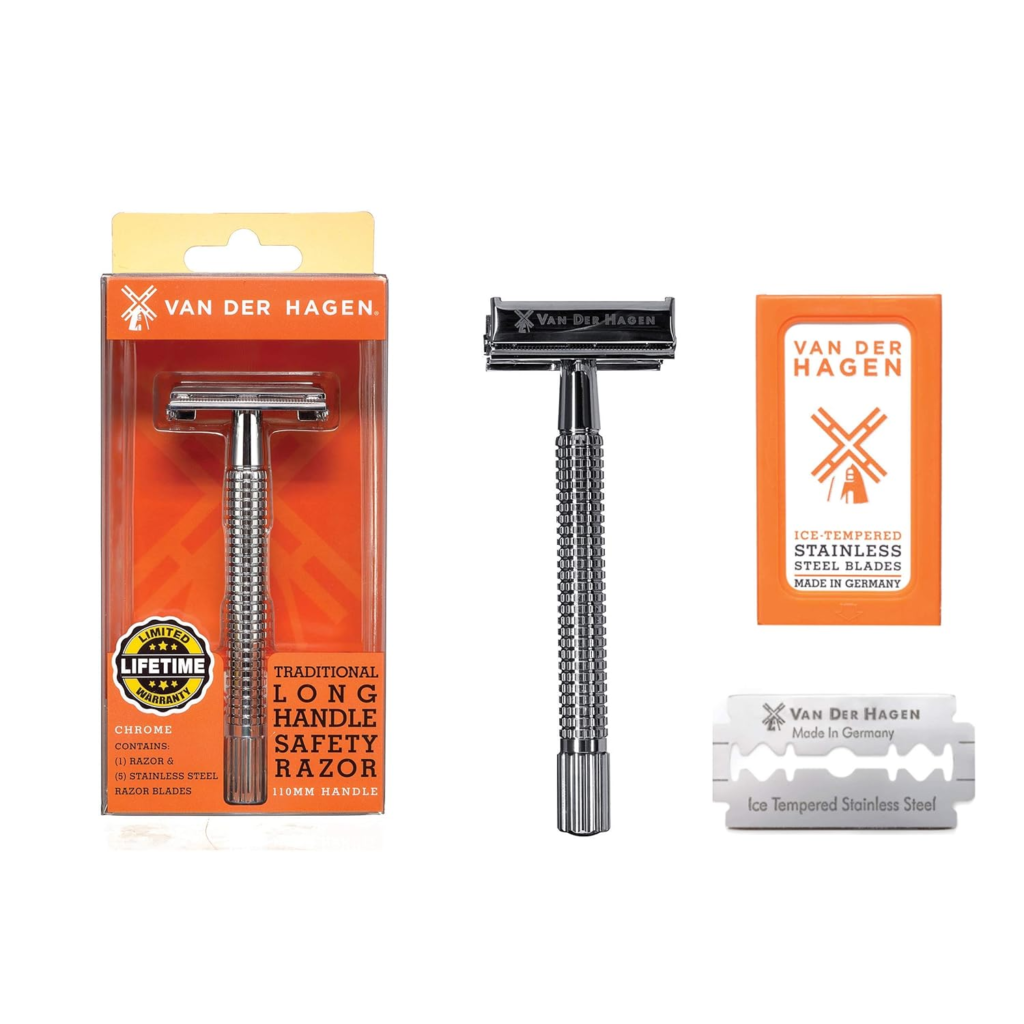
For teenagers who are just starting to shave and whose parents want to introduce the concept of safety razor shaving with the absolute minimum financial commitment, the Van Der Hagen razor is available at big box retailers and pharmacies in many markets. At under $15 and available without online ordering, it represents the most accessible physical-store starting point.
As covered in the best budget safety razors under $30 guide on this site, the Van Der Hagen is not an exceptional razor but it delivers enough performance to give a genuine introduction to what safety razor shaving involves. Many teenagers who start here upgrade to a Merkur or Edwin Jagger within their first year.
Specifications:
- Weight: 65g
- Handle length: 3.5 inches
- Comb type: Closed comb
- Material: Chrome-plated zinc
- Blade loading: Three-piece
Pros:
- Available in physical retail stores without online ordering
- Very low price minimizes financial risk
- Mild enough for a safe first safety razor experience
- Works with standard DE blades
- Accessible same-day purchase option
Cons:
- Lowest build quality of any razor on this list
- Blade alignment less precise than better alternatives
- Most users upgrade fairly quickly
- Very light at 65g
👉 Check Van Der Hagen Razor Price on Amazon
The Right Blades for Teenage Beginners
Blade choice for teenage beginners should prioritize smoothness and forgiveness over sharpness. The combination of a mild razor and a medium-smooth blade creates the widest possible margin for technique errors during the learning phase.
The top blade recommendations for teenage beginners are:
Gillette Platinum: medium sharpness, very smooth, the most forgiving commonly available DE blade. The best starting blade for teenagers with sensitive skin or for the very first shave.
Voskhod: medium sharpness, very smooth coating, widely recommended for beginners of all ages. Forgiving and comfortable across a range of technique levels.
Gillette Silver Blue: medium-sharp, very smooth, excellent all-round performance for most skin and hair types. The most widely recommended blade for beginners who want something slightly more efficient than the Gillette Platinum.
Astra Superior Platinum: sharp, very smooth, the most widely recommended blade for all-round beginner use. Excellent performance that suits a wide range of beard types without excessive sharpness.
Avoid Feather blades, Polsilver Super Iridium, and other very sharp blades until technique is reliably established over at least two to three months of consistent shaving. As covered in the best safety razor blades 2026 guide on this site, sharp blades amplify technique errors in ways that medium blades do not.
Teaching Teenagers to Shave with a Safety Razor
The technique fundamentals for teenagers are identical to those for adult beginners. The teaching approach needs minor adaptation for a younger audience.
Keep It Simple at the Start
Do not overwhelm a teenage beginner with every nuance of wet shaving technique in a single session. Focus on the three things that matter most in the first week: angle, pressure, and going with the grain. Everything else can come later.
Demonstrate the angle-finding method. Show what zero pressure looks and feels like. Explain grain direction with a finger demonstration before lathering. These three concepts are enough for the first several shaves.
Use the Learning Phase as a Confidence Builder
The first successful safety razor shave is a genuine accomplishment for a teenager. It requires skill, patience, and coordination in a way that dragging a cartridge razor across the face does not. Acknowledging this and treating the improvement between shaves as real progress encourages the persistence that moves a beginner through the learning phase quickly.
The Alum Block as Feedback Tool
As covered in the how to stop bleeding from a safety razor cut guide on this site, the alum block sting provides direct feedback about where technique needs improvement. Teaching teenagers to interpret the alum block response as information rather than punishment creates a self-correcting learning loop that accelerates technique development without requiring an adult to watch every shave.
A light sting in one area is a signal: pay more attention to angle and pressure there next time. No sting or very light sting across the whole face means the shave was clean and technique is developing well.
When to Graduate to a More Efficient Razor
Most teenagers starting with a mild safety razor are ready to consider a step up in aggressiveness after three to six months of consistent daily shaving with reliably good results. As covered in the aggressive vs mild safety razors guide on this site, the right time to upgrade is when technique is consistently good and the current razor feels like the limiting factor rather than the shaver’s skill.
For most teenagers, a mild beginner razor remains appropriate throughout their teens. The urgency to upgrade is lower for teenagers with fine to medium beard growth than for adult men with coarse, dense beards.
Addressing Common Teenage Shaving Concerns
Shaving Over Acne
Teenage acne and shaving coexist for many young shavers. A safety razor used correctly is not more damaging to acne-prone skin than a cartridge razor and is often better for it because of the single-blade, surface-level cutting mechanism.
The key precautions are: use a very mild razor, change blades frequently, use rich lather to minimize friction, shave around active inflamed spots rather than directly over them, and use a fragrance-free aftershave balm rather than alcohol-based products that irritate inflamed skin.
For teenagers with severe acne across shaving areas, a dermatologist consultation before starting any regular shaving routine is worthwhile. Some acne treatments affect skin barrier function in ways that change how skin responds to shaving.
First Shave Timing
There is no universal right age to begin shaving. Shaving when facial hair appears is appropriate whenever it appears. Some boys begin developing facial hair at twelve or thirteen. Others not until sixteen. The timing is individual and the starting point for safety razor shaving should follow when the hair appears, not a predetermined age milestone.
Frequency of Shaving
Teenage shavers who shave daily or every other day during the learning phase develop technique faster than those who shave weekly. The muscle memory that builds correct angle and pressure habits develops through repetition. Encouraging regular shaving during the first month or two, even if the hair growth does not strictly require it, accelerates the learning process significantly.
Dealing With the First Nicks
Prepare teenagers in advance for the reality that minor nicks may occur in the first week or two. Normalize it as part of the learning process rather than treating it as a failure or a danger. Having an alum block ready for the first shave demonstrates that nicks are manageable and expected rather than alarming.
Safety Razor Gifting for Teenagers
A complete safety razor starter kit makes an outstanding gift for a teenager who is beginning to shave or who has expressed interest in switching from a cartridge razor. The gift communicates investment in their wellbeing and introduces them to a better shaving experience from an early age.
The ideal teenage starter gift includes a Parker 99R or Merkur 34C razor, a blade sampler with emphasis on forgiving brands, Proraso White shaving cream, a basic synthetic brush, an alum block, and a simple stand. Present it with a brief note and an offer to teach the technique together.
As covered in the safety razor gift guide on this site, assembling the complete kit rather than buying just the razor is the difference between a gift that gets used immediately and one that sits in a drawer.
AMAZON AFFILIATE DISCLAIMER
This post contains affiliate links. If you purchase through our links, we may earn a small commission at no extra cost to you.
Frequently Asked Questions
Is a safety razor safe for a teenager to use?
Yes, with appropriate guidance and the right starting razor. A mild safety razor like the Merkur 34C or Parker 99R is no more dangerous than a cartridge razor and is arguably safer in some respects because the safety bar limits the depth of any accidental cut. Adult supervision for the first few shaves and proper technique instruction significantly reduces any risk.
What age can a teenager start using a safety razor?
There is no universal minimum age. Readiness depends on maturity, coordination, and willingness to follow technique guidance more than on a specific birthday. Teenagers who are careful and patient can use safety razors safely from whenever they begin shaving. Close adult supervision is recommended for shavers under fourteen.
What is the best safety razor for a teenager?
The Merkur 34C is the best quality option. The Parker 99R is the best budget option. Either is an appropriate starting razor for a teenage beginner. The choice depends primarily on budget and whether the butterfly or three-piece loading mechanism is preferred for the individual teenager.
Do teenagers need special safety razor products?
No. The same products recommended for adult beginners apply to teenagers. A mild razor, forgiving blades, quality shaving cream, and an alum block is the complete starting setup. Proraso White shaving cream is frequently recommended as a starting cream for teenagers because it is gentle, affordable, and produces good lather easily.
Can a teenager with acne use a safety razor?
Yes, with appropriate care. A mild single blade safety razor is often better for acne-prone skin than a multi-blade cartridge because it does not make multiple passes over inflamed skin per stroke. Shave around active inflamed spots rather than over them, use fragrance-free products, and change blades frequently for best results on acne-prone skin.
How should I teach my teenager to shave with a safety razor?
Demonstrate the three fundamentals before they try: angle finding, zero pressure, and with-the-grain direction. Watch their first few shaves and provide specific feedback on what you observe. Use the alum block as a feedback tool for identifying where technique needs improvement. Read the how to shave with a safety razor guide on this site together before the first shave session.
Should a teenager start with a safety razor or a cartridge razor?
Starting with a safety razor builds better long-term habits and delivers better long-term results. The learning curve is slightly longer than with a cartridge razor but the habits developed are the correct ones from the start. The cost savings over a teenage and young adult shaving career are also significant.
What blades should a teenager start with?
Gillette Platinum or Voskhod for the most sensitive, most forgiving start. Gillette Silver Blue or Astra Superior Platinum for a slightly more efficient starter blade. Avoid sharp blades like Feather until at least three months of consistent shaving with good technique has been established.