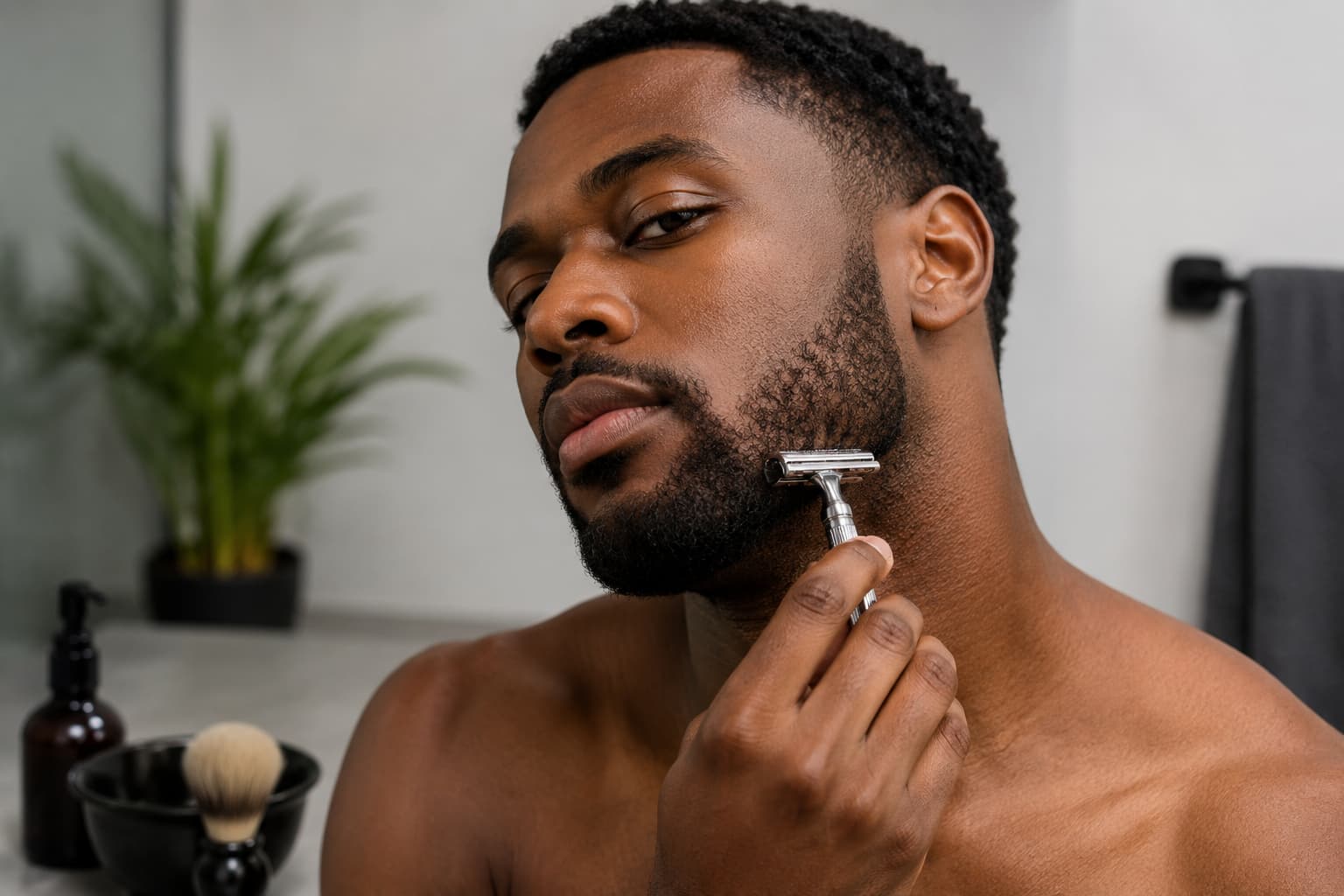
For many Black men, shaving is not just a grooming routine. It is a daily negotiation with a skin condition that causes genuine pain, visible scarring, and chronic frustration. Pseudofolliculitis barbae, the medical term for razor bumps, affects an estimated 45 to 85 percent of Black men who shave regularly. That range is not a minor inconvenience in a subset of shavers. It is a pervasive skin health issue affecting the majority of Black men who attempt regular shaving with the tools most commonly marketed to them.
The tools most commonly marketed to them are the problem.
Multi-blade cartridge razors are the dominant product in the men’s shaving market and they are specifically poorly suited for the hair type most common in Black men. The tight curl pattern of Black hair combined with the below-surface cutting mechanism of multi-blade cartridges creates a reliable recipe for pseudofolliculitis barbae. The razor companies know this. The dermatology literature has documented it for decades. And yet the marketing continues to push five-blade cartridges as the aspirational shaving tool for everyone.
This guide is specifically for Black men who are dealing with razor bumps, ingrown hairs, or chronic post-shave inflammation. It covers the precise mechanism of why cartridge razors cause the problem, why single blade safety razors solve it, which specific razors and techniques work best for Black men’s hair and skin, and the complete prevention and treatment protocol.
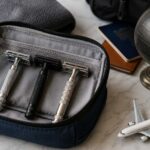
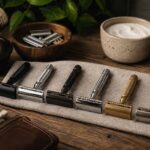
Quick Picks: Best Safety Razors for Black Men 2026
| Razor | Aggressiveness | Handle Length | Best For |
| Merkur 38C | Mild | 3.0 inches | Beginners, daily face shaving |
| Edwin Jagger DE89 | Mild | 3.5 inches | Sensitive skin, daily use |
| Parker 99R | Mild | 4.0 inches | Budget beginners, large hands |
| Rockwell 6S (Plates 1 to 2) | Mild setting | 3.5 inches | Long-term investment, adjustable |
| Merkur 23C | Mild | 4.0 inches | Long handle preference |
| RazoRock Game Changer 0.68 | Mild-Medium | 3.5 inches | Intermediate, efficient shave |
| Feather AS-D2 | Mild-Medium | 3.9 inches | Experienced shavers, premium |
| Mühle R89 | Mild | 3.9 inches | Mid-range, daily driver |
| Van Der Hagen Razor | Mild | 3.5 inches | Budget trial entry |
| Above the Tie H1 | Mild | Various | Precision mild for PFB |
Understanding Why Black Men Are Most Affected
The disproportionate impact of razor bumps on Black men is not random. It is the predictable result of a specific combination of biological characteristics interacting with a specific shaving tool design.
The Hair Structure
Black hair has a naturally elliptical cross-section rather than the round cross-section of straighter hair types. This elliptical structure is what produces the visible curl and coil pattern. The more elliptical the cross-section, the tighter the curl.
This matters for shaving because the tighter the natural curl of the hair, the more likely it is to curve back into the skin during regrowth rather than growing straight out through the follicle opening. A straight hair grows upward through the follicle path without significant deflection. A tightly curled hair starts curving immediately upon emergence and may re-enter the skin before it breaks the surface.
The Multi-Blade Interaction
Multi-blade cartridge razors use hysteresis to achieve their close shave. The leading blade stretches the hair before the blade severs it. The hair retracts after the stroke, pulling the cut tip below the skin surface. For straight hair, the cut tip regrows directly upward and emerges cleanly. For tightly coiled hair, the cut tip starts curving as soon as it begins regrowth. Starting from below the skin surface with a tight curl means the hair is likely to re-enter the skin before finding the follicle opening.
This is not a minor risk. For Black men with tight hair curl patterns, below-surface cutting by a multi-blade cartridge produces new ingrown hairs almost every shave. The chronic repetition of this cycle produces the persistent, widespread razor bumps that many Black men have come to accept as an unavoidable consequence of shaving.
They are not unavoidable. They are avoidable with the right tool.
Why Safety Razors Are the Clinical Recommendation
The dermatology literature on pseudofolliculitis barbae is consistent on the first-line recommendation for Black men with significant PFB: switch to a single blade safety razor and shave with the grain. This recommendation has been in the clinical literature for decades. It appears in guidelines from the American Academy of Dermatology. It is what dermatologists recommend to their Black male patients with PFB.
A single blade safety razor cuts hair at the skin surface level rather than below it. The hair tip starts its regrowth at the surface rather than underground. Even tightly coiled hair, starting from the surface, has a significantly higher probability of emerging through the follicle opening before curling back into the skin. The rate of new ingrown hair formation drops dramatically. For most Black men who make this switch with proper technique, it drops to near zero.
👉 Shop Safety Razors for Razor Bump Prevention on Amazon
The Right Razor for Black Men: What Matters Most
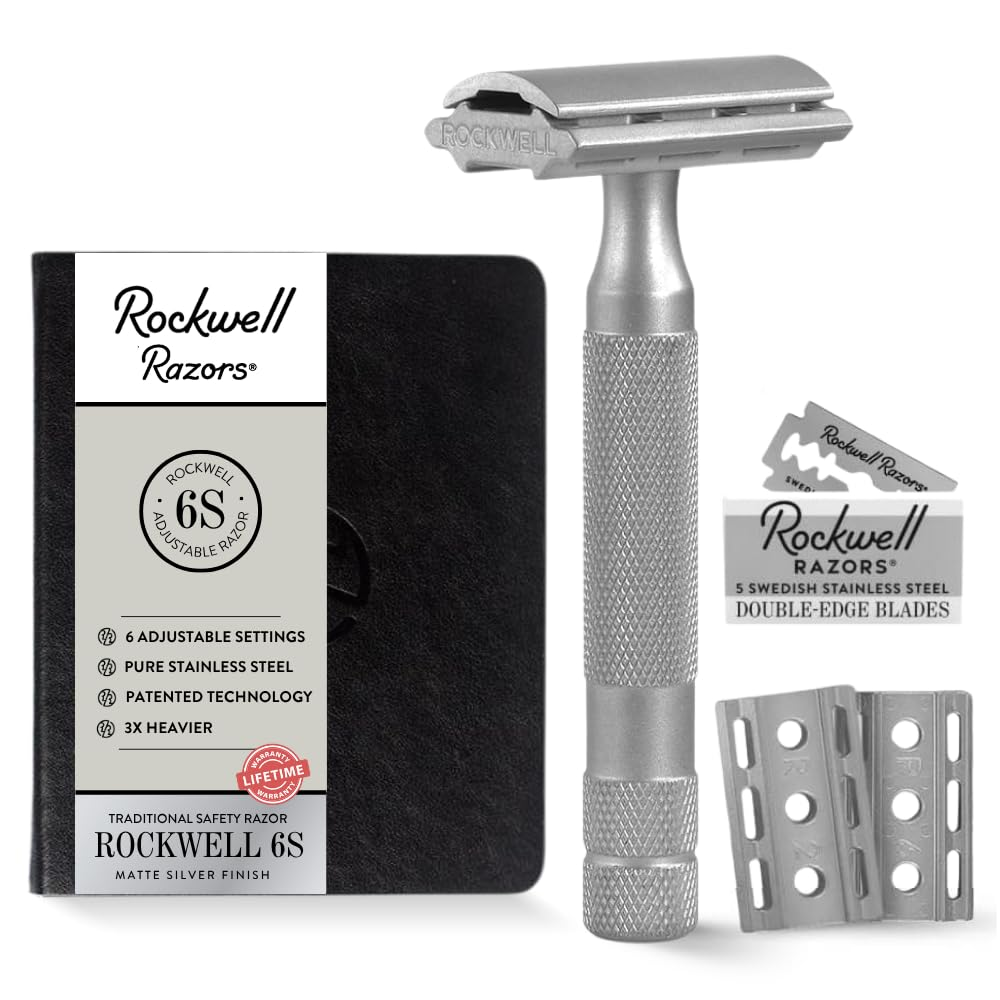
Aggressiveness: Start Mild
The instinct when dealing with a close shave problem is to reach for a more aggressive razor. For Black men managing PFB, this instinct should be resisted firmly, especially at the start.
Aggressive razors with large blade gaps can cut closer to or below the skin surface, which partially reintroduces the below-surface cutting mechanism that causes ingrown hairs. The goal is not the closest possible shave. The goal is a clean, surface-level cut that leaves the hair tip at skin level. A mild razor achieves this reliably. An aggressive razor can undermine it.
Start with a mild razor like the Merkur 34C, Edwin Jagger DE89, or Parker 99R. These are the tools that work. Once the skin is clear and technique is refined, a mild-to-medium razor can be explored for additional efficiency. But mild is the right starting point and often the permanent destination for Black men with significant PFB.
Blade Choice: Medium-Sharp and Smooth
The same logic applies to blade aggressiveness. An extremely sharp blade like a Feather in the hands of a beginner cuts through hair efficiently but is less forgiving of technique errors. For Black men who are new to safety razors and whose primary goal is eliminating razor bumps, starting with a medium-sharp, smooth blade reduces the risk of technique errors producing below-surface cuts.
Gillette Silver Blue, Gillette Platinum, Voskhod, and Personna Lab Blue are the top starting recommendations. All four are smooth, medium in sharpness, and forgiving enough for developing technique. The full blade comparison is in the best safety razor blades 2026 guide on this site.
Handle Length
Handle length affects technique consistency. A handle that suits your hand size produces more consistent angle maintenance than one that feels cramped or unwieldy. For most men, a 3.5 to 4.0 inch handle is the right range. Men with larger hands benefit from the longer end of this range.
Safety razor handle types and their specific impacts on technique consistency are covered in detail on this site. For PFB management, the consistency argument slightly favors a longer handle because better handle comfort produces more consistent technique.
👉 Check the prices of Safety Razors on Amazon
The Technique Protocol for Black Men with PFB
Technique is the second most important variable after razor choice. The right technique with the right razor eliminates new PFB formation for most Black men. The wrong technique with the right razor produces improvements but not complete resolution.
Step 1: Map Your Grain Direction Before Starting
Black men often have more complex grain direction patterns than men with straighter hair types. The face and neck may have hair growing in multiple different directions in adjacent areas. Shaving against even part of this grain without awareness is a reliable ingrown hair trigger.
Before your first shave with a safety razor, map the grain direction on every area of your face and neck. Run a finger across the skin in different directions. The direction that feels smooth is with the grain. The direction that catches or feels rough is against it.
Map each zone independently. The cheeks, the upper lip, the chin, the jaw, and each area of the neck may have different grain directions. Create a mental map of these zones and commit it to memory. This map is what guides every stroke of every shave.
Step 2: Use Proper Pre-Shave Preparation
Proper pre-shave preparation is more important for Black men with coarser, tightly coiled hair than for any other group of shavers. Coarse hair is harder than fine hair and resists the blade more at the moment of cutting. More blade resistance means the blade needs to push harder to cut, which increases the risk of stretching the hair before severing it.
Warm water softens hair by hydrating the shaft, which reduces the cutting resistance. Always shave after a warm shower or after applying a warm wet cloth to the face for three to five minutes. A pre-shave oil adds additional lubrication that reduces blade-to-hair resistance further.
The combination of warm water softening and pre-shave oil lubrication produces the lowest possible cutting resistance for coarse, tightly coiled hair. This is the preparation that lets the safety razor do its best work for PFB prevention.
Step 3: Build Rich Lather
Quality lather from a shaving soap or cream applied with a brush is non-negotiable for effective PFB management. Thin lather allows more direct contact between the blade and the skin surface. Thick, rich lather creates a cushioning layer that guides the blade at a consistent angle with consistent lubrication throughout each stroke.
For coarse hair specifically, the softening effect of a quality shaving soap on the hair during the lather application phase is meaningful. Quality shaving soaps contain glycerin and other humectants that continue to hydrate and soften the hair during the shave. This ongoing softening reduces cutting resistance on each subsequent stroke.
Step 4: With-the-Grain First Pass Only
The most critical technique rule for Black men managing PFB is strict with-the-grain shaving on the first pass. No exceptions. No areas where you go against the grain because it feels like it might get closer. Strictly with the grain, using the map you created in step one.
With-the-grain shaving cuts hair at the natural surface level without the stretching that against-the-grain shaving introduces. For tightly coiled hair, this is the difference between a hair tip that starts regrowth at skin level and one that starts below it.
Use medium-length strokes of two to three inches. Rinse the blade every three to four strokes. Keep the skin taut with your free hand in areas where the skin is loose.
Step 5: Assess Before a Second Pass
After the first with-the-grain pass, rinse with cool water and assess the skin. For Black men in the early phase of managing PFB, one pass is often sufficient. The goal is not the closest possible shave. The goal is a clean shave that does not trigger new ingrown hairs.
If the skin looks and feels good after one pass, stop. Re-lather and do one pass is a completely valid technique for PFB management. The incremental closeness of a second pass is not worth a new cycle of ingrown hairs if your skin is still adapting to single blade shaving.
When you are ready to add a second pass, make it across the grain rather than against it. Across-the-grain shaving is significantly less likely to produce below-surface cuts than against-the-grain shaving. Introduce it gradually after at least three to four weeks of single-pass shaving with clear skin results.
Step 6: Cold Water Rinse and Immediate Post-Shave Care
After shaving, rinse thoroughly with cold water. Cold water closes pores and reduces the immediate inflammatory response. Apply an alum block gently across all shaved areas. The alum’s astringent properties close micro-abrasions and reduce the initial inflammatory signal.
After rinsing off the alum block, apply a fragrance-free aftershave balm. For Black men managing PFB, adding a product containing salicylic acid to the post-shave routine is highly beneficial. Salicylic acid is a beta hydroxy acid that penetrates the follicle and clears the dead skin cell debris that can trap growing hairs. Applied after every shave, it maintains clear follicle pathways for new hair growth.
👉 Shop Post-Shave Products for Razor Bump Prevention on Amazon
Razor Bump Treatment: Managing Active PFB
Preventing new ingrown hairs is the primary goal. Treating existing ones is the parallel task. Here is the treatment protocol for active PFB.
The Break Period
If PFB is severe and widespread at the time of switching to a safety razor, consider a two to four week break from shaving before restarting with the single blade protocol. This allows existing ingrown hairs to resolve before new shaving resumes.
During the break period, continue treating active bumps with the methods below. A beard grown during this period is not a permanent commitment. It is a strategic pause that gives the skin a clear surface to work from when single blade shaving begins.
Warm Compress Twice Daily
Apply a warm wet cloth to affected areas for five to ten minutes twice daily. The warmth softens the skin surface and encourages trapped hairs to work toward the surface naturally. This is the safest and most consistently effective first-line treatment for individual ingrown hairs.
Salicylic Acid Treatment
Apply a salicylic acid product to affected areas twice daily during active PFB treatment. Products containing two percent salicylic acid are the most widely available and most appropriate for facial skin. Salicylic acid dissolves the dead skin cells that trap ingrown hairs, reduces follicular inflammation, and helps existing ingrown hairs surface naturally.
Several products are specifically formulated for razor bump treatment on darker skin tones. Tend Skin, PFB Vanish, and similar products have salicylic acid as their primary active ingredient alongside other soothing components. These work well for the treatment phase.
Glycolic Acid Between Shaves
Glycolic acid, an alpha hydroxy acid, is effective for maintaining clear follicle openings between shaves. Applied two to three times weekly to shaved areas, it provides chemical exfoliation that prevents the buildup of dead skin cells that can trap new hair growth.
For many Black men, alternating salicylic acid post-shave with glycolic acid between shaves produces better results than using either alone.
Topical Retinoids for Severe Cases
For Black men with particularly severe or persistent PFB that does not respond fully to the above protocol, topical retinoids prescribed by a dermatologist can be effective. Retinoids reduce follicular keratinization, which is the process that creates the keratin plugs that can block follicle openings. They are prescription-only products in most countries and require a dermatologist consultation.
Steroid Cream for Acute Inflammation
For individual ingrown hairs with significant surrounding inflammation, a short course of low-potency topical steroid cream applied to the specific bumps can reduce the acute inflammatory response. This is not a long-term solution but it provides relief from the most painful active bumps during the transition period.
When to See a Dermatologist
Any of the following warrants a dermatologist visit: PFB that does not improve significantly after four to six weeks of single blade shaving with correct technique, ingrown hairs that develop into infected pustules or cysts, widespread infection in the beard area, or post-inflammatory hyperpigmentation from previous PFB that needs medical treatment.
A dermatologist who is experienced with darker skin tones is the most appropriate specialist for Black men with significant PFB. Post-inflammatory hyperpigmentation, which is the darkened skin discoloration that can follow resolved PFB, is particularly common in darker skin tones and requires specific treatment approaches.
Post-Inflammatory Hyperpigmentation: The Dark Spot Problem
One of the most distressing consequences of chronic PFB for Black men is post-inflammatory hyperpigmentation. The areas where repeated ingrown hairs and inflammation have occurred often develop darker skin discoloration that can persist long after the active PFB is resolved.
This hyperpigmentation is the skin’s response to repeated inflammation. Melanocytes in the affected areas overproduce melanin in response to the inflammatory signals, producing visible dark patches that are often more noticeable and cosmetically concerning than the active bumps themselves.
Preventing new PFB is the most important intervention for preventing new hyperpigmentation. Each additional ingrown hair creates another inflammatory signal that deepens existing pigmentation or creates new dark spots.
For treating existing hyperpigmentation from resolved PFB, the following ingredients are clinically supported:
Niacinamide at four to five percent concentration reduces melanin transfer within the skin and fades hyperpigmentation gradually with consistent use. It is well-tolerated on all skin tones and has no sun sensitivity concerns.
Vitamin C in a stable formulation inhibits tyrosinase, the enzyme that drives melanin production, and fades existing hyperpigmentation with regular use.
Kojic acid, azelaic acid, and alpha arbutin are additional ingredients with evidence for hyperpigmentation treatment that are generally well-tolerated on darker skin.
Tretinoin, a prescription retinoid, accelerates cell turnover and fades hyperpigmentation faster than over-the-counter ingredients. It requires a dermatologist prescription.
The most important context for any hyperpigmentation treatment is sunscreen. UV exposure deepens existing hyperpigmentation and slows treatment. Daily SPF 30 or higher sunscreen on all treated areas is non-negotiable for effective hyperpigmentation management.
👉 Check Out the Best Safety Razor Deals on Amazon
Products Specifically Formulated for Black Men’s Shaving
Several products are specifically formulated for the PFB concerns of Black men’s shaving. These are worth knowing about as complements to the razor switch.
Bump Patrol Original Formula
A post-shave serum with a salicylic acid base specifically marketed for razor bump prevention. Applied after shaving, it reduces the inflammatory response in the follicle and keeps follicle openings clear. Widely used and well-reviewed in the Black male grooming community.
PFB Vanish
A roll-on product combining salicylic acid, glycolic acid, and other exfoliating ingredients. Designed specifically for ingrown hair and razor bump management across all body areas. Effective for facial PFB as well as bikini area and body use.
Tend Skin Solution
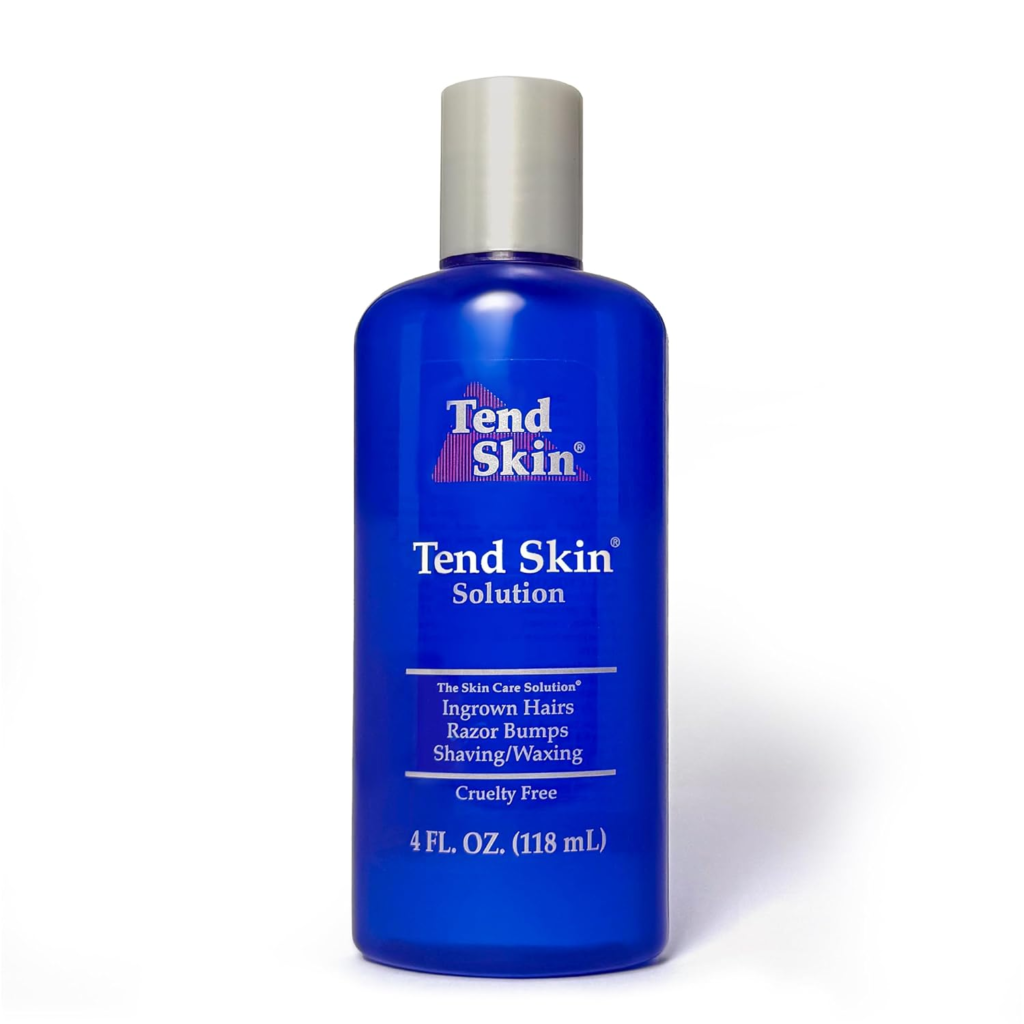
One of the oldest and most widely recognized razor bump products. Contains acetylsalicylic acid and isopropanol in a formulation that reduces razor bumps when applied post-shave. Available in liquid or roll-on formats.
High Time Bump Stopper
A gel specifically formulated for Black men’s razor bump prevention. Contains salicylic acid and benzoyl peroxide for combined exfoliating and antibacterial action. Long-standing product with significant community recognition.
All of these products work as complements to the single blade safety razor switch. They manage the chemical exfoliation and follicle-clearing aspects of prevention. The razor switch addresses the mechanical cause. Both working together produces better results than either alone.
👉 Shop Razor Bump Products on Amazon
The Complete Daily Protocol for Black Men Managing PFB
Before Shaving
Apply warm water or shave immediately after a warm shower. Apply pre-shave oil to damp skin. Build rich lather with a quality shaving soap or cream and a brush.
During Shaving
Use a mild single blade safety razor. Shave strictly with the grain on every stroke using the pre-mapped grain direction. Use medium-length strokes of two to three inches. Rinse the blade every three to four strokes. Keep skin taut with free hand in loose-skin areas.
After Shaving
Rinse with cold water. Apply alum block gently. Rinse alum block after sixty seconds. Apply fragrance-free aftershave balm. Apply salicylic acid product to all shaved areas.
Between Shaves
Apply glycolic acid product to shaved areas two to three times weekly. Exfoliate gently with a soft cloth or brush twice weekly. Apply niacinamide or vitamin C for hyperpigmentation management if needed. Daily sunscreen on all treatment areas.
This protocol takes approximately five minutes per day between shave days and twelve to fifteen minutes on shave days during the learning phase. It reduces to eight to ten minutes per shave day once technique is established and the routine is automatic.
Shaving Frequency for PFB Management
How often to shave is a question that has no universal answer for Black men managing PFB, but the considerations are specific.
Daily Shaving
Daily shaving keeps growth short enough that each shave removes a minimal length of hair. Short hair is less likely to curl significantly before reaching the follicle opening than longer growth. Some Black men with PFB find that daily single blade shaving with the correct protocol produces better results than less frequent shaving because the hair is always too short to curl back into the skin before emerging.
The downside of daily shaving is cumulative skin contact. Each additional shave creates additional mechanical skin contact that requires the skin to recover completely before the next session. For Black men with highly reactive skin, the recovery time between shaves matters.
Every Other Day or Less Frequent
Shaving every other day or every two to three days reduces cumulative skin contact and gives the skin more recovery time. The downside is slightly longer growth at each shave session, which allows more curl to develop before the hair is cut.
For most Black men managing PFB, the optimal frequency is daily or every other day. The specific best frequency is individual and can only be determined through experimentation with the single blade protocol. Start with every other day and assess the results before deciding whether daily produces better outcomes for your specific hair type and skin.
Addressing the Psychological Impact of PFB
The impact of chronic PFB extends beyond the physical. Many Black men dealing with persistent razor bumps report reduced confidence, avoidance of grooming situations, and frustration with a problem that seems to have no solution. The appearance of active bumps and hyperpigmentation in the beard area affects how men feel about their appearance in ways that deserve acknowledgment.
The most important message for Black men dealing with PFB is this: this is a mechanical problem with a mechanical solution, and the solution works. The switch to single blade shaving with correct technique produces measurable improvement in the overwhelming majority of cases. The protocol in this guide is not speculative. It is based on clinical evidence, dermatology recommendations, and the consistent experience of Black men in the wet shaving community who have made this switch.
The improvement is not immediate. Allow four to six weeks of consistent single blade shaving with the full protocol before assessing results. The existing bumps take time to resolve. The skin takes time to normalize after years of repeated inflammatory cycles. But the trajectory is clear and the destination is significantly better skin with significantly less pain and frustration.
AMAZON AFFILIATE DISCLAIMER
This post contains affiliate links. If you purchase through our links, we may earn a small commission at no extra cost to you.
Frequently Asked Questions
Why do Black men get razor bumps more than other men?
Black men experience razor bumps at higher rates because of the naturally tighter curl pattern of the hair shaft. Tightly coiled hair is more likely to curve back into the skin during regrowth, particularly when it has been cut below the skin surface by a multi-blade cartridge razor. The combination of below-surface cutting from cartridge razors and tightly curled regrowth produces chronic pseudofolliculitis barbae in the majority of Black men who shave regularly.
How long before I see improvement after switching to a safety razor?
Most Black men who switch to a single blade safety razor with correct technique notice a significant reduction in new ingrown hairs within the first one to two weeks. Existing bumps take two to four weeks to fully resolve. Post-inflammatory hyperpigmentation from previous PFB takes longer, often several months of consistent treatment, to fade meaningfully.
Is it possible to completely eliminate razor bumps with a safety razor?
For the majority of Black men, yes. Complete elimination of new ingrown hairs is achievable with a mild single blade safety razor, with-the-grain shaving technique, and the complete post-shave protocol. Some men with extremely tight curl patterns may still experience occasional ingrown hairs even with optimal technique, but at dramatically lower frequency and severity than with multi-blade cartridge razors.
Should I grow a beard instead of shaving to manage PFB?
Growing a beard eliminates shaving-related PFB entirely and is a valid choice for men who prefer this approach. However, a full beard requires precise beard line maintenance which itself involves shaving, often with a trimmer rather than a razor. For men who want to shave regularly and maintain a clean-shaved look, the single blade safety razor protocol is the most effective alternative to beard growth.
What is the best aftershave product for razor bumps?
Products containing salicylic acid at one to two percent concentration are the most consistently effective aftershave products for razor bump prevention. Bump Patrol, PFB Vanish, and High Time Bump Stopper are specifically formulated for this purpose. A fragrance-free base is important for minimizing additional irritation on reactive skin.
Can Black women use this protocol for bikini area razor bumps?
Yes. The same mechanism causes bikini area razor bumps in Black women, and the same protocol applies. Single blade safety razor, with-the-grain shaving, regular exfoliation, and salicylic acid post-shave care produce equivalent improvement in bikini area PFB for Black women. The safety razor ingrown hairs and razor bumps guide on this site covers the women-specific aspects of this in more detail.
Is laser hair removal a better option than a safety razor for severe PFB?
For men with severe PFB that significantly impacts quality of life and does not fully respond to single blade shaving with the complete protocol, laser hair removal is an increasingly recommended option. It reduces hair density and the diameter of individual hair shafts, which dramatically reduces the likelihood of ingrown hairs regardless of the shaving tool used. It is more expensive and requires multiple sessions but produces more definitive results for the most severe cases. Many dermatologists recommend exhausting the single blade safety razor protocol before pursuing laser as the less invasive and significantly less expensive first-line intervention.
Which blade brand is best for Black men with PFB?
Gillette Silver Blue, Gillette Platinum, Voskhod, and Personna Lab Blue are the top recommendations for Black men managing PFB. All four are smooth, medium in sharpness, and forgiving of technique variations. Avoid sharp blades like Feather until technique is well-established and PFB is under control.